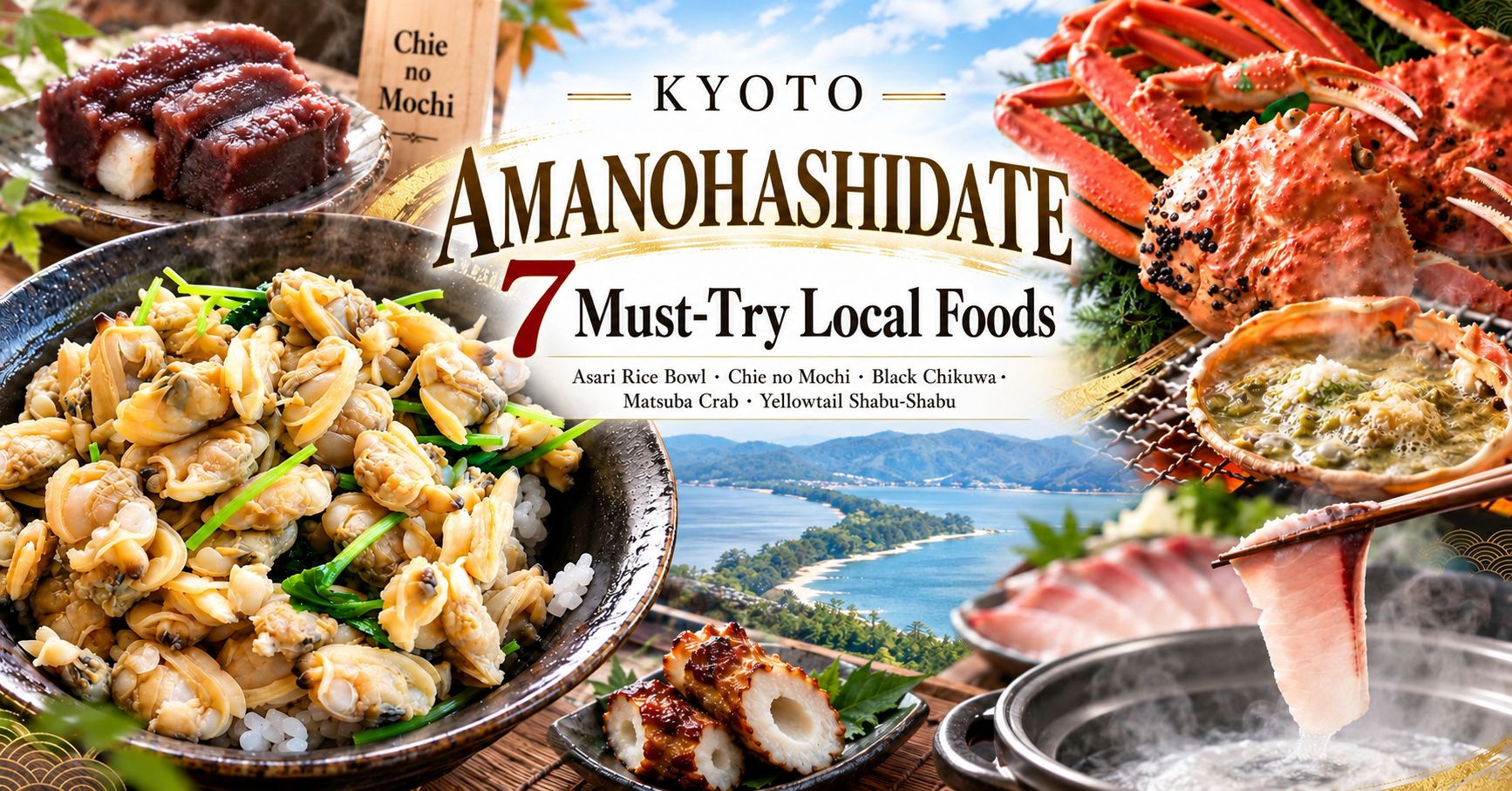
Not sure what to eat when you visit Amanohashidate? The area’s local specialties range from dishes you can enjoy all year, such as asari-don and Chie no Mochi, to seasonal delicacies such as Matsuba crab and yellowtail shabu-shabu in winter and Tango torigai in early summer.
This guide introduces seven local specialties to try in Amanohashidate, along with the best season for each and the shops where you can eat or buy them.
It is useful for first-time visitors, for anyone who wants to decide in advance what to eat while exploring, and for travelers who want to plan their trip around seasonal food.
Seven Local Foods of Amanohashidate: When and Where to Try Them
Amanohashidate’s local foods fall into two groups: those you can enjoy year-round and those available only in season. Start by checking when and where you can try each of the seven.
| Food | Best season | Where to try it |
|---|---|---|
| Asari-don (clam rice bowl) | Year-round | Hashidate Chaya in Amanohashidate Park |
| Chie no Mochi | Year-round | The four teahouses in front of Chion-ji Temple |
| Kuro chikuwa (black fish cake) | Year-round | Hashidate Chaya, Matsuya near the cable car’s Fuchu Station, and other shops |
| Heshiko (mackerel cured in rice bran) | Year-round | Souvenir shops and roadside stations in the area |
| Matsuba crab | Winter (generally early November to March 20) | Ryokan and restaurants around Amanohashidate |
| Yellowtail shabu-shabu | Winter (best from around December to February) | Ryokan and restaurants around Amanohashidate |
| Tango torigai | Early summer (shipped mainly in June and July) | Sushi restaurants and other restaurants around Amanohashidate |
The four year-round foods are easy to enjoy while you walk around Amanohashidate. The winter and early summer specialties are usually served at ryokan and restaurants, so if you plan to visit in season, it is a good idea to look into ryokan meal plans or make restaurant reservations in advance.
Year-Round Local Foods: Four Treats to Try While Exploring Amanohashidate
A classic walking route starts at Amanohashidate Station, stops at Chion-ji Temple, and crosses the Kaisenkyo Swing Bridge to the pine-lined sandbar. Here are the local foods you can enjoy along the way.
Asari-Don: A Clam Rice Bowl Served at a Teahouse Among the Pines
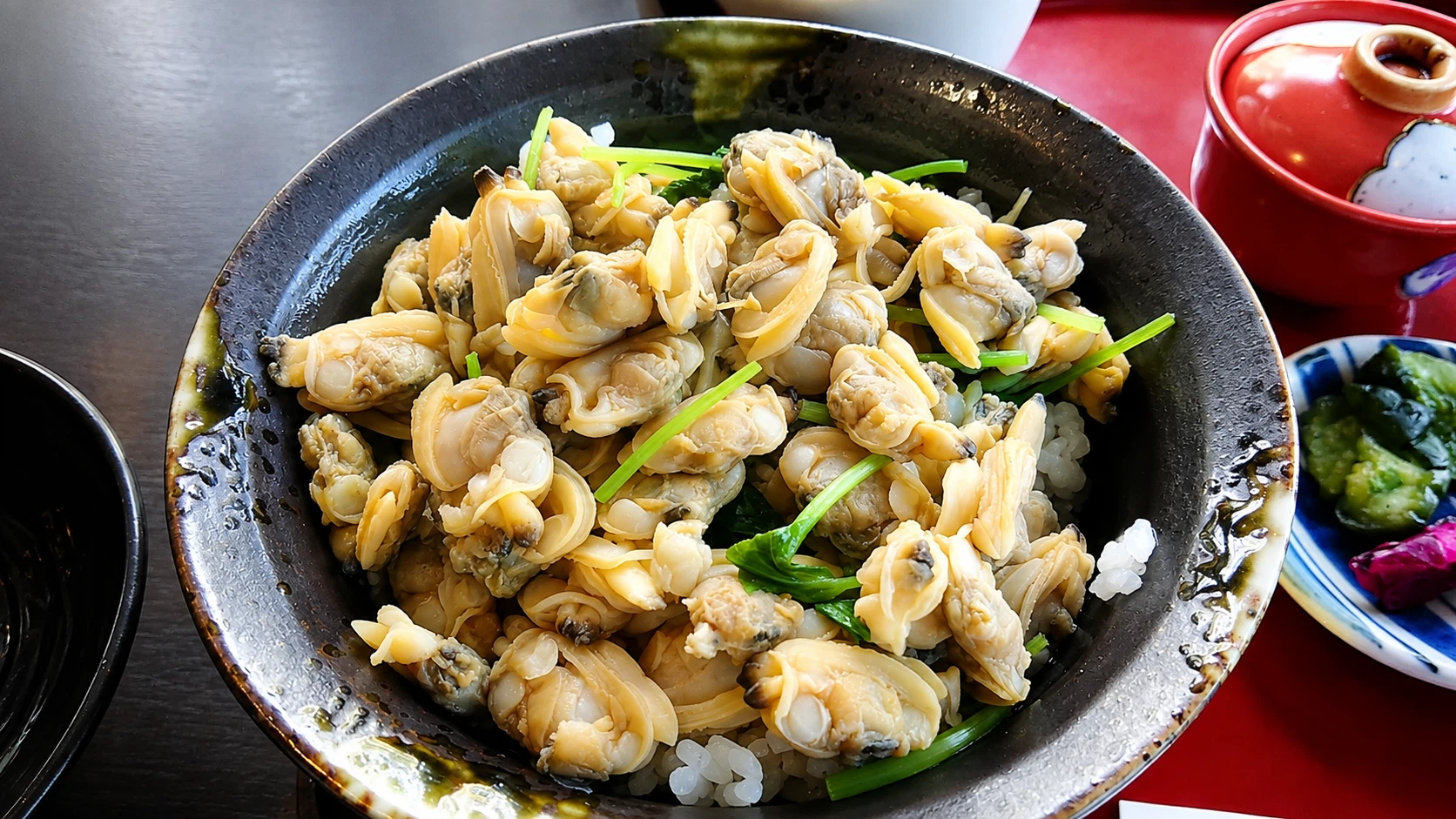
If you get hungry while walking around Amanohashidate, asari-don is the first dish to try. This rice bowl is topped with plenty of clams simmered in a sweet and savory sauce, and it is a local dish closely tied to the clams of the Aso Sea on the inner side of Amanohashidate.
At Hashidate Chaya, located in Amanohashidate Park just past the Kaisenkyo Swing Bridge, you can order a generous asari-don with so many clams that they almost hide the Tango Koshihikari rice beneath, all served with plenty of broth. It is one of the few places where you can eat on the sandbar itself, so it is a convenient stop during a walk through the pine trees.
| Name | Hashidate Chaya |
|---|---|
| Address | Monju, Miyazu City, Kyoto Prefecture (inside Amanohashidate Park) |
| Phone | 0772-22-3363 |
| Hours | 9:00 a.m.–5:00 p.m. (varies by season) |
| Closed | Thursdays (open during the New Year holidays and from July 20 to August 31) |
Chie no Mochi: A Break at the Teahouses in Front of Chion-ji Temple
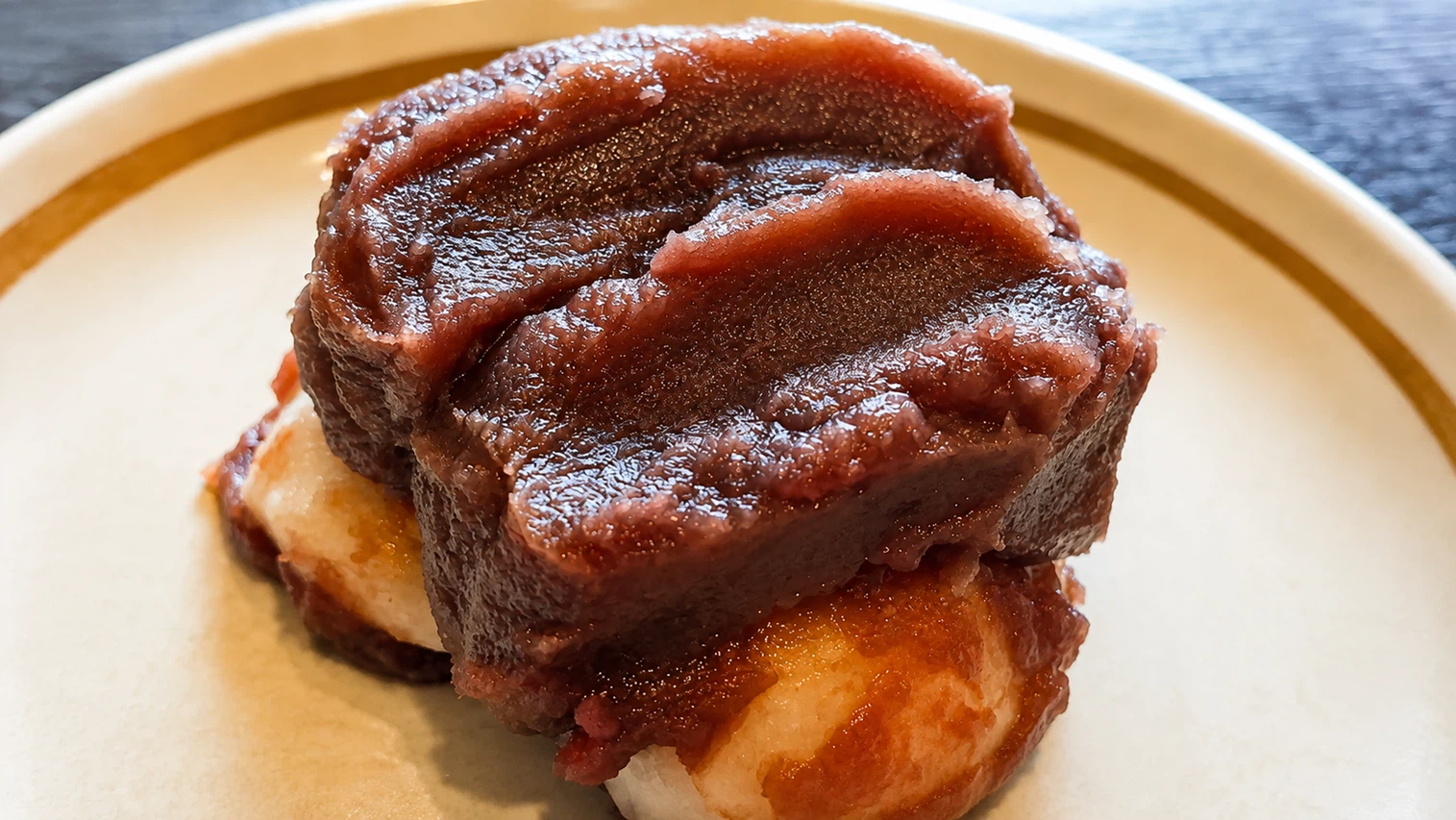
If you want something sweet, try Chie no Mochi. This local specialty has been enjoyed since the Edo period in front of Chion-ji Temple, one of the Three Great Monju Sites of Japan. It is a simple, gently sweet Japanese confection of soft rice cake topped with smooth red bean paste. Eating it is said to bring the wisdom of Monju Bodhisattva, and enjoying one after visiting the temple is a long-standing Amanohashidate tradition.
Four teahouses stand in front of Chion-ji Temple, Yoshino Chaya, Hikobee Chaya, Kanshichi Chaya, and Chitose Chaya, and all of them serve Chie no Mochi. Kanshichi Chaya is a long-established shop founded in 1690. A plate served with tea costs about 450 yen, and boxed sets to take home are also available, making them a good souvenir. The teahouses are about a three-minute walk from Amanohashidate Station, so you can stop by right after you arrive or while waiting for your train home.
Kuro Chikuwa: Miyazu’s Local Fish Cake Made from Oily Fish
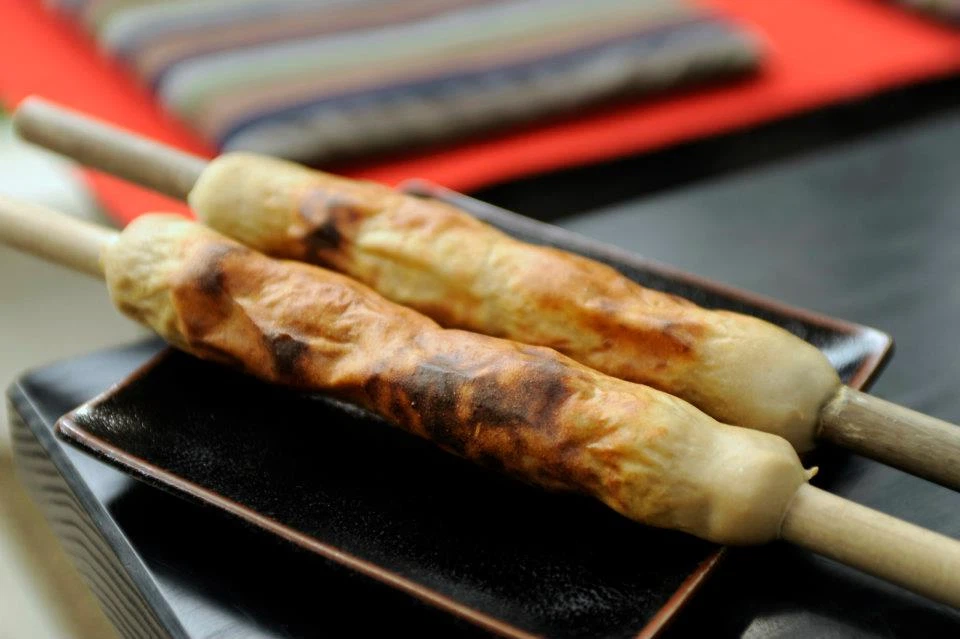
Kuro chikuwa is a fish cake that has long been eaten in Miyazu. It is made with a paste of oily fish such as sardines and horse mackerel, which gives it a dark color, and that is where the name comes from (kuro means black). Each one weighs about 80 grams and has a bouncy texture and a rich fish flavor.
Hashidate Chaya, the same teahouse that serves asari-don, also serves kuro chikuwa, so you may want to order both during your walk. Matsuya, near Fuchu Station on the cable car line up to Kasamatsu Park, also sells kuro chikuwa as its signature product. Locals usually grill it lightly, for example on a stove, so try warming it briefly before eating it at home.
Heshiko: A Traditional Preserved Fish and a Good Gift for Sake Lovers
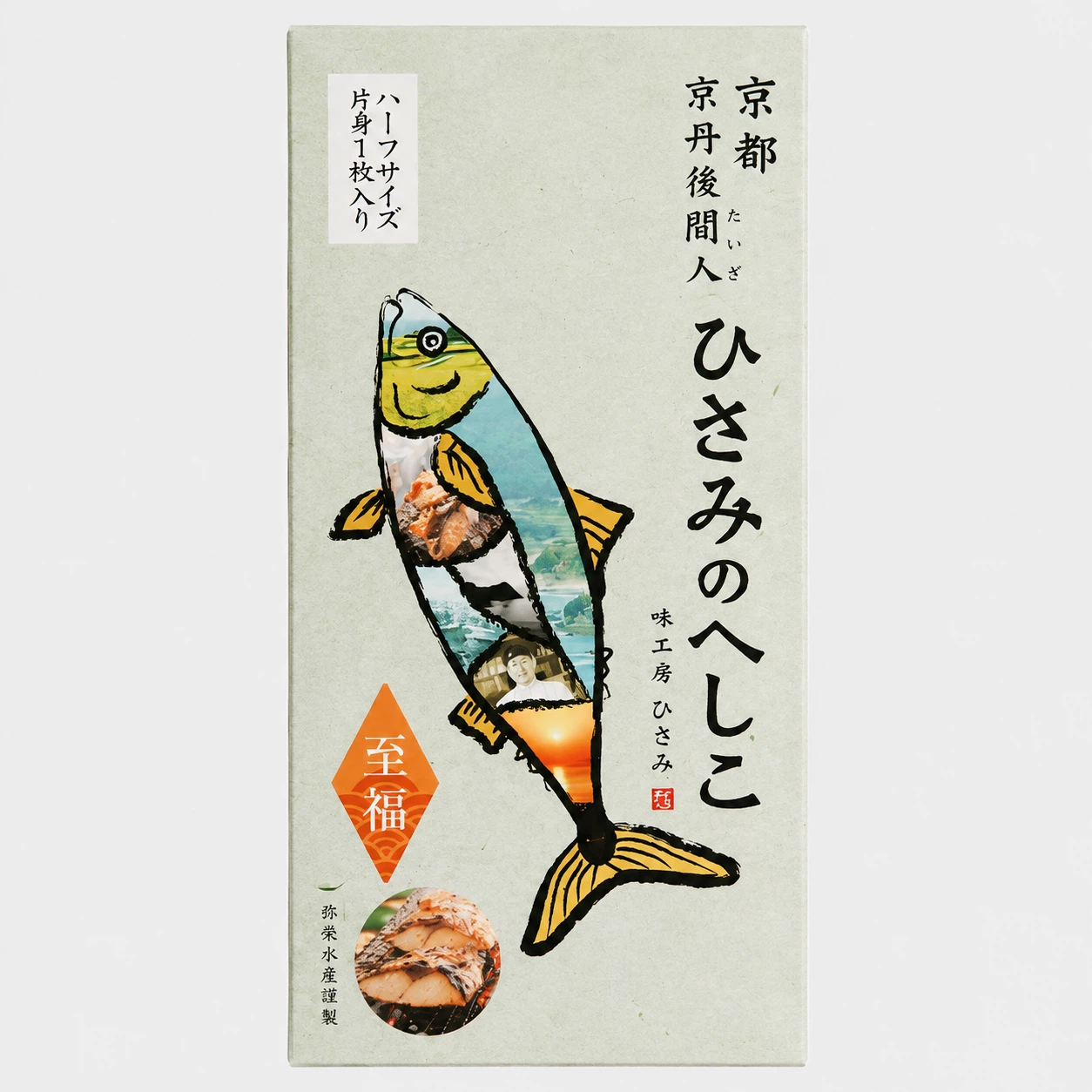
Another local food typical of the Sea of Japan coast is heshiko. This preserved food is made by curing mackerel in salt and rice bran for about a year, a method that has been passed down since before refrigerators existed as a way to keep fish for a long time.
Because heshiko is quite salty, it is usually sliced thin, lightly grilled, and eaten with rice or in ochazuke (rice with tea poured over it). It also pairs well with sake. Heshiko is made in many parts of Tango, including at the Ine branch of the Kyoto Prefectural Fisheries Cooperative Association in Ine and at Heshiko Kobo HISAMI in Kyotango City. It is easy to find at souvenir shops and roadside stations around Amanohashidate, and it makes a good gift for anyone who enjoys a drink.
Seasonal Local Foods: Three Delicacies Worth Planning Your Trip Around
In winter and early summer, Amanohashidate offers seasonal foods that some travelers plan their entire trip around. These are usually served at ryokan and restaurants, so if you are visiting in season, check the meal plans offered by ryokan as well.
Matsuba Crab: The Highlight of a Winter Trip to Amanohashidate
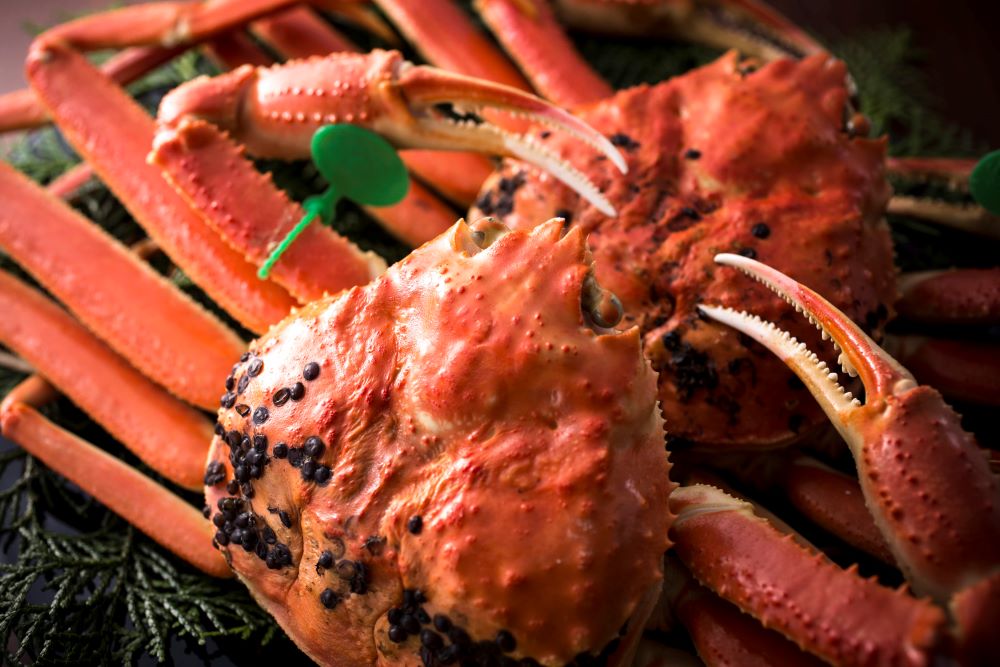
The best-known winter delicacy in Amanohashidate is Matsuba crab, the name for male snow crabs landed in the San’in region. In Kyoto Prefecture, the snow crab season generally opens on November 6, and male crabs are landed until March 20.
During the season, ryokan and restaurants around Amanohashidate offer crab meal plans, and you can enjoy the crab in many ways, including as sashimi, grilled, in kani-suki hot pot, or boiled. Many people visit Amanohashidate in winter specifically to eat crab.
Yellowtail Shabu-Shabu: Rich Winter Yellowtail Prepared the Miyazu Way
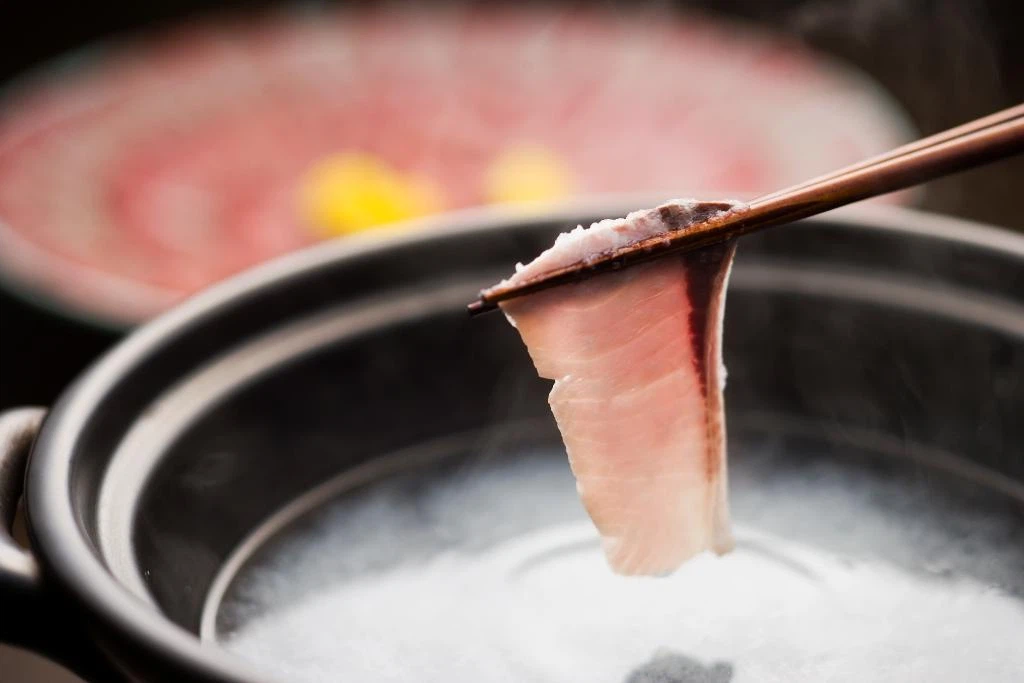
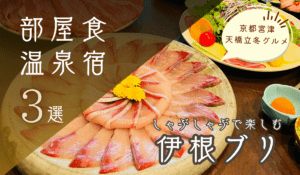
Alongside crab, another winter favorite is yellowtail shabu-shabu. Thin slices of yellowtail are dipped briefly in kombu broth and eaten with ponzu sauce. Only the surface of the fish is cooked, so you can fully taste the sweetness of its fat.
According to Miyazu City, yellowtail shabu-shabu was created in 1978 by the youth division of the Miyazu ryokan association as a winter specialty. Neighboring Ine Town is known as one of Japan’s three great yellowtail fishing grounds, and the best time to enjoy the dish is from around December to February, when the winter yellowtail is at its fattiest. You can try it at ryokan and restaurants around Amanohashidate.
Tango Torigai: A Thick, Sweet Kyoto Brand Shellfish Available Only in Early Summer
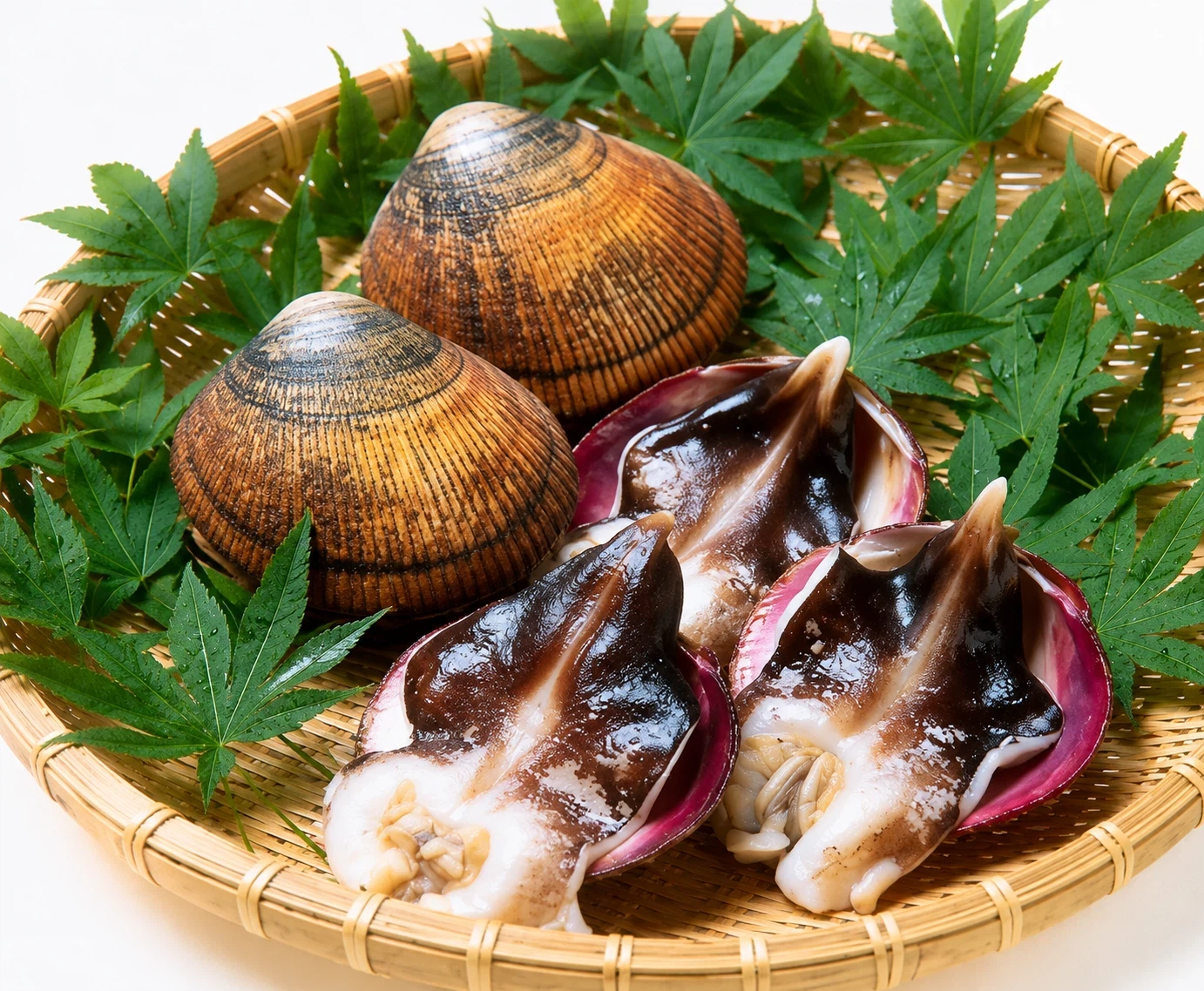
If you visit Amanohashidate in early summer, Tango torigai is well worth trying. This Kyoto Prefecture brand of torigai (Japanese cockle) is raised by local fishers for about a year in four bays, Maizuru Bay, Kunda Bay, Miyazu Bay, and Kumihama Bay, and it is certified as a Kyoto Brand Product.
The shells grow up to about 10 cm, noticeably larger than those of ordinary torigai. The meat is thick with a pleasant firmness and a distinctive sweetness. Shipments take place mainly in June and July, and sales for the year sometimes end once the supply runs out. The harvest also varies from year to year depending on sea conditions, so if torigai is the main reason for your visit, it is a good idea to check with the restaurant in advance.
New Local Specialties Around Amanohashidate: Ideas for Souvenirs
Local flavors drawing attention around Amanohashidate
ASOBI, a craft beer made with hops grown in Yosano Town
Olive oil made from olives grown in Miyazu
Photogenic Amanohashidate pudding in glass jars
Alongside long-loved local foods such as asari-don and Chie no Mochi, new local specialties are also emerging around Amanohashidate.
In neighboring Yosano Town, local growers cultivate hops, which Kakehashi Brewing uses to make its ASOBI craft beer. In Miyazu, a farm grows olives, and olive oil from MAEDA OLIVE FARM is a popular souvenir. Amanohashidate pudding in cute glass jars has also become a popular, photogenic sweet in recent years.
Along with the traditional specialties, looking for flavors that reflect Amanohashidate today is part of the fun of the trip. Keep these in mind when choosing souvenirs.
A One-Day Itinerary for Enjoying Amanohashidate’s Local Foods
This one-day itinerary starts at Amanohashidate Station and lets you try the local specialties at an easy pace. Combine sightseeing and meals to enjoy the full range of Amanohashidate’s food.
Chion-ji Temple is about a three-minute walk from Amanohashidate Station. After visiting the temple, enjoy Chie no Mochi at one of the teahouses in front of the gate.
At the teahouse among the pine trees, try the signature asari-don and kuro chikuwa.
Cycle north along the roughly 3.6 km pine-lined path and feel the sea breeze as you cross to the Fuchu side.
Ride the cable car up to Kasamatsu Park. On the way back, stop at Matsuya near Fuchu Station to pick up kuro chikuwa and heshiko as souvenirs.
In winter, try Matsuba crab or yellowtail shabu-shabu, and in early summer, Tango torigai. Enjoy these seasonal dishes at a relaxed dinner at your ryokan.
If you visit in winter or early summer, having dinner at your ryokan is a good way to enjoy the seasonal specialties. Several hot spring ryokan around Amanohashidate serve crab and yellowtail shabu-shabu, so consider staying overnight to enjoy Amanohashidate’s food at both lunch and dinner.
Frequently Asked Questions
- What are Amanohashidate’s best-known local foods?
-
Among the foods available all year, Chie no Mochi, served in front of Chion-ji Temple, and asari-don, served at the teahouse in Amanohashidate Park, are the best known. In winter, the seasonal highlights are Matsuba crab and yellowtail shabu-shabu, and in early summer, Tango torigai.
- Are there local foods I can easily try while sightseeing?
-
Try Chie no Mochi at the four teahouses in front of Chion-ji Temple, or asari-don and kuro chikuwa at Hashidate Chaya in Amanohashidate Park. Both are within walking distance of Amanohashidate Station.
- When can I eat Matsuba crab and yellowtail shabu-shabu?
-
In Kyoto Prefecture, the snow crab season generally opens on November 6, and male Matsuba crabs are landed until March 20. Yellowtail shabu-shabu is best from around December to February, when winter yellowtail is at its fattiest. Serving periods vary by restaurant and ryokan, so check when you make a reservation.
- Which local foods can I take home as souvenirs?
-
Chie no Mochi is available in boxed sets to take home, and kuro chikuwa and heshiko are also good choices. Some products need to be refrigerated, so check how to store them when you buy them.
Summary
Amanohashidate’s local foods change with the seasons, from year-round favorites such as asari-don, Chie no Mochi, kuro chikuwa, and heshiko to winter’s Matsuba crab and yellowtail shabu-shabu and early summer’s Tango torigai.
You can enjoy plenty of local food on a day trip, but to take your time with seasonal delicacies, staying at a ryokan near Amanohashidate and enjoying them at dinner is recommended. Try local specialties while exploring during the day, then enjoy seasonal dishes at your ryokan in the evening, and discover flavors that will make you want to return to Amanohashidate in every season.
Discover More About the Amanohashidate Area
-

[Kyoto Amanohashidate Gourmet] 3 Carefully Selected Quality Restaurants in Miyazu — Perfect for Lunch
-
[Kyoto Amanohashidate] 3 Dinner Restaurants in Miyazu, Chosen by a Local
-
[Kyoto] Winter in Amanohashidate: the Crab Marché, and 9 Hot Spring Villas Serving Live Crab as a Full Course
-
[Kyoto Amanohashidate] Michi-no-Eki Umi-no-Kyoto Miyazu: Limited-Edition Souvenirs and Local Food Worth the Stop