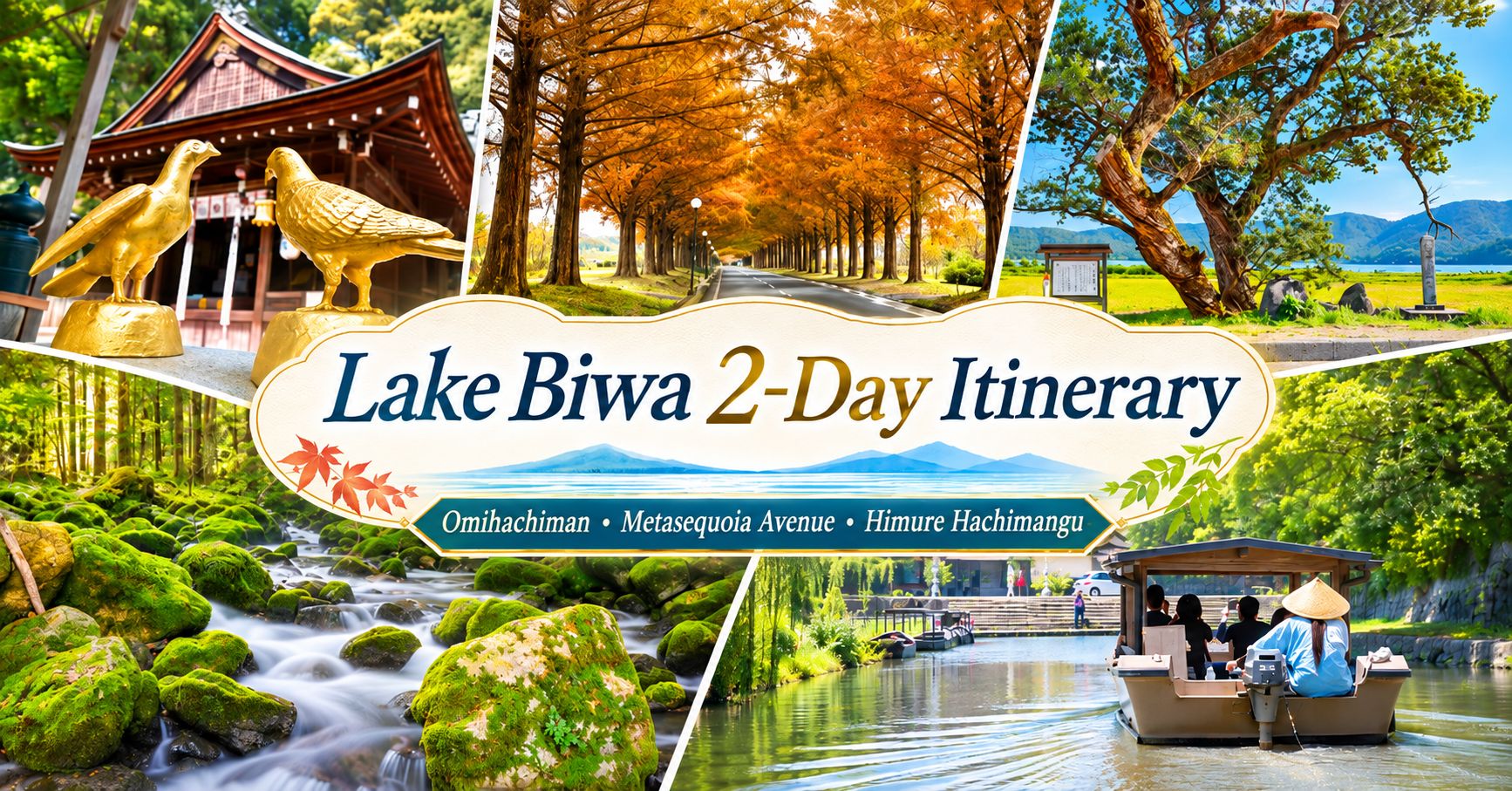
The area around Lake Biwa (Biwako), Japan’s largest lake, offers a wide range of sights, from historic landmarks to places where you can relax over sweets while looking out on the peaceful countryside. Dividing your trip between the east and north shores over two days lets you take your time at each stop.
This guide introduces a 2-day itinerary. Day 1 covers the east shore, including Tarobogu Shrine, Azuchi Castle Ruins, the Hachiman-bori Canal and Himurehachimangu Shrine in Omihachiman, and La Collina Omihachiman. Day 2 covers the north shore, including Lake Yogo (Yogoko), Mt. Shizugatake, Kinomoto-juku, and Metasequoia Avenue.
The route is especially suitable for those exploring Lake Biwa by rental car or looking for a slower-paced trip away from the crowds, whether traveling with family or friends.
Day 1: East Shore of Lake Biwa, from Tarobogu Shrine and Azuchi Castle Ruins to the Hachiman-bori Canal and La Collina Omihachiman
The morning covers two sites with many stairs, and the afternoon is set aside for walking through the old town and enjoying sweets. Parking is available at every stop.
Climb about 250 steps from the mid-slope parking lot and pass through the Meoto Iwa rocks, about 80 cm apart, to reach the main hall. Allow 60 to 70 minutes.
Climb the stone steps of the Otemichi to the site of the main keep. Allow 60 to 90 minutes.
Enjoy Omi beef, then walk through the historic streets along the canal. Allow 90 to 120 minutes.
See the grass-roofed buildings and try the baumkuchen. This relaxing stop wraps up the first day. Allow 60 to 90 minutes.
It takes about one hour by expressway from Omihachiman to reach your lakeside accommodation.
9:30 Tarobogu Shrine: Pass Between Giant Rocks 80 cm Apart to Reach the Main Hall
At Tarobogu Shrine, you reach the main hall by walking through a gap between enormous rocks. Admission is free, and the hall is about 250 steps from the mid-slope parking lot. From the main hall, you can look out over the farmland of the Gamo Plain.
Highlights: The 80 cm Meoto Iwa Rocks and Views of the Gamo Plain
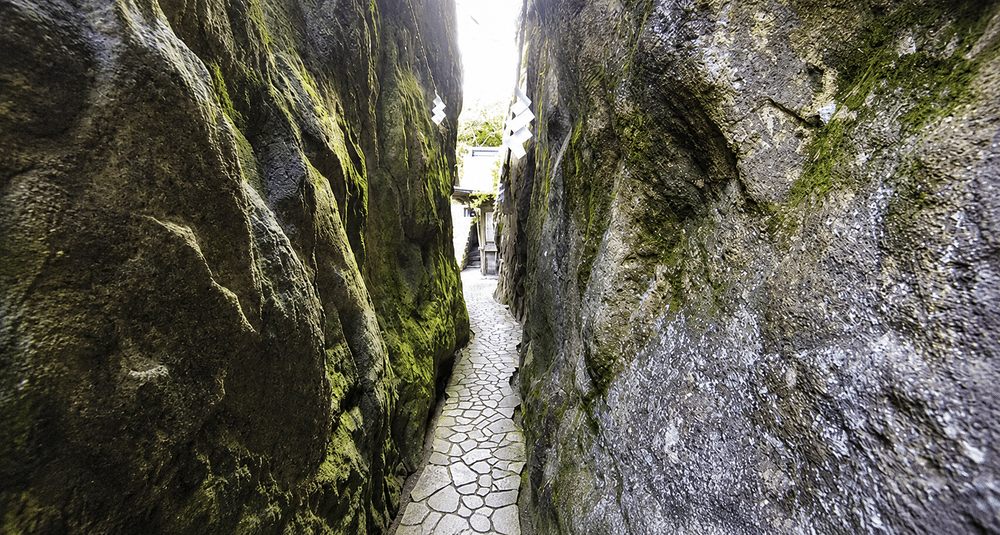
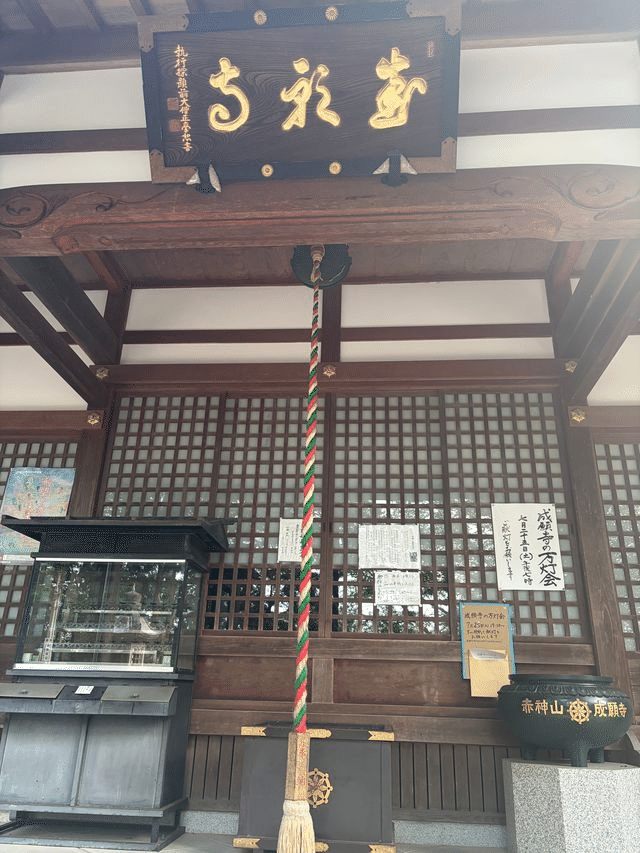
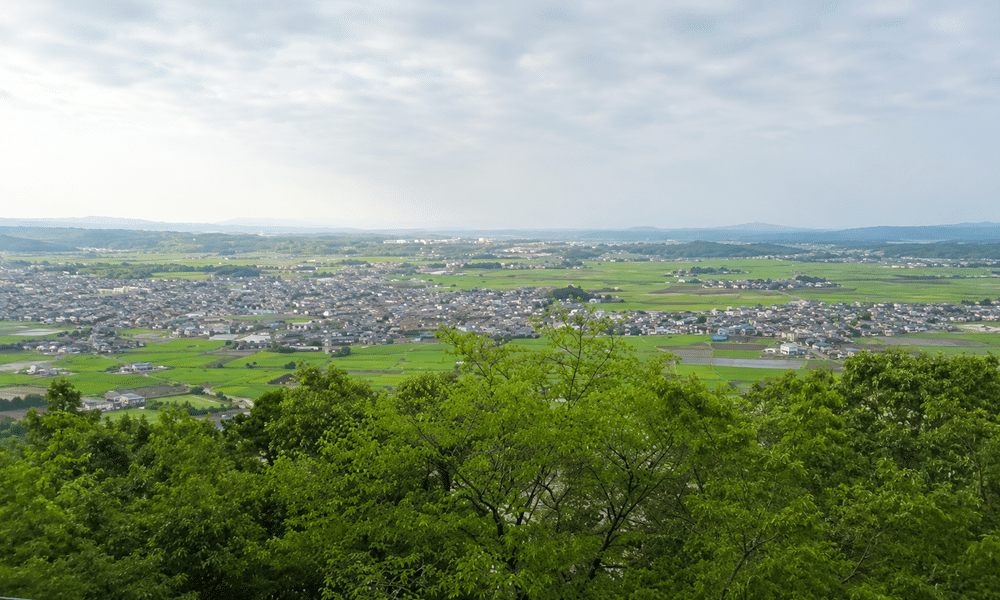
Tarobogu Shrine is best known for the Meoto Iwa (“Husband and Wife Rocks”). An enormous rock is split in two, and the gap of about 80 cm between the halves serves as the approach to the shrine. Walking between the rock walls naturally makes you stand a little straighter.
From the main hall just beyond the rocks, you can take in a panoramic view of the Gamo Plain, the farmland of Higashiomi. The open scenery is a satisfying reward after the climb.
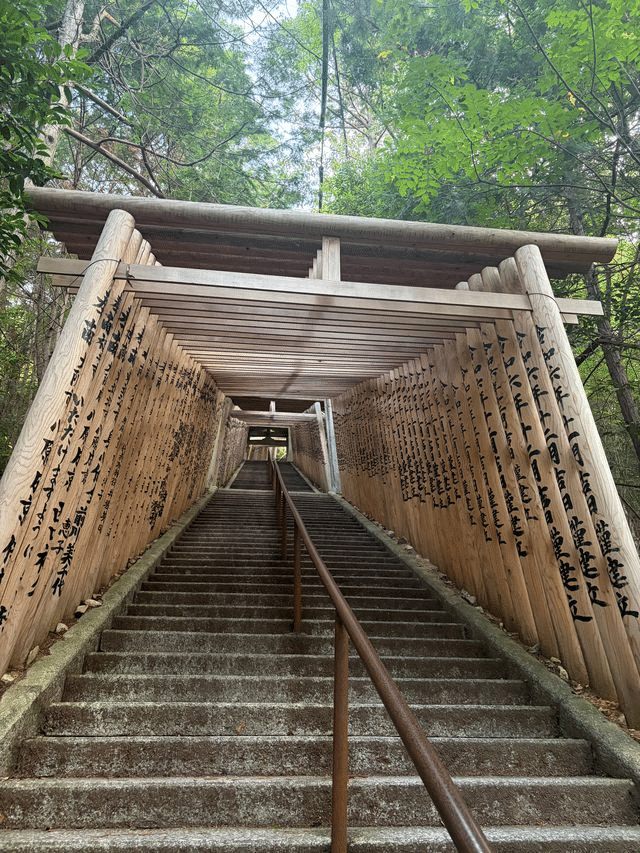
Because of the many stairs, sneakers or other comfortable shoes are recommended. The main approach from the foot of the mountain has 742 steps and makes for a solid climb, but if you drive to the mid-slope parking lot, only about 250 steps remain to the main hall (10 to 15 minutes on foot).
| Name | Tarobogu Shrine (Aga-jinja Shrine) |
|---|---|
| Address | 2247 Owaki-cho, Higashiomi City, Shiga Prefecture |
| Phone | 0748-23-1341 |
| Worship hours | Open 24 hours (reception desk: 9:00 a.m. to 5:00 p.m.) |
| Main approach (from the foot of the mountain) | 742 steps |
| From the mid-slope parking lot | About 250 steps, 10 to 15 minutes on foot |
| Time required (by car) | 40 minutes to 1 hour |
| Time required (on foot from the station) | 1 hour 30 minutes to 2 hours |
| Admission | Free |
| Parking | Free (mid-slope) |
| Access by car | About 10 minutes from Yokaichi IC on the Meishin Expressway |
| Access by train | About 15 minutes on foot from Tarobogu-mae Station on the Ohmi Railway |
| Official website | Tarobogu Shrine official website (Japanese) |
11:00 Azuchi Castle Ruins: Climb the Otemichi of Oda Nobunaga’s Castle
These are the ruins of the castle built by Oda Nobunaga. Admission is 700 yen for adults (scheduled to change to 1,000 yen per person from 2027). You climb the stone steps of the Otemichi, passing sites such as the residence of Hashiba Hideyoshi, on your way to the site of the main keep.
The Otemichi Stone Steps: Comfortable Shoes Recommended Because the Step Heights Vary
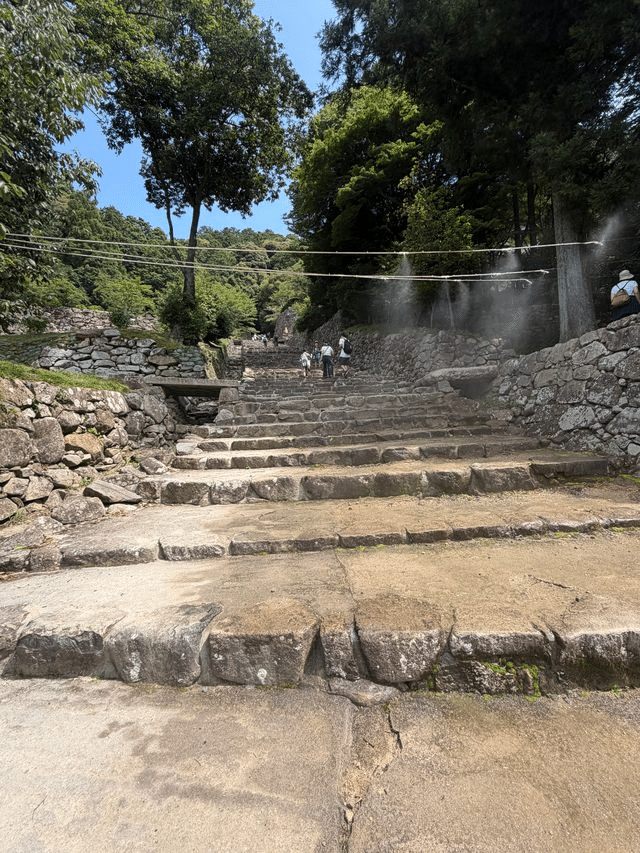
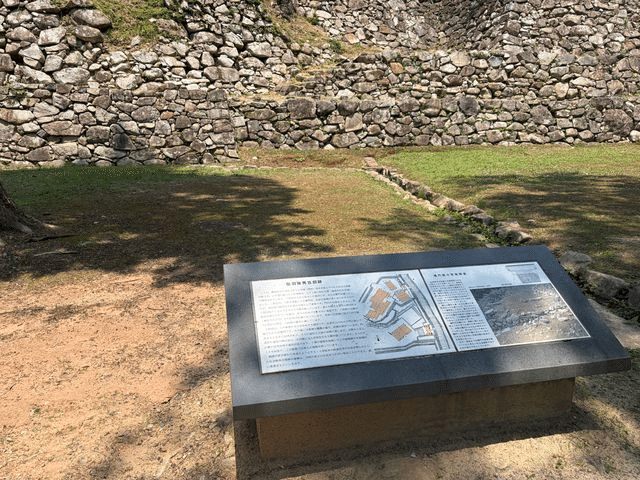
The Otemichi, which leads up from the entrance, is a straight and wide stone stairway. However, the step heights vary in some places, so sneakers or other comfortable shoes are recommended.
The sites of the residences of Hashiba Hideyoshi and Maeda Toshiie line both sides of the path. Passing the former homes of well-known samurai commanders on the way up is part of what makes Azuchi Castle Ruins so interesting.
Highlights: The Main Keep Site, Oda Nobunaga’s Mausoleum, and the Three-Story Pagoda at the Sokenji Temple Site
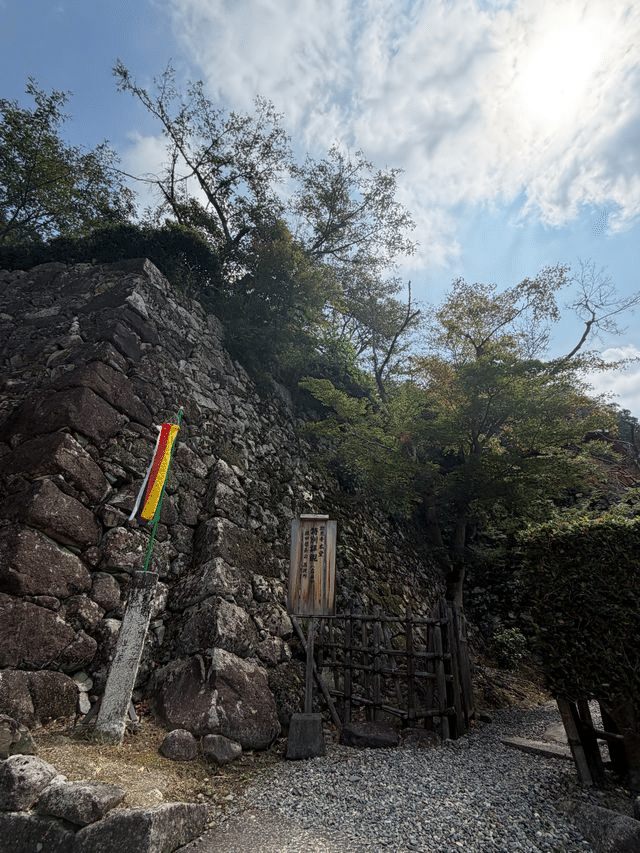
At the top of the climb is the site of the main keep. Only the foundation stones remain on the flat ground, and standing here, you can imagine the keep that once rose above it.
Oda Nobunaga’s mausoleum and the three-story pagoda at the Sokenji Temple site are also highlights. The view opens toward Lake Biwa from the pagoda, helping you understand why the castle was built here.
| Name | Azuchi Castle Ruins |
|---|---|
| Address | 6371 Shimotoyoura, Azuchi-cho, Omihachiman City, Shiga Prefecture 521-1311 |
| Phone | 0748-46-6594 (Azuchiyama Preservation Society) |
| Admission | Adults 700 yen, children (high school age and under) 200 yen (scheduled to change to 1,000 yen per person from 2027) |
| Time required | 60 to 90 minutes for the ruins only, about 3 hours including The House of Nobunaga |
| Hours | 8:30 a.m. to 5:00 p.m. (last entry at 4:00 p.m.; may vary by season) |
| Parking | Free (Azuchi Castle visitor parking and multipurpose plaza parking) |
| Access by car | 20 to 30 minutes from Ryuo IC, Gamo Smart IC, or Yokaichi IC on the Meishin Expressway |
| Access by train | 30 to 35 minutes on foot or about 10 minutes by bicycle from JR Azuchi Station |
| Official website | Azuchi Castle Ruins and Sokenji Temple official website (Japanese) |
After Azuchi Castle, Visit The House of Nobunaga
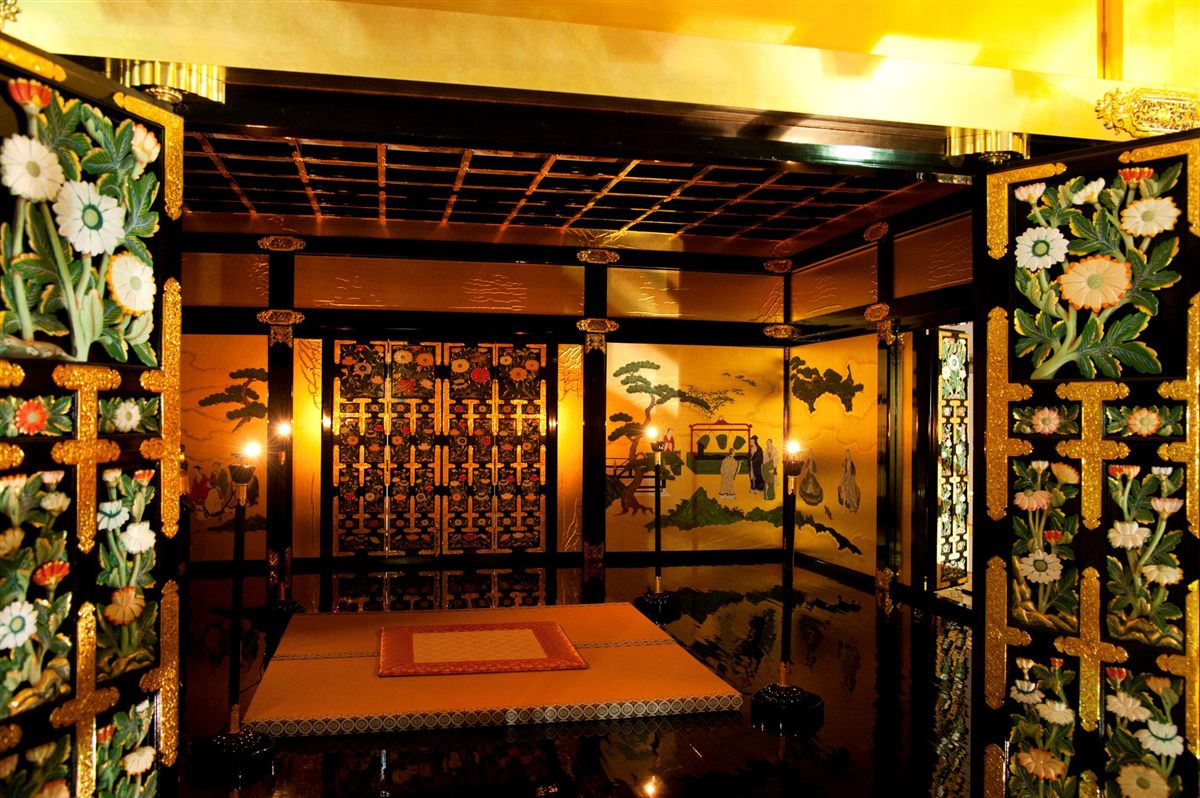
The castle ruins consist mainly of stone walls and foundation stones. If you would like to see what the buildings looked like, consider visiting The House of Nobunaga, about five minutes away by car, where you can see a reconstruction of the interior of the main keep.
Seeing the reconstruction after imagining the original building at the ruins can give you a very different impression. With lunch included, this makes a half-day course.
| Name | Azuchi-jo Castle Museum “The House of Nobunaga” |
|---|---|
| Address | 777 Kuwanomidera, Azuchi-cho, Omihachiman City, Shiga Prefecture 521-1321 |
| Phone | 0748-46-6512 |
| Hours | 9:00 a.m. to 5:00 p.m. (last entry at 4:30 p.m.) |
| Closed | Mondays (or the next weekday if Monday is a national holiday) and the New Year period |
| Admission | General 610 yen, students 350 yen, elementary and junior high school students 170 yen |
| Parking | Free |
| Access by car | About 20 minutes from Ryuo IC on the Meishin Expressway |
| Access by train | About 25 minutes on foot from JR Azuchi Station |
| Official website | The House of Nobunaga official website (Japanese) |
13:00 Lunch and a Walk in Omihachiman: Omi Beef and the Hachiman-bori Canal
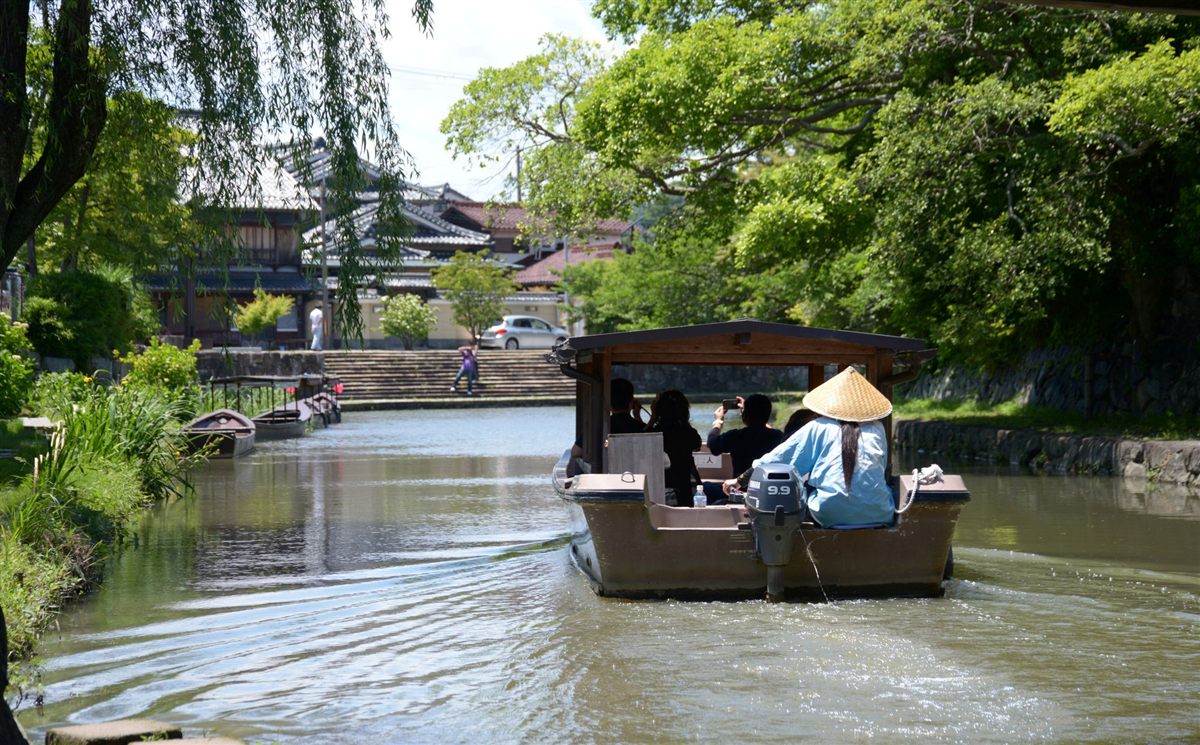
White-walled storehouses and willow trees line both sides of this stone-walled canal, and the sight of boats gliding across the water has appeared in many period dramas. The canal has served as a location for Onihei Hankacho, the Rurouni Kenshin films, and an NHK morning drama.
A Canal for Merchant Boats: How Toyotomi Hidetsugu’s Castle Moat Brought Prosperity to Omihachiman
The Hachiman-bori Canal is a moat about 4.75 km long dug when Toyotomi Hidetsugu built Hachiman Castle. It was built not only for defense but also to bring boats traveling on Lake Biwa into the town. Cargo boats entering the canal helped make Omihachiman a center of commerce, and the town went on to produce the Omi merchants, who traded throughout Japan.
After water transport ended, the canal fell into disrepair. By the late 1960s and early 1970s, it was so clogged with sludge that there were plans to fill it in. Local residents began cleaning it themselves and restored the scenery visitors can walk through today.
Hachiman Moat Tour: Looking Up at the Stone Walls and Willows from a Boat
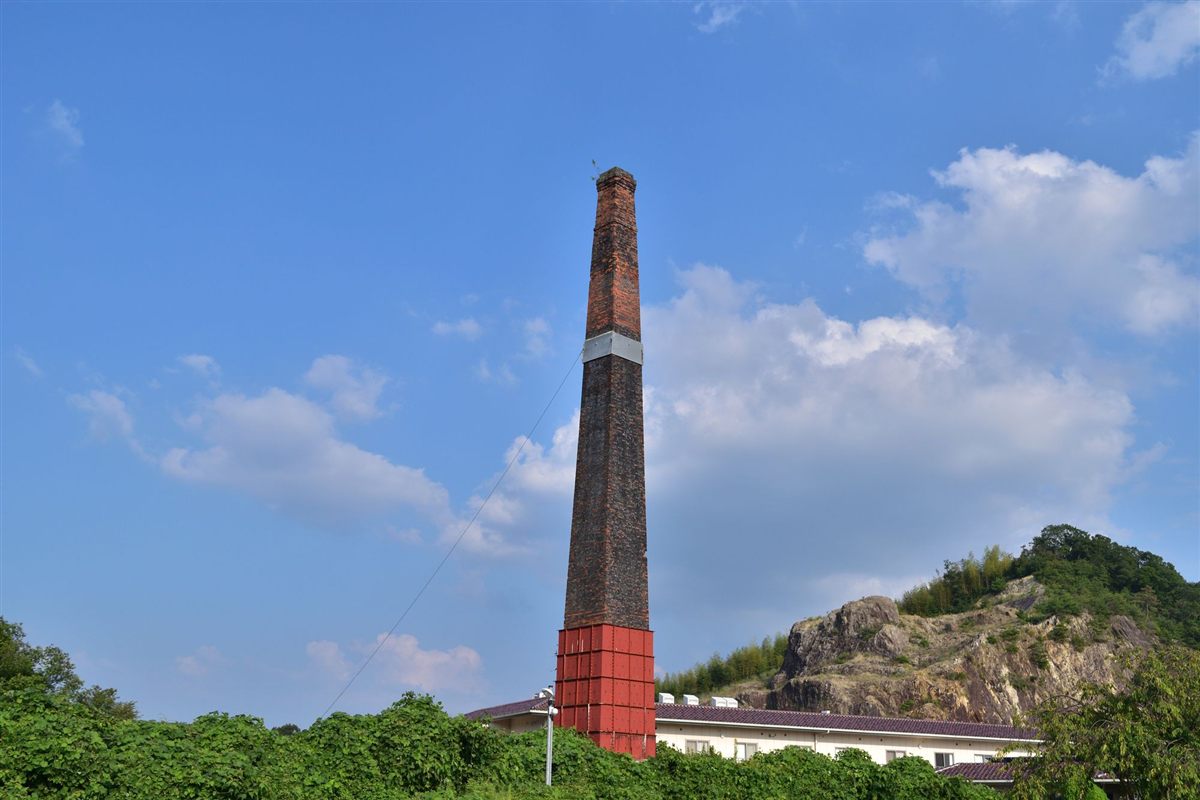
You can also tour the canal by boat on the Hachiman Moat Tour. The ride takes about 35 minutes and costs 1,500 yen for adults. Looking up at the stone walls and willows from just above the water offers a completely different perspective from walking along the bank. The red chimney of the Hoffmann kiln at the former Nakagawa Brickworks stands at the turnaround point, and a floating bridge that appeared in Rurouni Kenshin is located near the boarding area.
| Name | Hachiman Moat Tour (Waden) |
|---|---|
| Address | 743 Taga-cho, Omihachiman City, Shiga Prefecture 523-0821 |
| Phone | 0748-32-8817 |
| Boat ride time | About 35 minutes |
| Fee | Adults 1,500 yen, children 1,000 yen |
| Hours | 10:00 a.m. to 4:00 p.m. (the last departure may be earlier in winter depending on the weather) |
| Closed | No regular closing days |
| Parking | Use the Omihachiman City tourist parking lots (paid) |
| Access by car | About 25 minutes from Ryuo IC on the Meishin Expressway |
| Access by train and bus | About 7 minutes by Ohmi Railway bus (bound for Chomeiji) from JR Omi-Hachiman Station. The boarding area is right by the Hachimanbori (Osugicho) Hachimanyama Ropeway-guchi bus stop |
| Official website | Hachiman Moat Tour (Waden) official website (Japanese) |
Himurehachimangu Shrine and Shinmachi Street: Walking Around the Canal
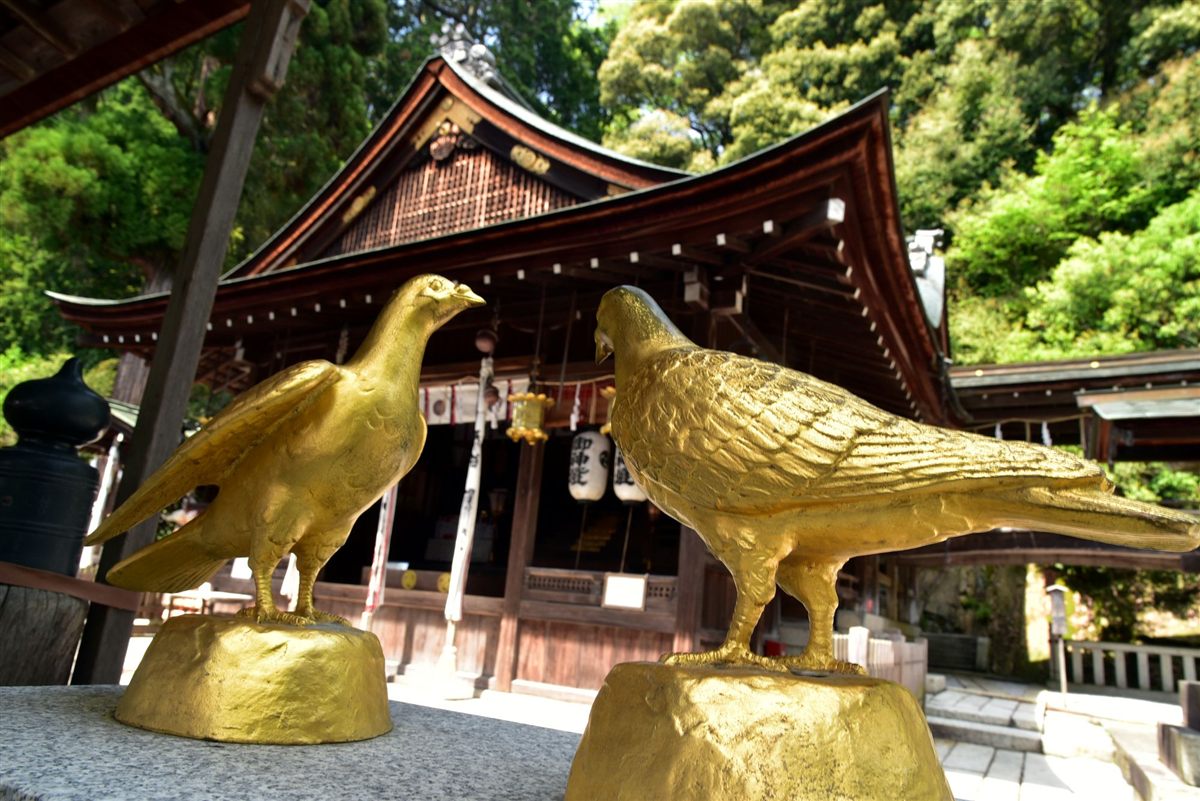
Right next to the canal stands Himurehachimangu Shrine (Himure Hachiman-gu), which has a history of more than 1,000 years. Omi merchants visited the shrine when setting out on their journeys and when returning home. A little farther on is Shinmachi Street, lined with merchant houses with black fences and white walls.
Restaurants serving Omi beef are concentrated in this area. They tend to be busy at lunchtime, so eating first lets you explore the canal at a more relaxed pace. The trees along the canal change color around late November.
| Name | Himurehachimangu Shrine |
|---|---|
| Address | 257 Miyauchi-cho, Omihachiman City, Shiga Prefecture 523-0828 |
| Phone | 0748-32-3151 |
| Parking | Available (the horse-riding ground on the shrine grounds) |
| Access by car | About 15 km from Ryuo IC on the Meishin Expressway |
| Access by train and bus | Take the Ohmi Railway bus bound for Chomeiji from Stop 6 at the north exit of Omi-Hachiman Station (JR and Ohmi Railway) and get off at Hachimanbori. On foot, it takes about 30 minutes from the station |
| Official website | Himurehachimangu Shrine official website |
15:30 La Collina Omihachiman: Grass-Roofed Buildings and Baumkuchen
This is the flagship location of Taneya and Club Harie, known for its baumkuchen. The grounds recreate the traditional landscape of Omihachiman, and the grass-roofed main building was designed by architect and architectural historian Terunobu Fujimori. Its storybook-like exterior is enjoyable to look at in itself.
Rice paddies spread across the center of the grounds, and from late summer to fall, you can see naruko, traditional noisemakers used to protect the rice from birds. The scenery changes with the seasons, so the view depends on when you visit.
Specialties include baumkuchen from Club Harie and castella sponge cake from Taneya. Meals are also available, such as omelet rice made with the eggs used for castella. The cafe serves freshly baked items, making it a convenient place for a final break of the day, and you can also pick up souvenirs here.
If you have extra time, the La Collina Tour introduces the soil and wildlife of the grounds. With 30-minute and 60-minute courses available, it is suitable for those who want to experience the nature of Omihachiman at a relaxed pace.
| Name | La Collina Omihachiman |
|---|---|
| Address | 615-1 Kitanosho-cho, Omihachiman City, Shiga Prefecture 523-8533 |
| Phone | 0748-33-6666 |
| Hours | 9:00 a.m. to 6:00 p.m. (Food Container: 10:00 a.m. to 5:00 p.m.) |
| Admission | Free |
| Parking | Free |
| Access by car | About 30 minutes from Yokaichi IC, Gamo Smart IC, or Ryuo IC on the Meishin Expressway |
| Access by train and bus | About 10 minutes by Ohmi Railway bus bound for Chomeiji or similar from Stop 6 at the north exit of JR Omi-Hachiman Station. Get off at Kitanosho La Collina-mae |
| Official website | La Collina Omihachiman official website (Japanese) |
Night 1: Tokuyamazushi, a Lakeside Inn on Lake Yogo Known for Its Cuisine
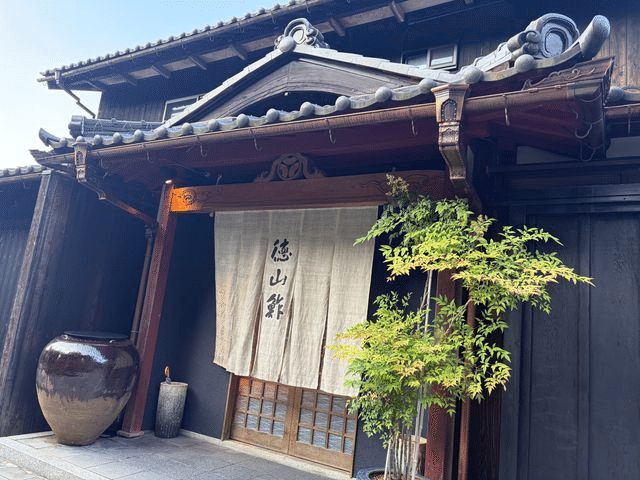
About one hour by expressway from Omihachiman, on the shore of Lake Yogo where Day 2 begins, stands an inn known for its cuisine and fermentation techniques. It is popular, so early reservations are recommended.
Cuisine: Fermentation Techniques and Seasonal Ingredients
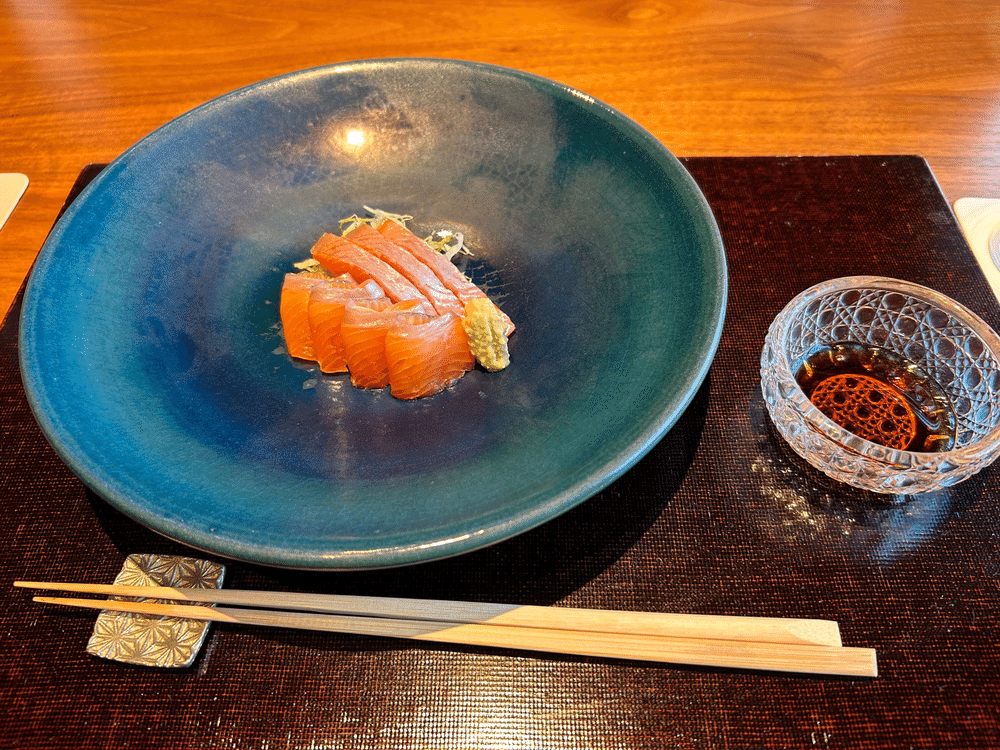
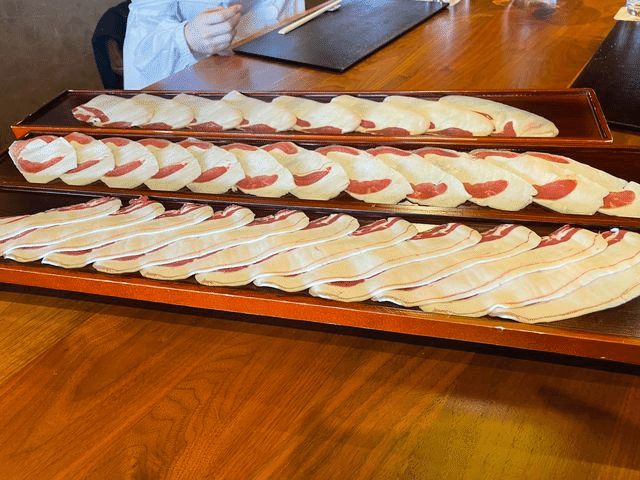
The cuisine at Tokuyamazushi centers on fermented dishes based on the techniques used to make funazushi, a traditional fermented fish. The featured ingredients change with the seasons.
| Season | Main ingredients |
|---|---|
| Summer | Ayu sweetfish and Biwa trout (native to Lake Biwa) |
| Fall and winter | Game meat such as bear |
Fish from Lake Biwa and ingredients from the mountains are connected through fermentation, and this distinctive approach draws visitors from far away.
Access and Reservations (Phone Only, About Five Months in Advance)
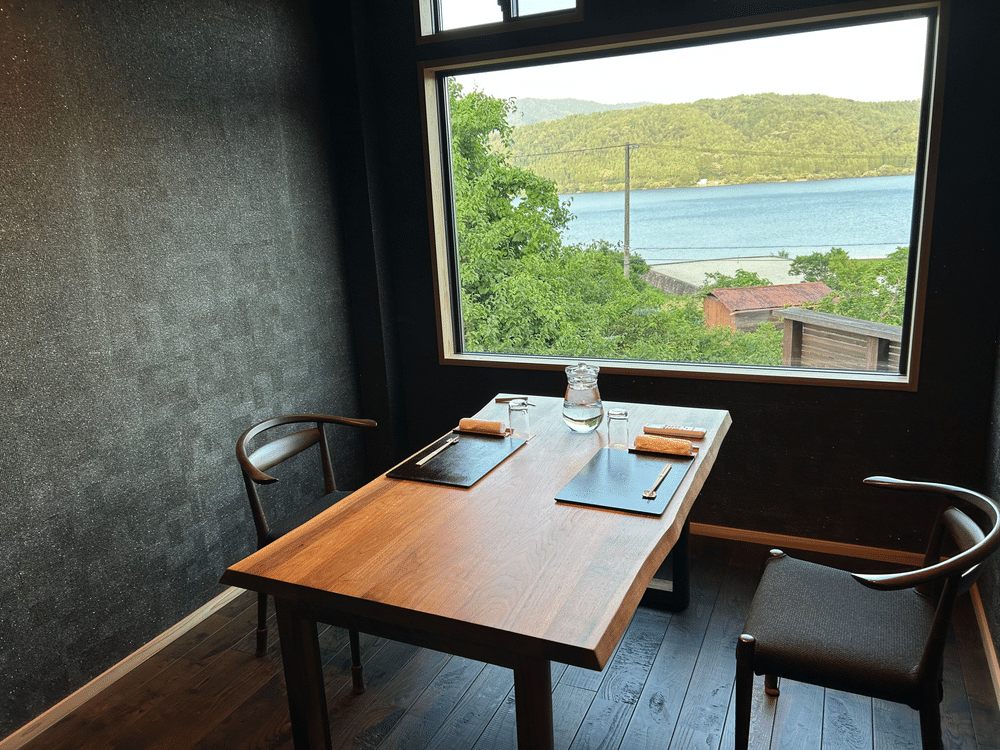
You can visit as a day trip, but staying overnight lets you spend a relaxed evening here. The location on the shore of Lake Yogo is another reason for its popularity. Because the inn is so popular, it helps to call with a general period in mind rather than one specific date. Having several possible dates ready will make booking easier.
Reservation Tips
・Reservations are accepted by phone only (10:00 a.m. to 5:00 p.m.) and cannot be made through booking websites
・First-time reservations should generally be made about five months in advance
・When booking a return visit on-site, dates up to about eight months ahead may already be full
・If your call is not answered, the inn will call you back
| Name | Tokuyamazushi |
|---|---|
| Address | 1408 Kawanami, Yogo-cho, Nagahama City, Shiga Prefecture 529-0523 |
| Phone | 0749-86-4045 (reservations: 10:00 a.m. to 5:00 p.m.) |
| Lunch | From 22,000 yen including tax |
| Dinner | From 27,500 yen including tax |
| Stay (one night with two meals) | From 49,500 yen including tax |
| Number of guests | 2 to 10 guests for overnight stays; children are not accepted |
| Access by car | About 10 minutes from Kinomoto IC on the Hokuriku Expressway |
| Access by train | About 20 minutes on foot from JR Yogo Station (transfer service available) |
| Official website | Tokuyamazushi official website (Japanese) |
Day 2: North Shore of Lake Biwa, from a Morning at Lake Yogo to Mt. Shizugatake, Kinomoto-juku, and Metasequoia Avenue
Public transportation in the northern Lake Biwa area takes considerable time, so driving is the most practical option. The Shizugatake Lift operates seasonally, so check its status before you set out.
Take a walk along the lake in front of the inn. In the morning, the surface of the water is as still as a mirror. Allow 30 to 60 minutes.
Take the lift for about six minutes and walk for 10 minutes to reach the summit, where you can look down on Lake Biwa and Lake Yogo. Allow 70 to 90 minutes.
Try yaki-saba somen, then walk through the historic streets of the Hokkoku Kaido. Allow 60 to 90 minutes.
This tree-lined road has about 500 metasequoia trees along 2.4 km and is easy to visit on the way back. Allow 30 to 60 minutes.
8:30 Lake Yogo: A Mirror-Like Lake Linked to the Hagoromo Legend
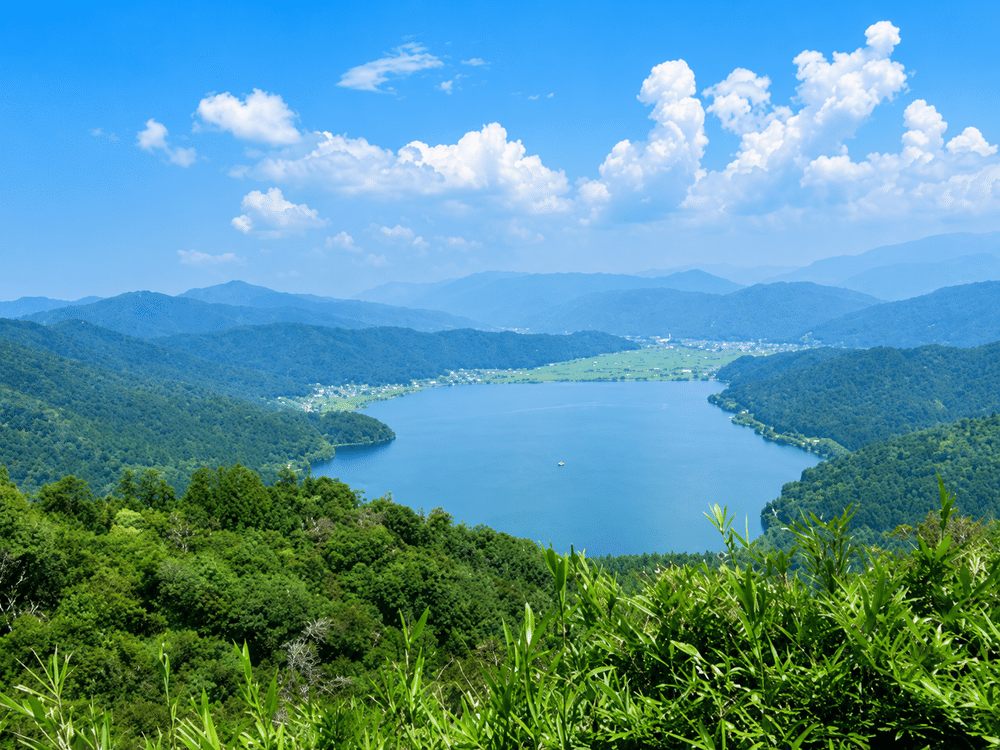
Lake Yogo is a small lake on the north side of Mt. Shizugatake. It is quieter than the busier tourist areas, and the calm water makes a walk along the shore very relaxing.
A Lake Linked to What Is Said to Be Japan’s Oldest Hagoromo Legend
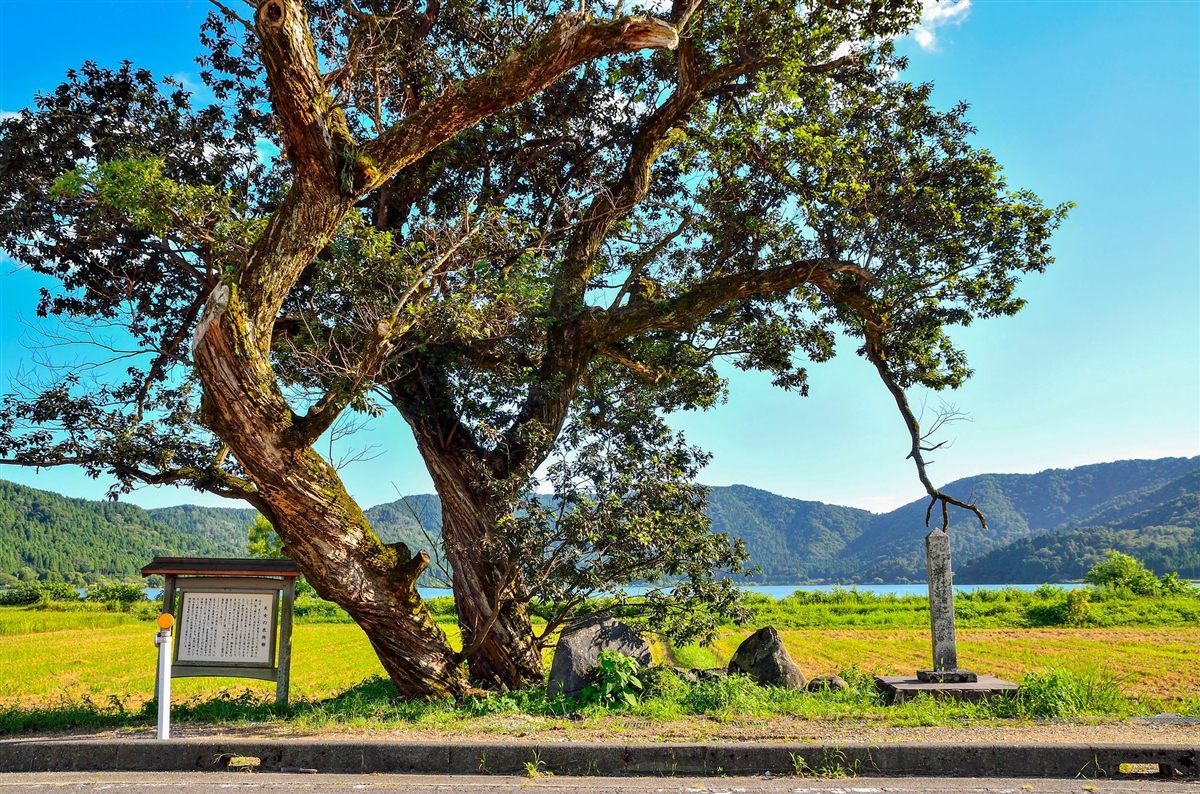
Lake Yogo is the setting of a tale about a celestial maiden who was bathing when her feather robe was hidden, leaving her unable to return to the heavens. Recorded in the Omi no Kuni Fudoki, a provincial record of ancient Japan, it is said to be Japan’s oldest Hagoromo legend. A tree called the Kinukake Willow stands by the lake and is said to be where she hung her robe.
The Water Known as “Mirror Lake”: Walk or Cycle the 6.4 km Loop
Lake Yogo is about 6.4 km around. On windless days, the surrounding mountains are reflected perfectly on its surface, which is why it has long been called “Kyoko” or “Mirror Lake.” It lacks the vastness of Lake Biwa but offers a greater sense of calm.
A well-maintained path runs along the lake, and cycling around it takes about 30 minutes. JR Yogo Station is about a five-minute walk from the lake, and rental bicycles are available at the station. In spring, cherry blossoms and rapeseed flowers bloom together along the Yogo River embankment, and from late November, anglers gather on the piers to fish for smelt.
The Lake Yogo Visitor Center on the north shore has a restaurant serving lake fish and restrooms. Camping, barbecues, swimming, and canoeing are prohibited along the lake. Lake Yogo is especially suitable for those who want to spend a relaxing time surrounded by beautiful natural scenery.
| Name | Lake Yogo (Yogoko) |
|---|---|
| Address | Yogo-cho, Nagahama City, Shiga Prefecture |
| Inquiries | 0749-53-2650 (Nagahama Maibara Tourism Association) |
| Fee | Free |
| Parking | Available |
| Access by car | About 10 minutes from Kinomoto IC on the Hokuriku Expressway |
| Access by train | About 5 minutes on foot from JR Yogo Station |
| Reference website | Nagahama, Maibara, and Okubiwako tourism website |
9:30 Mt. Shizugatake: Ride the Lift and Look Down on Two Lakes
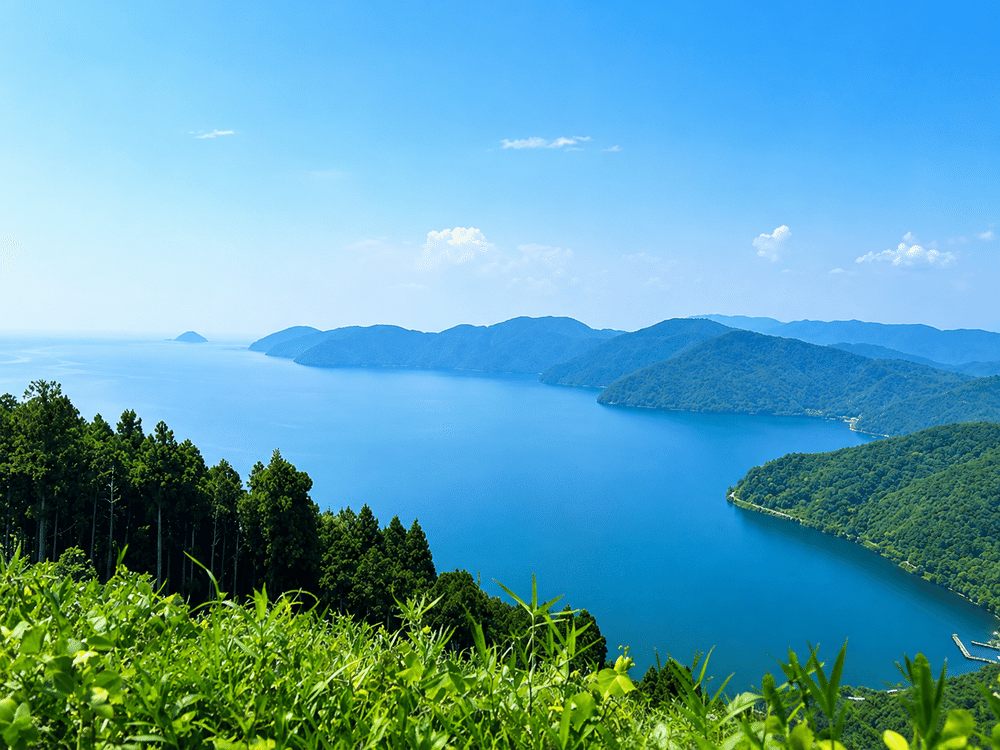
The summit is about six minutes by lift and a further 10-minute walk. You can see Lake Biwa and Chikubu Island on one side and Lake Yogo on the other. Mt. Shizugatake is also the site of the Battle of Shizugatake.
Summit Highlights: Looking Down on Lake Biwa and Lake Yogo at the Same Time
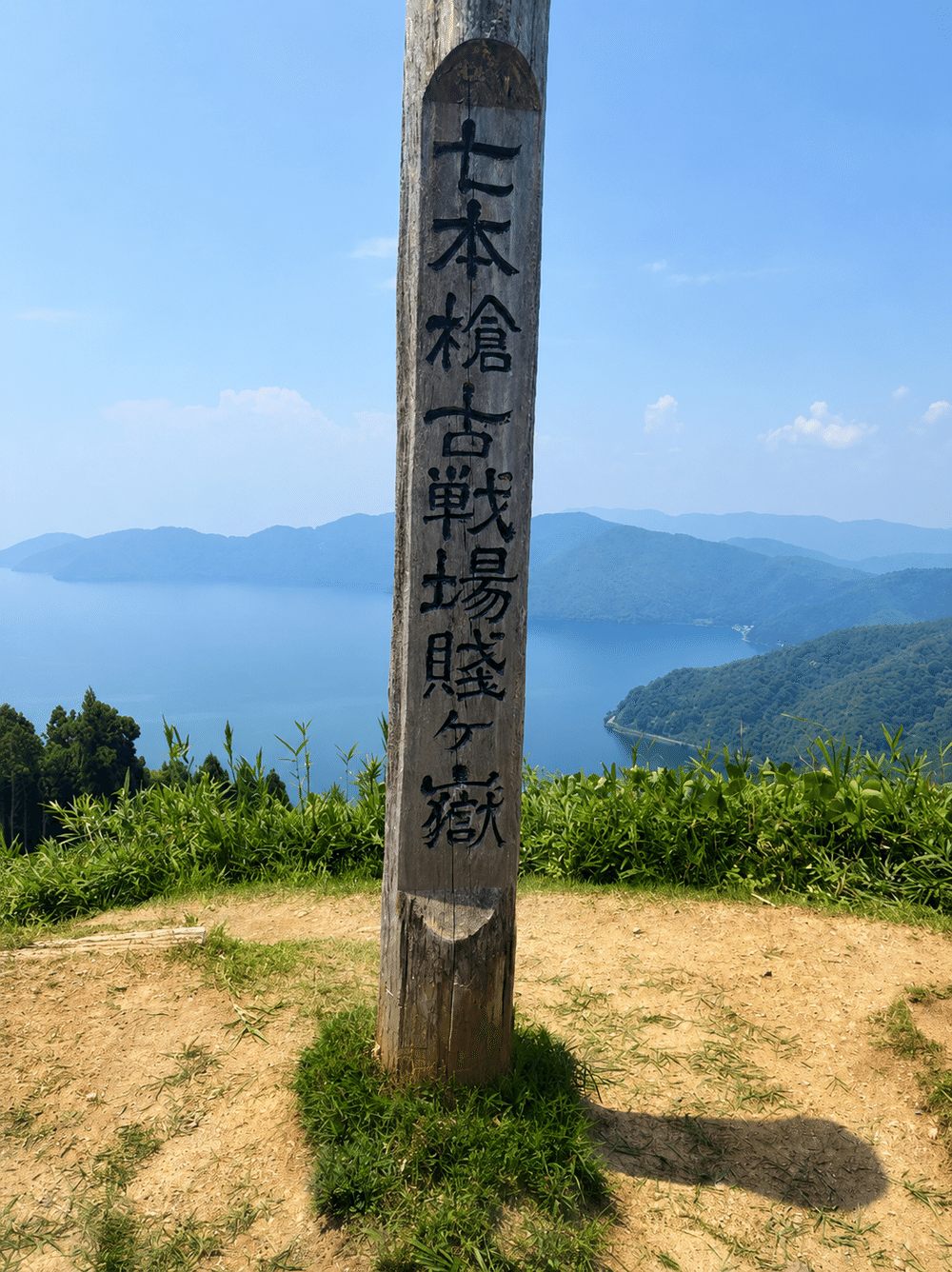

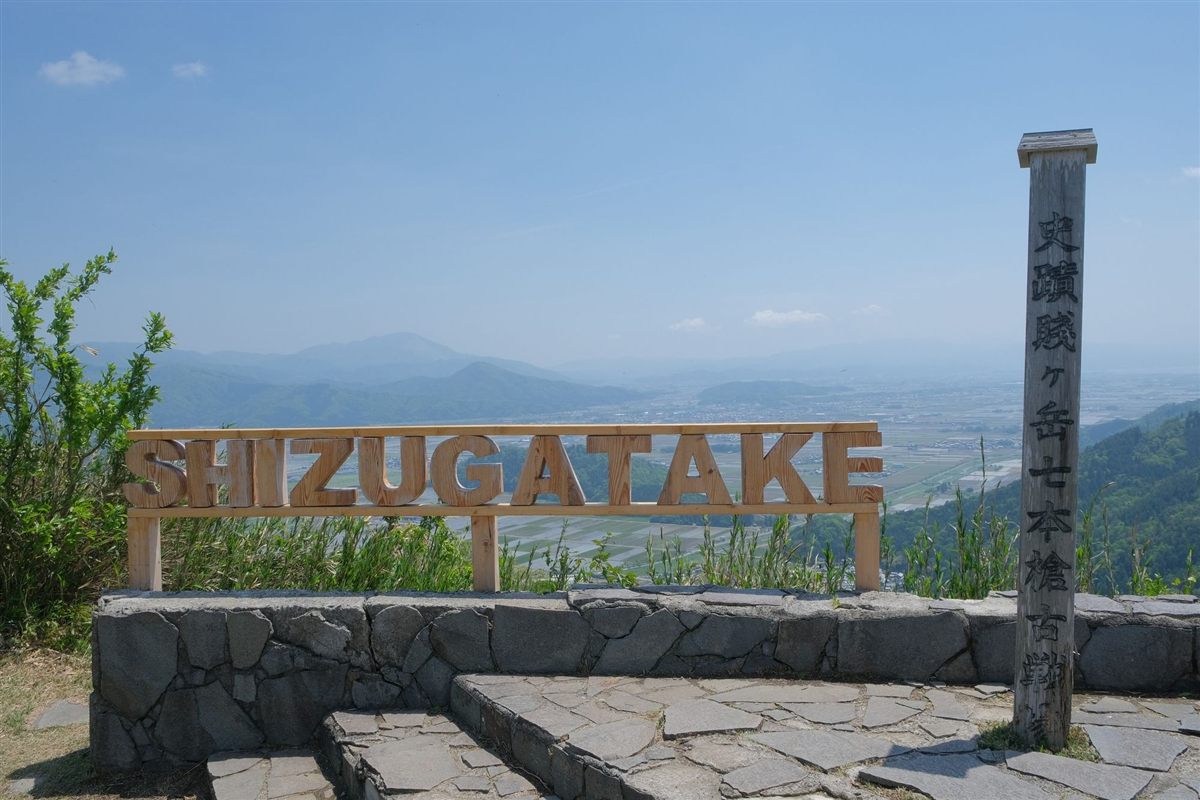
Few places offer views of both Lake Biwa and Lake Yogo at once.
This was the site of the Battle of Shizugatake, and a battlefield monument and statues of samurai commanders stand on the mountain. You can picture the historic events here while taking in the view.
There are also plenty of photo spots, including the SHIZUGATAKE sign and a swing that faces the scenery.
The round trip takes about an hour, making it easy to visit during a drive. The lift does not operate when heavy rain or storm warnings are in effect, so check the official website before you set out.
The lift departs from the trailhead and takes about six minutes. From the upper lift station, it is about a 10-minute walk to the summit of Mt. Shizugatake.
| Name | Shizugatake Lift |
|---|---|
| Address | Oto, Kinomoto-cho, Nagahama City, Shiga Prefecture |
| Phone | 0749-82-3009 |
| Operating season | Mid-April to early December in most years |
| Hours | 9:00 a.m. to 5:00 p.m. (until 4:00 p.m. from November; last ride down at 4:45 p.m.) |
| Lift fare | Round trip: adults 1,100 yen, elementary school students 500 yen. One way: adults 600 yen, elementary school students 300 yen (free for younger children) |
| Lift ride time | About 6 minutes (closed in winter) |
| Suspended | Days when heavy rain or storm warnings are issued |
| From the upper station to the summit | About 10 minutes on foot |
| Round-trip time | About 1 hour to 1 hour 30 minutes |
| Parking | Free, 66 spaces |
| Access by car | About 3 minutes from Kinomoto IC on the Hokuriku Expressway |
| Access by train | Take a Kokoku Bus from JR Kinomoto Station to Oto, then walk or take a taxi. A free shuttle bus also runs from JR Kinomoto Station on weekends and national holidays |
| Official website | Shizugatake Lift official website |
11:30 Lunch and a Walk in Kinomoto-juku: Yaki-Saba Somen and the Hokkoku Kaido
Kinomoto-juku is a former post town on the Hokkoku Kaido, where you can walk along streets lined with traditional townhouses. For lunch, try yaki-saba somen, a local dish of the northern Lake Biwa area. The salad bread at the Tsuruya Pan main store is another specialty of the town.
Kinomoto Jizoin: A Temple Known for Its Buddha of the Eyes
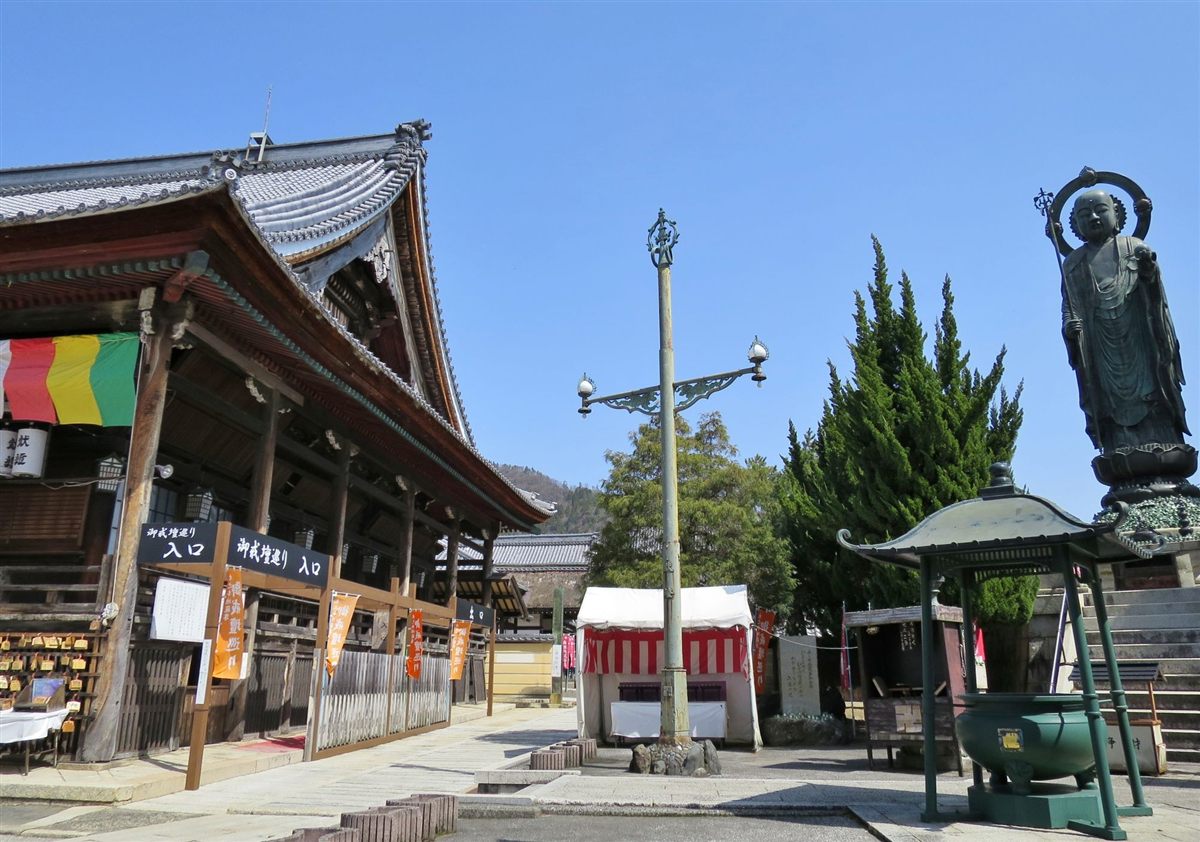
At the center of the post town stands Kinomoto Jizoin (formally known as Joshin-ji Temple). It is traditionally associated with healing eye ailments and has long drawn worshippers from many regions. Frog statues line the grounds, and according to tradition, these frogs close one eye to protect the eyes of worshippers.
| Name | Kinomoto Jizoin (Joshin-ji Temple) |
|---|---|
| Address | 944 Kinomoto, Kinomoto-cho, Nagahama City, Shiga Prefecture |
| Phone | 0749-82-2106 |
| Worship hours | 8:00 a.m. to 5:00 p.m. |
| Closed | No regular closing days |
| Fee | Free to enter the grounds; 300 yen for the kaidan meguri, a walk through the dark passage under the hall |
| Parking | 30 spaces for cars |
| Access by car | About 5 minutes from Kinomoto IC on the Hokuriku Expressway |
| Access by train | About 5 minutes on foot from JR Kinomoto Station |
| Reference website | Nagahama, Maibara, and Okubiwako tourism website |
A Historic Road with a Soy Sauce Maker and a Sake Brewery
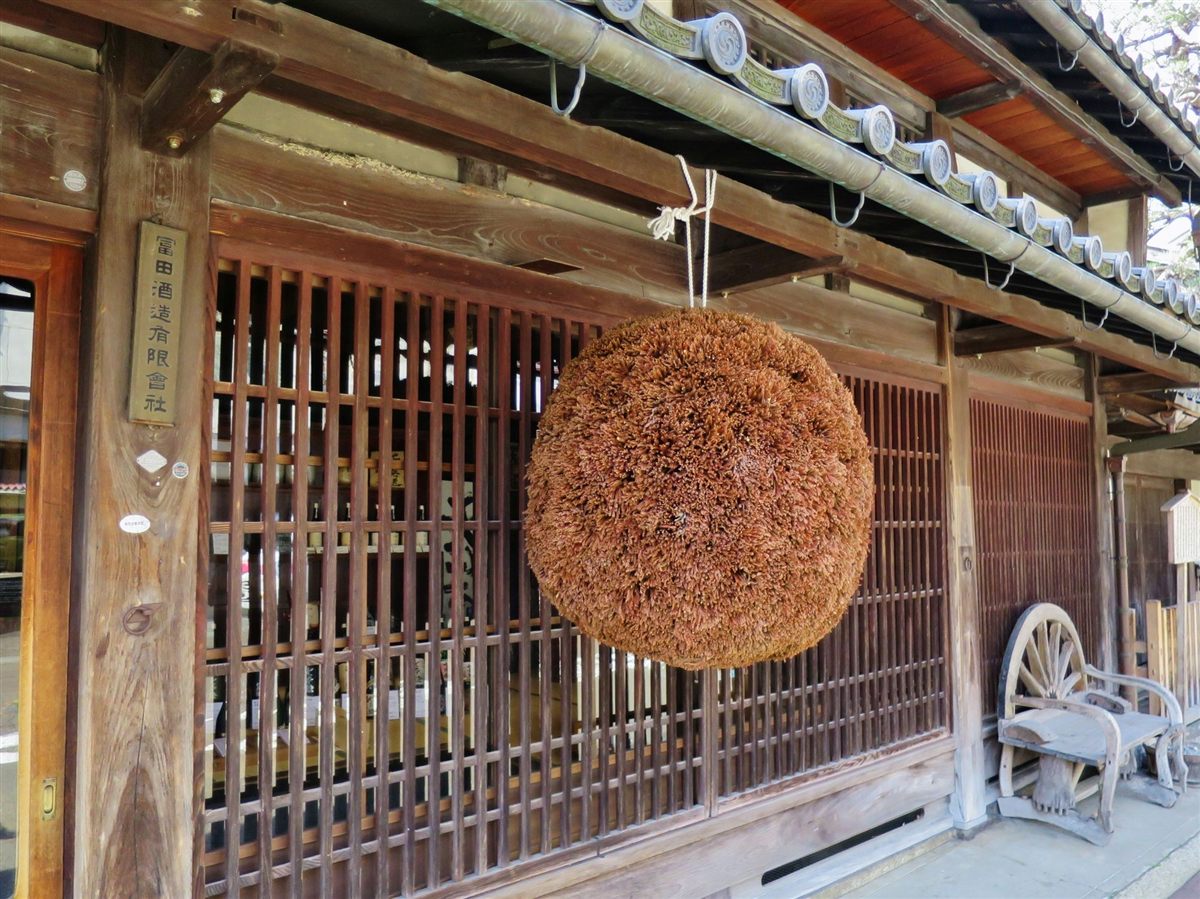
Kinomoto-juku was a post town on the Hokkoku Kaido, a road that branched off from the Nakasendo and led to Kanazawa. During the Battle of Shizugatake, Hashiba Hideyoshi is said to have raced along this road to get ahead of Shibata Katsuie.
Historic buildings still stand along the street. Shirakiya Soy Sauce Shop, housed in a late Edo-period inn, is a Registered Tangible Cultural Property of Japan. Tomita Brewery, known for its Shichihonyari sake, stands in front of the temple gate, and the former Takeuchi Residence, once an official inn for traveling lords, is also on this street. The street is short, but stopping at each building can easily fill your time.
| Name | Shirakiya Soy Sauce Shop |
|---|---|
| Address | 932 Kinomoto, Kinomoto-cho, Nagahama City, Shiga Prefecture |
| Phone | 0749-82-2048 |
| Building | Registered Tangible Cultural Property of Japan (main building) |
| Parking | Use the Kinomoto Station parking lot or the tourist parking lot |
| Access by car | About 1 km from Kinomoto IC on the Hokuriku Expressway |
| Access by train | About 7 minutes on foot from JR Kinomoto Station |
| Reference website | Nagahama City newsletter feature on Kinomoto-juku (PDF, Japanese) |
| Name | Tomita Brewery |
|---|---|
| Address | 1107 Kinomoto, Kinomoto-cho, Nagahama City, Shiga Prefecture 529-0425 |
| Phone | 0749-82-2013 |
| Shop hours | 9:00 a.m. to 5:00 p.m. (closed irregularly) |
| Brewery tours | Not available |
| Parking | Use the Kinomoto Station parking lot or the tourist parking lot |
| Access by car | About 1 km from Kinomoto IC on the Hokuriku Expressway |
| Access by train | About 7 minutes on foot from JR Kinomoto Station |
| Official website | Tomita Brewery official website |
Yaki-Saba Somen and Salad Bread: Local Food to Try in Kinomoto

Yaki-saba somen is a local dish of the northern Lake Biwa area in which grilled mackerel is simmered and somen noodles are served with the cooking liquid. It is said to have originated from “gogatsu mimai,” a custom of sending grilled mackerel to married daughters during the busy farming season.
Another specialty is the salad bread from Tsuruya Pan, founded in 1951. It is a soft bread roll filled with pickled daikon radish mixed with mayonnaise. The combination is hard to imagine from its appearance, but it is one of the first items many visitors buy in town.
| Name | Tsuruya Pan Kinomoto Main Store |
|---|---|
| Address | 1105 Kinomoto, Kinomoto-cho, Nagahama City, Shiga Prefecture 529-0425 |
| Phone | 0749-82-3162 |
| Hours | Monday to Saturday 8:00 a.m. to 6:00 p.m., Sundays and national holidays 9:00 a.m. to 5:00 p.m. |
| Closed | No regular closing days (occasional temporary closures) |
| Parking | 20 spaces |
| Access by train | About 7 minutes on foot from JR Kinomoto Station |
| Official website | Tsuruya Pan official website (Japanese) |
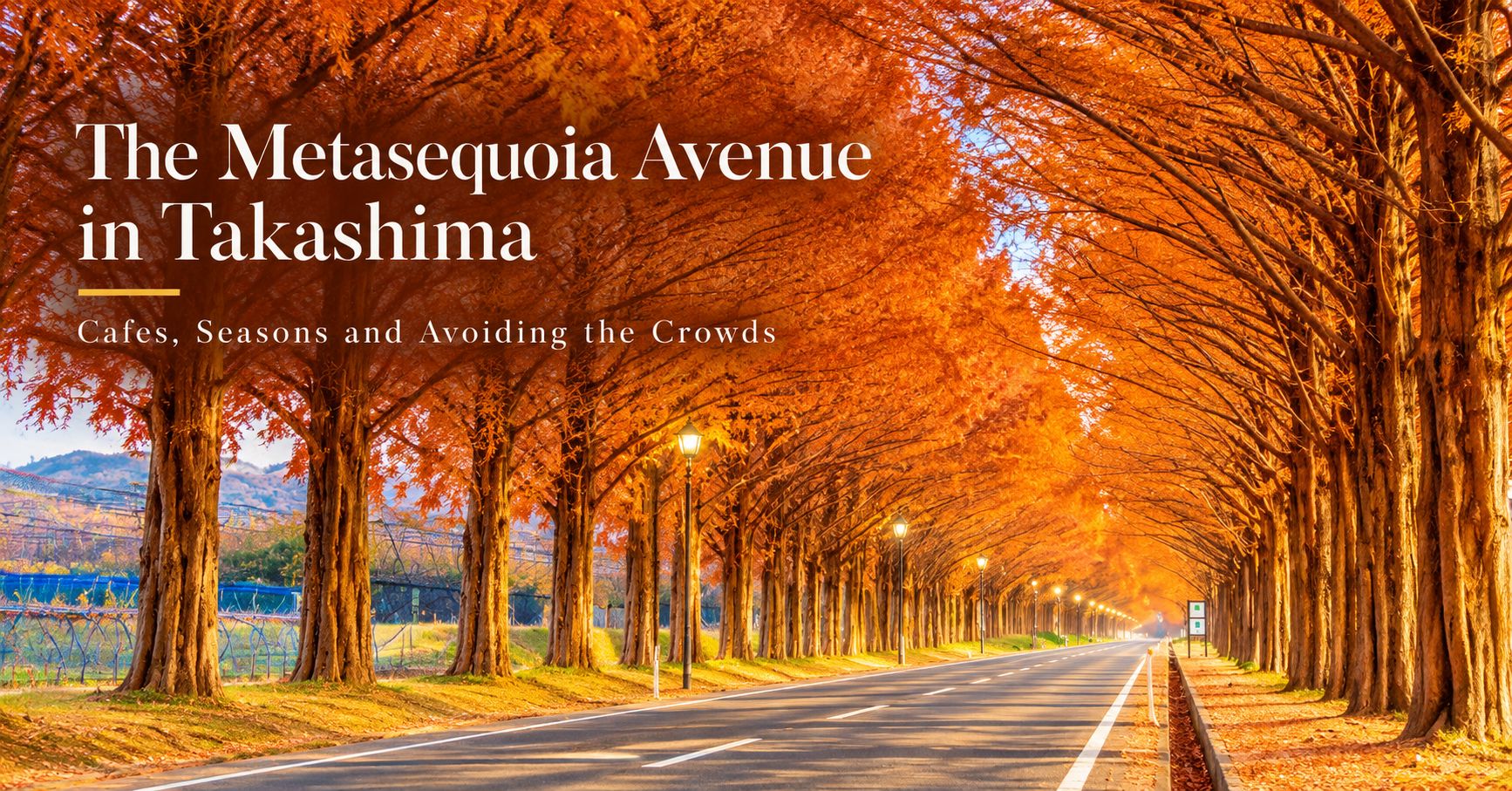
14:00 Metasequoia Avenue: About 500 Trees Along 2.4 km
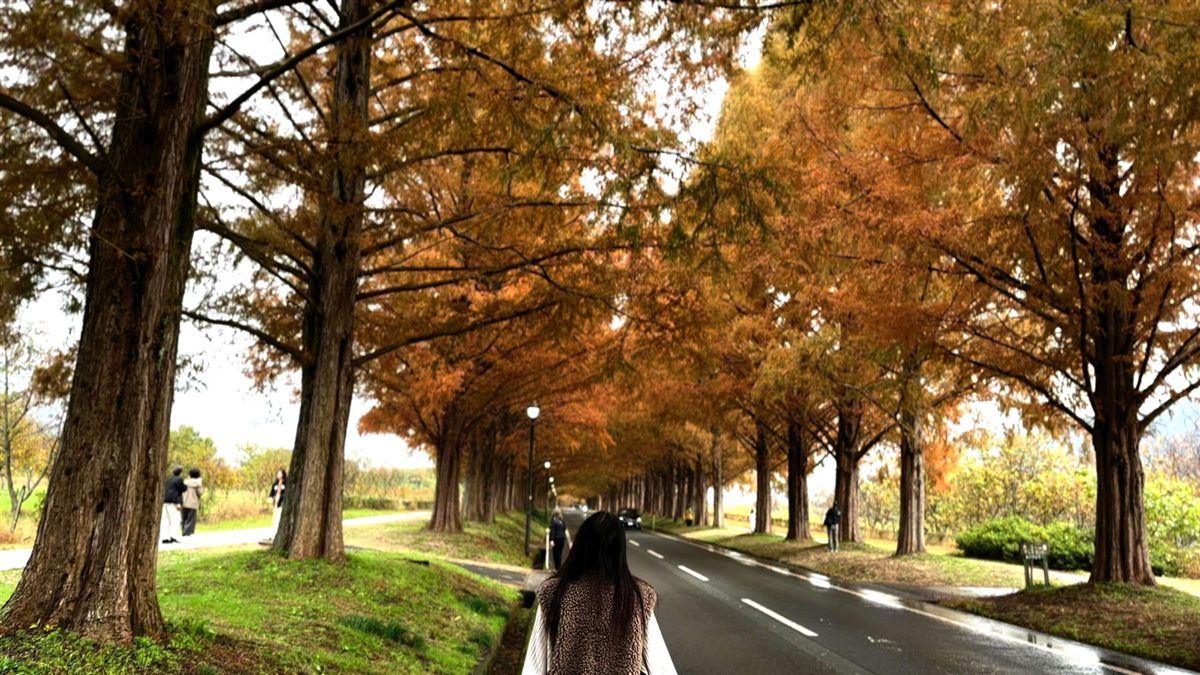
This metasequoia-lined road is located in Makino-cho, Takashima City. From late November to early December, the leaves turn from gold to russet, and the road is also pleasant to walk when fresh green leaves appear. There are also several cafes in the area.
The trees were planted in 1981 as a windbreak for farmland when a school farm was being developed. Cared for by local residents, the road was selected in 1994 as one of the “New 100 Views of Japanese Roadside Trees” and is now one of the best-known landscapes in northern Shiga.
Colors That Change with the Seasons: Fresh Green, Gold, and Snow
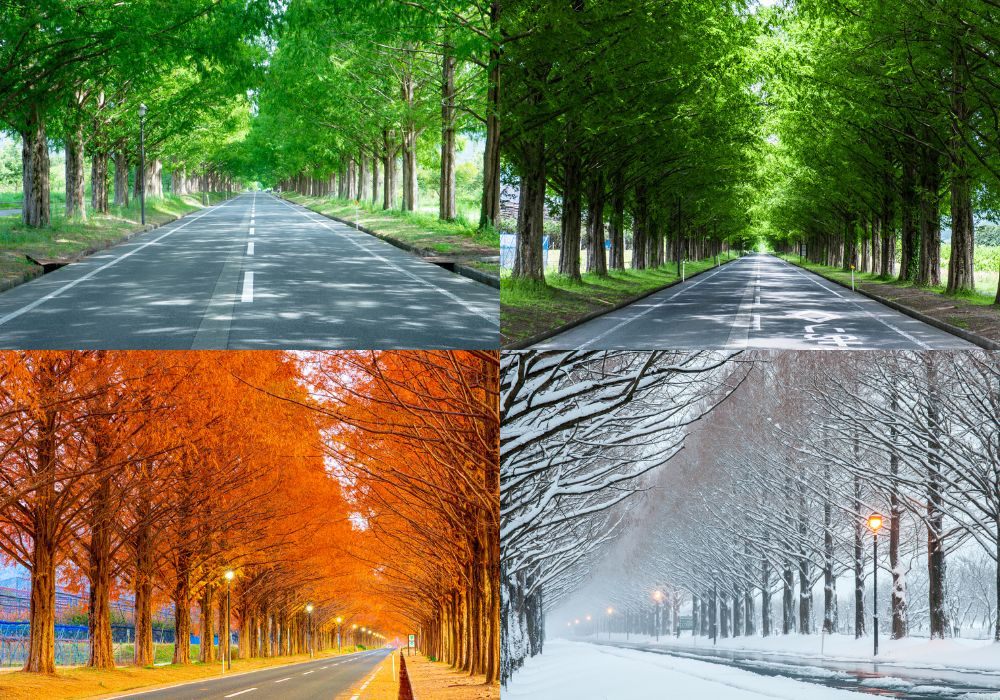
The trees are bright green from spring to early summer and deep green in summer. From late November to early December, they turn from gold to russet, and after the leaves fall, snow creates a quiet landscape of white and brown.
The same road looks completely different depending on the season, which is part of its appeal. In 2010, it was also selected as one of Japan’s 100 Best Autumn Leaf Spots.
About 500 metasequoia trees stand in straight lines for 2.4 km along the prefectural road. Their tall trunks frame the road on both sides and appear to narrow into the distance, creating a scenic view from any point along the way.
Starting Your Walk from Makino Pick Land
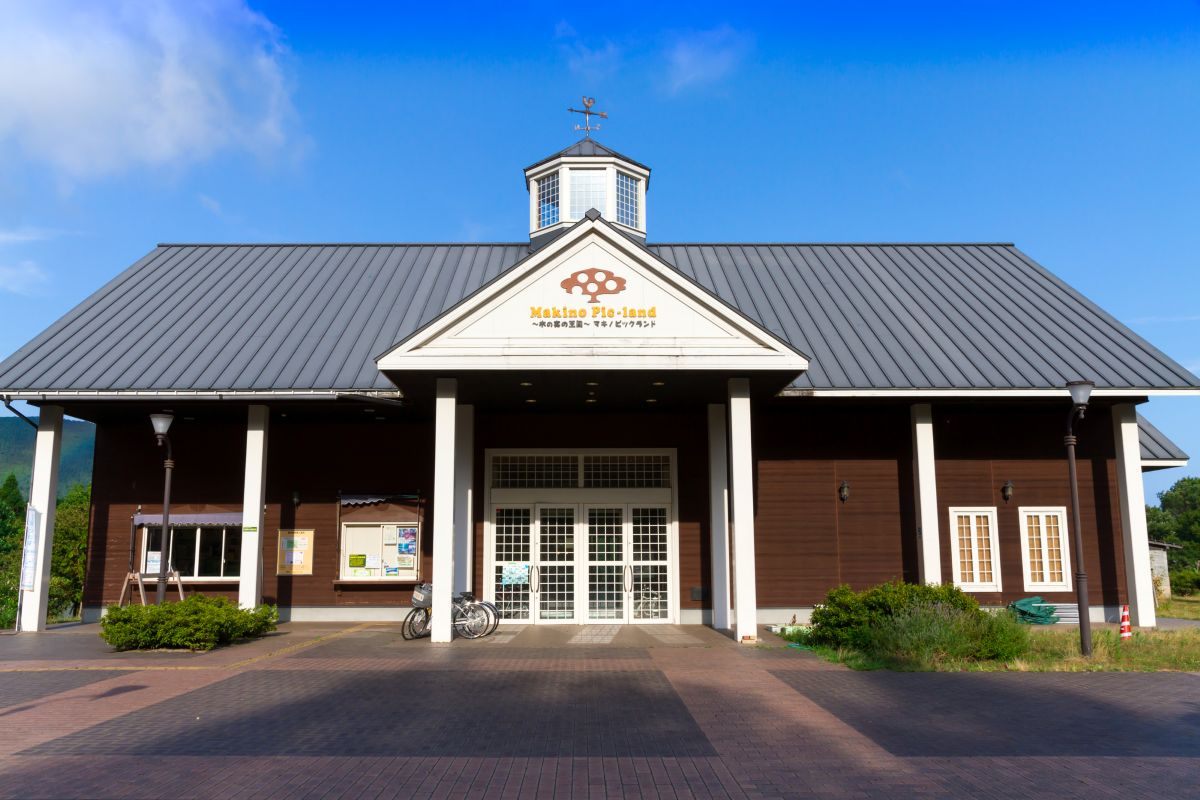
The starting point is Makino Pick Land, an agricultural park with a cafe and shop, where you can also enjoy seasonal picking of grapes, blueberries, sweet potatoes, and chestnuts.
Free parking is available for 230 standard cars, making it a convenient stop during a drive. You can drive along the road, but walking the 2.4 km there and back takes about an hour. Another option is to walk one way and return, or drive through first and get out at a spot you like.
| Name | Metasequoia Avenue |
|---|---|
| Address | Hiruguchi to Makino, Makino-cho, Takashima City, Shiga Prefecture |
| Inquiries | 0740-33-7101 (Biwako Takashima Tourism Association) |
| Best time for fall colors | Usually late November to early December |
| Parking | Free parking at Makino Pick Land (free temporary parking lots open nearby during the fall color season) |
| Access by car | About 30 minutes from Kinomoto IC on the Hokuriku Expressway, or about 80 minutes from Kyoto-Higashi IC on the Meishin Expressway |
| Access by train and bus | About 6 minutes by community bus (Makino Kogen Line) from JR Makino Station. Makino Pick Land is right by the bus stop |
| Reference website | Takashima Travel Guide |
Two Additional Stops If You Have Time
This section introduces two places you can add to the east and north shore routes if you have extra time.
Kawachi no Kazaana Cave: A Limestone Cave That Stays Around 12°C Even in Summer
Beyond the 1-Meter-High Entrance, a Huge Underground Space
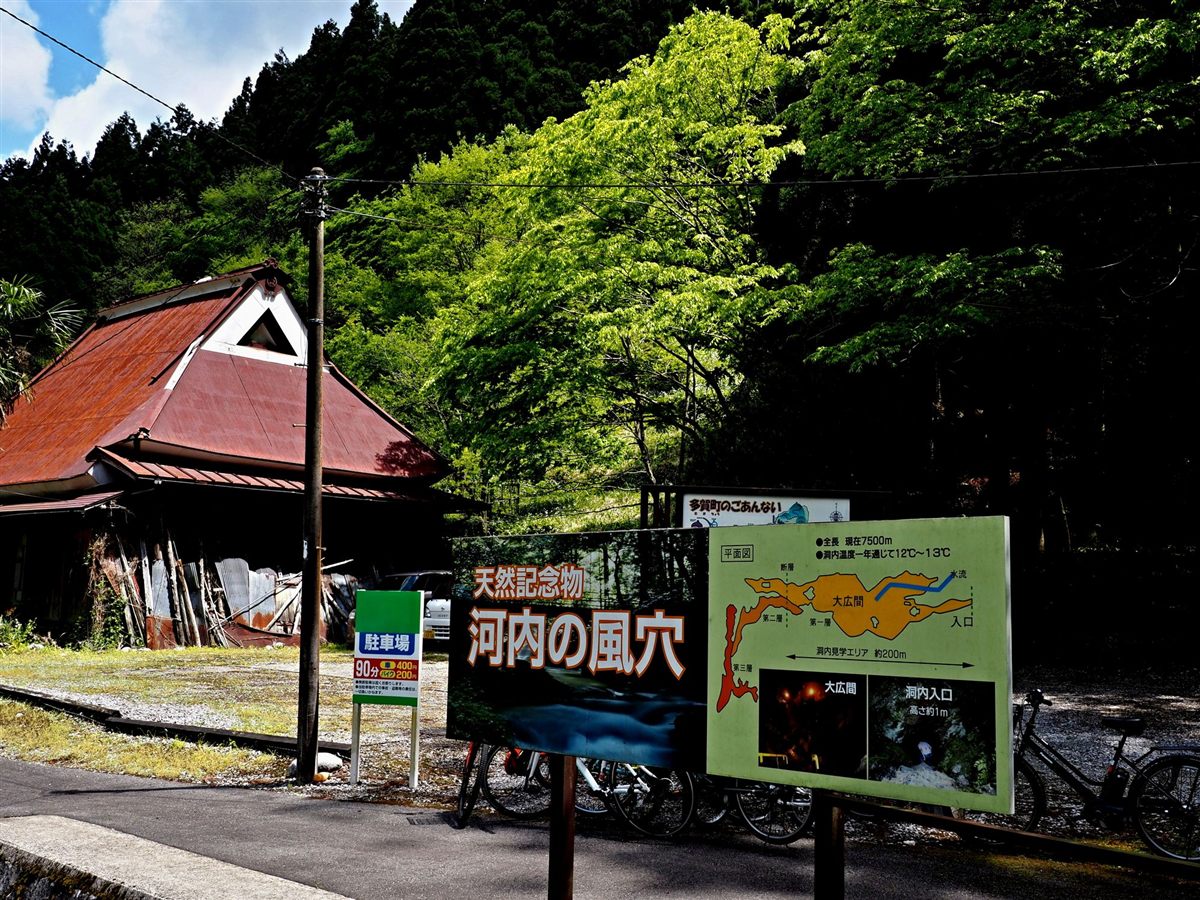
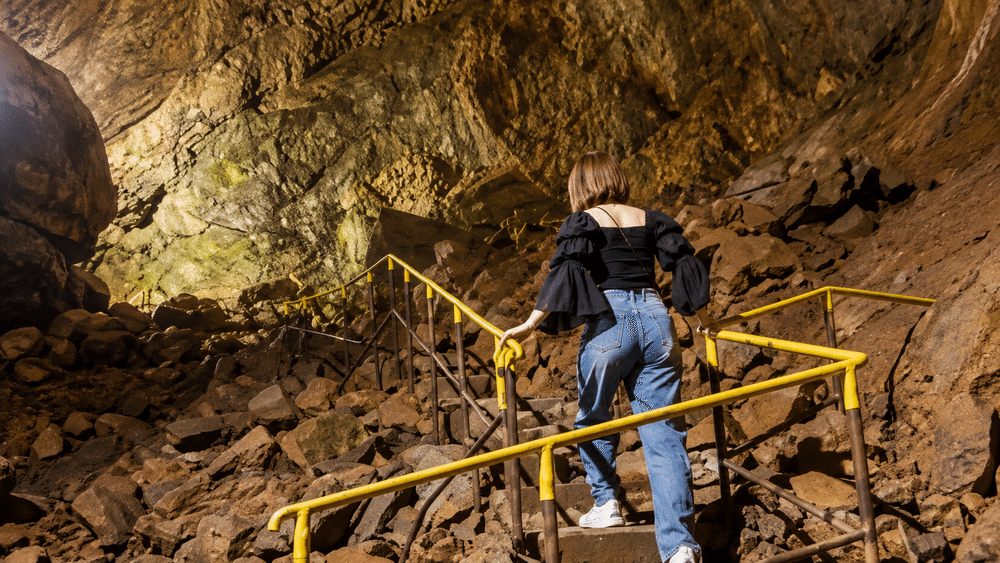
The biggest highlight is the contrast between the entrance and the interior. After crouching to pass through the entrance, which is about 1 meter high, you find a surprisingly large underground space. The first level alone covers about 1,190 square meters, and giant boulders are piled up in a great hall without pillars, a scene that is hard to imagine from the narrow entrance.
Kawachi no Kazaana is a limestone cave formed about 550,000 years ago in the limestone area at the foot of Mt. Ryozen. With a total length of 10,020 meters, it is the fourth longest cave in Japan and is designated a Natural Monument of Shiga Prefecture. Only the first and second levels, about 200 meters from the entrance, are open to the public, and much of the cave beyond remains unexplored. According to local legend, a dog released into the cave came out in Ise in Mie Prefecture, which suggests just how deep the cave was thought to be.
Passing through narrow sections and over wet rocks, then climbing the stairs with the help of handrails, can feel like a small adventure. The cave stays at around 12 to 13°C throughout the year, so you can walk through cool air even in midsummer, making it a good stop during a drive on a hot day.
A Crystal-Clear River Between the Parking Lot and the Cave
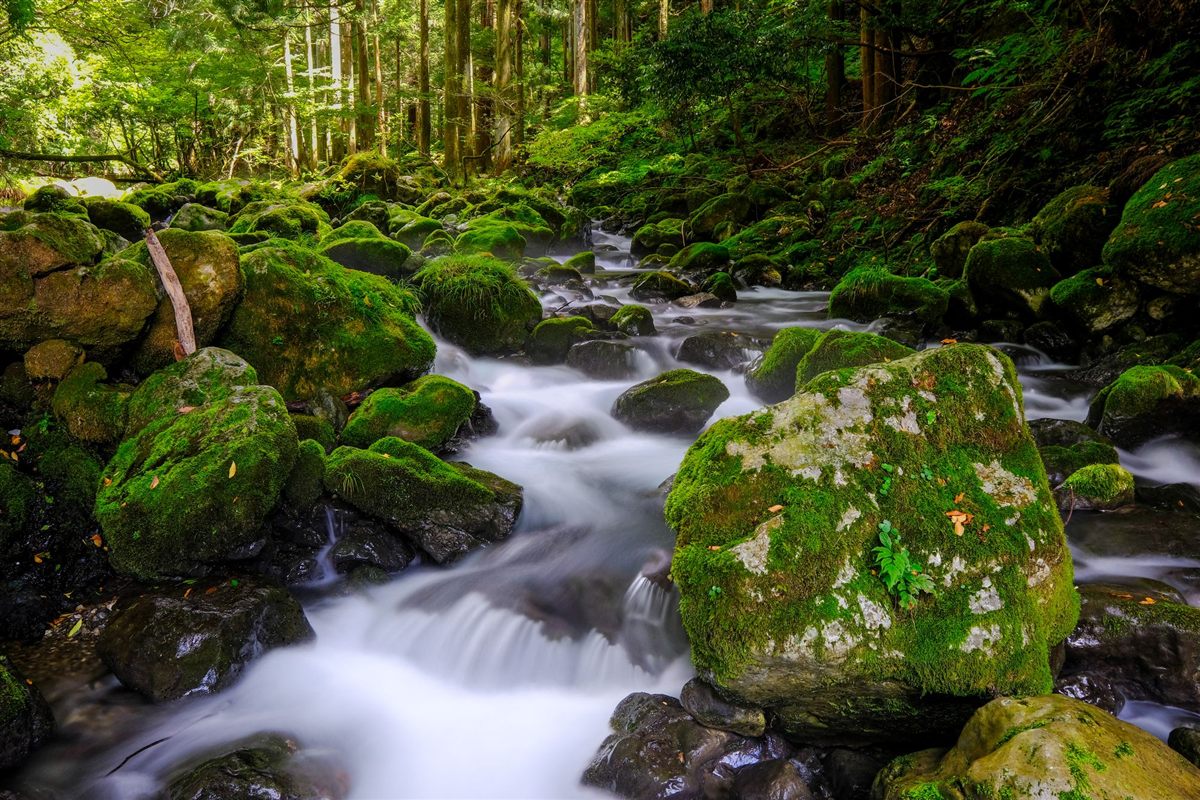
The Seri River flows along the way from the parking lot to the cave. Stairs lead down to the water, which is clear enough to see the riverbed.
Mountain stream fish such as amago trout swim here, and in summer, simply dipping your feet in the water is refreshing. Combined with the cave, this makes for a half-day surrounded by nature.
| Name | Kawachi no Kazaana Cave |
|---|---|
| Address | Kawachi, Taga-cho, Inukami District, Shiga Prefecture |
| Phone | 0749-48-0552 |
| Admission | Adults (junior high school age and up) 500 yen, children (age 5 to elementary school) 300 yen |
| Parking fee | 500 yen for standard cars |
| Time required | About 60 to 120 minutes (about one hour for the cave only) |
| Hours | April to October: 9:00 a.m. to 6:00 p.m. (last entry at 5:00 p.m.). November to March: 10:00 a.m. to 5:00 p.m. (last entry at 4:00 p.m.) |
| Closed | Closed during heavy rain or snow |
| Access by car | About 25 minutes from Hikone IC or Taga Smart IC on the Meishin Expressway |
| Access by train | About 30 minutes by taxi from JR Hikone Station, or about 15 minutes by taxi from Taga-taisha-mae Station on the Ohmi Railway |
| Reference website | Taga Tourism Association (Japanese) |
Kirin Brewery Shiga Plant: Compare Beers from the Ichiban Shibori Series
The Tour: From Tasting Malt to Seeing Huge Tanks
The tour takes you through the ingredients and brewing process in order, with hands-on activities such as tasting malt and smelling hops.
What You Can Experience on the Tour
・Tasting malt
・Smelling hops
・Comparing first-press and second-press wort
・Seeing large production equipment, including tanks 7 meters in diameter and 18 meters high
・A machine that can fill about 2,000 containers per minute (introduced on video)
Comparing first-press and second-press wort makes the meaning of the name “Ichiban Shibori” (first press) easy to understand. The tour also explains how ingredients are produced and the concept of CSV (creating shared value), giving you insight into the background of the product.
Tasting: Choose from Four Ichiban Shibori Beers
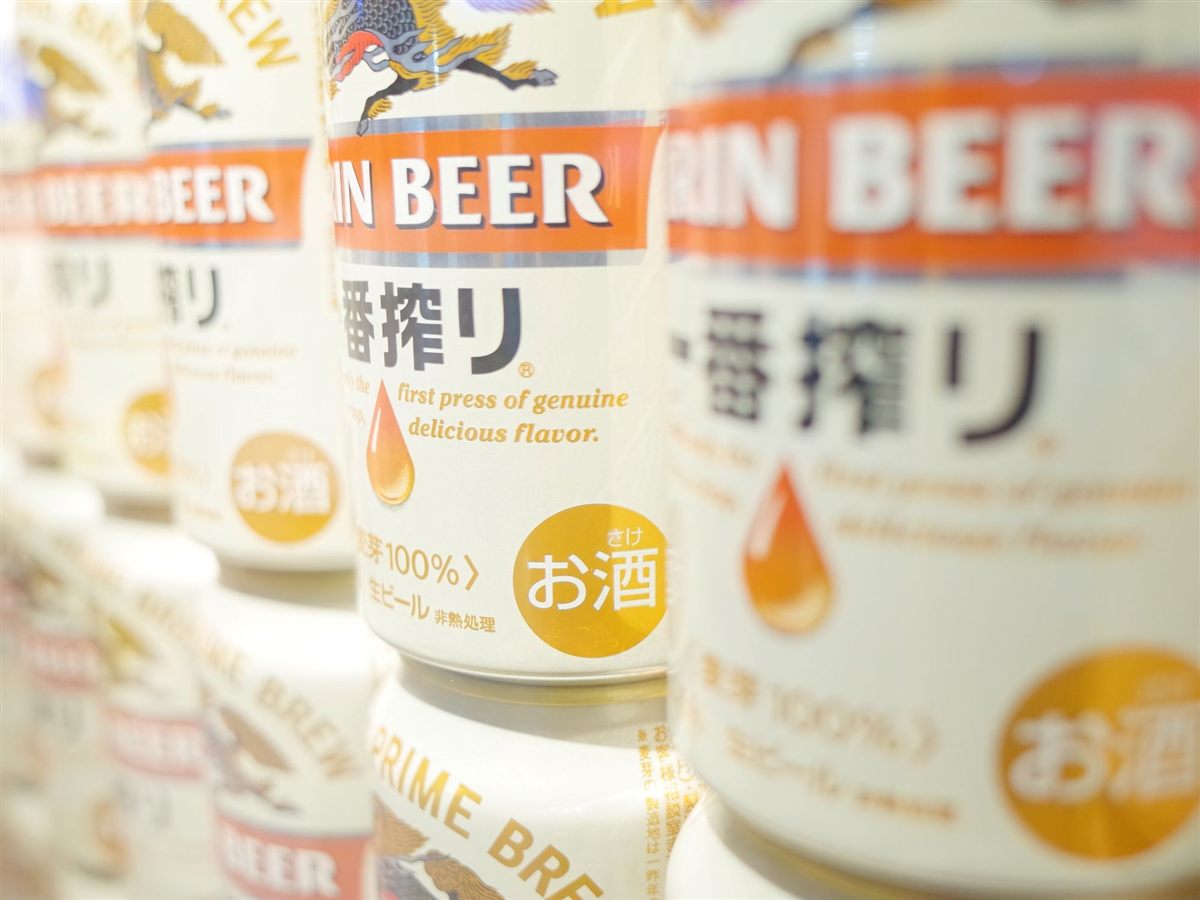
The tasting after the tour lasts about 25 minutes. The first glass is Kirin Ichiban Shibori draft beer, and you can then have up to two more glasses from four varieties: Ichiban Shibori, Kuronama (black draft), Premium, and White Beer (available products may change). Snacks such as cheese-flavored kakinotane rice crackers are also provided.
Participants aged 19 and under can join for free and are served soft drinks, so the tour is also suitable for families.
| Name | Kirin Brewery Shiga Plant |
|---|---|
| Address | 1600 Binmanji, Taga-cho, Inukami District, Shiga Prefecture 522-0342 |
| Phone | 0570-055898 (factory tour general inquiries) |
| Fee | Age 20 and over: 1,000 yen. Age 19 and under: free |
| Time required | About 80 minutes |
| Reservations | Advance reservation required |
| Closed | Mondays (open on national holidays and closed the next weekday), the New Year period, and occasional temporary closures |
| Access by car | About 3 minutes from Taga Smart IC or about 15 minutes from Hikone IC on the Meishin Expressway |
| Public transportation | Take a bus from JR Minami-Hikone Station to Kirin Beer-mae, or walk about 15 minutes from Screen Station on the Ohmi Railway |
| Official website | Kirin Brewery Shiga Plant official website (Japanese) |
Frequently Asked Questions
- Can I do this itinerary without a car?
-
Both routes assume travel by car, and parking is available at each stop. By train, the east shore requires a combination of the Ohmi Railway, JR, and taxis, while the north shore takes longer because the sights are some distance from JR stations.
- If I only have time for a one-day trip to Lake Biwa, which route should I choose?
-
Day 1 on the east shore is suitable for those interested in historic sites, Omi beef, and sweets, while Day 2 on the north shore is suitable for those who want to enjoy the tree-lined road and lakeside scenery. Each route fits comfortably into one day.
- How much walking is involved?
-
On the east shore, Tarobogu Shrine has about 250 steps and Azuchi Castle Ruins has the stone steps of the Otemichi. Since the morning involves many stairs, comfortable shoes are recommended. On the north shore, you can walk along the roughly 2.4 km Metasequoia Avenue, and it takes about 10 minutes on foot to reach the summit of Mt. Shizugatake.
- Where should I have lunch?
-
On the east shore, restaurants serving Omi beef are located around the Hachiman-bori Canal. Allowing 90 to 120 minutes, including time for a walk, gives you plenty of time. On the north shore, you can try the local dish yaki-saba somen in Kinomoto-juku.
- Can I do the route in reverse?
-
Yes, but on Day 1, visiting Tarobogu Shrine and Azuchi Castle Ruins, which have many stairs, in the morning is easier physically. On Day 2, scheduling Mt. Shizugatake in the morning is recommended to fit the lift’s operating hours.
- When does the Shizugatake Lift operate?
-
The lift operates seasonally and is closed in winter. Check its status before you visit.
- When can I see the fall colors?
-
Metasequoia Avenue is at its best from late November to early December. This period can be crowded, so an early start is recommended.
- How far in advance should I book Tokuyamazushi?
-
Reservations are accepted by phone only, generally about five months in advance. Having several possible dates ready makes booking easier.
Summary
Day 1 focuses on history and Omi beef on the east shore, and Day 2 on lakes and a tree-lined road on the north shore. Because the two routes do not overlap, you can travel efficiently.
If you only have one day, focus on either the east or north shore. On the east shore, you can start at Tarobogu Shrine and finish in Omihachiman. On the north shore, you can visit Mt. Shizugatake and Kinomoto-juku and then add Metasequoia Avenue.
You can also adjust the route by adding Kawachi no Kazaana Cave or Kirin Brewery Shiga Plant, or by staying at Tokuyamazushi on Lake Yogo.
Discover More About the Lake Biwa Area
-

The Metasequoia Avenue in Takashima: Cafes, Seasons and Avoiding the Crowds
-
Autumn Leaves Around Lake Biwa: 14 Spots in Shiga with Peak Timing and Illuminations
-
Lake Biwa, Shiga: Top Spots, Activities & Stays for Spring & Summer!
-
Biwako Valley and Biwako Terrace: Fares, Hours and the Sky Bridge
-
Shirahige Shrine: The Lake Torii, Access and Parking
-
List of Recommended Accommodations Featured in This Article