Do you ever feel worn out by stress from work, relationships, or family, or by small worries that build up day to day?
With mindfulness and meditation drawing attention as ways to care for mental well-being, consider trying Ajikan meditation and shakyo (sutra copying), traditional Buddhist practices that offer a deeper connection with Buddhist teachings.
Ajikan and sutra copying are especially recommended for people who have never meditated, or who tend to put others first and push themselves too hard.
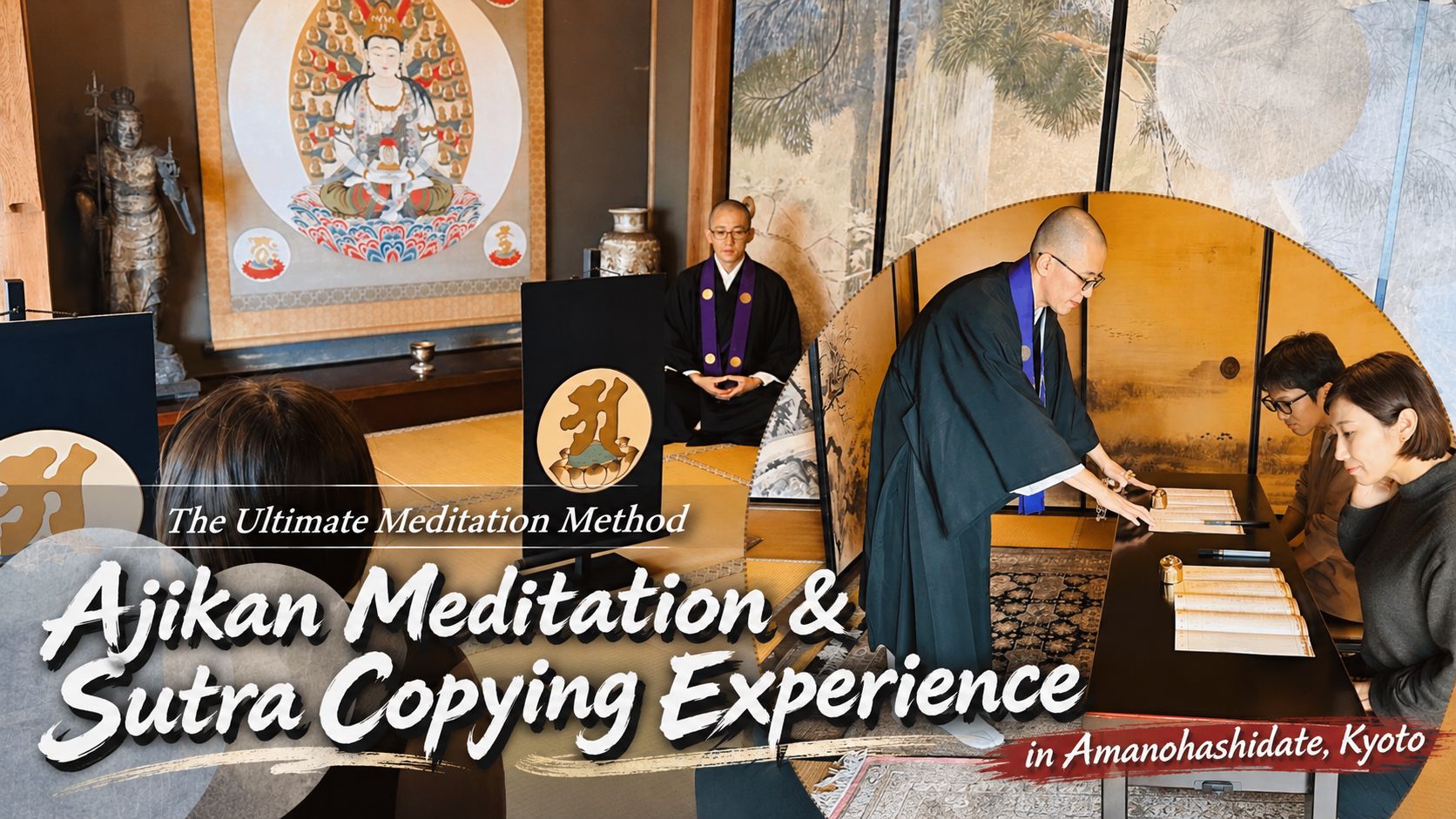
This article introduces the Ajikan meditation and sutra copying experience at Nariai-ji Temple in Amanohashidate, Kyoto.
At the end of the article, we also introduce recommended places to stay in the Amanohashidate area to help you plan your trip.
What Is Ajikan Meditation?

Ajikan is a meditation practice of Shingon Buddhism in which you meditate while looking at a hanging scroll bearing the sacred syllable “A” (阿) written in Siddham script, as the name suggests.
It is similar to zazen, but the two differ. Zazen is a practice of Zen Buddhism in which you sit upright, regulate your breathing, and focus your mind to reflect on yourself. Ajikan, a practice of Shingon Buddhism, is distinguished by meditating while looking at a scroll bearing this sacred syllable.
Just as “a” is the first letter of the Japanese syllabary, “A” is the first character of Siddham, the script used to write Sanskrit in Japanese Buddhism. It represents the beginning of the universe and the source of all life, and it is also the seed syllable of Dainichi Nyorai (Mahavairocana Buddha), a central figure in Shingon Esoteric Buddhism. In other words, this single character is regarded as a representation of the Buddha.
By focusing your mind on the character “A,” Ajikan aims to help you reflect on the source of your own life and come to know yourself more deeply.
Ajikan as Time to Care for Yourself
Many people pay close attention to how their bosses, colleagues, team members, and family are doing, asking themselves, “How are they feeling? Is something worrying them?” Yet they often neglect their own state of mind.
Ajikan offers such people a chance to remember the importance of caring for and valuing themselves, and to go about their days with renewed energy.
Reflecting on Dainichi Nyorai and on the ancestors who passed life down through many hardships to the present day may also give you strength to face your own challenges.
What Is Shakyo (Sutra Copying)?

Shakyo means copying Buddhist sutras by hand. It was originally one of the practices of Buddhist training, and before printing technology existed, it was also a way to spread the scriptures.
Traditionally, copying sutras was also regarded as a way to accumulate merit by helping preserve and spread Buddhist teachings.
It is also believed that copying a sutra while thinking of someone who has passed away, and then dedicating it to a temple or having it ceremonially burned, serves as a memorial offering for one’s ancestors.
The Heart Sutra in particular contains words of prayer for the happiness of the world and the people around us. It is said that copying it while making wishes such as the fulfillment of one’s prayers, good health, memorial offerings for ancestors, and the prosperity of future generations is traditionally believed to bring merit.
Sutra Copying Also Helps Calm the Mind
If you are worried that copying difficult Buddhist characters and words you do not understand will be hard, there is no need for concern.
In sutra copying, you simply copy each character of the sutra one by one, so it does not matter if you do not understand the meaning of each one.
Even without knowing the meaning, copying each kanji while reflecting on the meaning or intention behind each character naturally helps you concentrate, and many people find their mind becoming calmer.
This process has much in common with meditation and breathing exercises, and many people find it a good way to relieve stress.
Ajikan Meditation and Sutra Copying at Nariai-ji Temple


Nariai-ji Temple stands at one of the best spots for viewing Amanohashidate, one of the Three Scenic Views of Japan.
In ancient times, the temple was a training ground for Shugendo, Japan’s tradition of mountain asceticism. It is known for a legend in which a monk, facing death in deep snow during his training, was saved by Kannon, the Bodhisattva of Compassion.
Surrounded by nature on Mt. Nariai, where you can feel the changing seasons up close, Nariai-ji Temple is an ideal place for Ajikan meditation and sutra copying.
As you listen to birdsong, rustling leaves, and the sound of the temple bell, you can adjust your posture, breathing, and mind, and take a break from everyday life to clear away accumulated fatigue and worries.
This experience is especially suitable for those who think, “I have never meditated,” or “My mind is always busy. Can I really empty my mind?”
Relaxing body and mind in this calm setting may leave you feeling refreshed and free.
Just as sauna enthusiasts in Japan describe a deeply refreshed and balanced state as totonou, you may want to visit regularly to rebalance your mind.

In addition to Ajikan meditation and sutra copying, the experience at Nariai-ji Temple includes a tour of the interior of the main hall guided by the head priest. You can take your time to experience the serene and deeply spiritual atmosphere inside.
Nariai-ji Temple has many legends, ranging from slightly eerie tales to heartwarming stories about Kannon. If you are interested, see the article below.
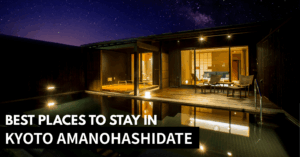
Recommended Places to Stay in Amanohashidate, Kyoto
Finally, here are some recommended places to stay in the Amanohashidate area where you can relax before or after the Ajikan meditation and sutra copying experience at Nariai-ji Temple.
They include accommodations with meal plans featuring local ingredients from northern Kyoto, and private villas where you can enjoy a hot spring bath at your own pace.
Miyazu Harbor: Enjoy the Sea after Visiting the Mountain Temple

Miyazu Harbor is located southeast of Amanohashidate, directly facing Miyazu Bay.
It is a resort villa with an infinity pool that appears to merge with Miyazu Bay, where guests can also enjoy glamping.
Each villa is rented exclusively to one group, making it suitable for gatherings with friends, parties, or trips with relatives. Guests can enjoy the sound of the waves and the scent of the sea up close.
The view at sunset, when the evening light colors the sky and the sea, is especially beautiful.
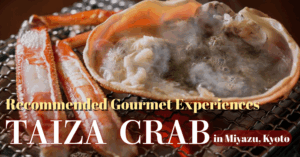
Miyazu Harbor offers a BBQ menu featuring premium ingredients from the Amanohashidate area, such as Japanese Black wagyu beef and abalone, as well as a winter-only Crab Marché plan featuring premium branded crab.
Crab season in northern Kyoto opens in early November. The Crab Marché plan serves crab as a full course of crab sashimi, grilled crab, crab shabu-shabu, and crab hot pot, and it is popular enough to attract repeat guests year after year.
Because the crab is served at peak freshness, the plan is a good choice as a reward for yourself or for celebrating an anniversary or special occasion with someone important to you.
Each villa is equipped with a draft beer server offering up to 6 liters of all-you-can-drink beer per villa. The beer pairs well with Miyazu’s fresh seafood, making it especially appealing to beer lovers.
| Miyazu Harbor Address: 405-7 Namiji, Miyazu City, Kyoto Prefecture Tel: +81-50-3161-4571 (10:00 a.m.–6:00 p.m.) Official website: https://www.m-harbor.jp/ (Japanese only) |

MEZZO ALL SUITE VILLAS: Natural Hot Spring Villas within Walking Distance of Amanohashidate Station

MEZZO ALL SUITE VILLAS is located about a 10-minute walk from Amanohashidate Station.
It offers easy access to popular sightseeing spots such as Amanohashidate View Land and Kasamatsu Park, making it a good choice for travelers who want to explore the Amanohashidate area thoroughly.
Each villa is also rented exclusively to one group and has a private pool and an open-air bath filled with the property’s silver hot spring water, making it ideal for hot spring lovers and anyone who wants to spend special time in a private space.
MEZZO ALL SUITE VILLAS also offers a BBQ with seafood and mountain produce from the Amanohashidate area, as well as the Crab Marché plan featuring plenty of live branded crab.
Enjoy the seasonal flavors of Amanohashidate alongside a relaxing hot spring stay.
| MEZZO ALL SUITE VILLAS Address: 1058-13 Mannen, Miyazu City, Kyoto Prefecture Tel: +81-50-3161-4573 (9:00 a.m.–6:00 p.m.) Official website: https://en.mezzo-allsuite.com/ |
The Miyazu area also has a variety of other accommodations, including one with three types of hot spring baths, one where you can go fishing on a private cruise and have your catch prepared for you in a private dining room, and an auberge serving course meals prepared by top chefs.
For more details, see the article below.
Summary
This article introduced the Ajikan meditation and sutra copying experience at Nariai-ji Temple in Amanohashidate, Kyoto.
If you are busy with work, housework, or study, consider trying it as a way to make time for yourself.
Besides Nariai-ji Temple, the Amanohashidate area has many other attractions. They are introduced in detail in the articles below, so use them when planning your visit.
Discover More about Amanohashidate
-

Amanohashidate Guide: What Makes Japan’s Famous Sandbar Special, the Five Great Views, Access, Food, and Seasons
-
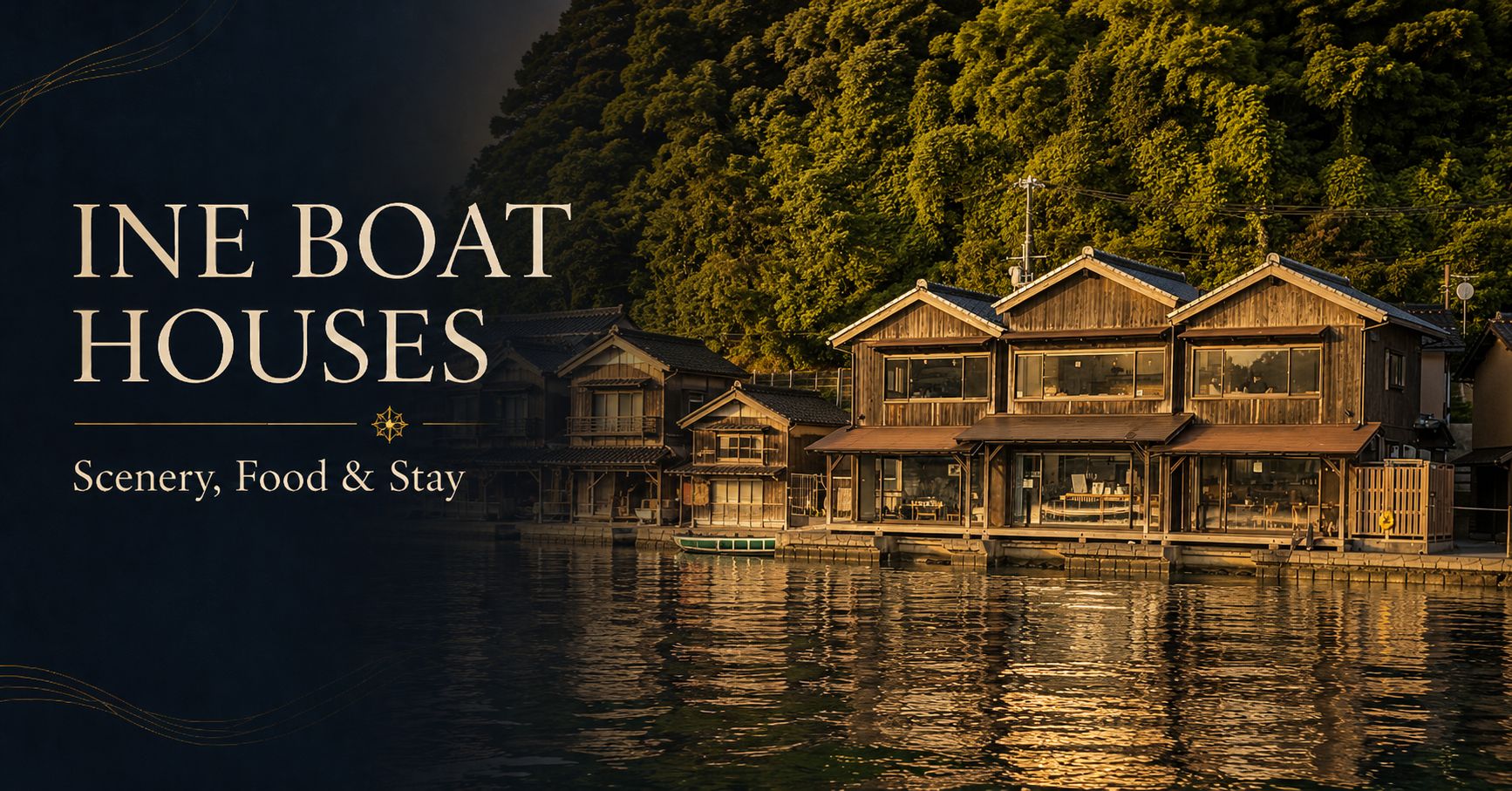
[Kyoto] The Ine Boat Houses: Scenery, Food, Where to Stay and How to Get There
-
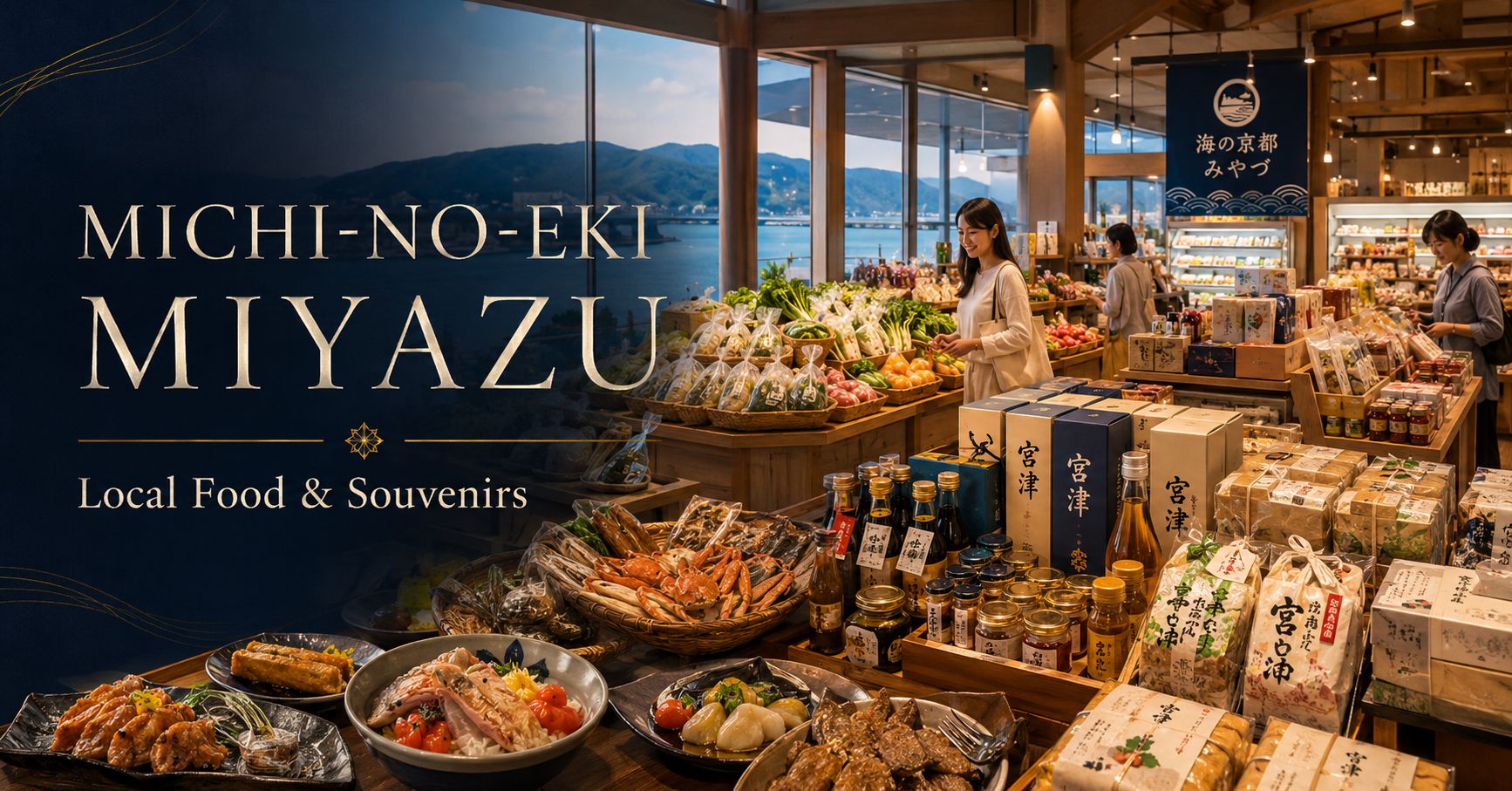
[Kyoto Amanohashidate] Michi-no-Eki Umi-no-Kyoto Miyazu: Limited-Edition Souvenirs and Local Food Worth the Stop