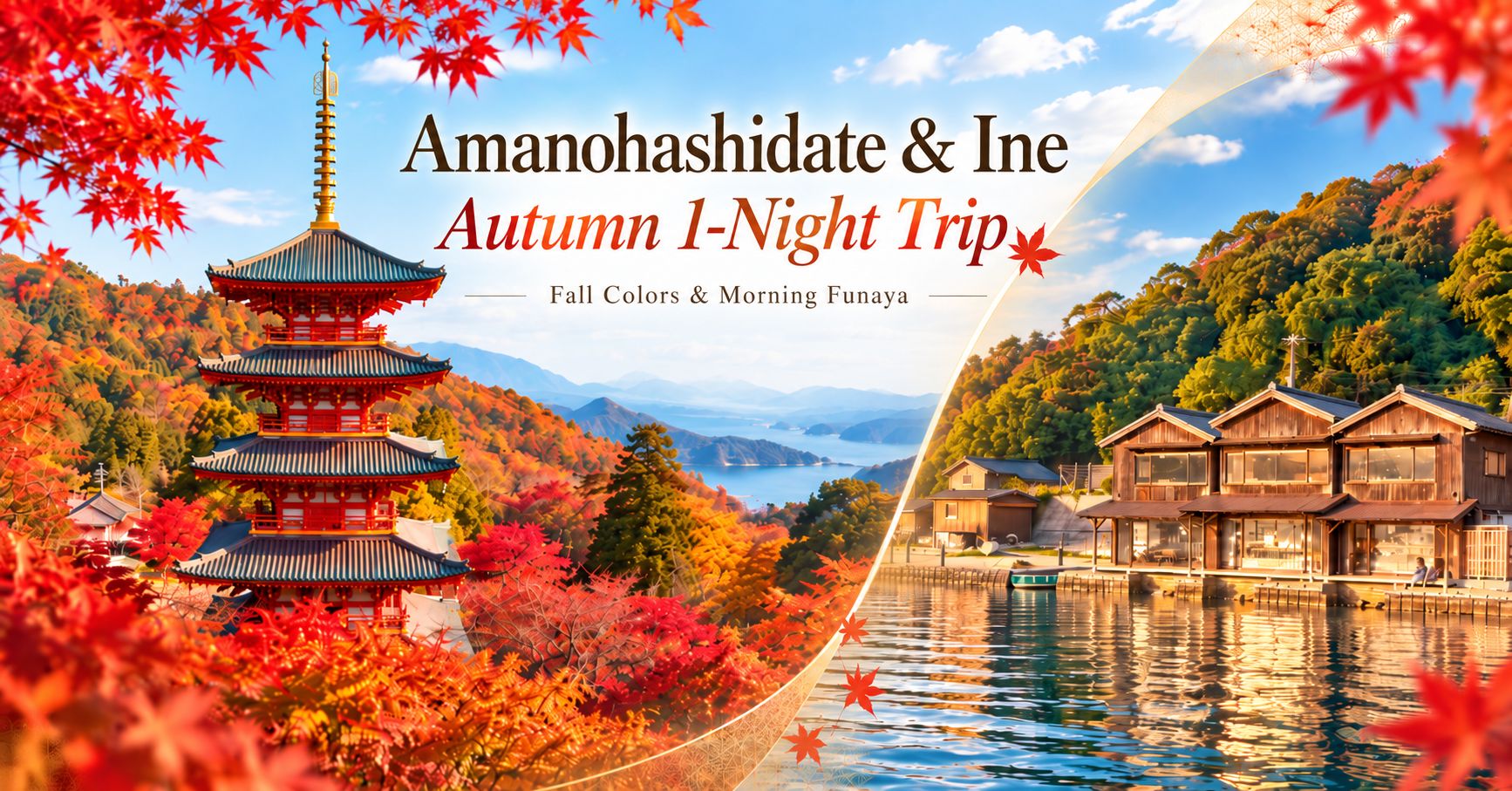
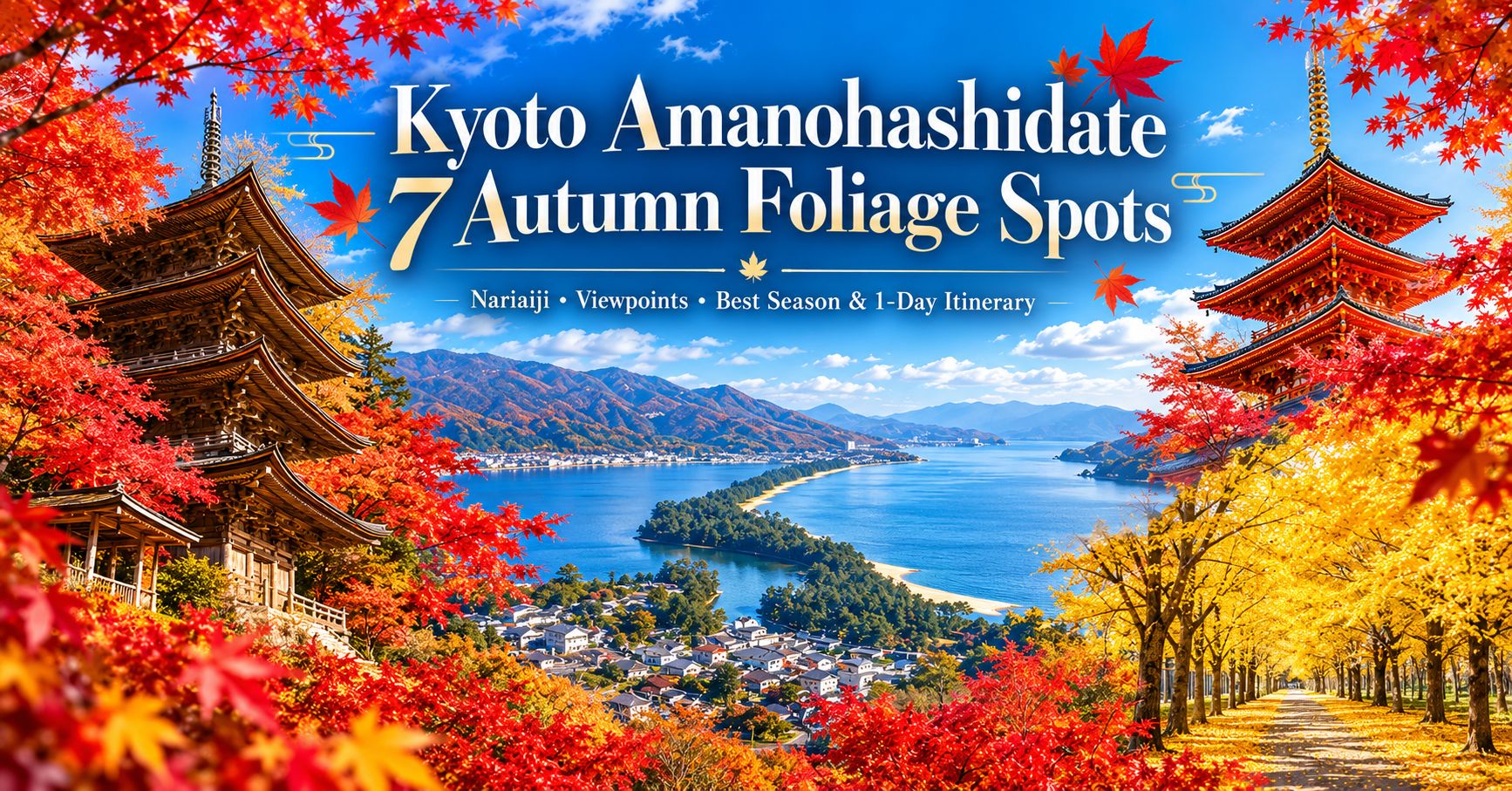
Autumn color reaches Amanohashidate in November. Kyoto autumn leaves are most often associated with the temples in Kyoto City, and northern Kyoto adds a different set of views: observation decks above the pine-covered sandbar, temple grounds that turn red around a pagoda, and a road lined with golden ginkgo trees.
This guide covers seven places to see autumn leaves around Amanohashidate, along with the best time to visit each one, how to get there, and how to combine them in a single trip.
It is useful if you are visiting Amanohashidate in autumn for the first time, deciding how to pair the observation decks with the temples, or planning to drive a little farther to reach the larger temple gardens.
When Autumn Leaves Peak in Amanohashidate
Autumn color arrives at slightly different times depending on elevation and location. Check the peak period for each place before you set your travel dates.
| Place | Peak period | In brief |
|---|---|---|
| Nariaiji Temple | Mid to late November | Autumn leaves around the five-story pagoda, with a view over Amanohashidate |
| Amanohashidate Kasamatsu Park | Early to mid-November | The Shoryukan view, with color on the surrounding hills |
| Amanohashidate View Land | Early to mid-November | The Hiryukan view and autumn leaves in one frame |
| Ouchitoge Ichijikan Park | Early to mid-November | A quiet place to see Amanohashidate as a single line |
| Suzu Ginkgo Avenue | Late October to early November | A road lined with golden ginkgo trees (no parking lot) |
| Kongoin Temple (Maizuru City) | Mid to late November | A three-story pagoda framed by maples, known as the maple temple of Tango |
| Tajima Ankokuji Temple (Toyooka City, Hyogo Prefecture) | Around mid-November | Enkianthus leaves seen from a tatami room in the main hall |
The observation decks start around early November, and the temples from the middle of the month. Pairing a deck with a temple lets you see two stages of color on the same day. Peak timing shifts from year to year, so it is worth checking each site’s official information before you go.
Four Spots That Look Out Over Amanohashidate
These four places put the sandbar and the autumn color in the same scene. The decks change color earlier and reach their peak in early November.
Nariaiji Temple: Autumn Leaves at the Five-Story Pagoda
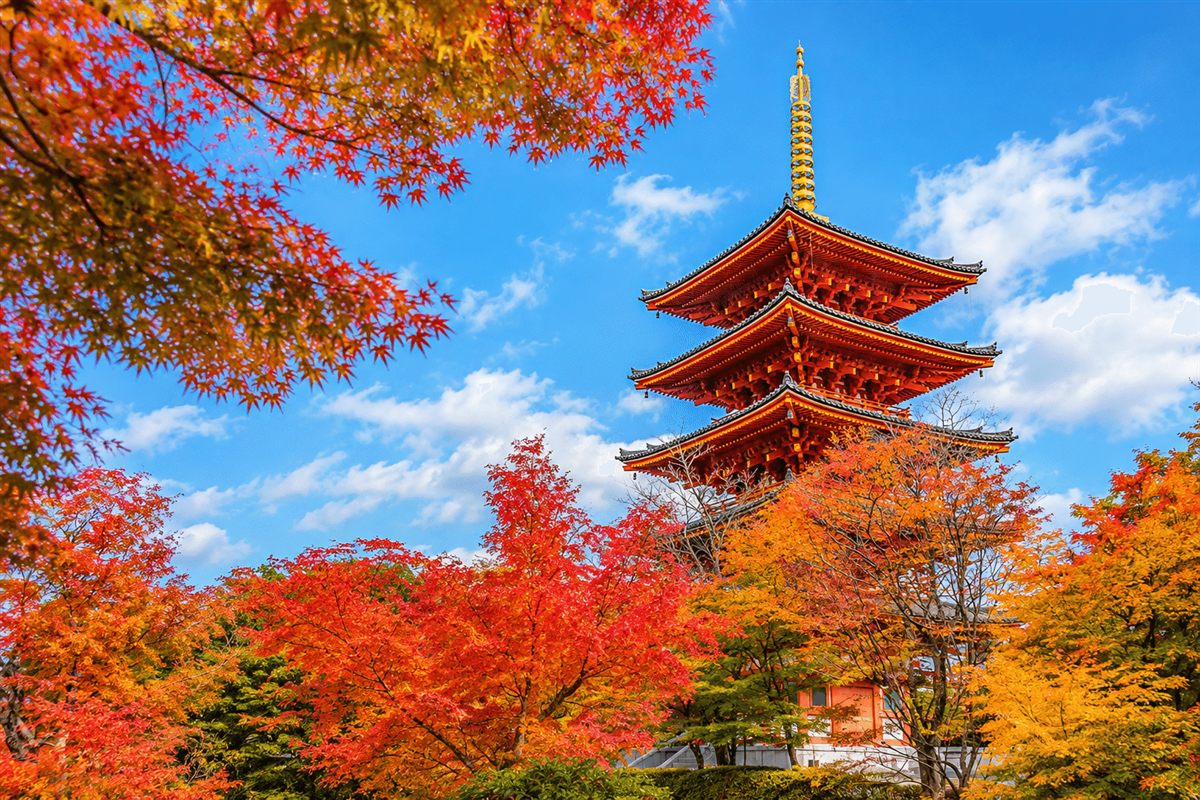
Nariaiji Temple stands on a hillside above Amanohashidate and is the 28th temple on the Saigoku Kannon pilgrimage. The maples around the five-story pagoda usually turn red from mid to late November.
The grounds look down on Amanohashidate, so the autumn color and the sandbar appear in the same view. Evening illumination is held in some years, but whether it takes place and on which dates changes from year to year. Check the Amanohashidate Tourism Association or the temple’s official information before your visit.
| Peak period | Mid to late November |
|---|---|
| Parking | 50 standard cars and 4 large vehicles (free) |
| By car | About 15 minutes from the Yosa-Amanohashidate exit on the Kyoto Jukan Expressway |
| By public transportation | Sightseeing boat from Amanohashidate Station to Ichinomiya, then the cable car or chairlift to Kasamatsu Park, and about 7 minutes by mountain bus from the park |
| Phone | 0772-27-0018 |
Amanohashidate Kasamatsu Park: The Shoryukan View and the Hills in Color
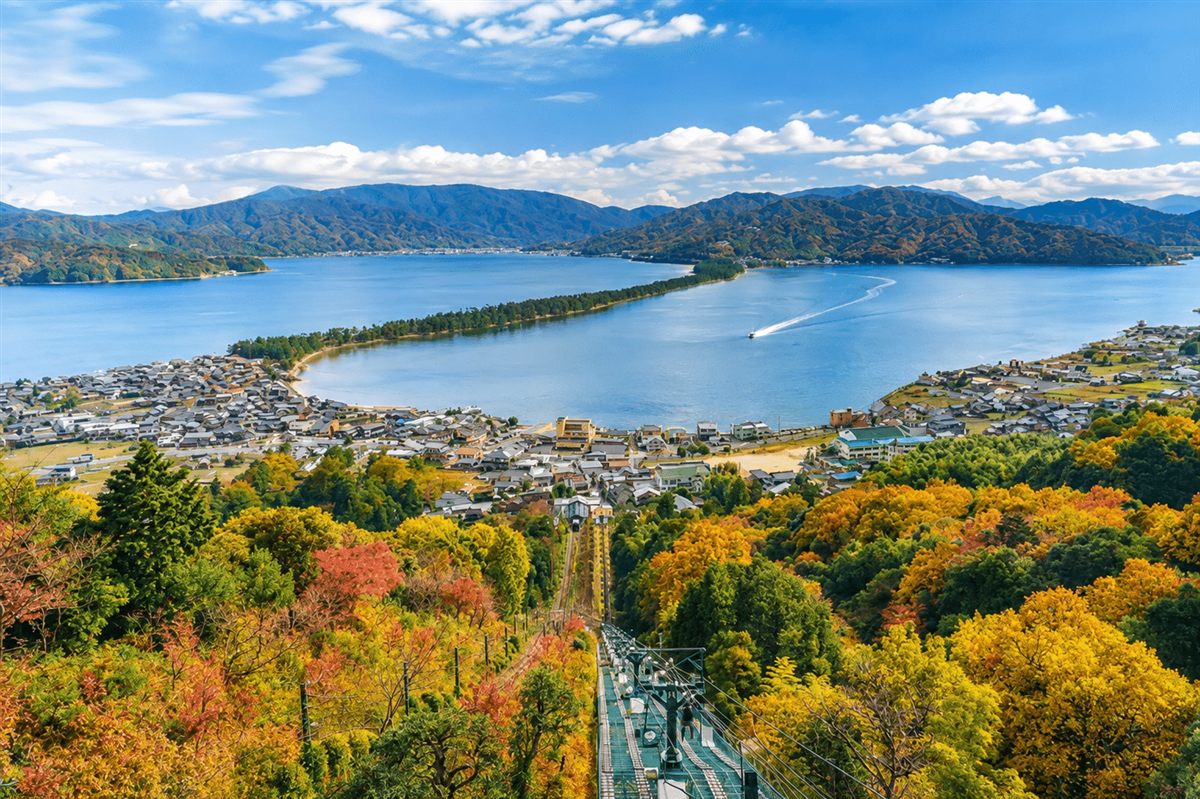
Kasamatsu Park, on the north side of Amanohashidate, offers the Shoryukan view, in which the sandbar appears to rise like a dragon. From early to mid-November, when the surrounding hills change color, the green of the pines below contrasts with the red and yellow on the slopes.
A cable car and a chairlift run to the top, so there is little walking. The mountain bus to Nariaiji Temple also leaves from the park, which makes it a practical first stop if you plan to visit both.
Amanohashidate View Land: The Hiryukan View with Autumn Color
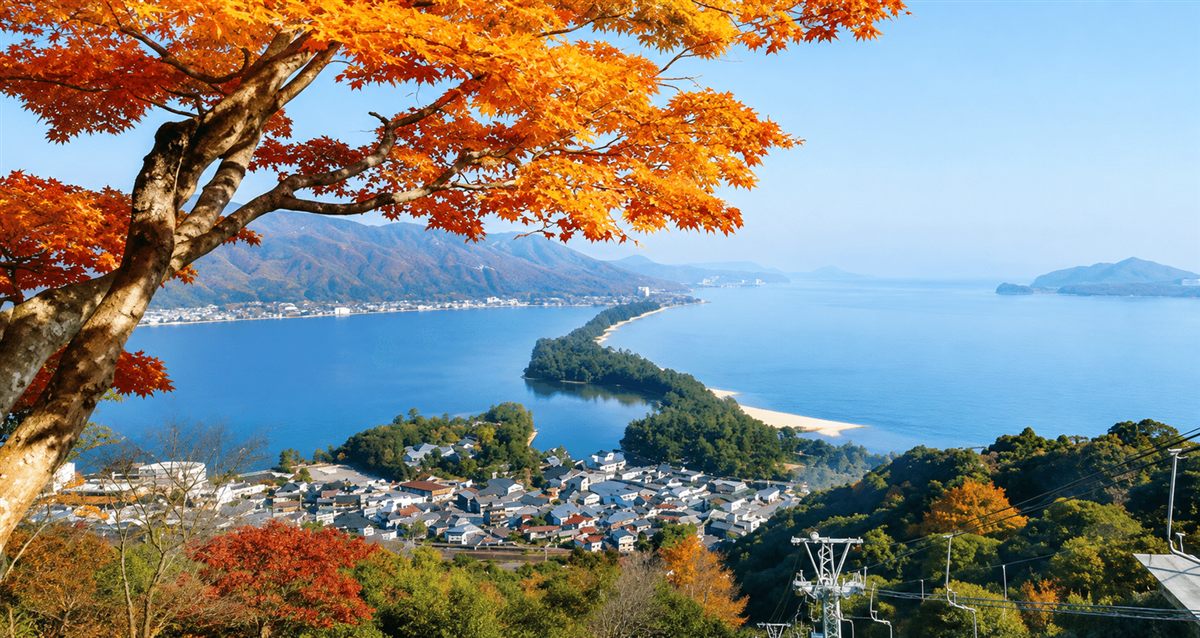
On the south side, Amanohashidate View Land offers the Hiryukan view, in which the sandbar looks like a dragon rising into the sky. It is within walking distance of Amanohashidate Station, so it works well as a first stop if you arrive by train.
The summit has an open plaza, and when the maples turn, the color appears alongside the view from the observation deck. If you are deciding between here and Kasamatsu Park, the next article compares the two views and how to reach them.

Ouchitoge Ichijikan Park: A Quiet View of the Sandbar as a Single Line
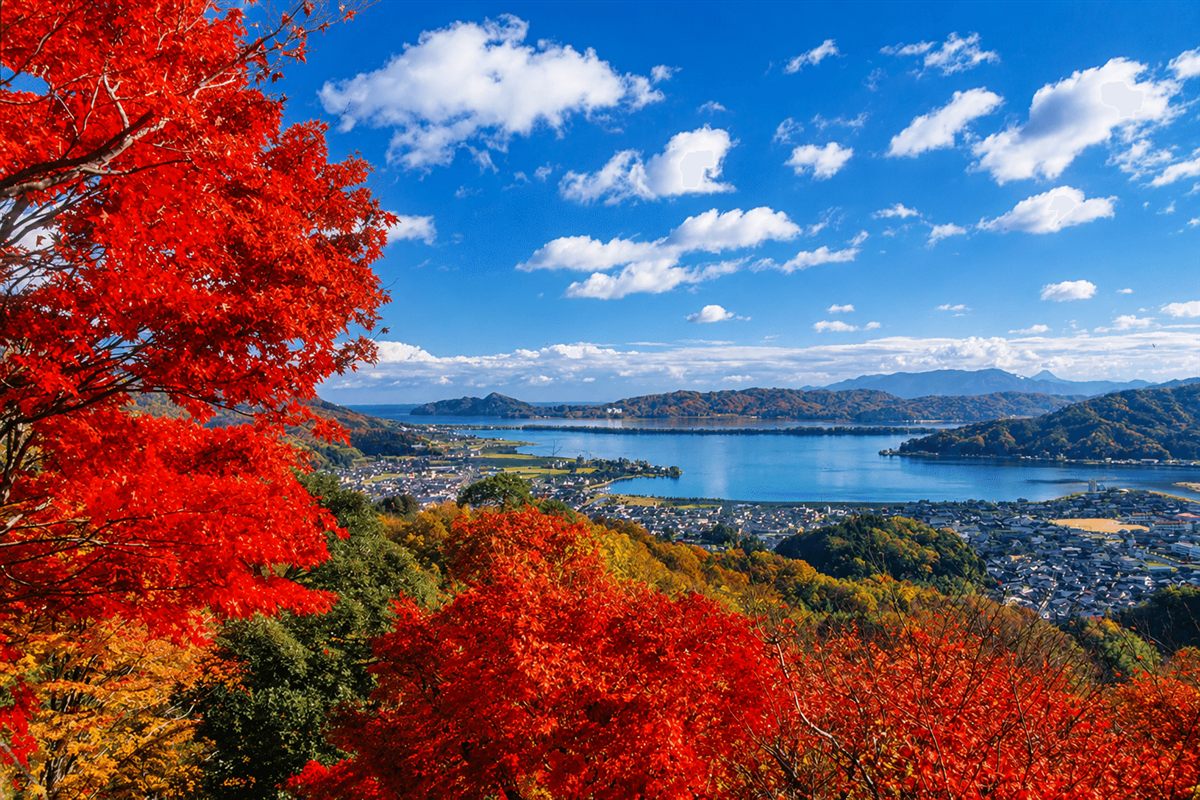
Ouchitoge Ichijikan Park, on the Ouchi Pass in Yosano Town, offers the Ichijikan view, in which Amanohashidate appears as a single horizontal line. Fewer people come here, so it stays calm even during the autumn season.
The park is in the hills, so check road conditions and opening hours before you set out. It suits travelers who want a quiet place to take in the view.
Three More Autumn Sites Worth the Drive
With a car, you can continue from Tango toward Maizuru and Tajima and see autumn scenery that differs from Amanohashidate.
Kongoin Temple: A Three-Story Pagoda Framed by Maples
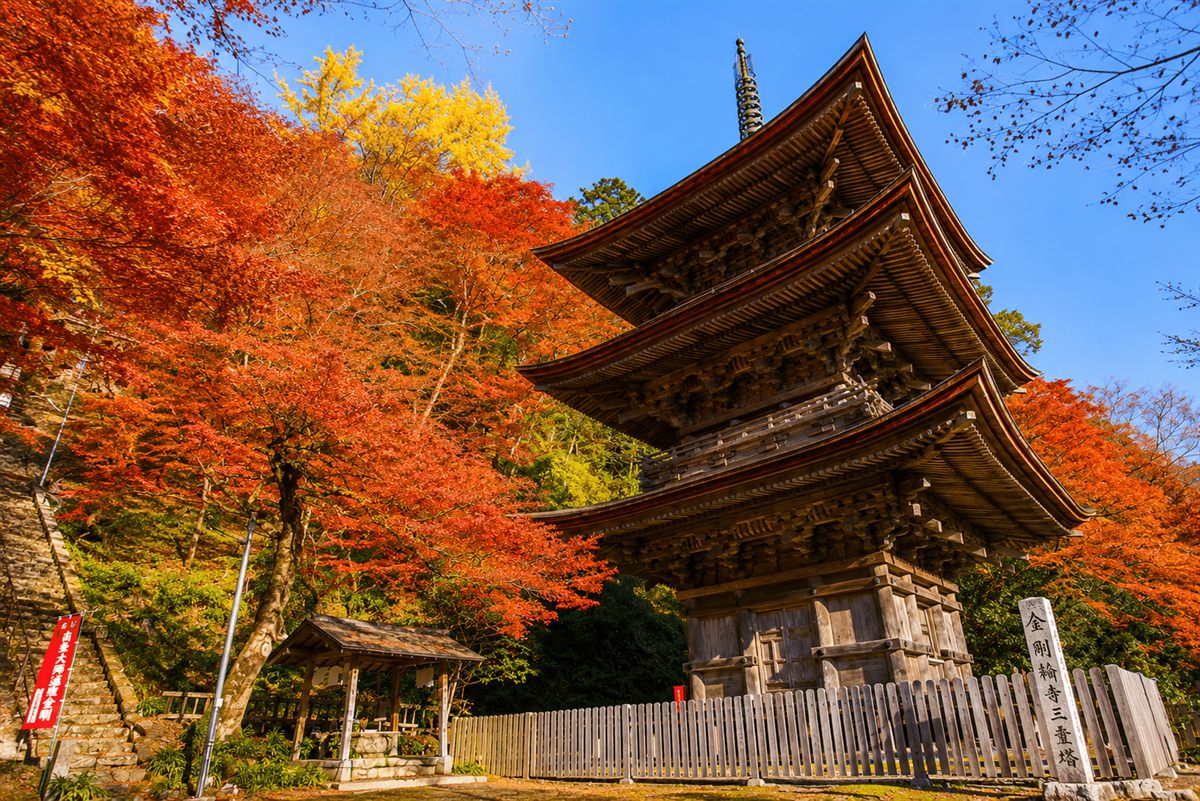
Kongoin Temple in Maizuru City is known as the maple temple of Tango. Japanese maples begin to turn in early November, and from mid to late November the grounds turn red around the three-story pagoda, an Important Cultural Property.
The drive from Amanohashidate takes about an hour, so it fits best into a day that also covers the Maizuru area. Viewing the treasure hall requires a reservation in advance.
Tajima Ankokuji Temple: Enkianthus Leaves Framed by the Hall Window
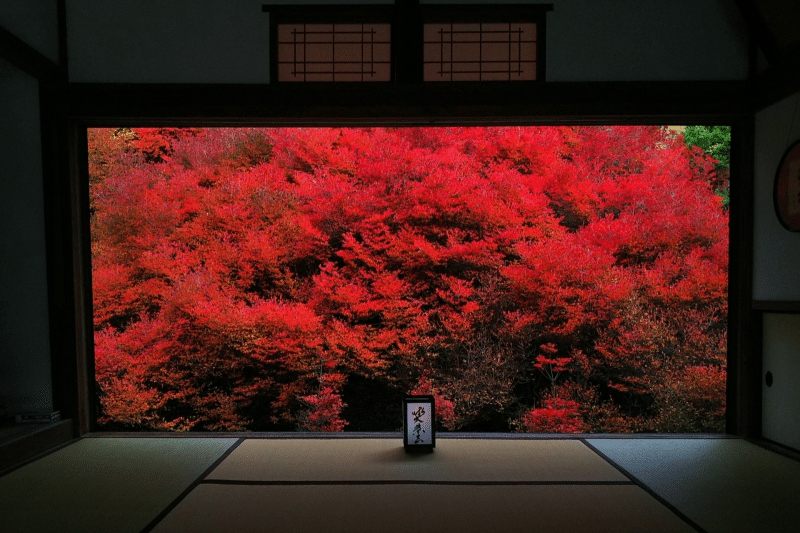
At Tajima Ankokuji Temple in Tanto, Toyooka City, Hyogo Prefecture, you can look out at the enkianthus in the back garden from a tatami room in the main hall. The window opening frames the view, and the leaves usually turn deep red around mid-November.
The viewing period is short each year, and some days are crowded. Check the City of Toyooka tourism information or other official sources for the opening dates, how to visit, and group reservations before you go.
Suzu Ginkgo Avenue: Golden Trees from Late October
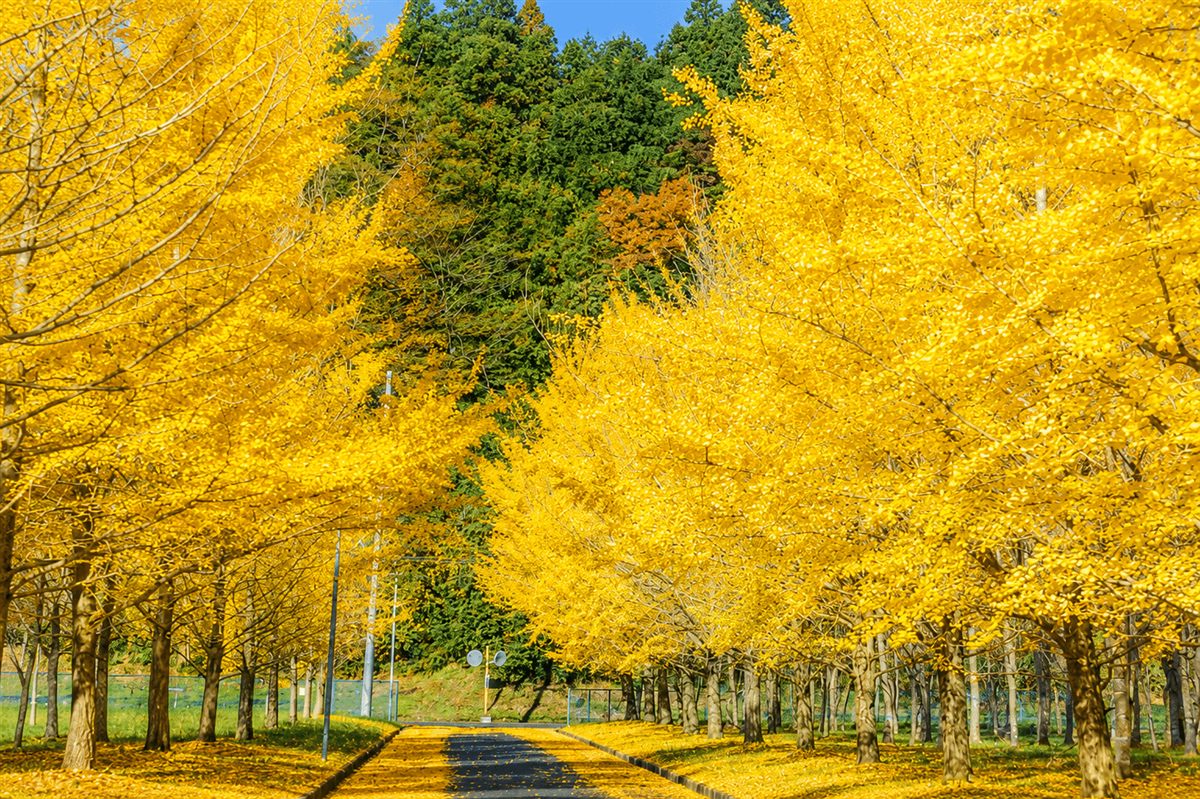
Ginkgo trees turn earlier than maples. The ginkgo avenue in Suzu, Miyazu City, turns golden from late October to early November and is one of the quieter autumn spots near Amanohashidate.
There is no dedicated parking lot, and street parking is not possible because homes and businesses line the road. If you drive, use a nearby parking lot and walk from there.
A One-Day Route Through Amanohashidate in Autumn
This route pairs the observation decks with a temple. It starts at Amanohashidate Station and moves from the south side to the north.
Outside the autumn season, a two-day route through Amanohashidate and Ine is also an option.

Walk from Amanohashidate Station to the chairlift. Take in the autumn color and the Hiryukan view from the observation deck at the top.
Cross the Kaisenkyo bridge to the pine grove. Local dishes such as asari-don, a clam rice bowl, are served at the teahouse in the park.
Take the sightseeing boat to Ichinomiya, then the cable car or chairlift up to Kasamatsu Park for the Shoryukan view and the color on the hills.
About 7 minutes by mountain bus from Kasamatsu Park, with the pagoda, the maples, and the view over the sandbar at the top.
Head to your accommodation in the late afternoon. By November, the season for Tango’s winter seafood has started.
If you drive, Nariaiji Temple is about 15 minutes from the Yosa-Amanohashidate exit, so visiting the temple in the morning and the decks in the afternoon also works. To add Kongoin Temple or Tajima Ankokuji Temple, plan one day around Amanohashidate and a second for Maizuru and Tanto.

To choose a place to stay by its hot spring or its meals, the guide to accommodation around Amanohashidate is a good starting point.
Frequently Asked Questions
- When do the autumn leaves peak in Amanohashidate?
-
Kasamatsu Park and Amanohashidate View Land, the two observation decks, usually peak from early to mid-November. Temples such as Nariaiji and Kongoin peak from mid to late November. The ginkgo avenue in Suzu starts to turn in late October.
- Is there evening illumination during the autumn season?
-
Nariaiji Temple holds evening illumination in some years. Whether it takes place and on which dates changes each year, so check the Amanohashidate Tourism Association or the individual sites for official information.
- Can I see the autumn leaves without a car?
-
Amanohashidate View Land is within walking distance of Amanohashidate Station, Kasamatsu Park is reached by sightseeing boat and cable car, and Nariaiji Temple is served by the mountain bus from Kasamatsu Park, so those three can be done by public transportation. A car is more practical for Kongoin Temple and Tajima Ankokuji Temple.
- What should I wear during the autumn season?
-
Mornings and evenings in Tango are cold in November, and the wind feels colder on the decks and in the hills. An extra layer is useful.
To compare ways of getting here from Kyoto City or Osaka, see the guide to transportation options.

Summary
Autumn color in Amanohashidate begins at the observation decks in early November, and temples such as Nariaiji and Kongoin follow from the middle of the month. The green of the pine grove next to the red and yellow on the hills is specific to this part of Kyoto.
A day trip covers the main spots, but daylight is short during the autumn season, so a night near Amanohashidate gives you more time. Dinner at a ryokan brings in Tango’s autumn and winter seafood, such as snow crab and yellowtail.
Discover More About the Amanohashidate Area
-

Amanohashidate Guide: What Makes Japan’s Famous Sandbar Special, the Five Great Views, Access, Food, and Seasons
-
Explore the Sacred Shrines & Temples of Amanohashidate: Pray for Love, Wisdom & Success
-
What Is Amanohashidate? Highlights, Viewpoints and Main Attractions in Miyazu, Kyoto
-
Amanohashidate View Land: Highlights, Access and Nearby Attractions
-
[Kyoto Amanohashidate Gourmet] 3 Carefully Selected Quality Restaurants in Miyazu — Perfect for Lunch
-
[Kyoto Miyazu] 4 Places to Stay in Amanohashidate Serving Winter Yellowtail, Including One Where You Catch It Yourself
-
[Kyoto Amanohashidate] Autumn Color Seen from Above, and a Morning at the Boat Houses: A Night in Amanohashidate and Ine
-
Is Amanohashidate Worth Visiting? Why Some Call It Disappointing, and How to Plan a Better Day