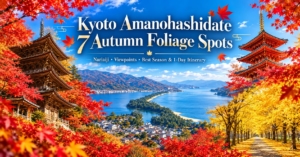
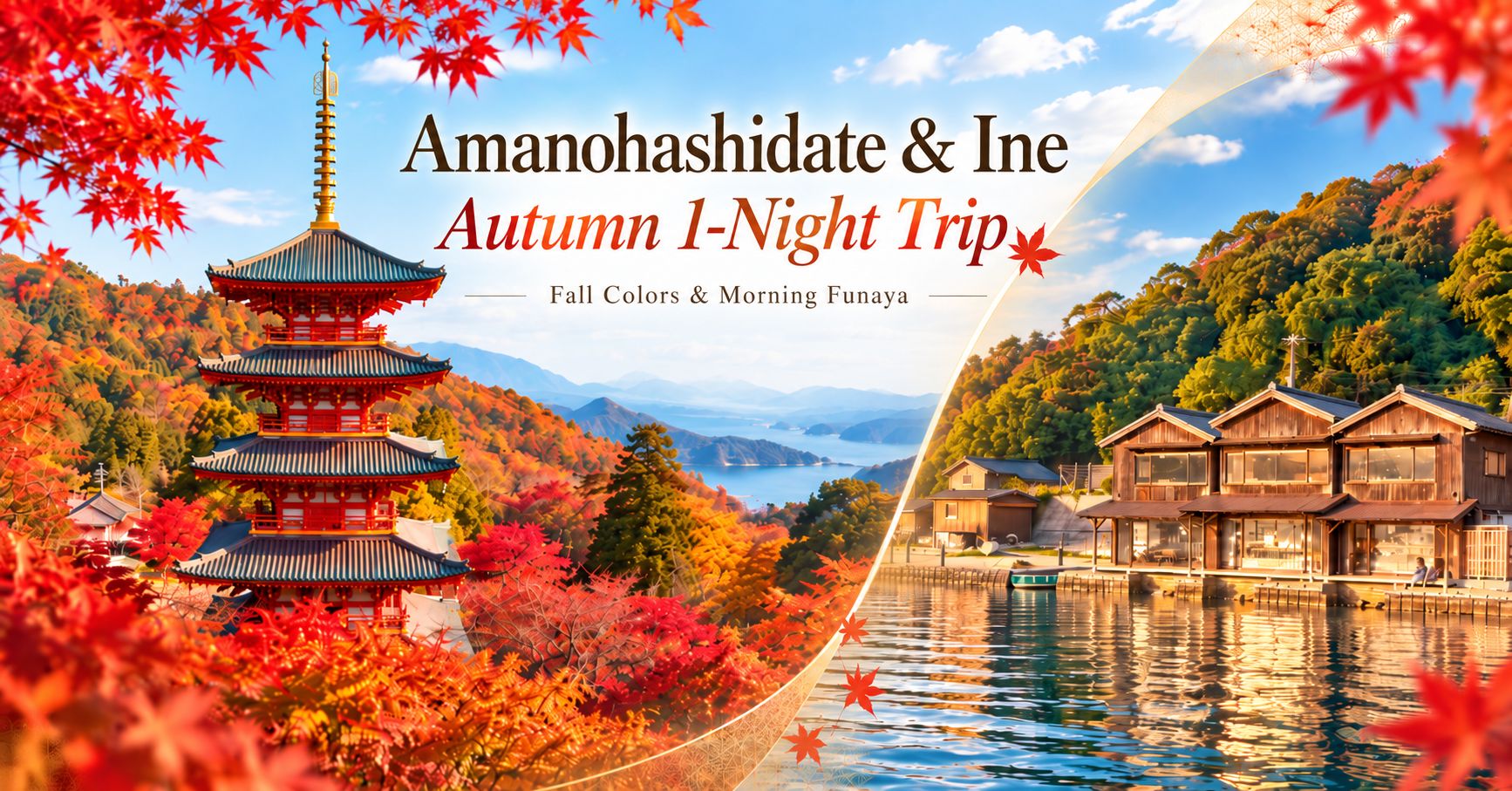
Looking down on autumn leaves — and beyond them, one of Japan’s three great views.
Nariai-ji, a temple on the hillside above Amanohashidate in northern Kyoto, is a foliage site with a rare advantage. Colored trees, a 33-meter five-story pagoda, and the sandbar spread out below, all in one view. There are not many places where those three things line up.
Autumn in Kyoto usually means the temples of the city, but traveling further north opens up an autumn the city cannot offer.
The foliage season also overlaps with the opening of snow crab fishing on 6 November. And the Ine boat houses have mornings and evenings that only overnight guests get to see.
This article makes the case for spending a night in Amanohashidate or Ine in autumn.
What autumn here offers that Kyoto city does not
The foliage in central Kyoto is superb. But autumn in Amanohashidate and Ine offers several things the city cannot.
A different density of people
From late November into December, central Kyoto is at its busiest. Roads and buses around Arashiyama and Higashiyama are congested during the day, and a large share of the day can go on moving and queuing.
In Amanohashidate and Ine, in the same foliage season, the proportion of the day you actually spend looking at the scenery is very different.
You get the mornings and evenings
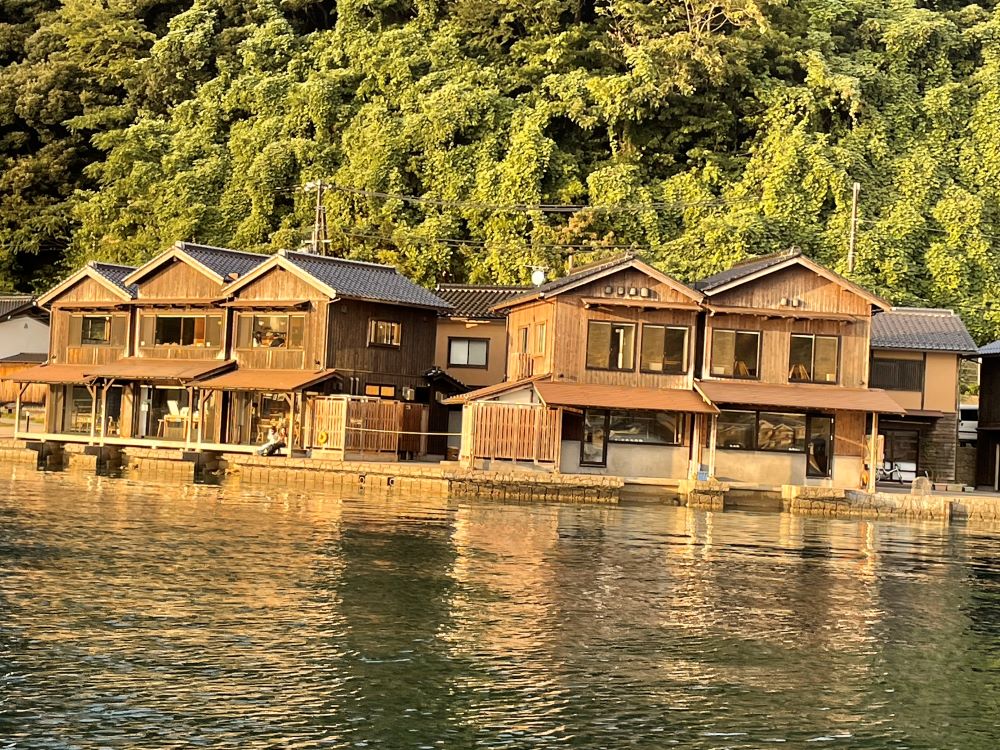
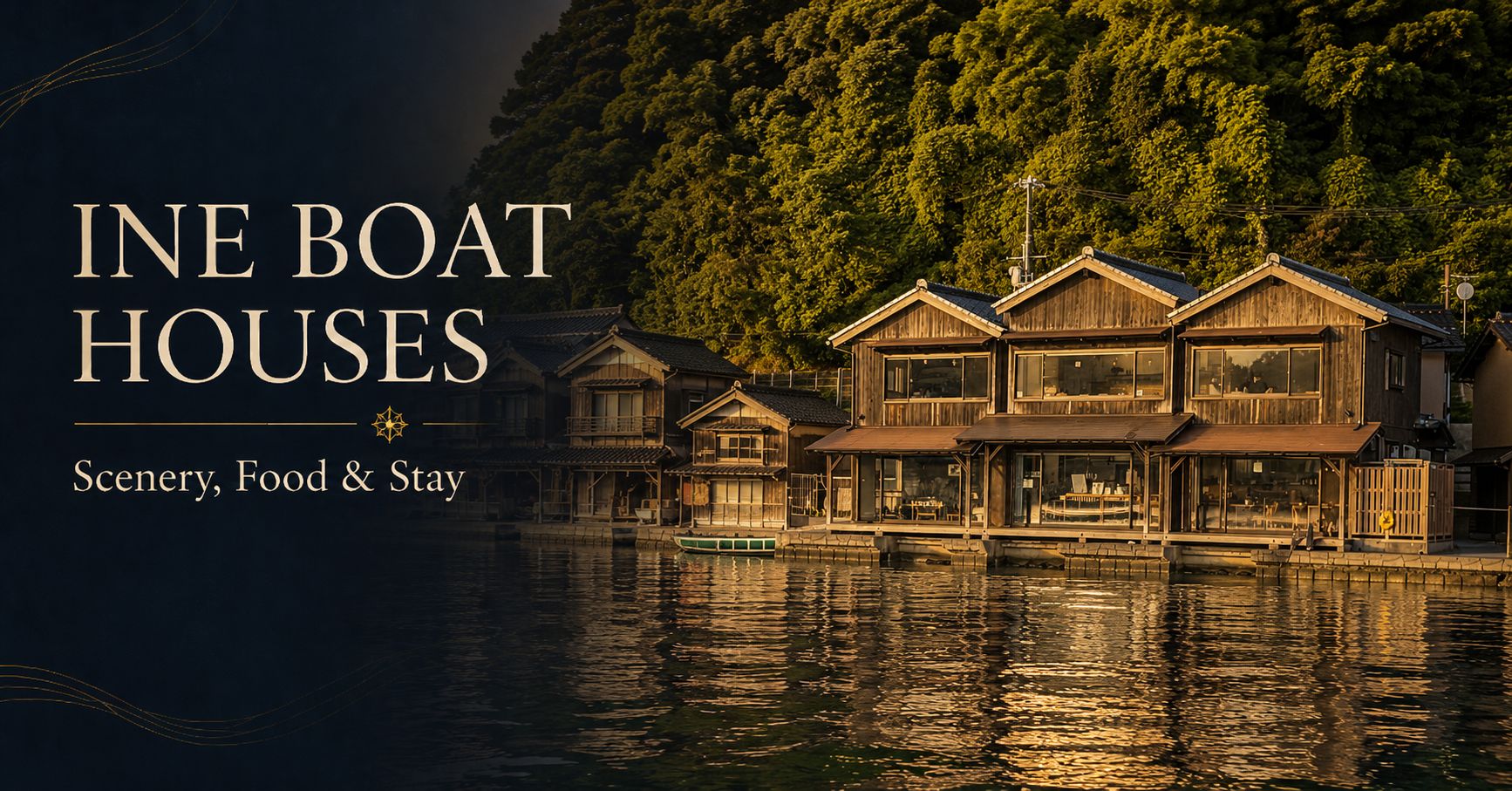
The boat houses at Ine are at their quietest and most striking before the day trippers arrive and after they leave. Those hours belong to people staying in the area.
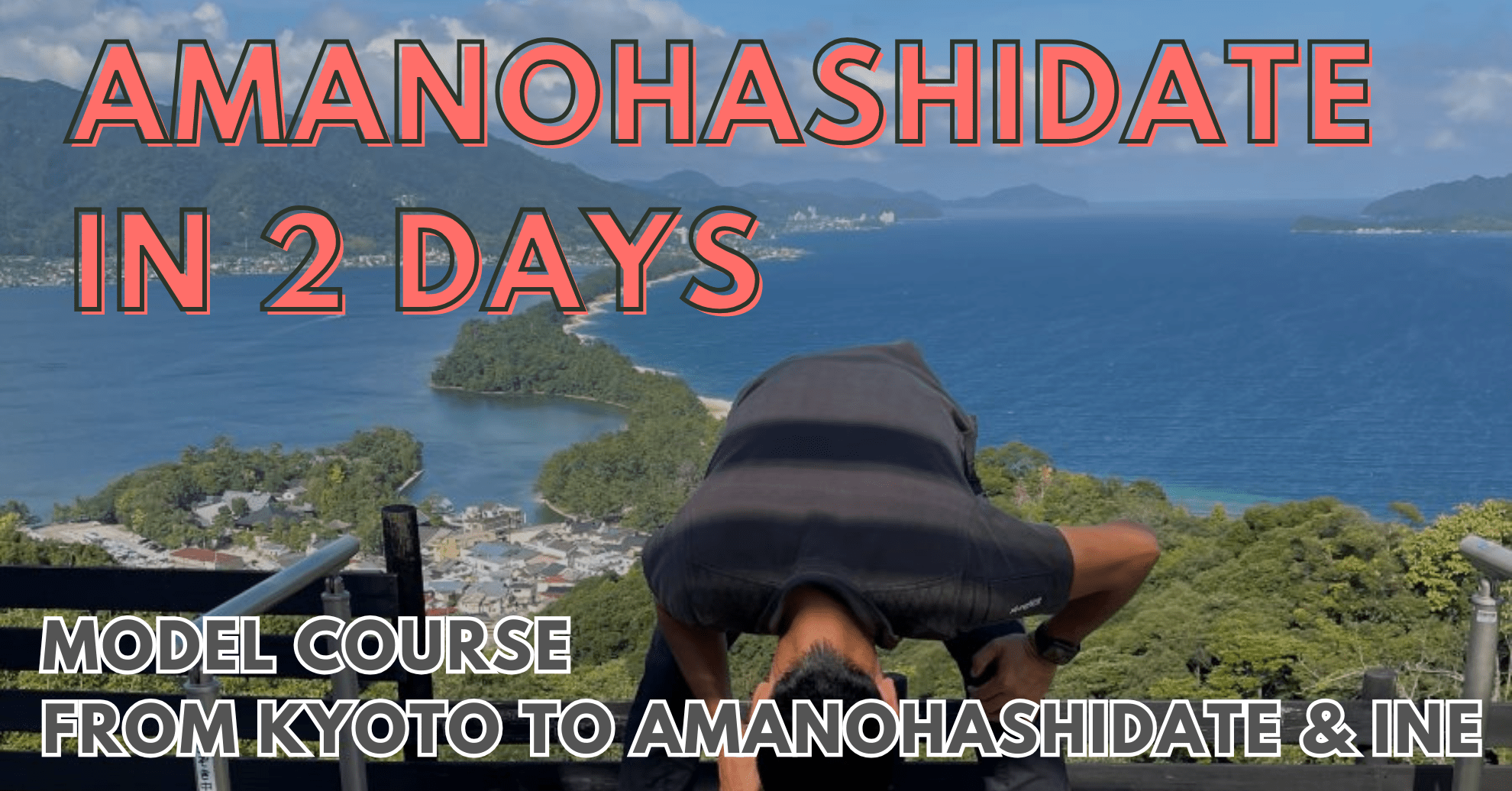
Amanohashidate is around two hours from central Kyoto by limited express. A day trip is possible, but this article is about staying the night.
You can split Amanohashidate and Ine across two days
Amanohashidate and Ine are about 35 minutes apart by car. Doing both in one day means spending it moving.
Stay locally and you can split them: Amanohashidate and Nariai-ji on day one, Ine on day two, with time to spare in each.
Because Ine Bay opens to the south, from open ground on the eastern side you can also watch the sunrise over the sea. Sunrise in November is around 6:16 a.m. at the start of the month and around 6:46 a.m. at the end — an early start, but a realistic one.
Looking down on foliage and the sandbar at once: Nariai-ji
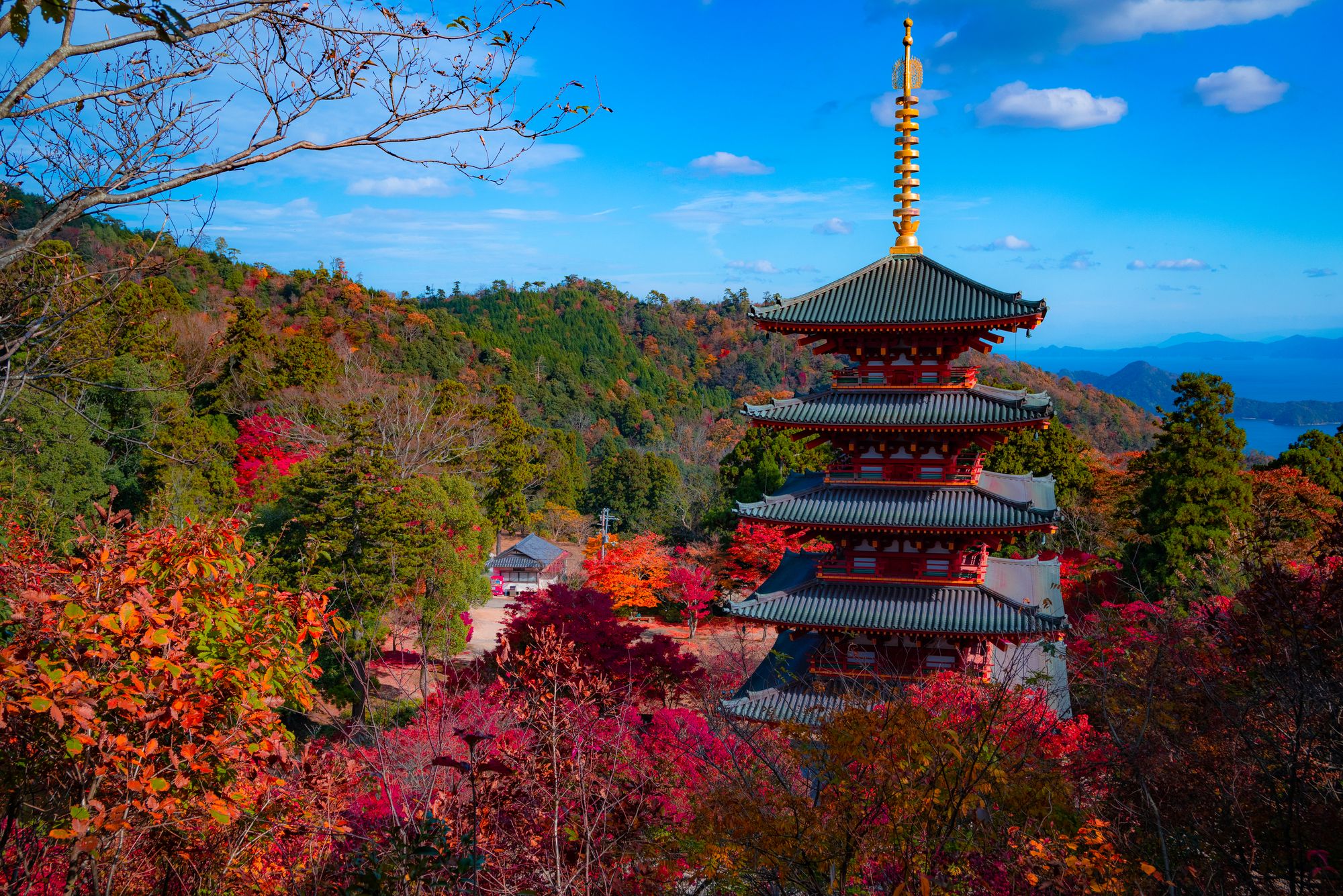
The centerpiece of this itinerary is Nariai-ji, on the hillside above the sandbar.
It is the 28th temple of the Saigoku pilgrimage, and one of the best-known foliage sites in the Tango region.
The foliage is usually at its best from mid- to late November. Maple, Japanese maple, oak and hornbeam grow across the grounds, and the 33-meter five-story pagoda and main hall framed by autumn color make a striking scene. In some years the temple holds an illumination.
The real strength of Nariai-ji, though, is that the foliage and Amanohashidate can be seen together. At most temples and gardens in Kyoto city you look up at the foliage; because Nariai-ji sits on a hillside, you look down over the leaves toward the sandbar. The sea and the foliage occupy the same frame — a combination the city’s famous sites cannot match.
▶Nariai-ji
▶Address: 339 Nariaiji, Miyazu, Kyoto
▶Foliage: usually mid- to late November
▶Main species: maple, Japanese maple, oak, hornbeam
▶Admission: 500 yen
▶Parking: 50 spaces
▶Access: Kasamatsu cable car plus the Nariaisan bus, or by car
*Prices and services can change. Please check the official website for current information.
(Source)
https://koyo.walkerplus.com/detail/ar0726e12724/
And 6 November is the opening day for crab
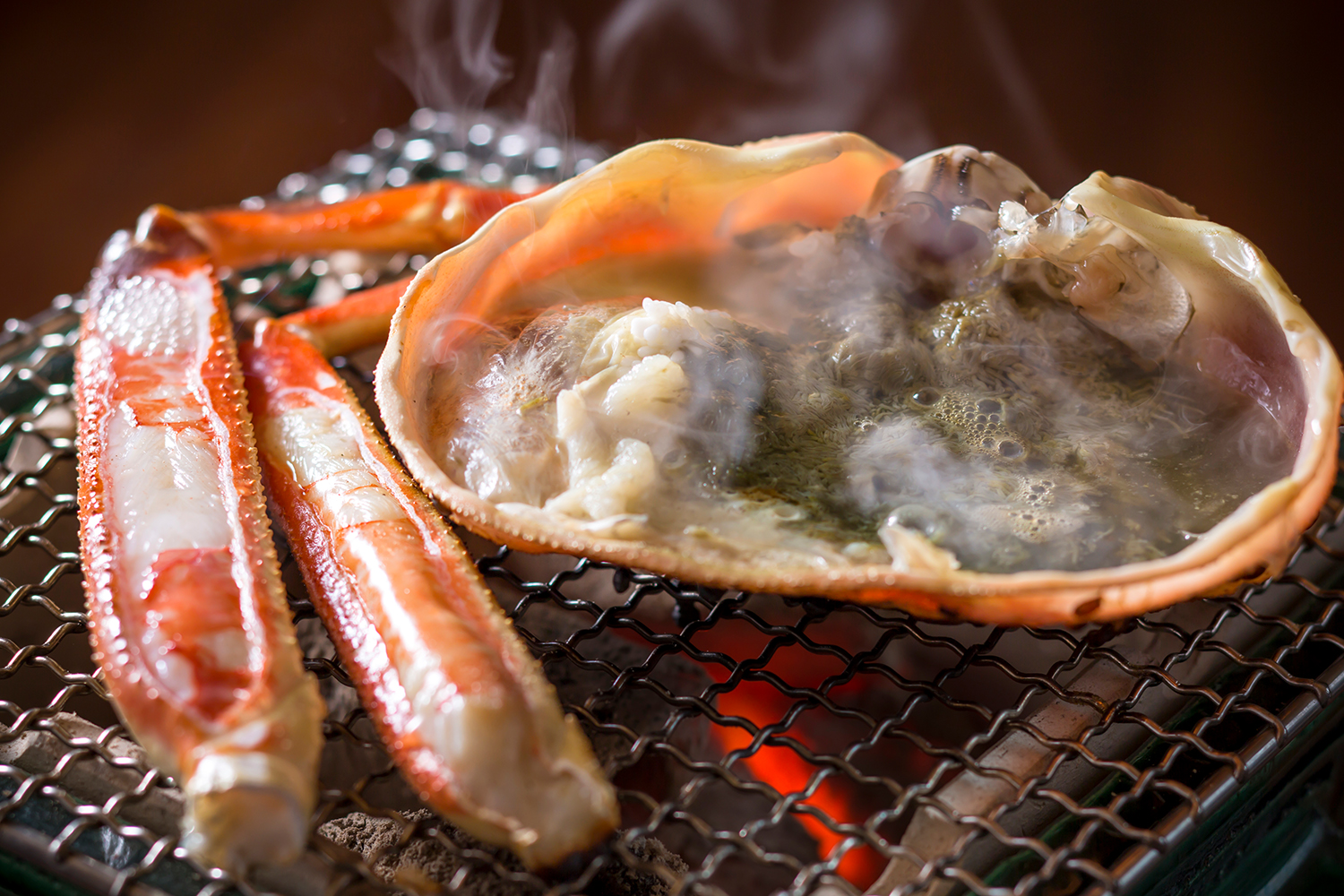
There is one more reason to come at this time of year.
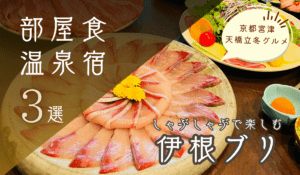
Kyoto Prefecture’s snow crab season opens every year on 6 November — overlapping neatly with the foliage at Nariai-ji.
Snow crab landed in Tango carries a tag identifying where it was caught, and accommodations around Miyazu begin serving full live-crab courses. See the foliage, eat crab where it is landed, and stay the night. November in Amanohashidate is one of the few times all three are possible at once.
As the New Year approaches, however, both crab prices and room rates rise. For foliage and crab together, mid-November to early December is the window.
When is Ine at its most beautiful?
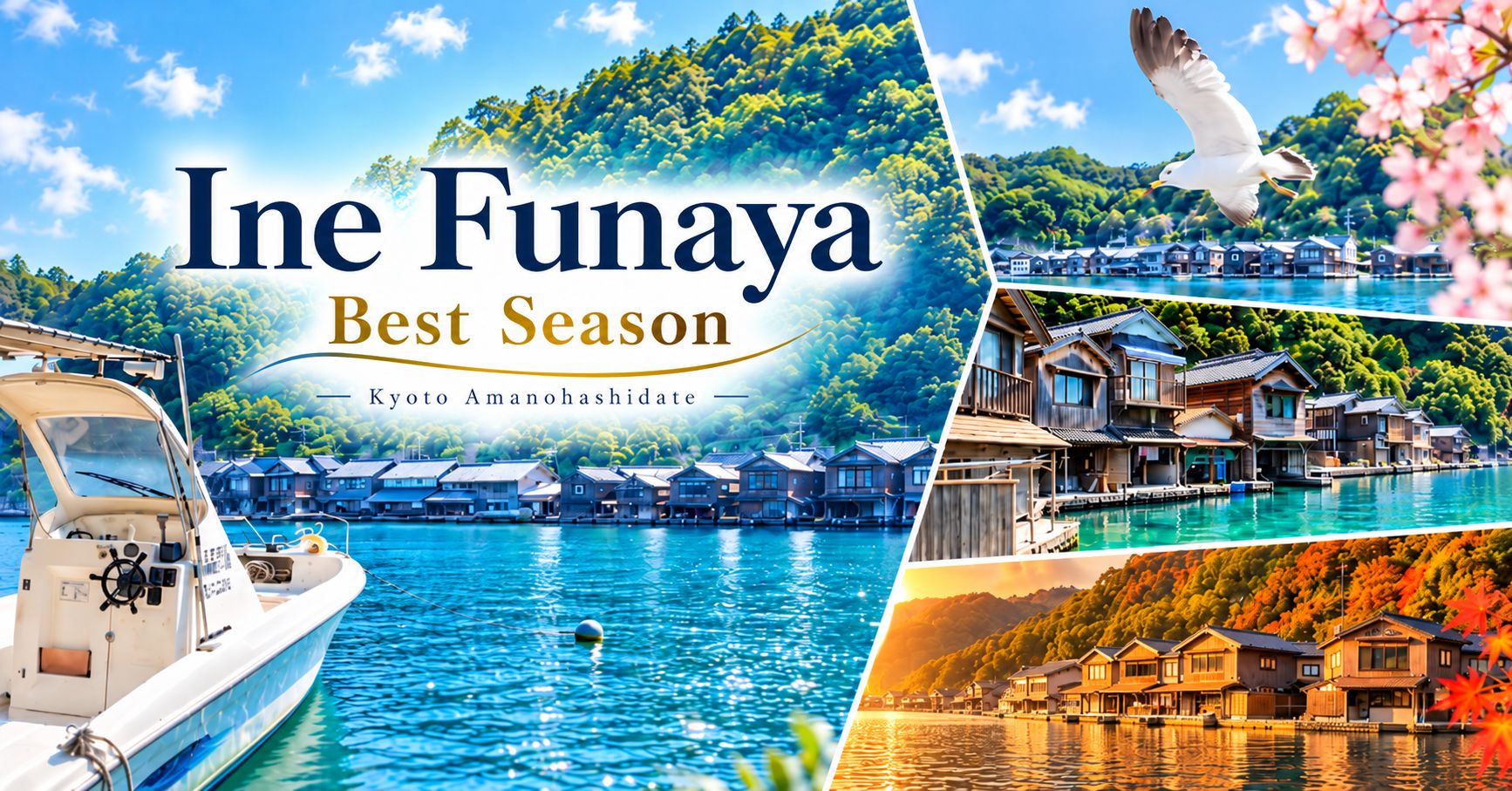
What you see at the Ine boat houses depends not only on the season but on the weather and the wind that day. On a clear day with little wind, the bay turns deep green and reflects the funaya and the mountains behind them.
The seasonal differences, and the timing for morning light, are covered in the article below.

Four places to stay around Miyazu
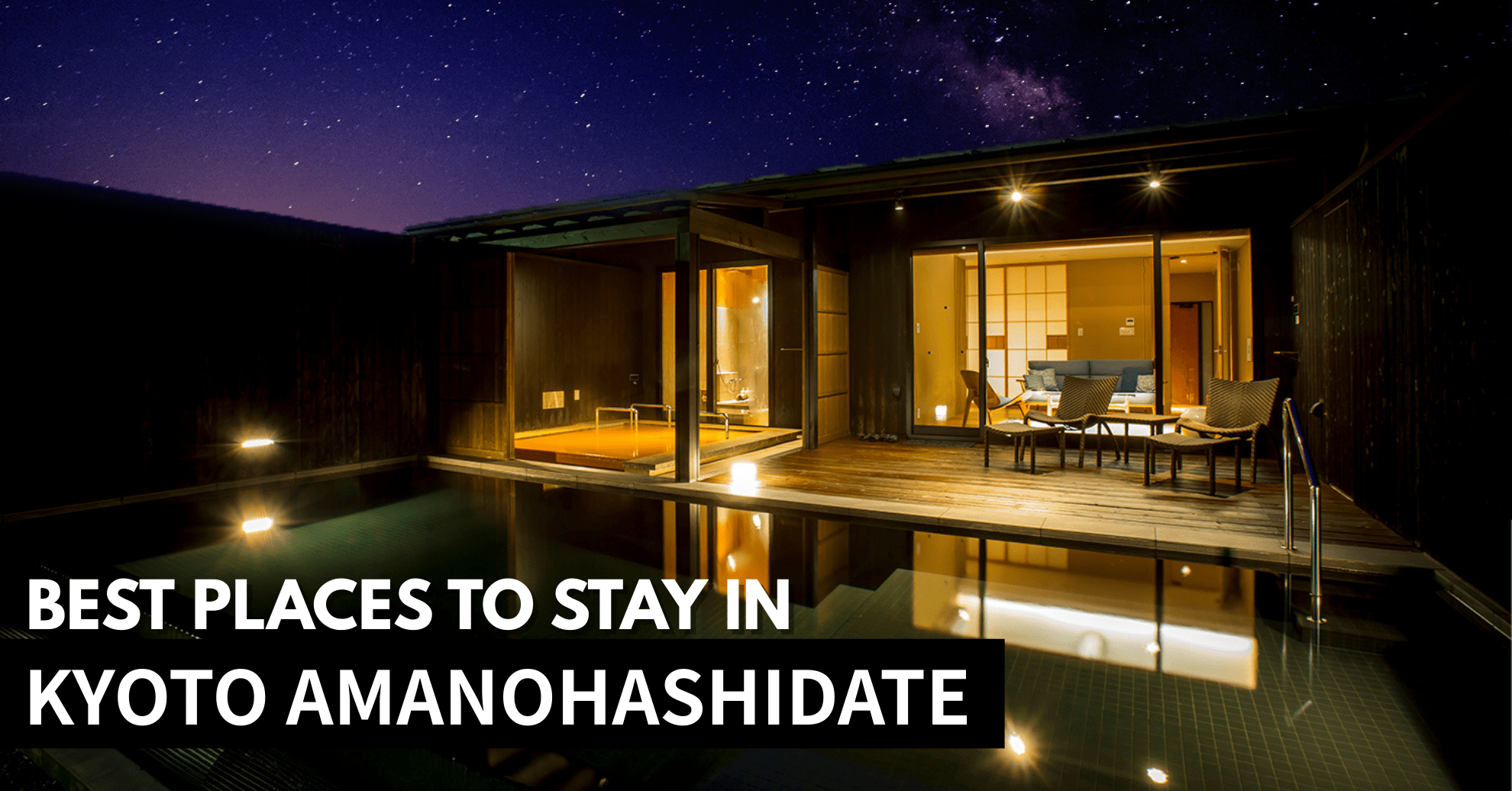
Miyazu and Amanohashidate have a number of places built around hot springs and food. Here are four with distinct characters. All offer crab plans in winter.
Hoshino-Oto: food and hot springs, for two adults
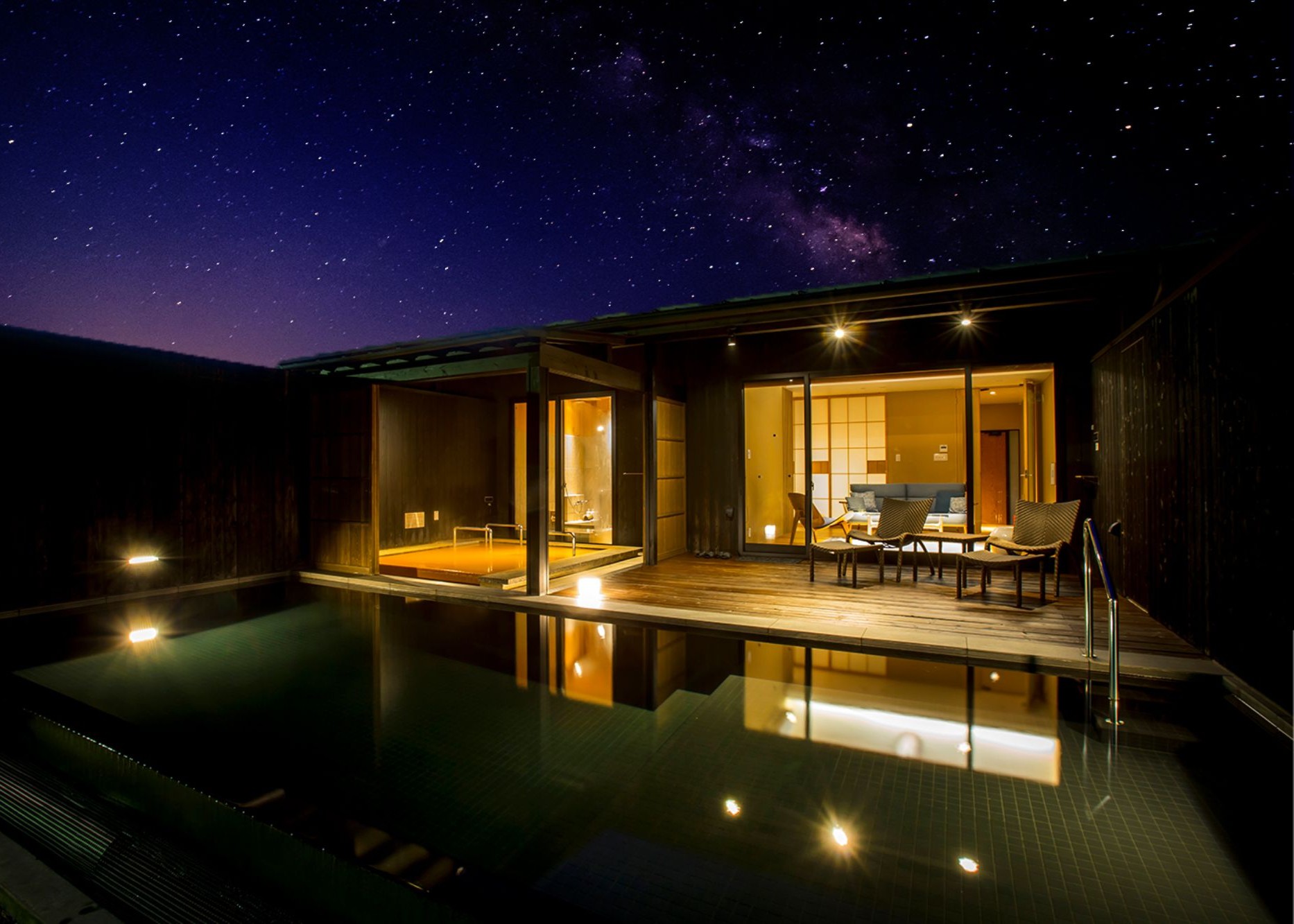
A resort villa taking only seven groups a day, with a private pool and two natural hot springs in every villa.
At Kanon, the restaurant on the property, the kitchen builds creative dishes from Amanohashidate ingredients. In winter there is a limited-season plan featuring Taiza crab and other premium local brand crab as a full course.
Guests must be of junior-high-school age or older, which suits a quiet, adults-only stay.
▶Amanohashidate Rikyu Hoshino-Oto
▶Address: 2686 Hioki, Miyazu, Kyoto
▶Type: seven resort villas (seven groups per day)
▶Features: kin and gin hot springs / private pool / age 13 and over
Auberge Villa SOSO: one group a day, at a restaurant you can sleep in
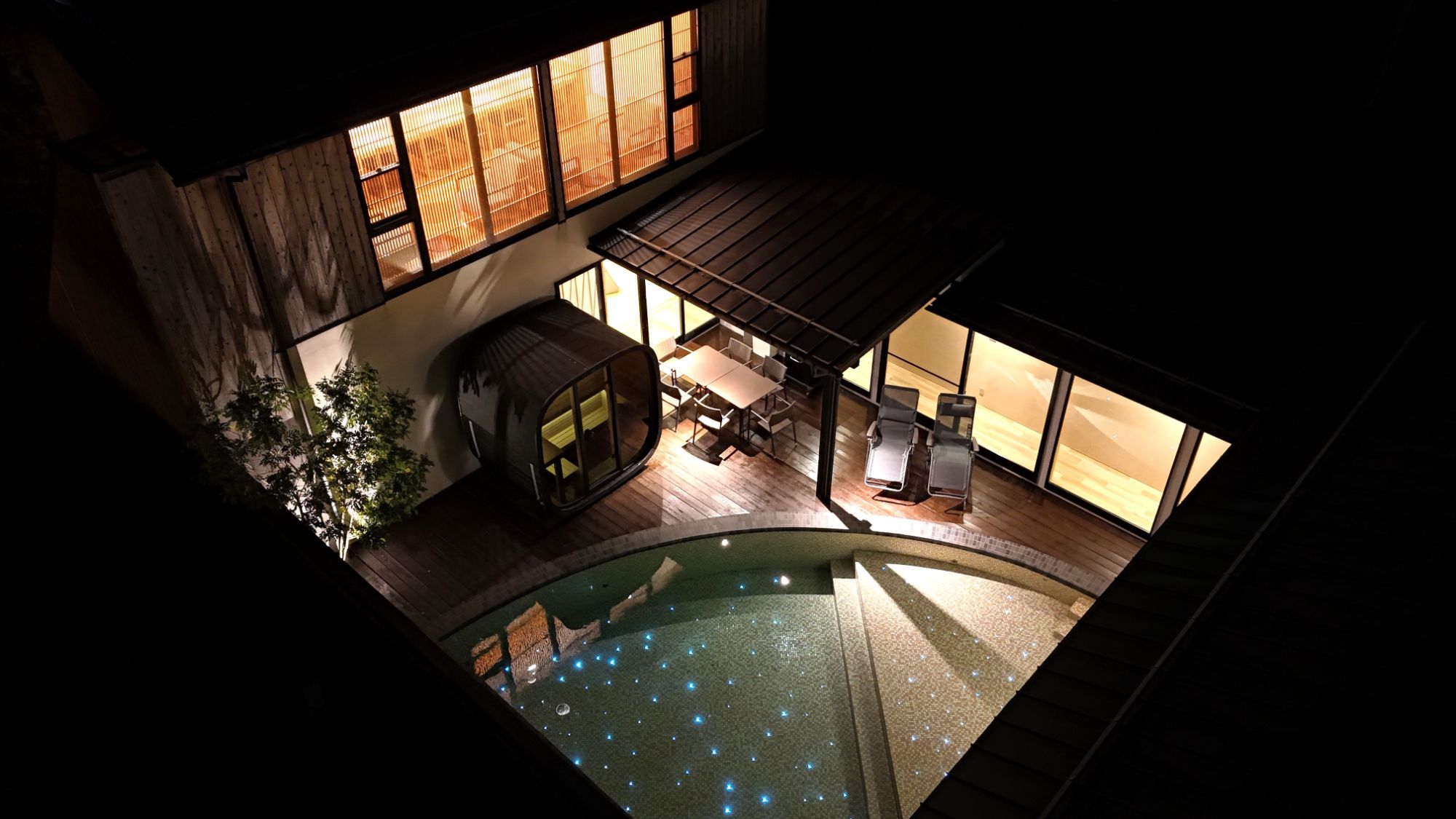
An auberge taking one group per day, built on the idea of a restaurant you stay in, with the meal at the center of the trip.
Because you have the whole building, it works well for families and groups. A good choice if you want to come back from the foliage and eat without keeping an eye on anyone else.
▶Auberge Villa SOSO
▶Area: Miyazu, Kyoto
▶Type: auberge, one group per day
▶Features: whole-house rental / food-focused / suits families and groups
MEZZO ALL SUITE VILLAS: for easy access from Amanohashidate Station
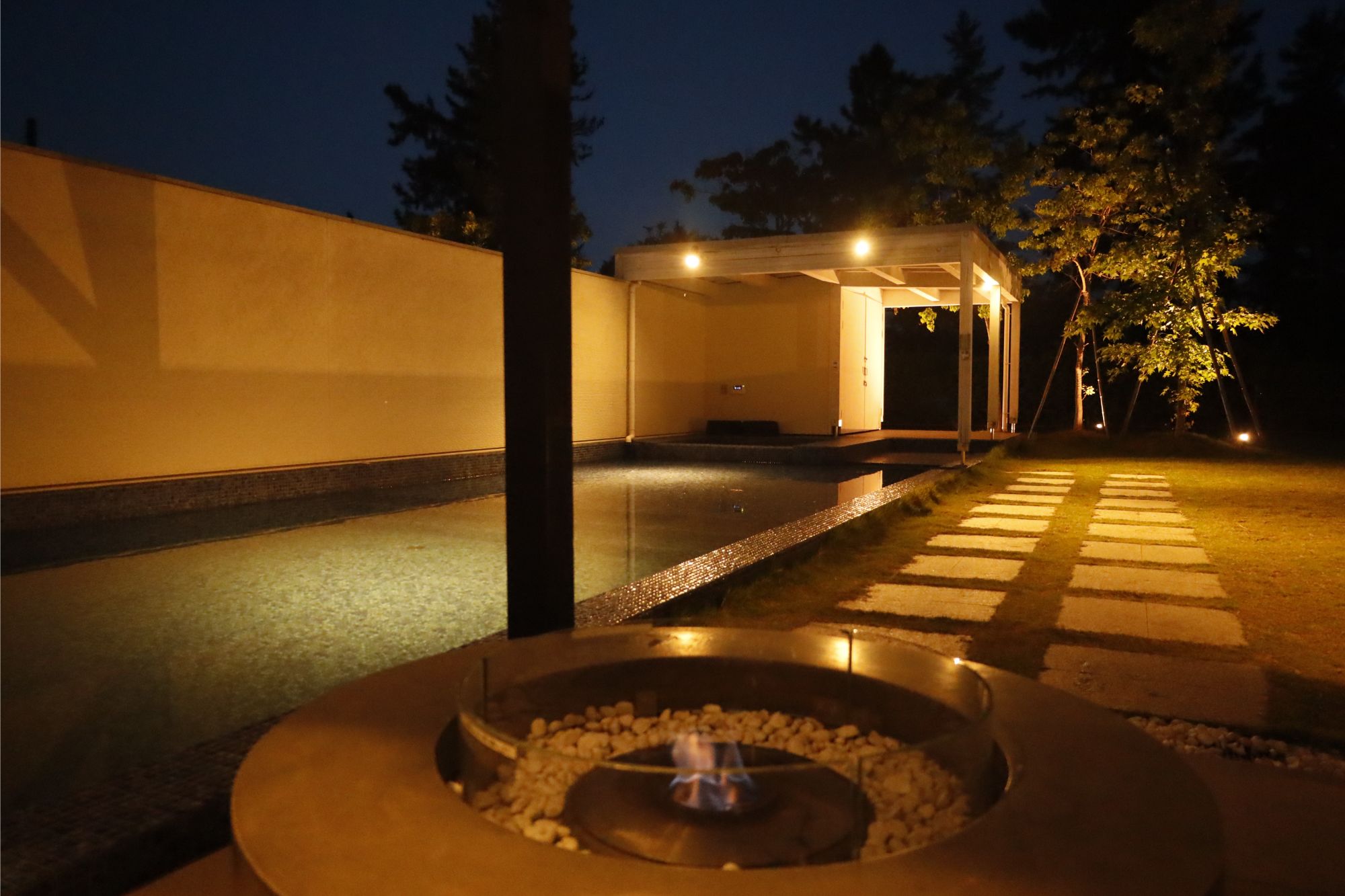
Its main strength is proximity to Amanohashidate Station, which suits anyone arriving by train from Kyoto and using the station as a base for Nariai-ji and Ine.
All villas are suites, and winter brings full live-crab course plans. A practical option if you would rather not drive.
▶MEZZO ALL SUITE VILLAS
▶Area: Miyazu, Kyoto
▶Type: all-suite villas
▶Features: close to Amanohashidate Station / crab plans available
Hanashobu: for guests who want the hot springs
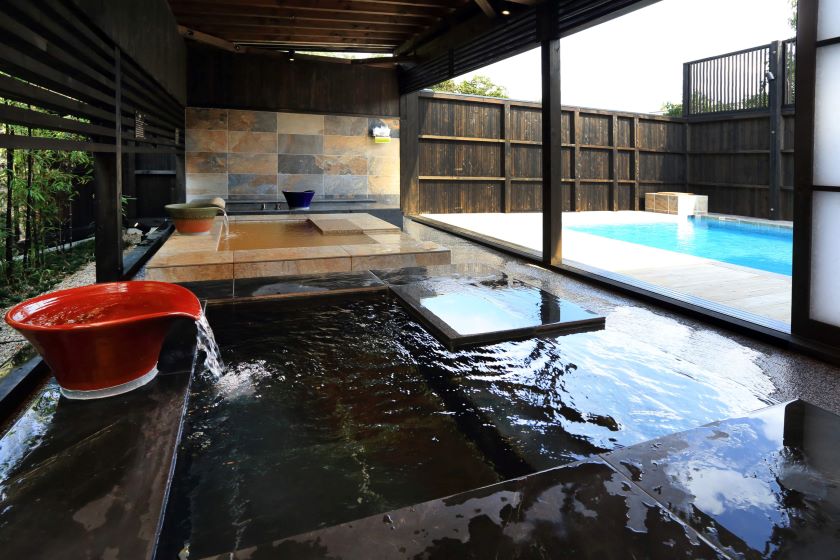
A property built around three hot springs and the comfort of Japanese-style rooms.
Late autumn in Tango is cold. This suits the classic approach: eat crab, take a long bath, and rest in a tatami room.
▶Hanashobu
▶Area: Miyazu, Kyoto
▶Type: accommodation with hot springs
▶Features: three hot springs / Japanese-style rooms / crab plans available
Beyond these four, the Miyazu area also has Rurihama, Marinetopia The Suite and Auberge Villa KUON, among others, where you can combine hot springs with crab.
In closing: the view gets wider the further north you go
Looking down on autumn color, with the sea beyond it. That is what autumn in Amanohashidate and Ine offers.
Nariai-ji, where the foliage and the sandbar can be seen together. Snow crab, from 6 November. The mornings and evenings at Ine that only overnight guests reach. These come together only at this time of year.
Miyazu has places to stay built around hot springs and food. This autumn, consider going a little further north in Kyoto and spending a night in Amanohashidate or Ine.
More of the Amanohashidate area
-

[Kyoto Amanohashidate] When to Visit the Ine Boat Houses: Choosing by Season, Weather and the Look of the Water
-
[Kyoto] The Ine Boat Houses: Scenery, Food, Where to Stay and How to Get There
-
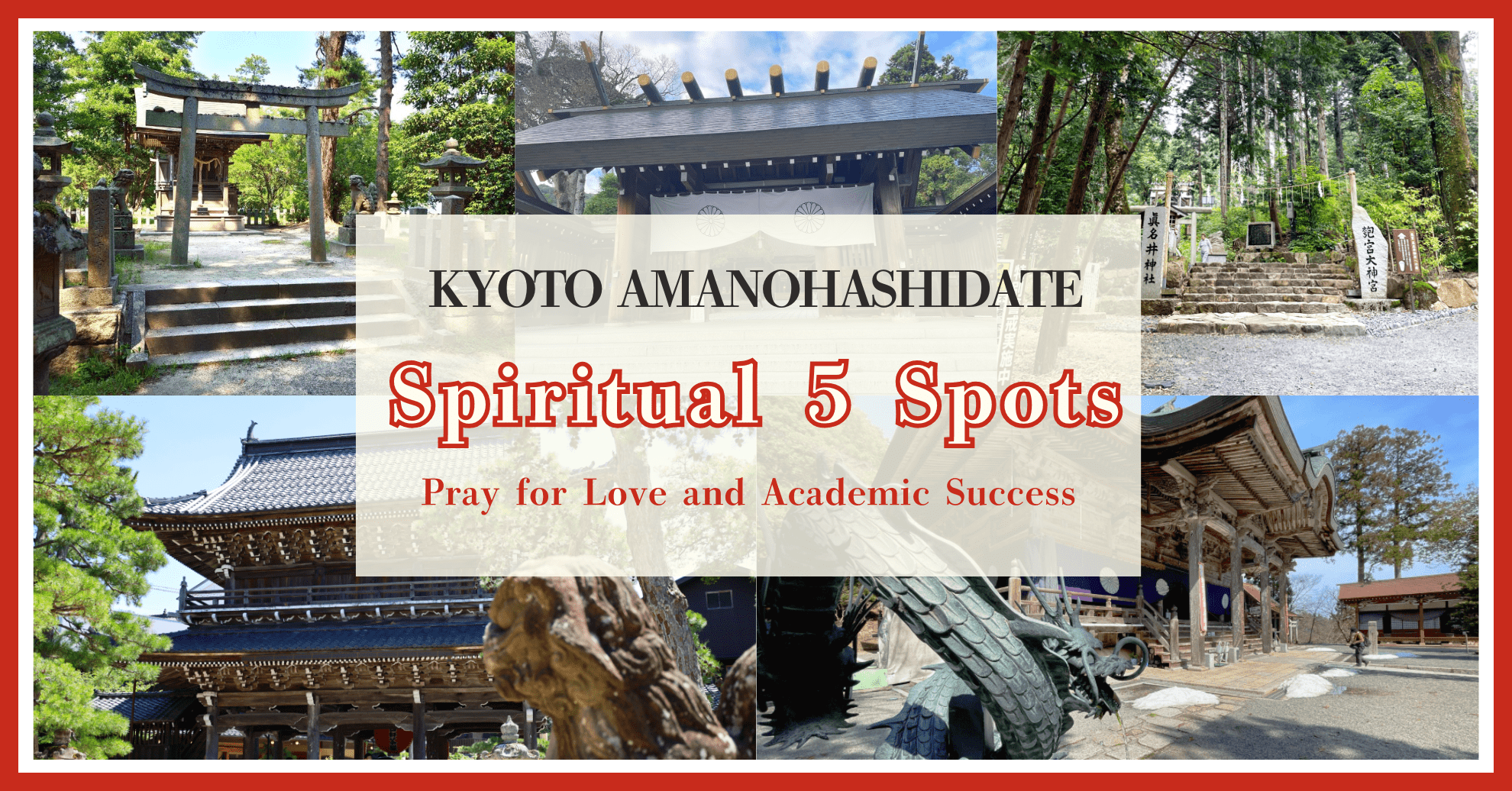
Explore the Sacred Shrines & Temples of Amanohashidate: Pray for Love, Wisdom & Success
-
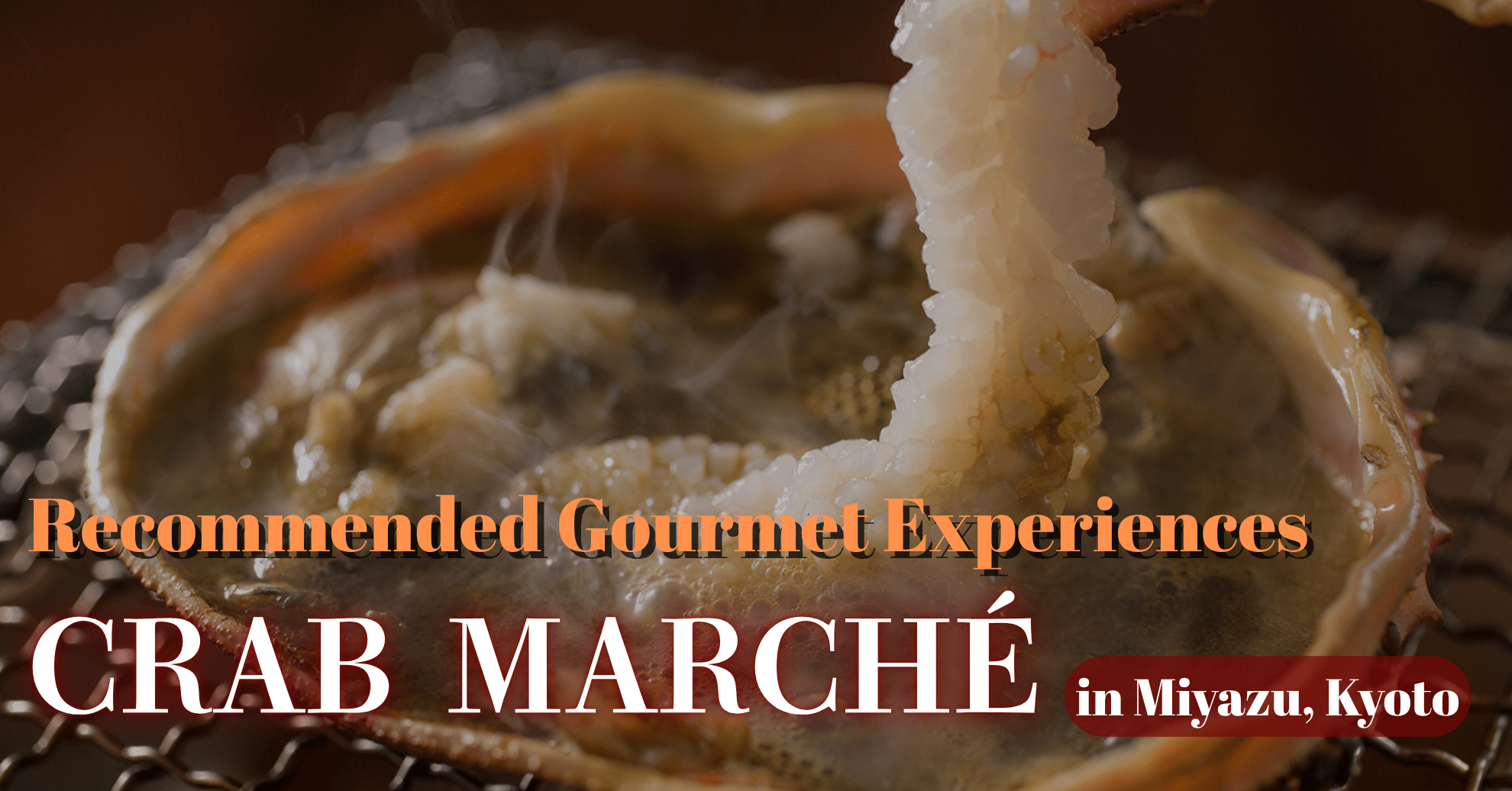
[Kyoto] Winter in Amanohashidate: the Crab Marché, and 9 Hot Spring Villas Serving Live Crab as a Full Course
-
[Kyoto] How to Enjoy Amanohashidate – A 2-Day Model Course from Kyoto to Amanohashidate & Ine
-
8 Hot Spring Ryokans with Excellent Food in Miyazu and Amanohashidate, Kyoto