Most people come to Amanohashidate for the view from the sandbar and for seafood from the Sea of Japan. The area also has a number of shrines and temples where visitors pray for success in love, in study, and in business.
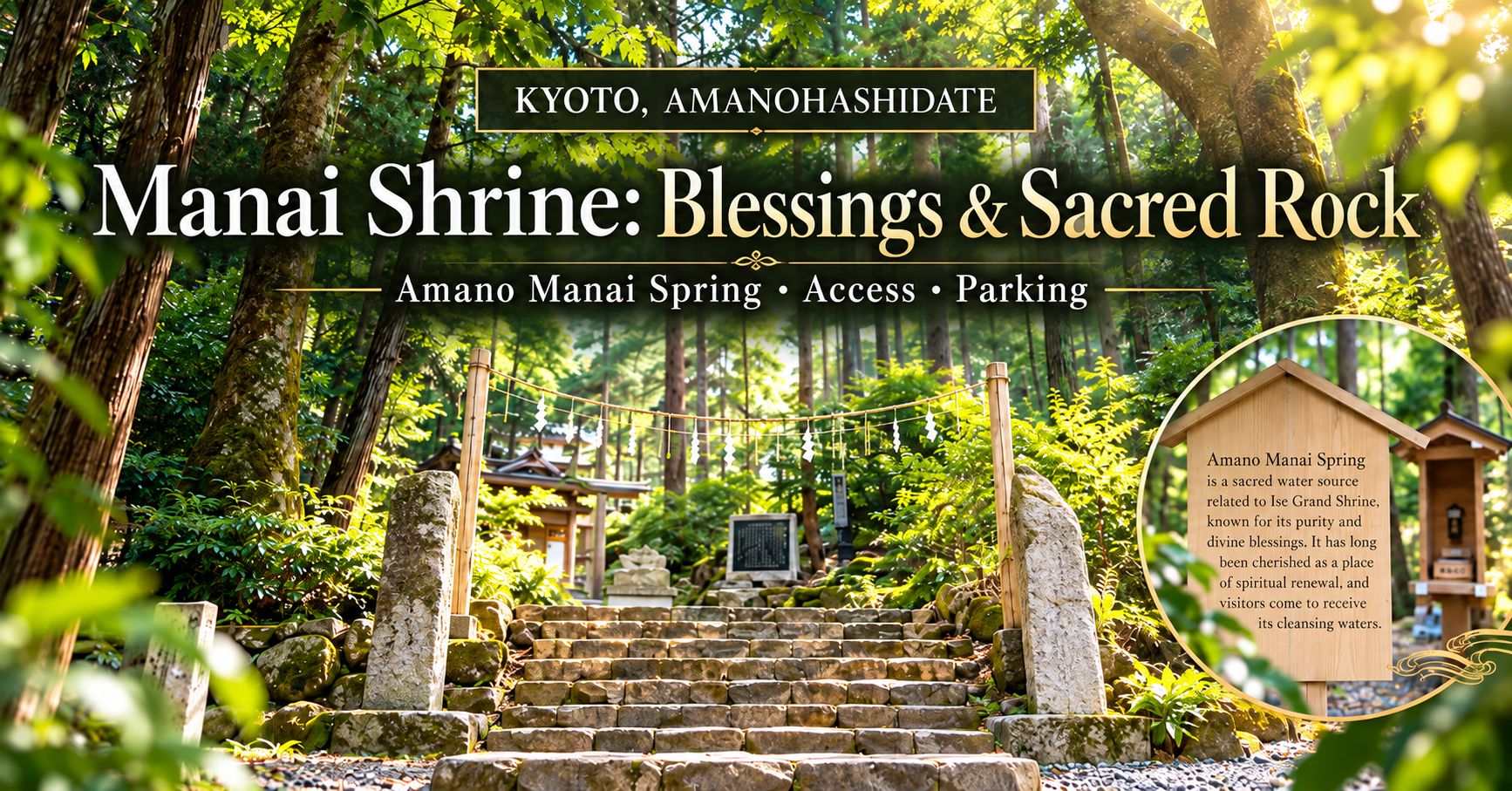
At the north end of the pine-lined sandbar, in the Fuchu district, stands Manai Shrine (Manai Jinja), the inner shrine of Motoise Kono Shrine. It has been a place of worship since ancient times.
Behind the main hall are iwakura, sacred rocks that have been worshiped in the same form for about 2,500 years. Beside the torii gate, spring water known as Ama no Manai no Mizu rises from the ground. The shrine is one of the better-known spiritual sites in the Kitakinki region.
This article covers the blessings associated with Manai Shrine, what to see there, what visitors say about it, and how to reach the shrine.
It is written for travelers interested in the spiritual sites around Amanohashidate, and for anyone who wants clear directions to Manai Shrine.
Contents
About Manai Shrine: The Inner Shrine of Kono Shrine, Where a 2,500-Year-Old Form of Worship Remains
Manai Shrine, known as a spiritual site
Manai Shrine is the inner shrine of Motoise Kono Shrine, the first shrine of the former Tango Province. It is also called Kushihama no Miya. According to the Amanohashidate Tourism Association, “kushi” refers to the source of a mysterious, subtle power.
The atmosphere changes once you leave the busy sandbar. Walk inland from Kono Shrine and the approach runs quietly through the trees.
What makes Manai Shrine unusual are the iwakura behind the main hall. Before shrine buildings existed, people believed that deities dwelled in large rocks and trees themselves, and offered their prayers there.
The Amanohashidate Tourism Association states that the iwakura have been worshiped in the same form for about 2,500 years. In other words, a place of prayer older than the shrine building itself has been left as it was. Knowing this changes how the same scenery looks.
Photography is now prohibited in part of the sacred grounds
Visitors used to be able to take photographs freely and to walk right up to the iwakura. As the number of visitors grew, the previous head priest of Kono Shrine became concerned that the sacred grounds would be damaged, and measures to protect the area are now in place.
Manai Shrine is less a sightseeing stop than a place of worship that is still carefully looked after. Rather than taking photographs, it suits a quiet moment with your hands joined. Please follow the signs on site.
Blessings at Manai Shrine: Daily Life and Business, Matchmaking and Marital Harmony
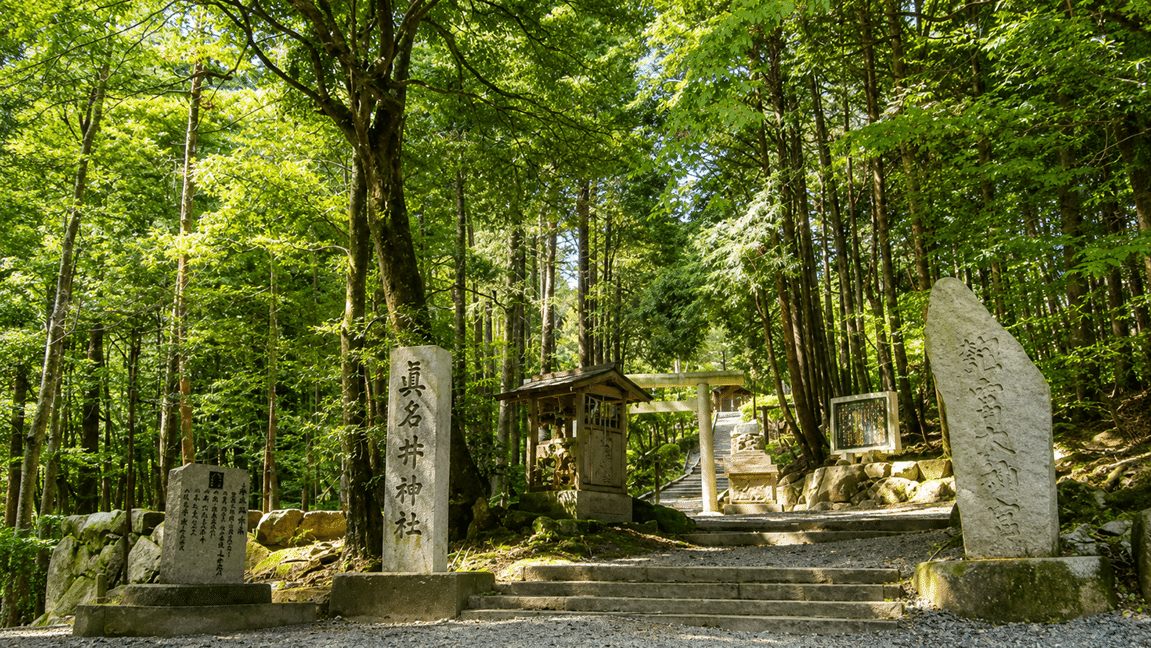
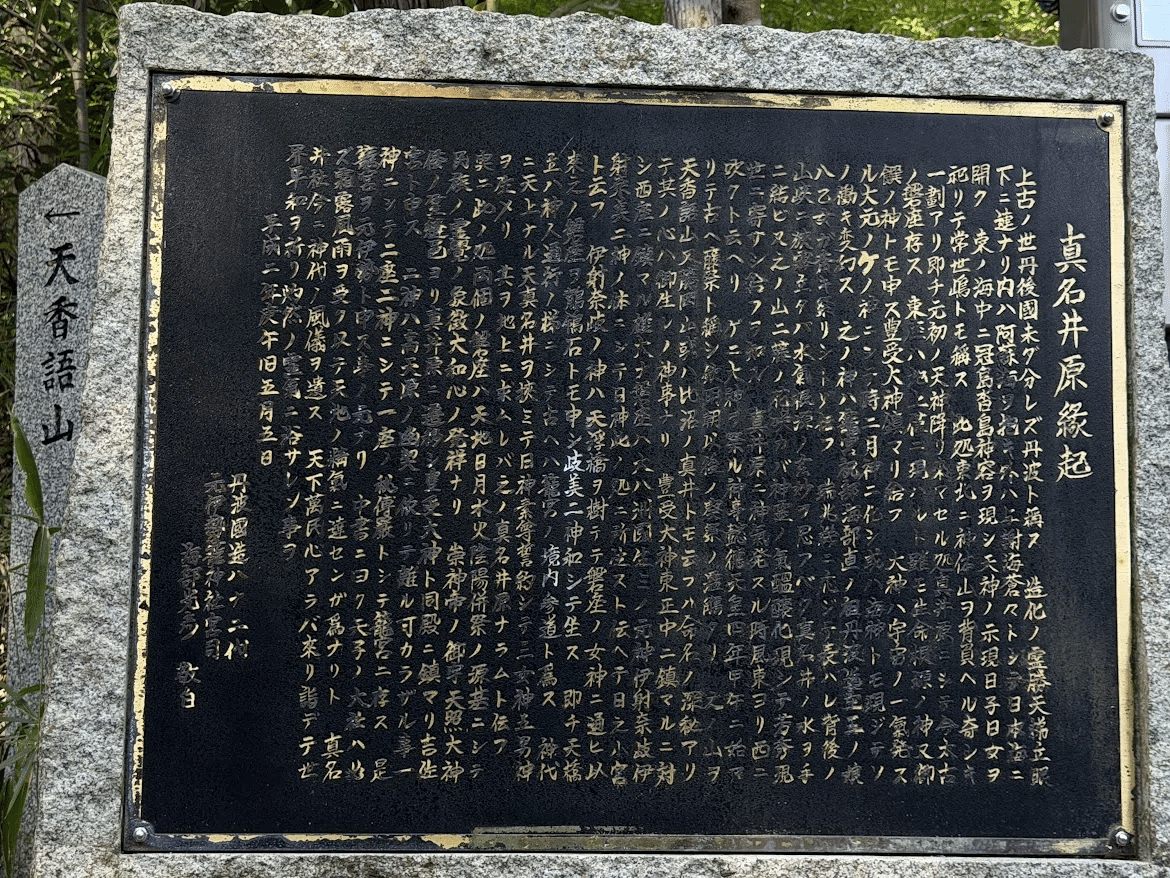
A stone monument stands quietly in the grounds
The iwakura at Manai Shrine are divided into a main seat and a west seat, each enshrining different deities. The Kono Shrine website lists them as follows.
Iwakura
Deities
Associated blessings
Main seat
Toyouke Okami (with Mizuhanome no Mikoto, Hikohohodemi no Mikoto and the Kamiyo Itsutsuyo no Kami in the adjoining hall)
Abundant harvests; protection of food, clothing and shelter; prosperity in business
West seat
Amaterasu Okami Izanagi no Okami Izanami no Okami
Matchmaking and marital harmony; family safety and long life
Source: Motoise Kono Shrine official website, “Inner Shrine Manai Jinja”
Toyouke Okami, enshrined in the main seat, presides over industry and over food, clothing and shelter. The deity is also described as having an aspect of the moon and as being the same deity as Amenominakanushi no Kami. Blessings tied to daily life and business sit alongside those for matchmaking and marital harmony in the same grounds, which is what sets Manai Shrine apart.
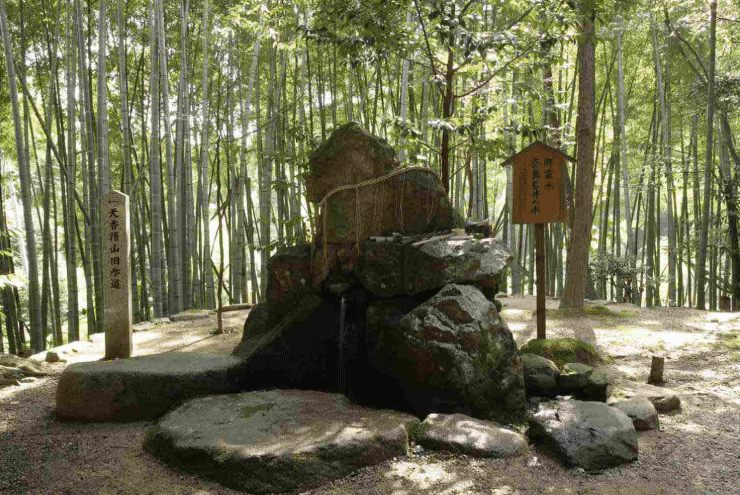
Ama no Manai no Mizu: Sacred Spring Water Beside the Torii Gate
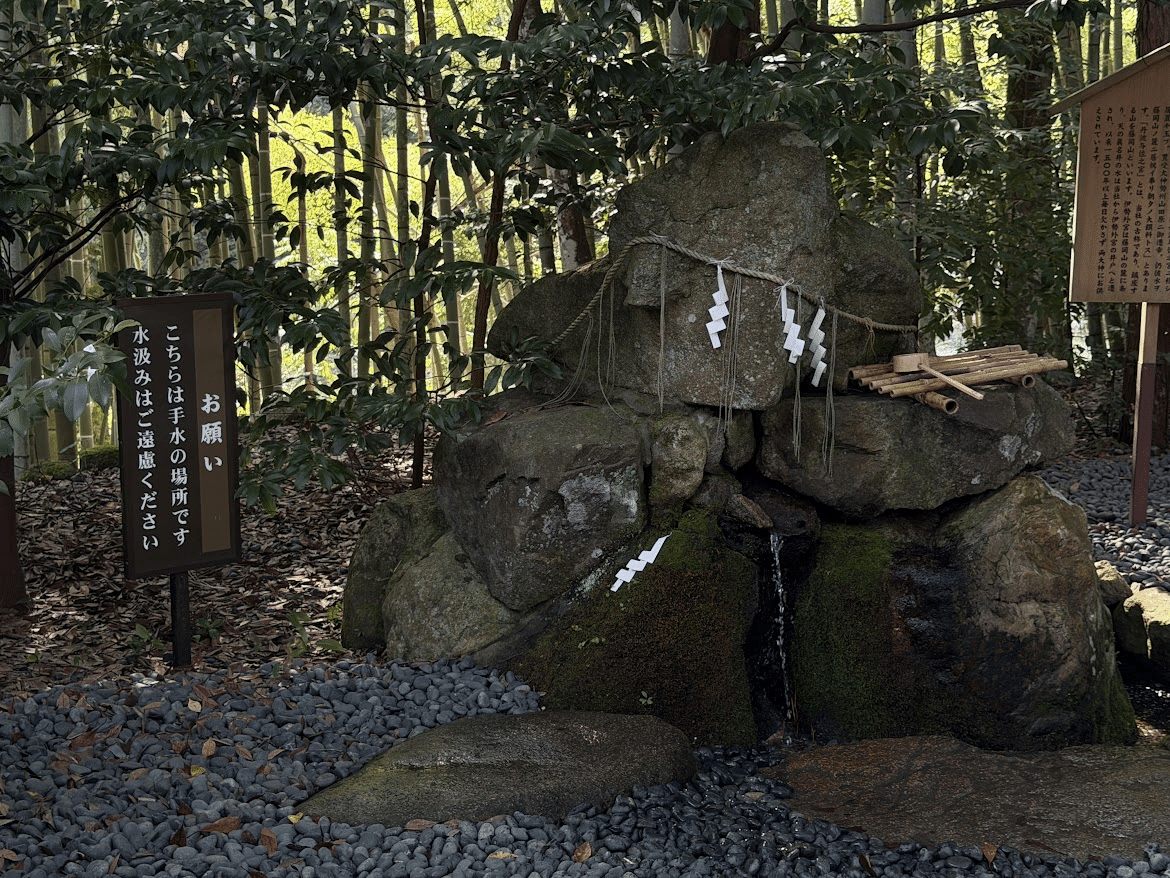
The sacred spring water Ama no Manai no Mizu
No account of Manai Shrine is complete without Ama no Manai no Mizu. The water rises steadily within the grounds, and people come from across Japan to draw it.
According to shrine tradition, the third ancestral deity, Amenomurakumo no Mikoto, carried water used by the deities down from the heavens in a golden bowl. The word “manai” itself is an honorific for water.
The term comes from Japanese mythology. The sacred well in Takamagahara, the heavenly realm where Amaterasu Omikami and the other heavenly deities were said to live, was called Ama no Manai, and the name serves as the highest honorific given to sacred water.
These origins give a sense of how sacred the site is considered to be.
Is Manai Shrine Frightening? What Visitors Actually Say
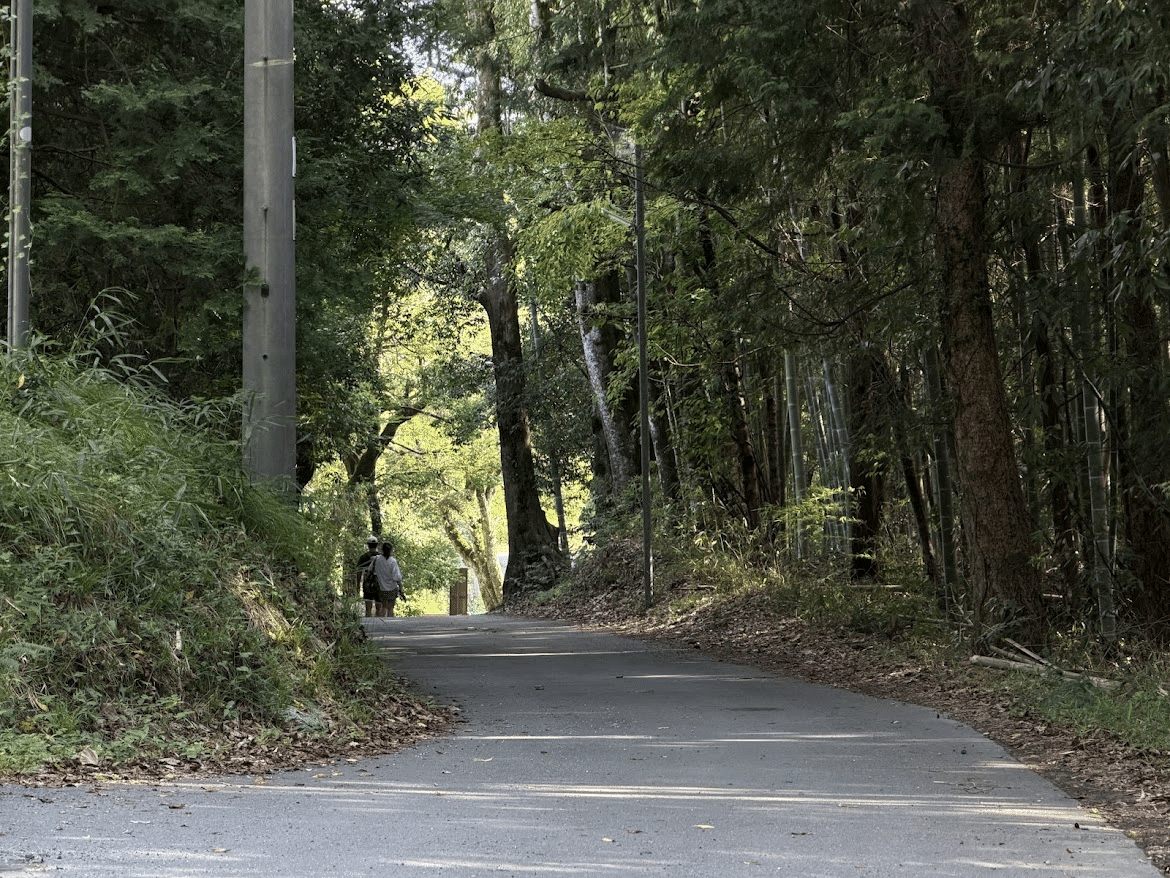
The walk back after visiting. Plenty of shade keeps it cool even in summer
Search for Manai Shrine and terms such as “Manai Jinja mysterious” and “Manai Jinja frightening” come up. Reading through the reviews, however, the meaning turns out to be somewhat different from a frightening legend.
Comments that come up often from visitors ・The air felt different ・Very quiet, with a sacred atmosphere ・Surrounded by mountain air, you naturally stand up straighter ・A sense of calm settles in ・Felt strong energy on seeing the iwakura
Impressions vary from person to person. What several reviews share, though, is not that the site is frightening, but that it is not a place to visit noisily as an extension of sightseeing.
Because many deities are enshrined here, the Amanohashidate Tourism Association asks visitors to refrain from visiting with impure intentions. Visit with respect for the deities and you will take in the atmosphere of the place.
Getting to Manai Shrine: A 7-Minute Walk from Kono Shrine, with a 200-Meter Climb at the End
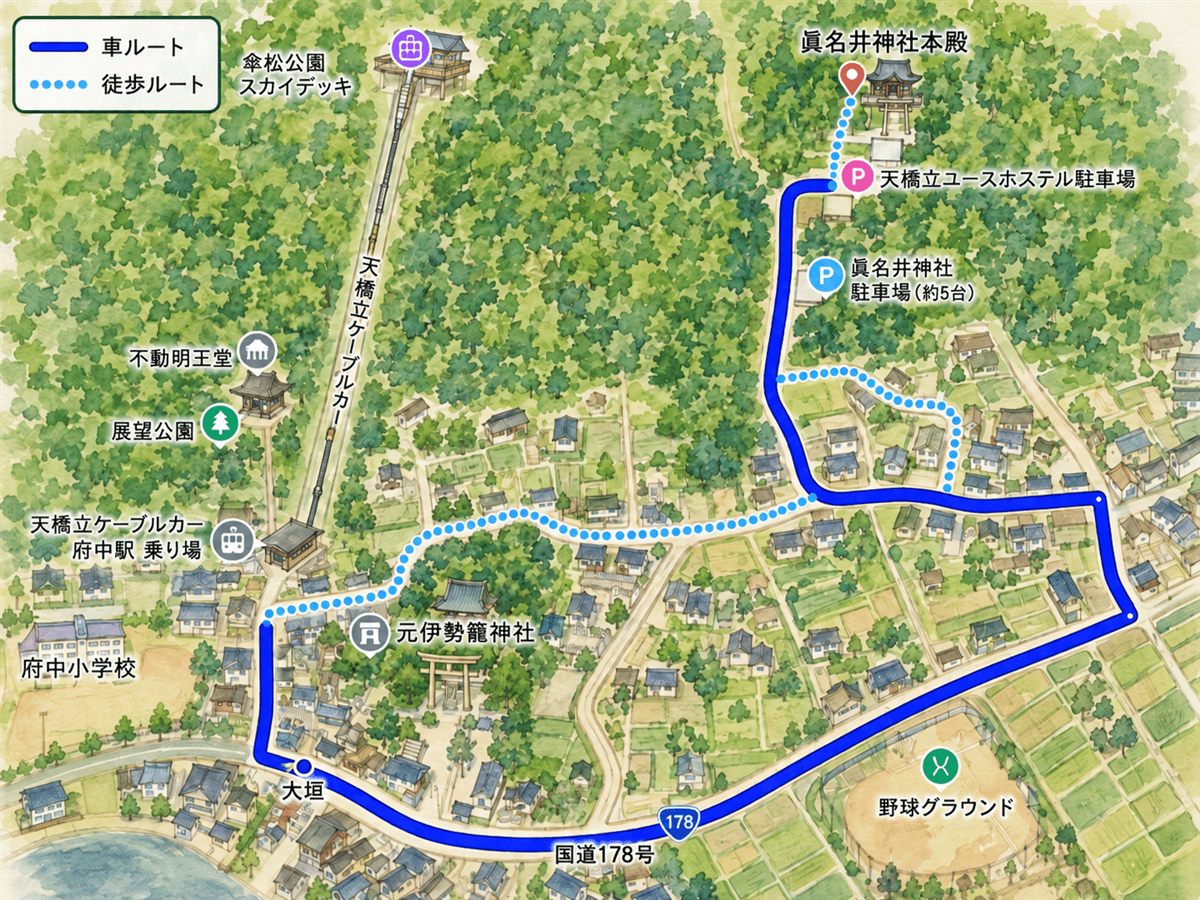
Access map for Manai Shrine
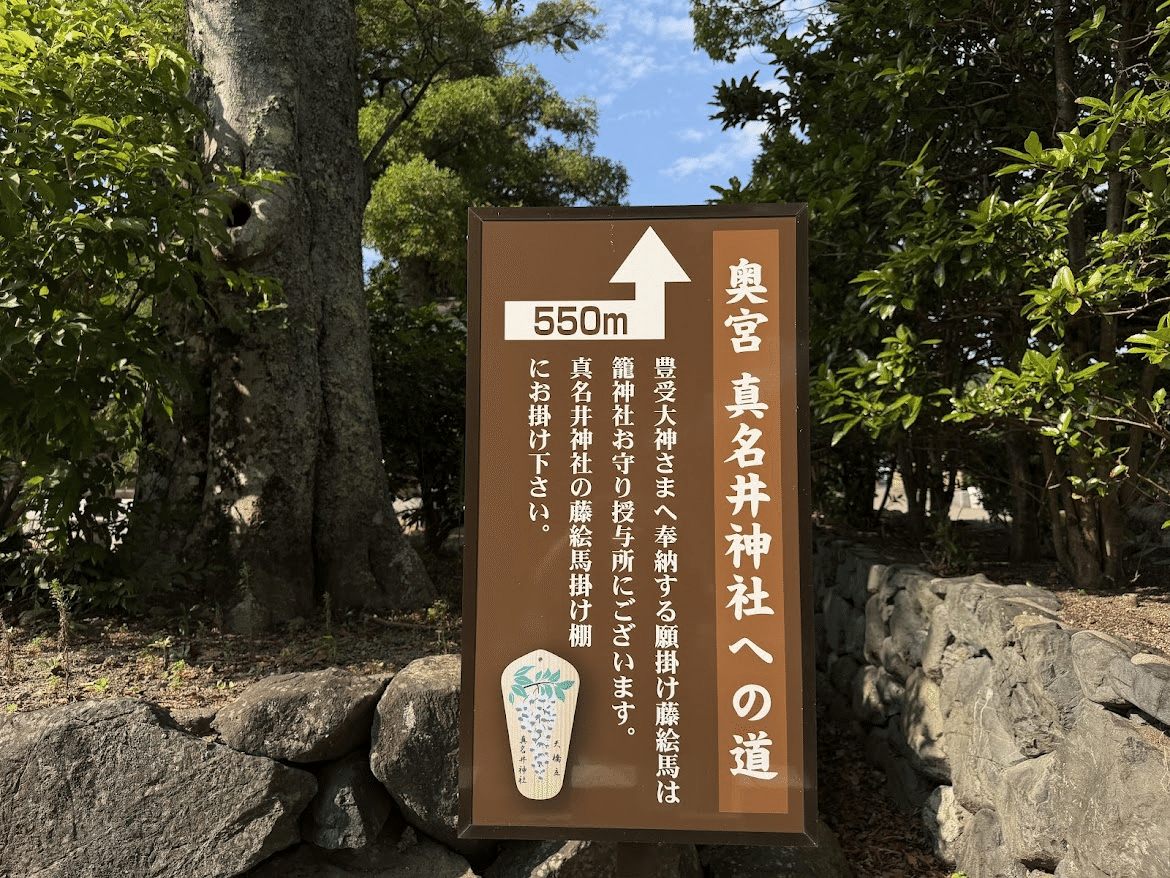
There are three ways to reach Manai Shrine: walking from Kono Shrine, walking from the cable car Fuchu Station, or driving to a point near the shrine. From Motoise Kono Shrine it is a 7-minute walk, about 550 meters, with the last 200 meters or so uphill.
Park at Kono Shrine and walk from there The Kono Shrine website asks visitors to use the parking lot at the main shrine and walk to Manai Shrine, in order to keep cars from congesting the approach. There is a small parking area near Manai Shrine, but planning on the Kono Shrine lot makes the visit smoother.
Walking from Motoise Kono Shrine: About 550 Meters
After visiting Kono Shrine you can walk straight on to Manai Shrine. Head to the right as you face the main hall and you will find a narrow path leading through to Manai Shrine.
Visit the main hall of Kono Shrine firstAbout 550 meters from Kono Shrine to Manai Shrine
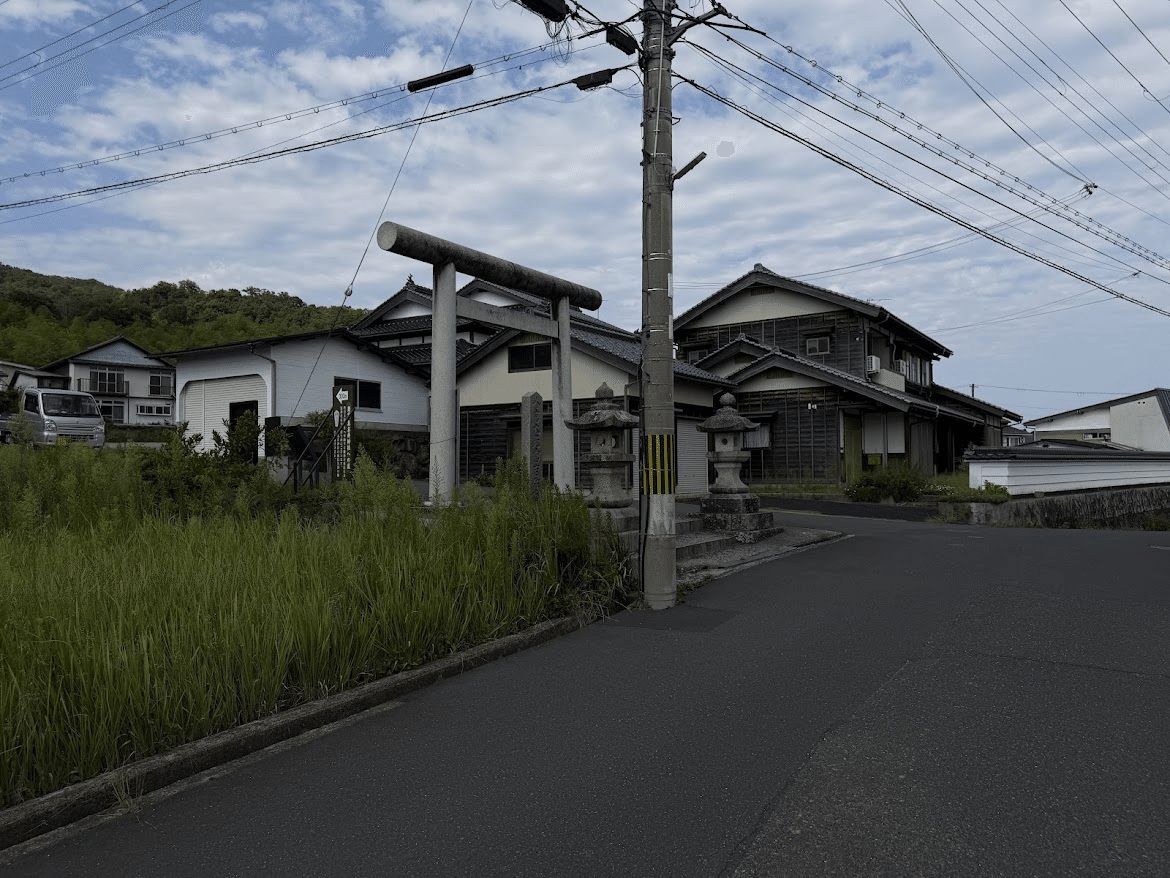
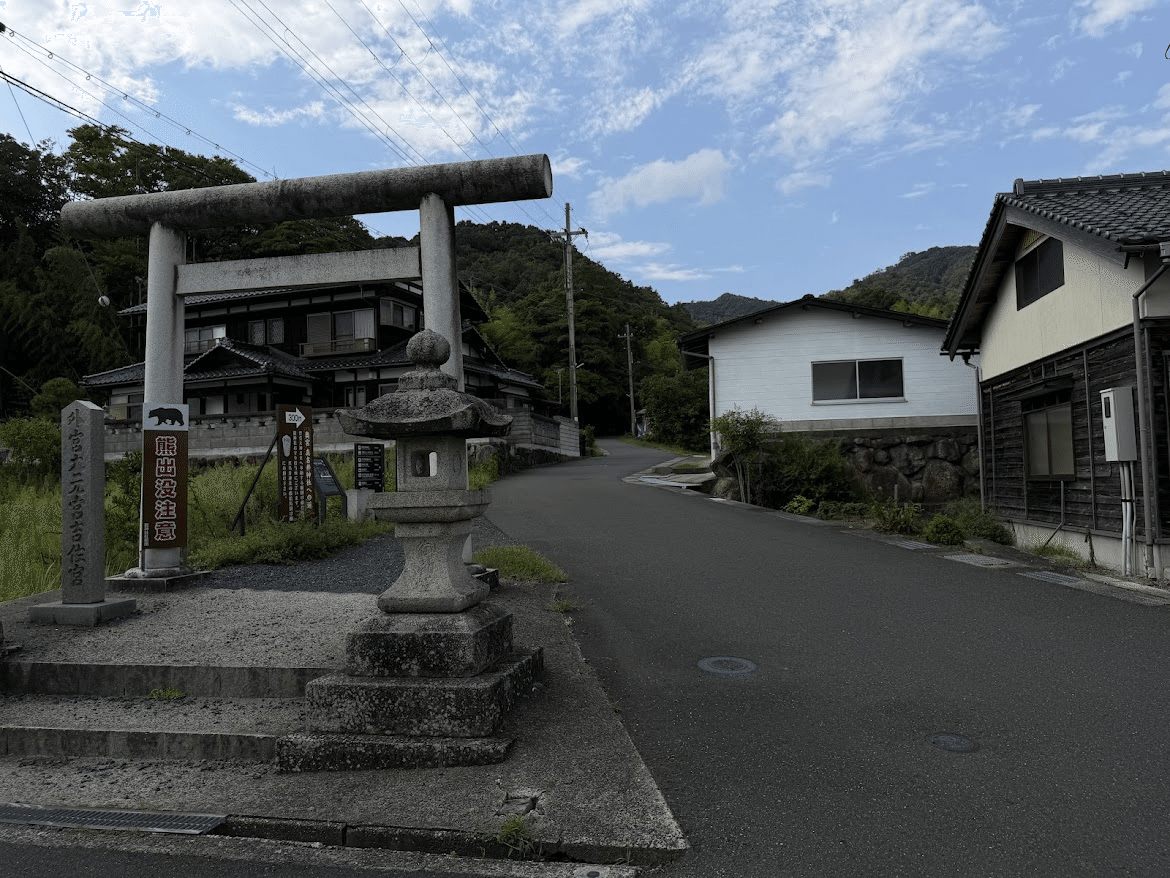
The narrow path joins the road that runs down from the cable car Fuchu Station. Turn right at the junction and continue toward Manai Shrine. When a torii gate appears ahead, turn left there.
Turn left here once you see the torii gateAbout 200 meters of uphill from the torii gate
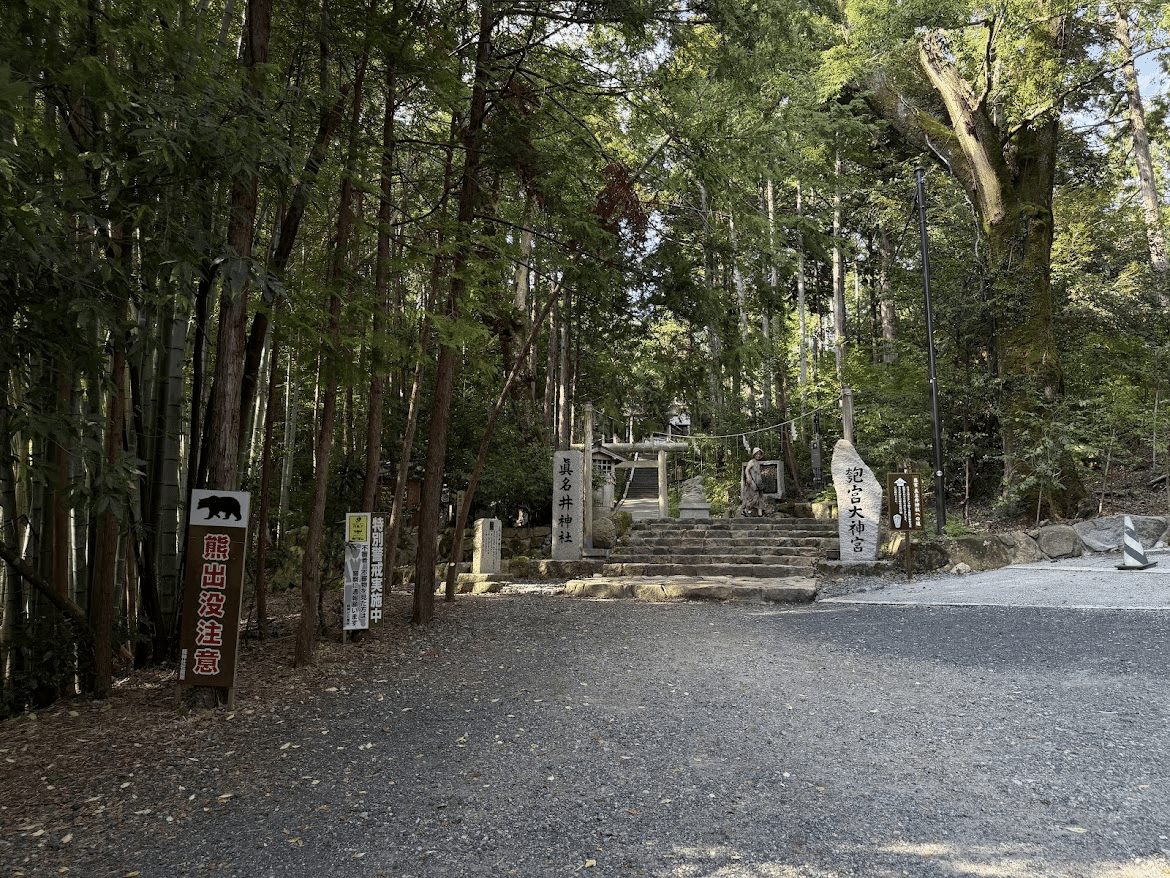
Past the torii gate the slope runs for about 200 meters. It is not a long stretch, but it is not flat either, so comfortable shoes help. At the top of the slope you reach Manai Shrine.
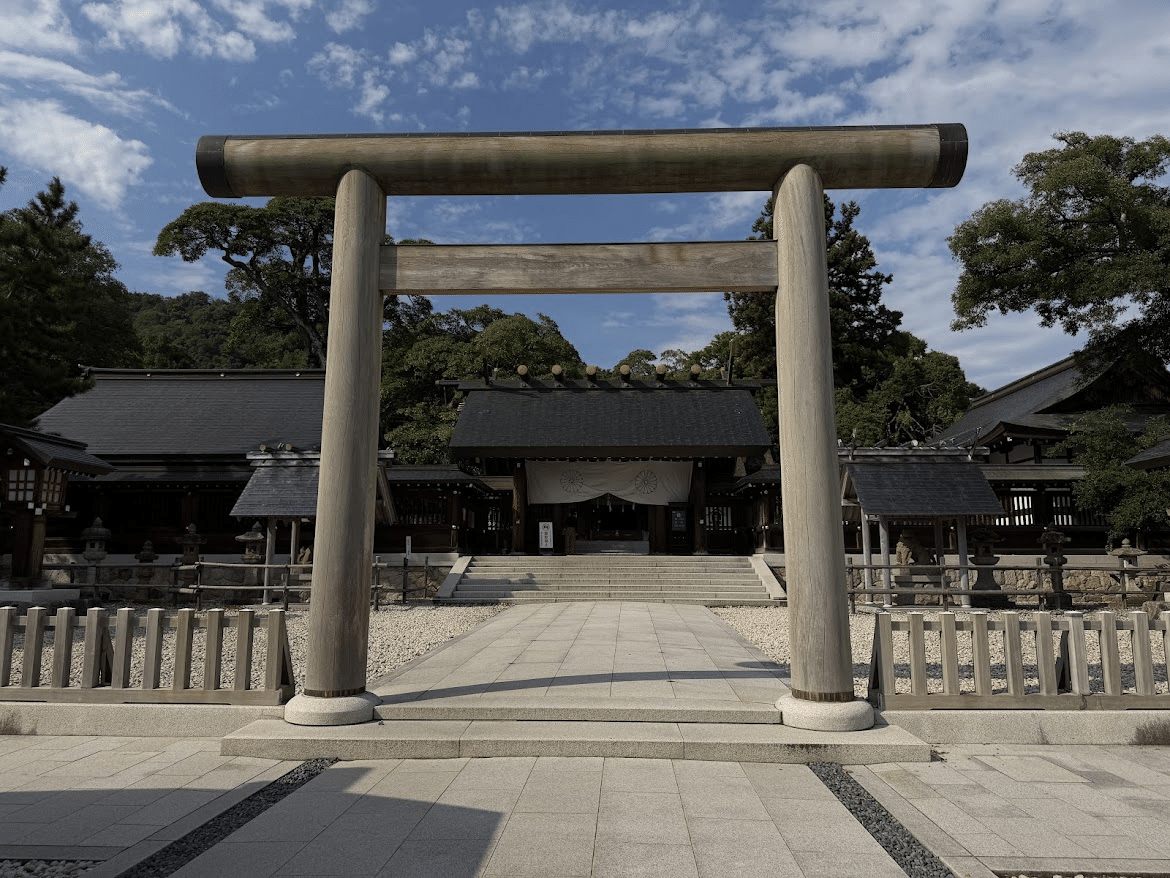
The entrance to Manai Shrine
Walking from the Cable Car Fuchu Station: About 500 Meters to the Torii Junction
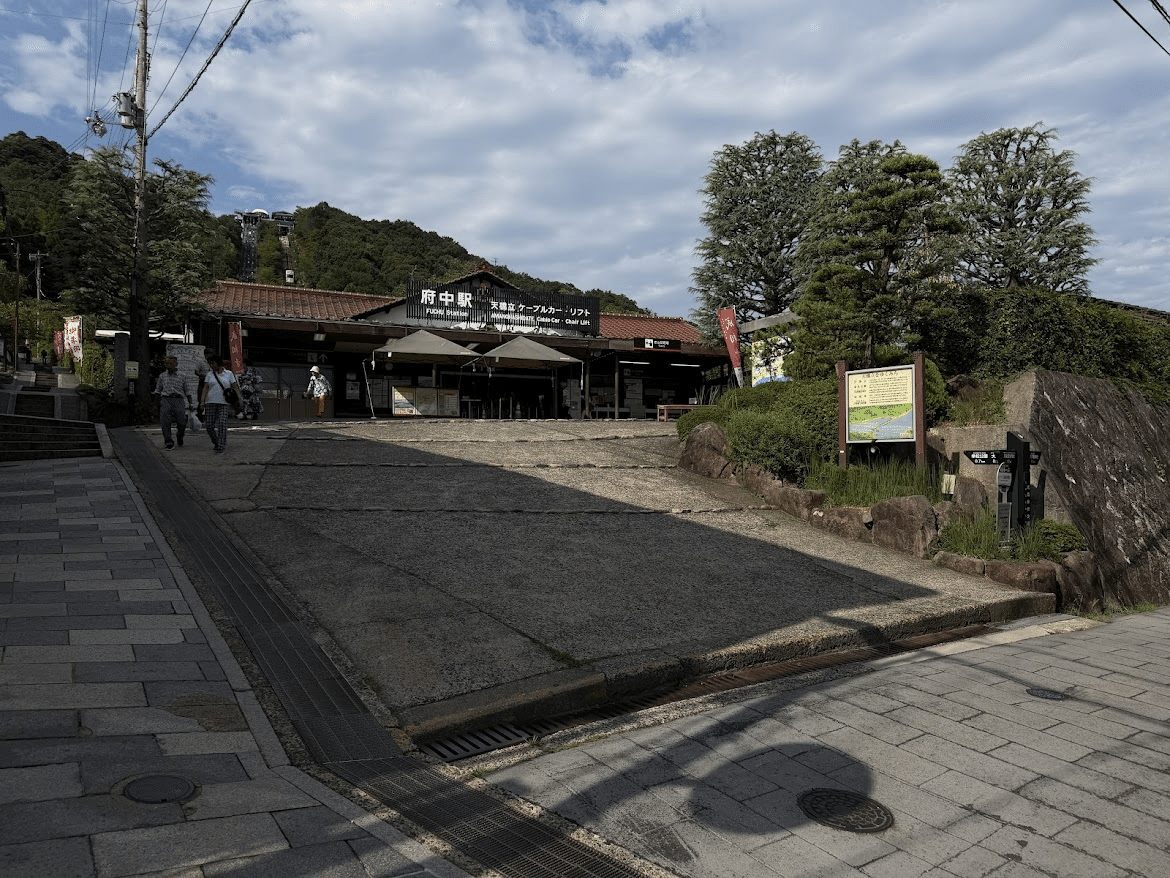
This route is convenient if you are coming down from Kasamatsu Park. From the Amanohashidate cable car Fuchu Station, take the narrow road toward Kono Shrine and follow the stone-paved path around the outside of the shrine grounds.
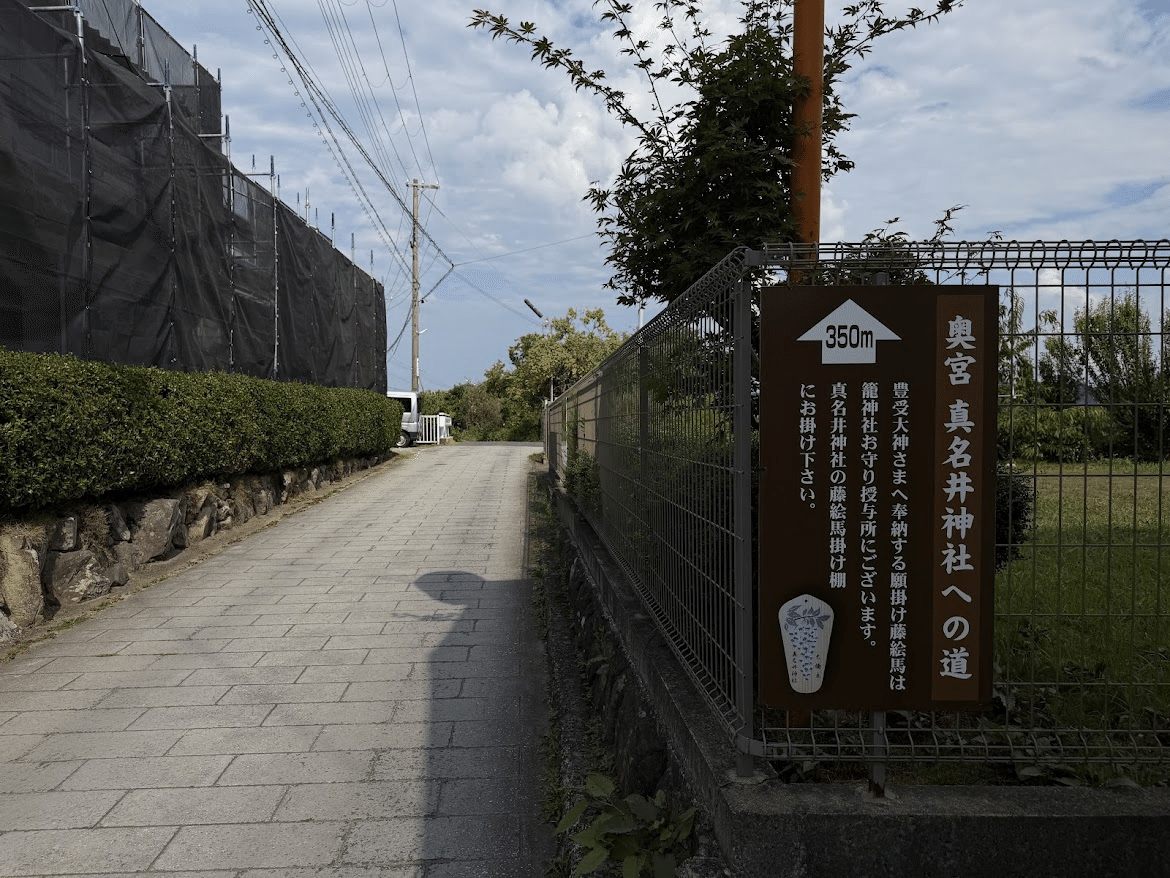
Start from the Fuchu Station of the Amanohashidate cable carFollow the stone-paved path and a sign for 350 meters to Manai Shrine appears
The stone-paved path turns into a paved road partway along, and the torii gate comes into view. It is about 500 meters from Fuchu Station to the torii junction, and from there the climb is the same as on the route from Kono Shrine.
Cars can use this road, but it carries a lot of pedestrians, so walking makes for a calmer approach.
Driving: Use the Baseball Ground on Route 178 as a Landmark
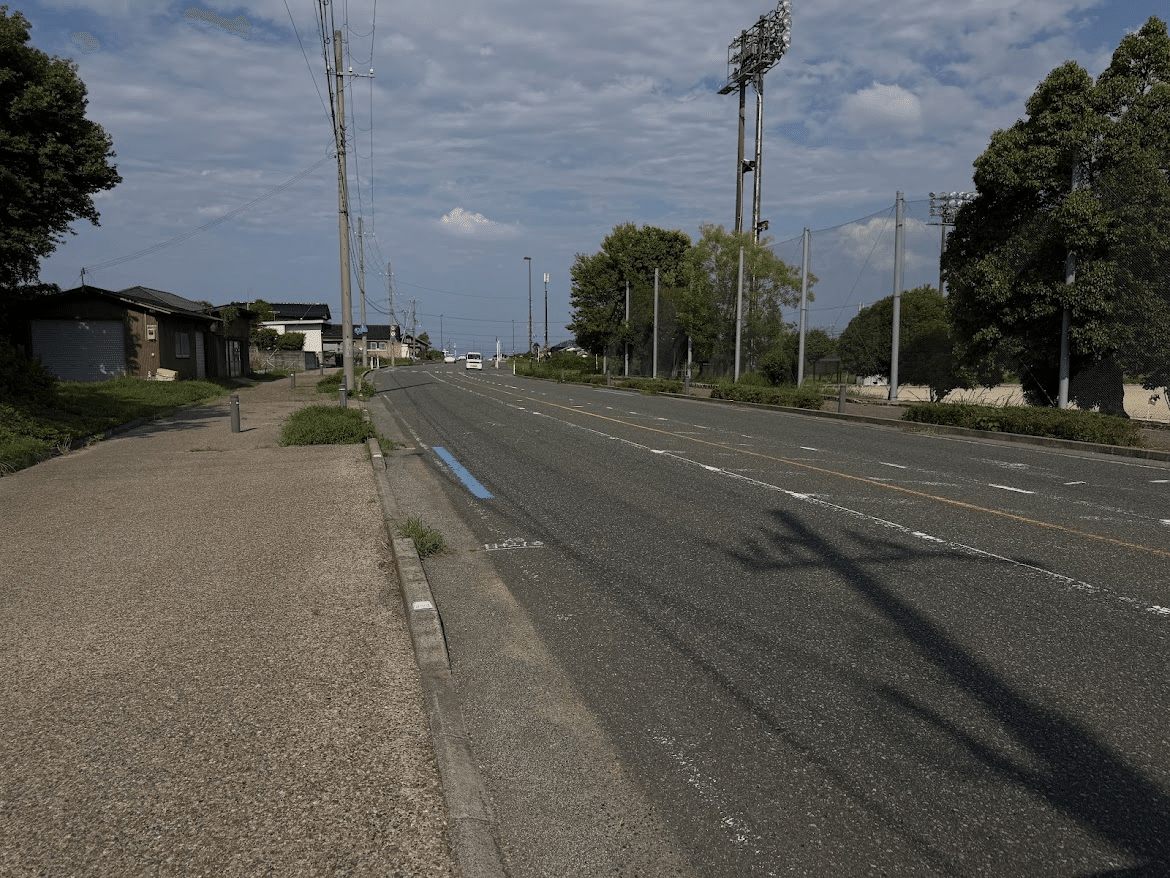
To drive to a point near Manai Shrine, follow Route 178 past the front of Kono Shrine and keep going. A baseball ground on the right is the landmark.
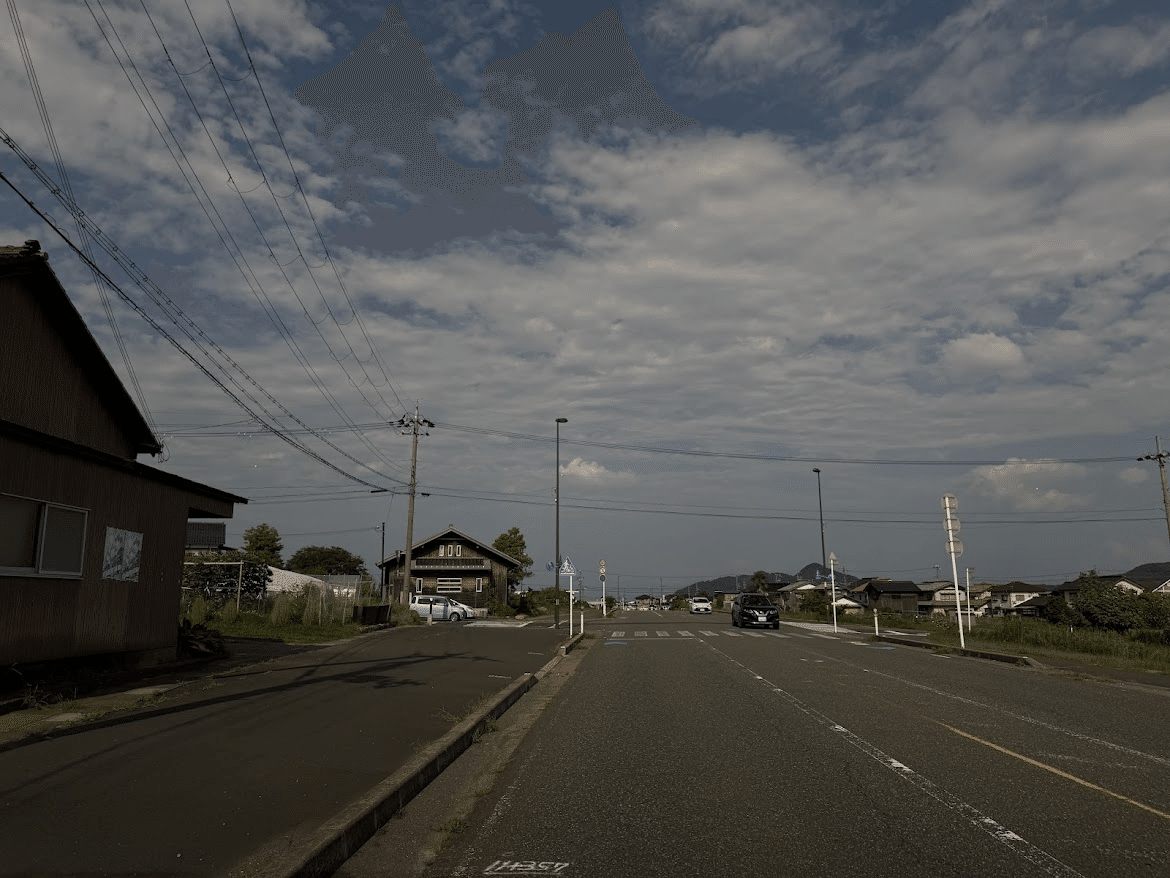
The baseball ground visible from Route 178 is the landmarkPast the ground, turn left just before the building named Okawa no Ie on the left side of the road
After the turn the road comes to a dead end, where you turn left again. Pass through the residential street, then turn right and climb toward the hillside to reach Manai Shrine. The turns are easy to miss on a first visit, so note the scenery in the photographs and take it slowly.
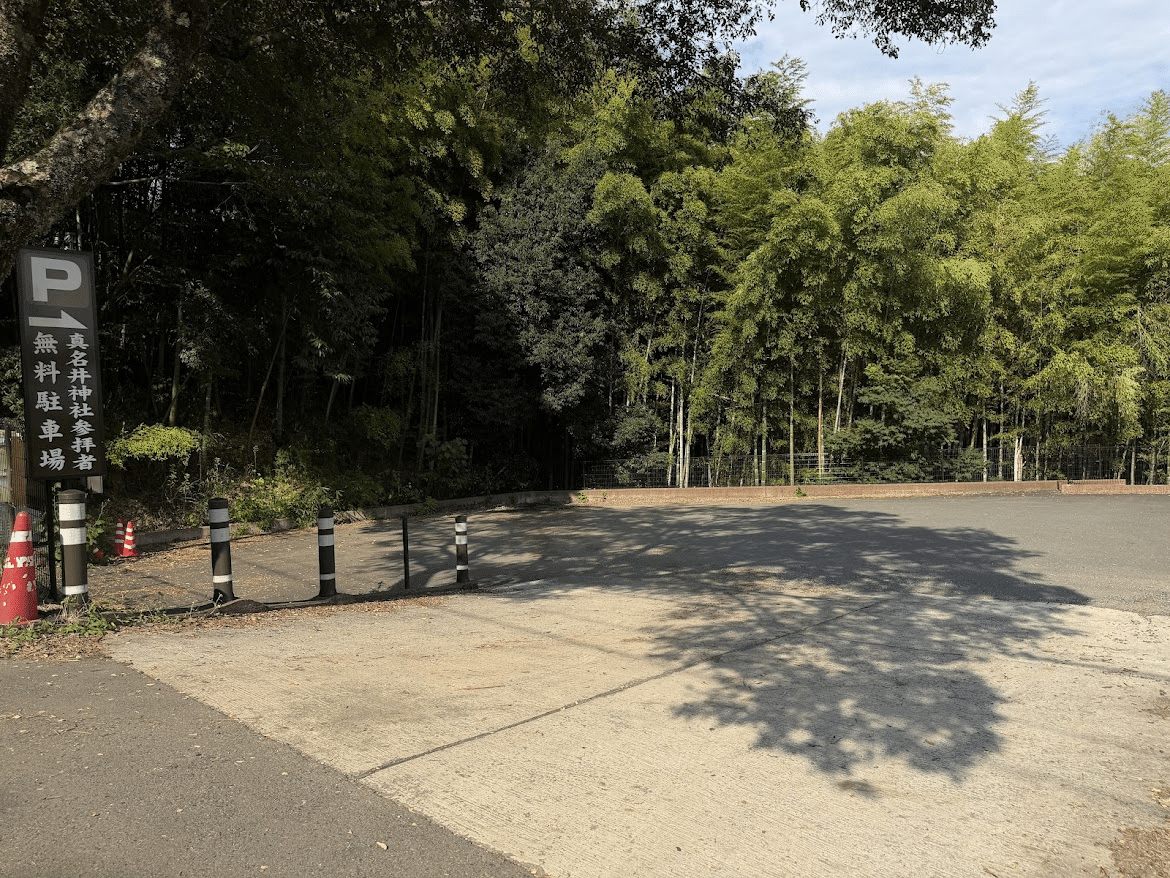
The parking area just below Manai Shrine, on the right-hand side
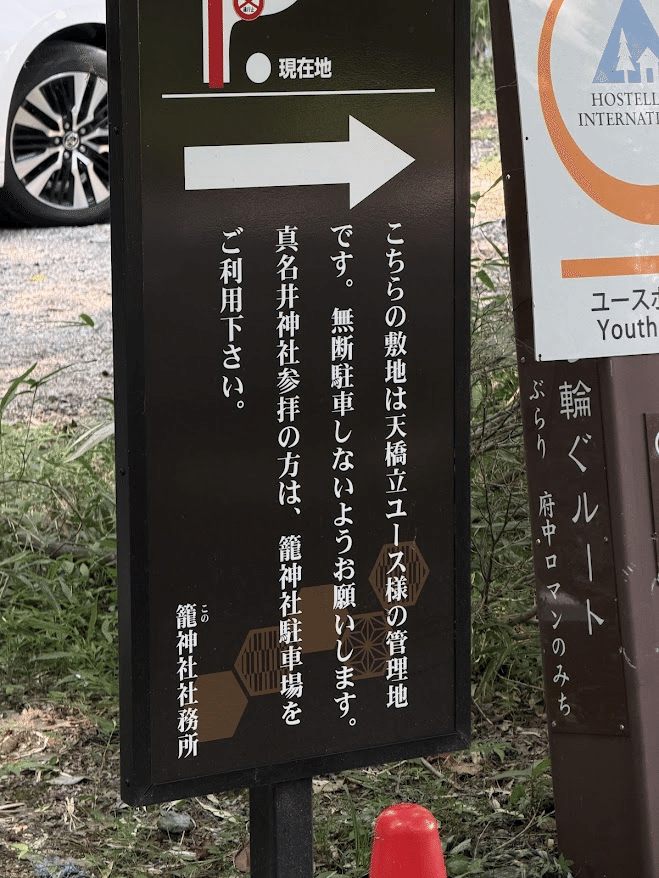
The parking area sits a little below Manai Shrine on the right-hand side and holds about five cars. It is not a large visitor parking lot, so it can fill up on weekends and at busy times. The parking lot of the Amanohashidate Youth Hostel is immediately below it and easy to mistake for the shrine lot, but it is not for shrine visitors, so please do not park there.
Manai Shrine at a Glance
Name
Manai Shrine (inner shrine of Motoise Kono Shrine)
Address
905 Nakano, Miyazu, Kyoto
Inquiries
Motoise Kono Shrine, 0772-27-0006
Visiting hours
Open at any time (the main shrine, Kono Shrine, opens 8:00-17:00, subject to change)
Closed
None
Admission
Free
Parking
The shrine asks visitors to use the Kono Shrine parking lot (conservation fee: free for the first 30 minutes, 800 yen for the day, for cars). A small area for about five cars sits just below Manai Shrine
Access
7-minute walk from Motoise Kono Shrine (about 550 m, with the last 200 m uphill); about 500 m from the Amanohashidate cable car Fuchu Station to the torii junction
Sources: Amanohashidate Tourism Association and the Motoise Kono Shrine official website (as of October 2026)
Goshuin stamps are issued at the main shrine, Kono Shrine. Items from Manai Shrine are offered only to those who visit in person, and the office opens just a few days each month, from 10:00 to 15:30, at the Manai Shrine kinbansho.
Opening dates are announced in the news section of the Kono Shrine website, so it is worth checking before you set out.
Combine Your Visit with the Amanohashidate Three-Shrine Pilgrimage
Around Amanohashidate, a route linking three shrines is known as the Amanohashidate three-shrine pilgrimage: Amanohashidate Shrine, Motoise Kono Shrine and Manai Shrine.
Amanohashidate has a myth called Ama no Ukihashi, in which the ladder a male deity used to visit a female deity in the age of the gods fell over and became the sandbar. Tied to that myth, the three-shrine route came to be associated with success in love.
There is no set order for the visit. If you start sightseeing from the Amanohashidate Station side, Amanohashidate Shrine, then Motoise Kono Shrine, then Manai Shrine follows naturally.
The pine-lined sandbar is about 3.6 kilometers one way. A rental bicycle covers it in 15 to 20 minutes, and you can return the bicycle at Ichinomiya Pier.
Cross the sandbar by bicycle on the way out and take a sightseeing boat back, and you avoid retracing the same route. With time to spare, Kasamatsu Park and Nariaiji Temple are both worth adding.
What are the visiting hours and admission fee at Manai Shrine?
According to the Amanohashidate Tourism Association, the shrine can be visited at any time, admission is free and it has no closing days. The main shrine, Kono Shrine, opens from 8:00 to 17:00 (subject to change), so if you are visiting both, it is safer to come within those hours.
How long does it take to walk from Motoise Kono Shrine to Manai Shrine?
The Amanohashidate Tourism Association gives it as a 7-minute walk. The distance is about 550 meters, and the final 200 meters past the torii junction is uphill. The path is not flat, so comfortable shoes help.
Is there parking at Manai Shrine?
There is a parking area for about five cars just below Manai Shrine, on the right-hand side. The Kono Shrine website asks visitors to use the main shrine parking lot and walk from there, to keep cars from congesting the approach. At Kono Shrine the conservation fee for cars is free for the first 30 minutes and 800 yen for the day.
Can I get a charm or a goshuin stamp at Manai Shrine?
Goshuin stamps are issued at the main shrine, Kono Shrine. Items from Manai Shrine are offered only to those who visit in person, and the office opens just a few days each month, from 10:00 to 15:30, at the Manai Shrine kinbansho. Opening dates are announced in the news section of the Kono Shrine website, so check before you go if a charm is your aim. In winter the office may not open because of snow.
Can I take photographs in the grounds?
Photography is prohibited in part of the sacred grounds. Measures to protect the area are in place, so please follow the signs on site and keep your visit quiet.
What blessings is Manai Shrine associated with?
The Kono Shrine website lists abundant harvests, protection of food, clothing and shelter, and prosperity in business for Toyouke Okami in the main seat of the iwakura, and matchmaking, marital harmony, family safety and long life for Amaterasu Okami, Izanagi no Okami and Izanami no Okami in the west seat.
Summary
Amanohashidate is known for its views, but looking at its history adds another layer. Manai Shrine in particular keeps iwakura that go back about 2,500 years and the sacred spring Ama no Manai no Mizu, and it rewards a careful look.
The Fuchu district, where Manai Shrine stands, takes some time to reach from the Amanohashidate Station side. If you want to visit first thing in the morning, staying nearby is the easier option.
The Amanohashidate area has places to stay where you can take your time over dinner and a hot spring, so consider an overnight trip alongside the three-shrine pilgrimage and Kasamatsu Park.
I am a writer with six years of experience. Born in Hyogo, I traveled to the U.S., India, Thailand, and Taiwan during my student years, experiencing and enjoying cultural differences between Japan and other countries.
Inspired by Kyoto’s tea caddy maker Kaikado and paper-cutting artist Teppei Hayakawa, whose work helps preserve traditional techniques, I developed a deep interest in Japanese craftsmanship.
Now, I focus on uncovering lesser-known attractions and locally loved establishments in Japan, driven by a passion to share them with more people. My goal is to provide detailed, authentic information through research and interviews.
I believe history, traditional culture, and uniquely Japanese customs become even more fascinating when you understand their background. Every day, I write articles with the hope that readers will feel inspired to visit and experience these places for themselves.