Amanohashidate is located in Miyazu City, in northern Kyoto Prefecture.
Facing the Sea of Japan, the area has an abundance of seafood. Sushi and seafood rice bowls are popular here, and its local cuisine reflects generations of knowledge about how to enjoy seasonal fish.
This guide introduces four seafood restaurants popular with local residents, chosen by someone born and raised in Miyazu.
The list includes a relatively new restaurant, and it is especially useful for those who want plenty of local seafood or who are looking for lesser-known places to eat.
Kinpa Ginpa: Conveyor-Belt Sushi Popular with Tuna Fans

The area around Miyazu Station has a number of restaurants along backstreets such as Shinhama Wakuwaku Street and Uoya-machi Street. About a 10-minute walk from the station is Kinpa Ginpa, a conveyor-belt sushi restaurant that opened in March 2024.
Fresh Sushi at Reasonable Prices

Kinpa Ginpa is supervised by Daiki Suisan, a major chain based in the Kansai region.
Daiki Suisan operates fresh fish markets such as Maguro Park and many conveyor-belt sushi restaurants, which allows it to offer sushi comparable to that of a high-end sushi restaurant at reasonable prices.
As a result, the restaurant has quickly become popular with local residents for its sushi made with fresh seafood.
Weekend Tuna-Cutting Shows

On weekends, the restaurant holds a tuna-cutting show featuring tuna sourced from around Japan.
You can watch a whole tuna being filleted and may also have the chance to try rare cuts, such as kama-toro from the collar and cheek meat.
Quantities are limited and these cuts may sell out, but tuna fans can also choose from o-toro (fatty tuna), chu-toro (medium fatty tuna), akami (lean tuna), soy-marinated bluefin tuna, and seared o-toro.
O-toro is 390 yen per piece and kama-toro is 580 yen per piece (before tax), making it a good choice for those who want to enjoy plenty of tuna at a reasonable price. Prices may change.
What Are Kama-Toro and Tuna Cheek?
Kama-toro comes from the area near the gills of the tuna, and its name comes from its resemblance to a sickle (kama).
Because it lies next to the fatty o-toro, it is also rich in fat and melts in the mouth.
Cheek meat, as the name suggests, comes from the cheeks of the tuna. Only two pieces can be taken from one fish, making it rare, and it has little sinew.
Both are rare cuts generally served only at tuna-cutting shows and some high-end restaurants.
| Kinpa Ginpa Address: 1988-1 Shinhama, Miyazu City, Kyoto Prefecture Phone: 0772-21-7644 Hours: 10:45 a.m. to 9:00 p.m. Closed: No regular closing days Official website (Japanese): https://kinpaginpa.jp/ |
Miyatoto Suisan: A Wide Variety of Seafood Rice Bowls

About a 10-minute walk from Kinpa Ginpa is Miyazu Amanohashidate Ryoshimachi Totomart.
This complex has five shops, including a restaurant serving fish caught around Miyazu, a cafe serving local sweets, and a store selling a variety of Miyazu souvenirs.
One recommended option is Miyatoto Suisan.
This casual food court-style restaurant serves seafood landed in Miyazu Bay, including sashimi, seafood rice bowls, rolled omelets with seafood, simmered yellowtail and daikon radish, and rock oysters.
There are many types of seafood rice bowls, including sea urchin and salmon roe and seared blackthroat seaperch, so you can choose your favorite toppings. Bowls also come with miso soup and pickles.
The savory miso soup makes a good match for the seafood.
| Miyatoto Suisan (the details below are for Miyazu Amanohashidate Ryoshimachi Totomart) Address: 1775-25 Ryoshi, Miyazu City, Kyoto Prefecture Phone: 0772-25-9006 Hours: 10:00 a.m. to 6:00 p.m. Closed: Tuesdays Official website (Japanese): https://totomart-miyazu.com/shop/miyatoto/ |
Sushi Kurosaki: Sushi and Japanese Cuisine for Breakfast, Lunch, and Dinner
The Tango area offers a variety of seafood through the seasons: yellowtail and Spanish mackerel from winter to spring, sea bream in spring and fall, tuna, tilefish, and squid in summer, and bigfin reef squid and crab in winter.
Sushi Kurosaki, located near a fishing port, serves sushi, sashimi, and kaiseki made with seasonal ingredients.
Seafood and Mountain Produce from Morning to Night

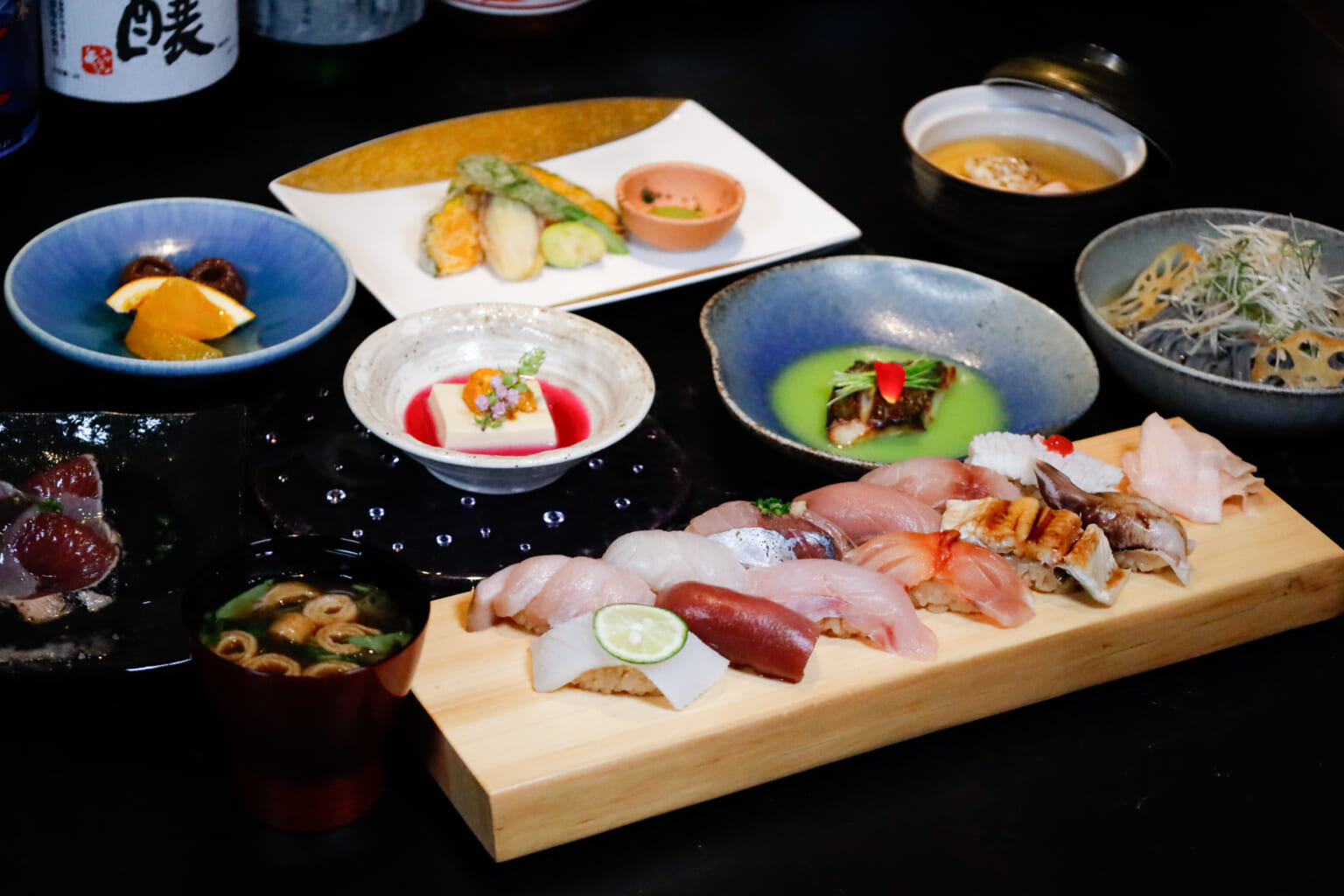
Lunch options include the Hioki omakase sushi lunch course, featuring sushi and tempura, as well as 6 to 12 pieces of nigiri sushi and seafood rice bowls.
Dinner options include the Miyazu omakase dinner course with 10 pieces of sushi, four seasonal dishes, and dessert, and the Tango omakase dinner course with 12 pieces of sushi and six seasonal dishes.
For more seasonal seafood, assorted sashimi and assorted tempura are also available and go well with drinks.
A Bright and Comfortable Space

Large windows make the dining room bright and open, and you can look outside as you eat.
In addition to counter and table seating, there is seating for groups of eight or more.
Reservations can be made by phone or online and are recommended if you want to avoid waiting.
A cancellation fee of 5,000 yen applies from three days before your reservation, so please book a date and time you are sure of.
| Sushi Kurosaki Address: Hioki, Miyazu City, Kyoto Prefecture Phone: 050-3155-3426 (9:00 a.m. to 7:00 p.m.) Hours Breakfast: 8:00 a.m. to 10:00 a.m. (last order at 9:30 a.m.) Lunch: 11:30 a.m. to 2:00 p.m. (last order at 1:30 p.m.) *From August 1 to September 2, the last order is at 1:00 p.m. Dinner: 5:30 p.m. to 9:00 p.m. (last order at 8:30 p.m.) Closed: Mondays and Tuesdays (open on national holidays) Official website (Japanese): https://www.kurosaki-mt.com/ RESERVATION |
Torimatsu: A Restaurant Serving Bara-Zushi, a Local Dish of Tango

Torimatsu is a Japanese cuisine and sushi restaurant long popular with local residents, marking its 92nd year in 2024. It specializes in bara-zushi, a local dish of the Tango region, and serves other dishes made with fresh local seafood.
What Is Bara-Zushi, the Traditional Dish of Tango?

Bara-zushi is a traditional dish of the Tango region in which sweet-and-savory simmered mackerel is shredded and scattered over vinegared rice, then topped with dried shiitake mushrooms, thin strips of omelet, fish cake, and red pickled ginger.
It is packed into a wooden box and cut into portions before serving.
Mackerel was once abundant in the area but spoiled quickly, and bara-zushi is said to have developed as a way to keep it longer.
Today, it is still commonly served at festivals and celebrations, as well as at large gatherings such as school sports days and Hinamatsuri (the Girls’ Festival).
Bara-Zushi Set Meals at Torimatsu

In addition to bara-zushi, Torimatsu serves set meals featuring sushi, grilled fish, and other dishes with seasonal seafood landed in Tango.
A recommended option is the Bara-Zushi Gozen Kotohikihama set.
It includes sashimi, grilled fish, fried dishes, and chawanmushi (savory egg custard), and its presentation is reminiscent of a high-end ryokan meal.
Because seasonal seafood must be prepared in advance, reservations are generally required. Same-day visits are possible if seats are available, so contact the restaurant to check.
| Torimatsu Address: 146 Amino, Amino-cho, Kyotango City, Kyoto Prefecture Phone: 0772-72-0429 Hours Lunch seatings: 11:30 a.m., 12:00 p.m., 12:30 p.m., 1:00 p.m., 1:30 p.m. Dinner seatings (Saturdays and Sundays only): 6:00 p.m., 6:30 p.m., 7:00 p.m., 7:30 p.m. *Advance reservations are required for these seatings. Same-day visits are possible if seats are available, but the menu is limited. Closed: Tuesdays, Wednesdays, and Thursdays Official website (Japanese): https://torimatsu.jp/ |
Summary
This guide introduced seafood restaurants popular with local residents in the Amanohashidate and Tango areas of Kyoto.
These restaurants make generous use of fresh seafood from northern Kyoto and serve many dishes that are difficult to find in large cities.
The list also includes places that rarely appear in the media, so it is especially useful for those looking for lesser-known restaurants.
Use this guide when planning your meals in the area.