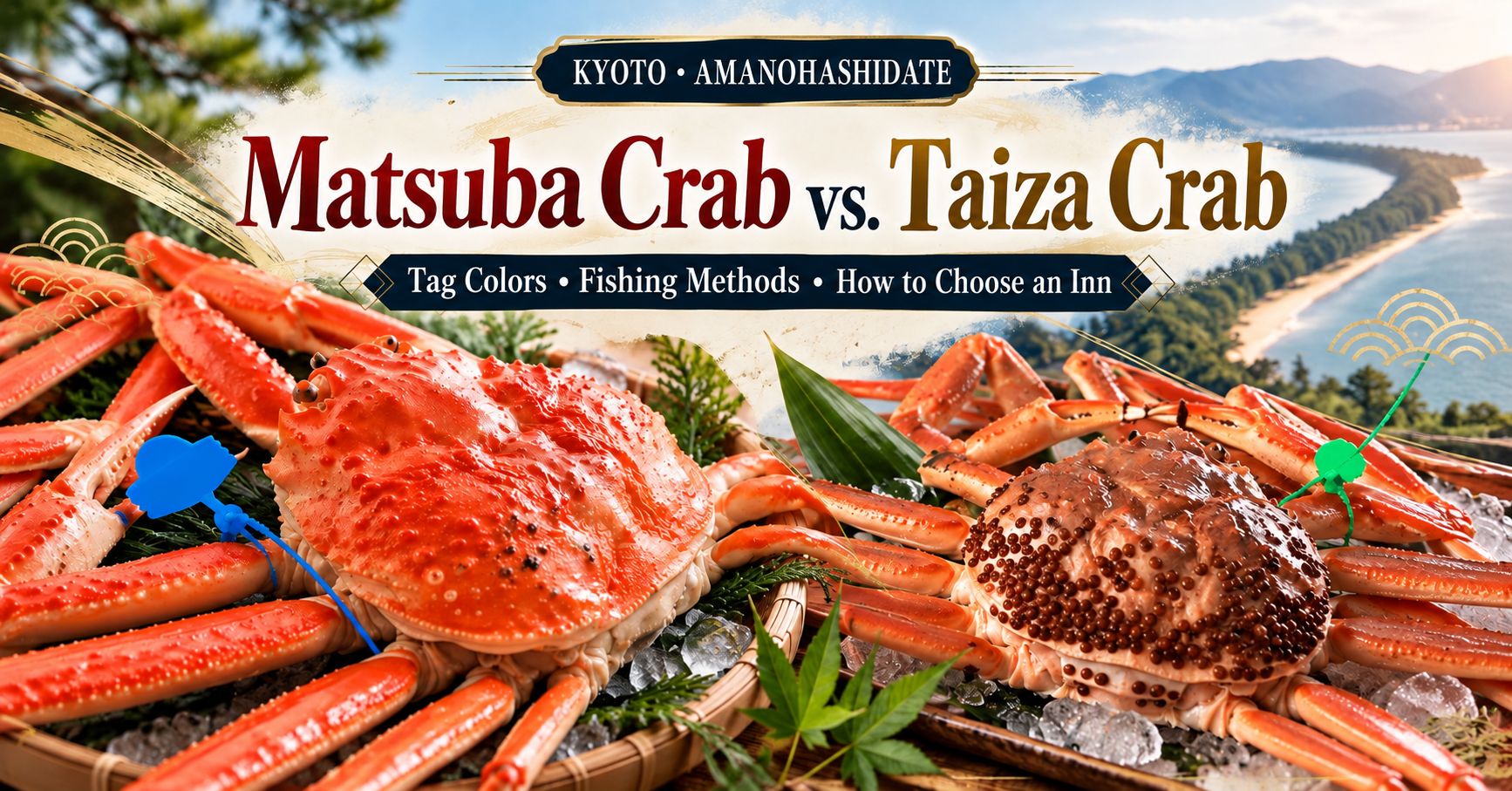
If you visit the Tango area in winter, matsuba crab is the one dish to try. Looking at inn plans, though, you will see “matsuba crab,” “Taiza crab,” and “snow crab” used side by side, and the price gaps can be confusing.
In this article, we cover the difference between matsuba crab and Taiza crab, what the tag colors tell you about where a crab was landed, and what to check when choosing an inn that serves crab.
This is for anyone planning a first crab trip, comparing inn plans, or hoping to try a branded crab.
Matsuba crab and Taiza crab: the difference, first
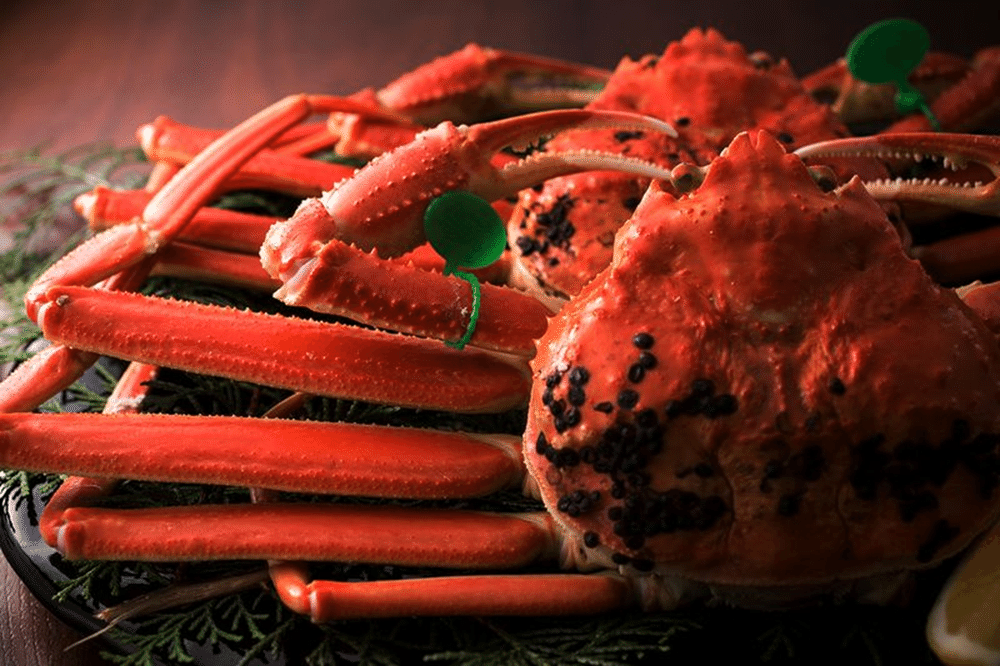
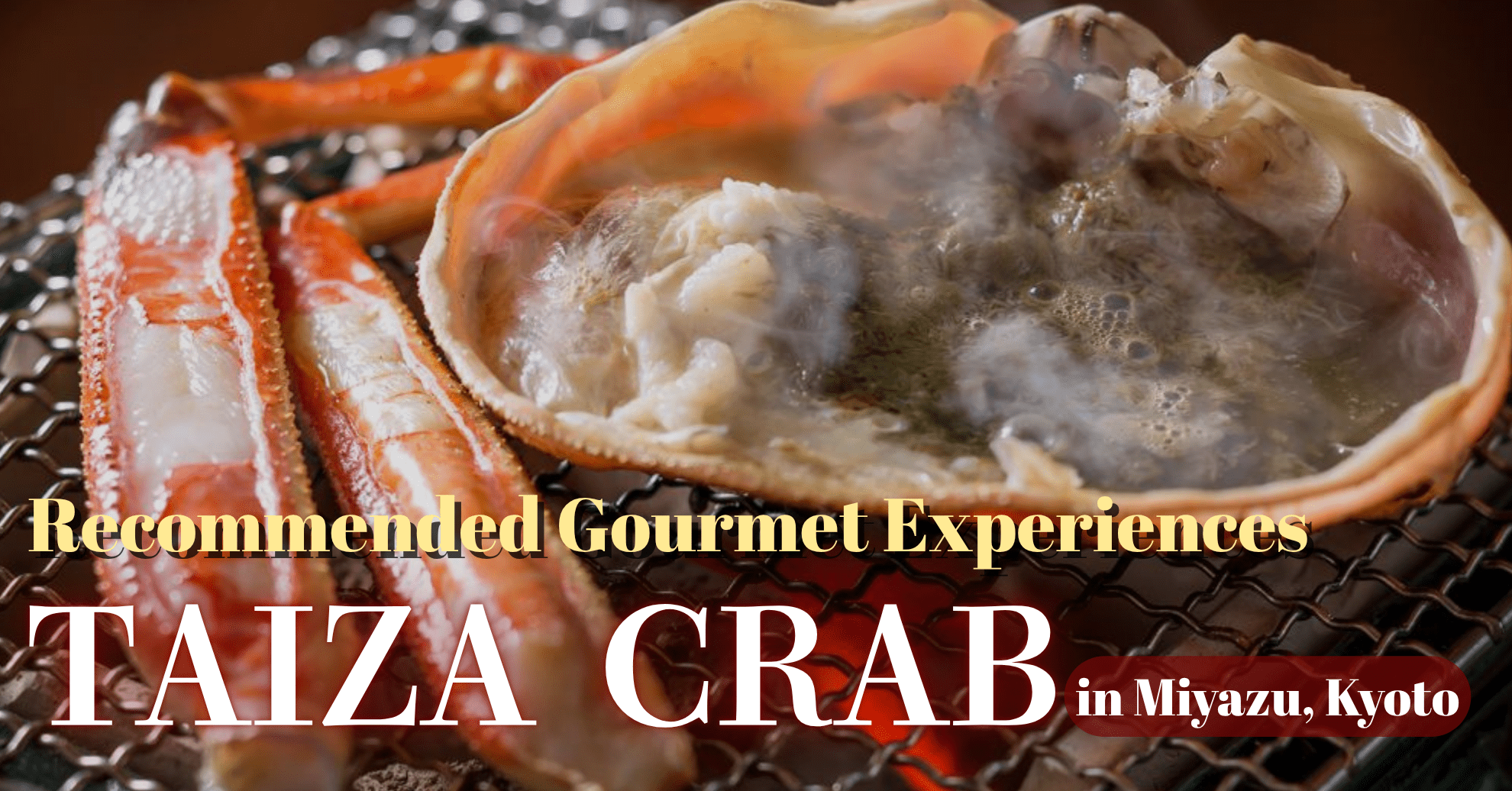
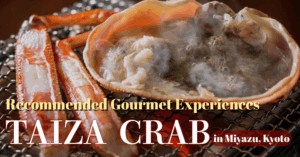
Taiza crab is a type of matsuba crab. Male snow crabs caught in the Sea of Japan and landed between the San’in region and northern Kyoto are called matsuba crab. Among those, the ones landed at Taiza Port in Kyotango City are called Taiza crab.
| Matsuba crab | Taiza crab | |
|---|---|---|
| What the name covers | Male snow crab landed at several ports along the Sea of Japan | Only crab landed at Taiza Port in Kyotango City |
| How it is caught | Varies by port; some boats stay out overnight | Five small boats, returning the same day |
| Tag | Color differs by port | Green tag stamped “Taiza Gani” and the boat’s name |
| Volume | Landed in relatively steady volume | About 20 tons a year, which is small |
| Price guide | From about 10,000 yen per crab | From several tens of thousands of yen per crab |
Both matsuba crab and Taiza crab are the same true snow crab. The difference is the port where they are landed and how they are caught. Taiza crab is landed in smaller volumes, so it costs more.
Why Taiza crab is called a phantom crab
Why is Taiza crab the only matsuba crab treated as special? It comes down to how it is caught and how little there is.
Five small boats, out and back in a day
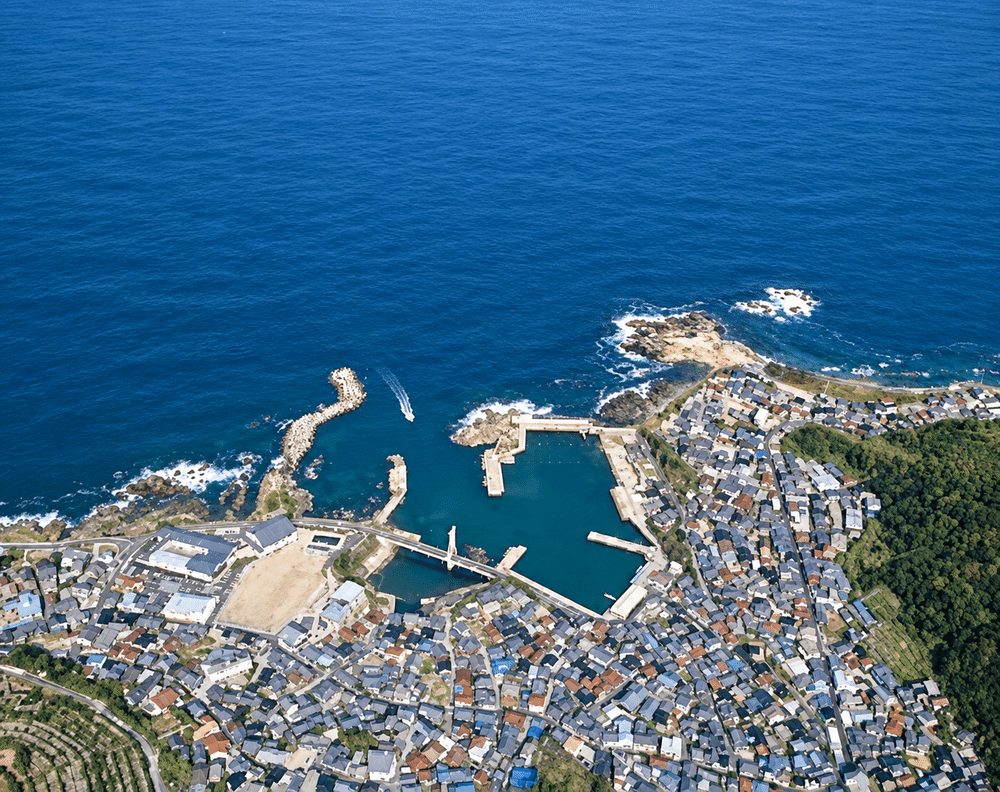
Taiza crab is caught by five small bottom-trawl boats out of Taiza Port, and no others. They work a fishing ground 20 to 30 km off Cape Kyoga at depths of about 230 to 300 meters, and return to port the same day instead of staying out overnight.
Because the catch spends little time on board, the crabs arrive in good condition. That is why Taiza crab is often served raw.
Some days the boats cannot go out
Because the boats are small, they stay in port when the Sea of Japan turns rough in winter. The catch is about 20 tons a year, and there are days in season with nothing landed.
Even when an inn’s plan specifies Taiza crab, several rough days in a row can make it unavailable. If you have your heart set on Taiza crab, ask how the inn handles days with no catch when you book.
The green tag goes only on crabs that pass a strict sort
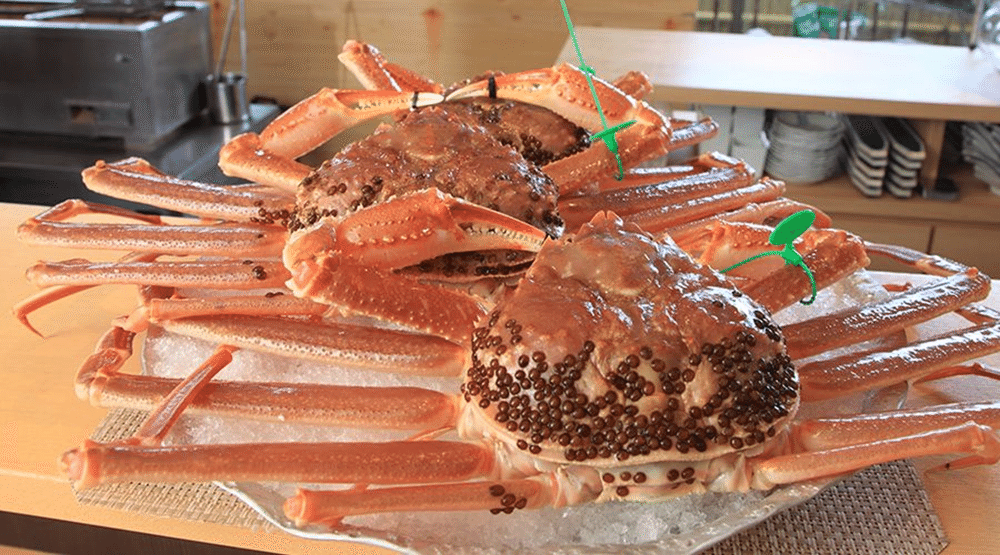
Landed crabs are sorted by size, weight, how full the meat is, color, and whether the shell is damaged. Only those that pass get a green tag stamped with “Taiza Gani” and the name of the boat.
The tag was introduced in 1988, and in 2006 Taiza crab became the first crab in Japan registered as a regional collective trademark. The tag certifies where the crab was landed, so take a look when crab is served at an inn or restaurant.
What is a crab leech?
A crab leech is a leech that attaches to crabs. It feeds on the body fluids of fish, does not harm the crab, and is not harmful to people. Crab leeches usually lay eggs on rocks, but where the seabed is sand with no rocks, they lay them on a crab’s shell.
A shell covered in leech eggs does not look appealing, but it is actually a sign that the crab is good to eat. It means time has passed since the crab molted, and the shell is full of meat. So if you get to pick a crab, or see the crab served at your inn, check whether it has leech marks.
What the tag colors say about where a crab comes from
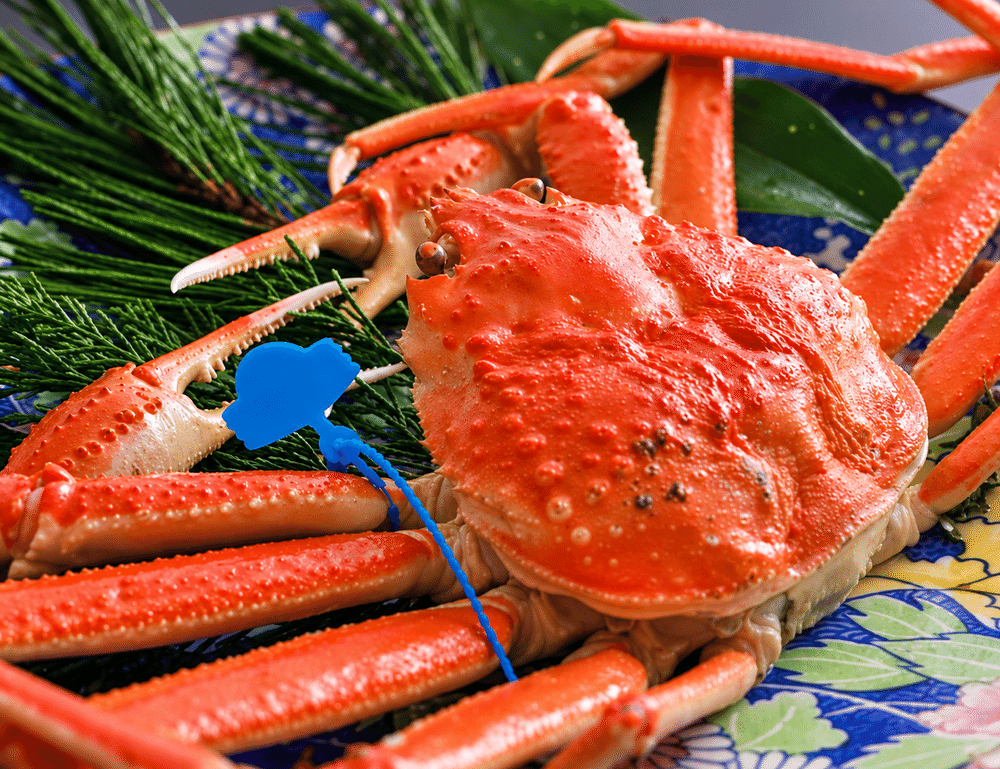
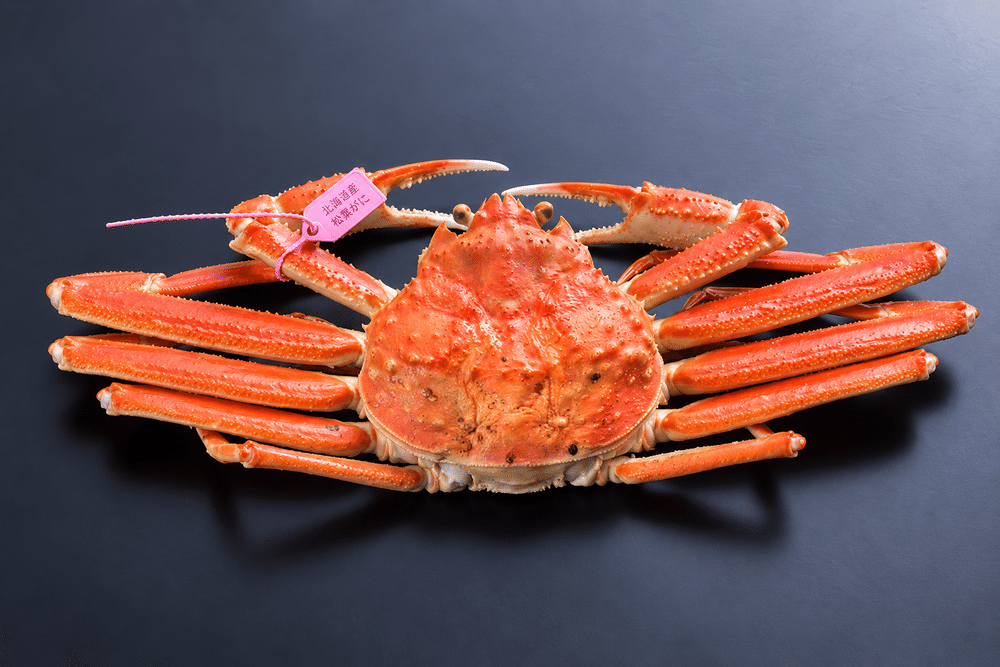
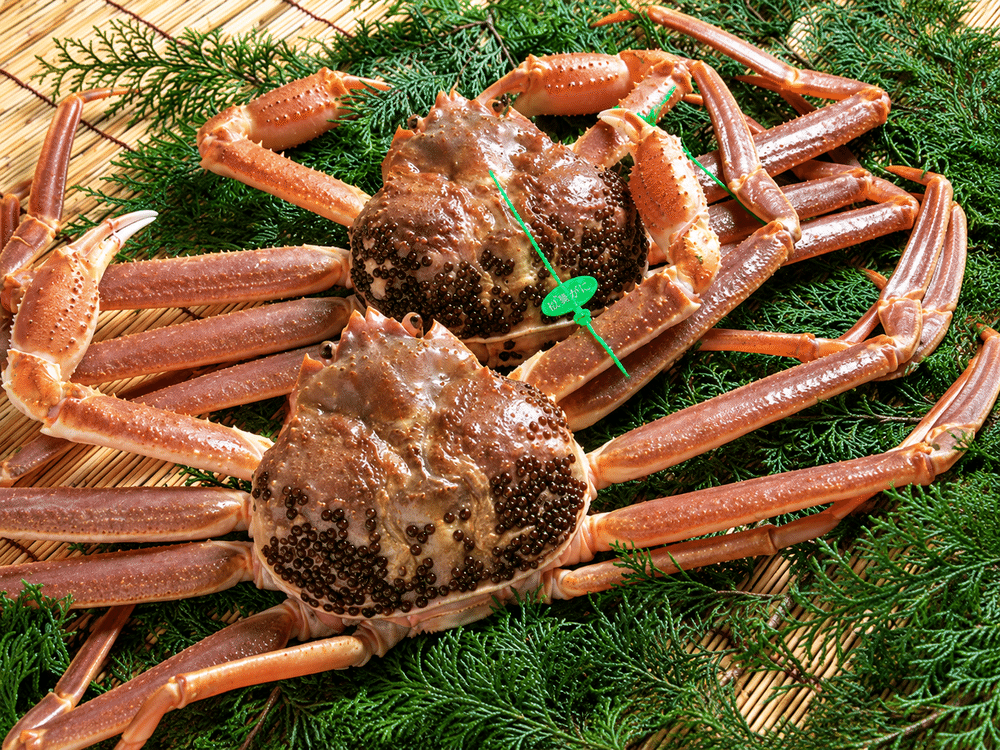
Matsuba crab tags are color-coded by the port where the crab was landed. Learn the colors and you can tell at a glance, on an inn’s plan or at a market counter, where a crab came from.
| Tag color | Main port |
|---|---|
| Green | Taiza Port (Kyotango City, Kyoto) |
| Blue | Tsuiyama Port (Hyogo) |
| Pink | Shibayama Port (Hyogo) |
| White | Hamasaka Port (Hyogo) |
| Yellow | Echizen Port (Fukui) |
| Light blue | Kanazawa, Hashidate, and Wajima Ports (Ishikawa) |
Even among crabs from the same Sea of Japan, the name and the tag change with the port. A tagged crab has a clear origin, which raises the price, but knowing where your crab was caught becomes part of the trip.
How to choose an inn for crab: six things to check before you book
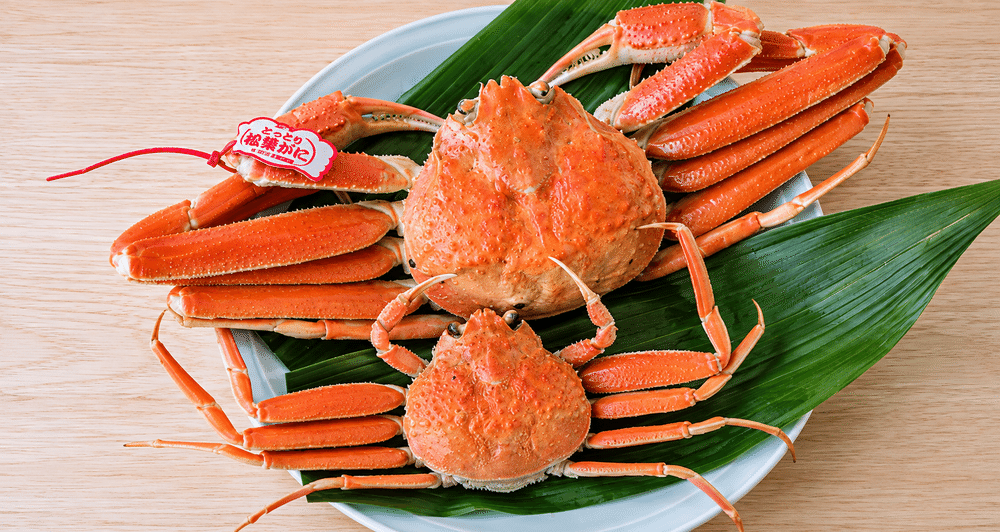
What to compare across plans
– Type of crab (true snow crab, or red snow crab or bairdi crab)
– Live or frozen
– Domestic or imported
– Brand (tagged or not)
– Portion per person and what else is served
– Timing (prices rise around the New Year holidays)
Crab plans vary so much in price because these six factors combine differently. Start with the type of crab. They look alike, but true snow crab, red snow crab, and bairdi crab are different species. The one known for a delicate sweetness is true snow crab, which includes both matsuba crab and Taiza crab.
Next, live or frozen. If you plan to eat it as sashimi or shabu-shabu, live crab makes more of a difference, and it keeps the flavor of the crab miso. If the meal centers on grilled crab or hot pot, frozen crab still tastes very good.
Last, timing. Prices rise around the New Year holidays, so the same plan can cost more. If you can shift your dates, November or late January onward tends to be calmer on price.
The crab season and when to book
Kyoto Prefecture’s snow crab season normally opens on November 6, and males are landed through March 20. The 2026-2027 season is expected to follow the same dates.
Bookings concentrate in November right after the opening and around the New Year holidays. Book early if you want to specify a branded crab. If you would rather take your time, late January through March is a good window. Crabs landed then are often full of meat, and prices are steadier.
Frequently asked questions
- Do Taiza crab and matsuba crab taste different?
-
Both are true snow crab. Taiza crab is landed by small boats that return the same day, which helps keep it fresh. Other brands also use same-day fishing, so differences in taste come more from how the crab was caught and from the individual crab.
- Is a crab without a tag lower quality?
-
The tag marks where a crab was landed, so no tag does not mean poor quality. Use it as a guide when you want to specify a brand.
- When is the best time to go for crab?
-
The season runs from November 6 to March 20 each year. Prices rise around the New Year holidays, so November or late January onward is easier on the budget.
- Will I definitely get to eat Taiza crab?
-
On rough days the boats cannot go out, and there are times with no catch. If Taiza crab is your goal, ask when you book how the inn handles days with no delivery.
Summary
Matsuba crab and Taiza crab are both male true snow crab from the Sea of Japan. The difference is the port where they are landed and how they are caught. Crab taken by the five small boats working out of Taiza Port, out and back in a day, is sold as Taiza crab with a green tag.
When you choose an inn, compare the type of crab, live or frozen, the origin, the brand, the portion, and the timing. Amanohashidate and the Tango area have a number of inns that serve crab, so pick the one that fits your trip.
More about Amanohashidate
-

[Miyazu, Kyoto] Where to Eat Taiza Crab in Amanohashidate: 3 Whole-Villa Hot Spring Stays
-
[Kyoto] Winter in Amanohashidate: the Crab Marché, and 9 Hot Spring Villas Serving Live Crab as a Full Course
-
Amanohashidate Local Food Guide: 7 Specialties to Try, from Asari-Don and Chie no Mochi to Winter Matsuba Crab and Yellowtail Shabu-Shabu
-
[Kyoto Amanohashidate] Autumn Color Seen from Above, and a Morning at the Boat Houses: A Night in Amanohashidate and Ine
-
8 Hot Spring Ryokans with Excellent Food in Miyazu and Amanohashidate, Kyoto
-
[Kyoto] How to Enjoy Amanohashidate – A 2-Day Model Course from Kyoto to Amanohashidate & Ine