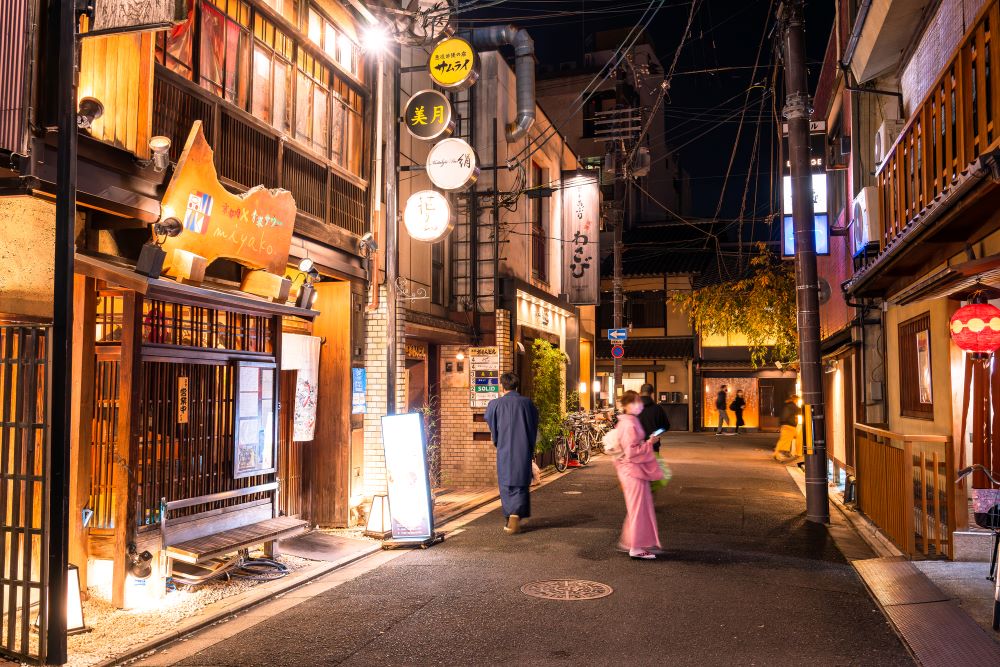
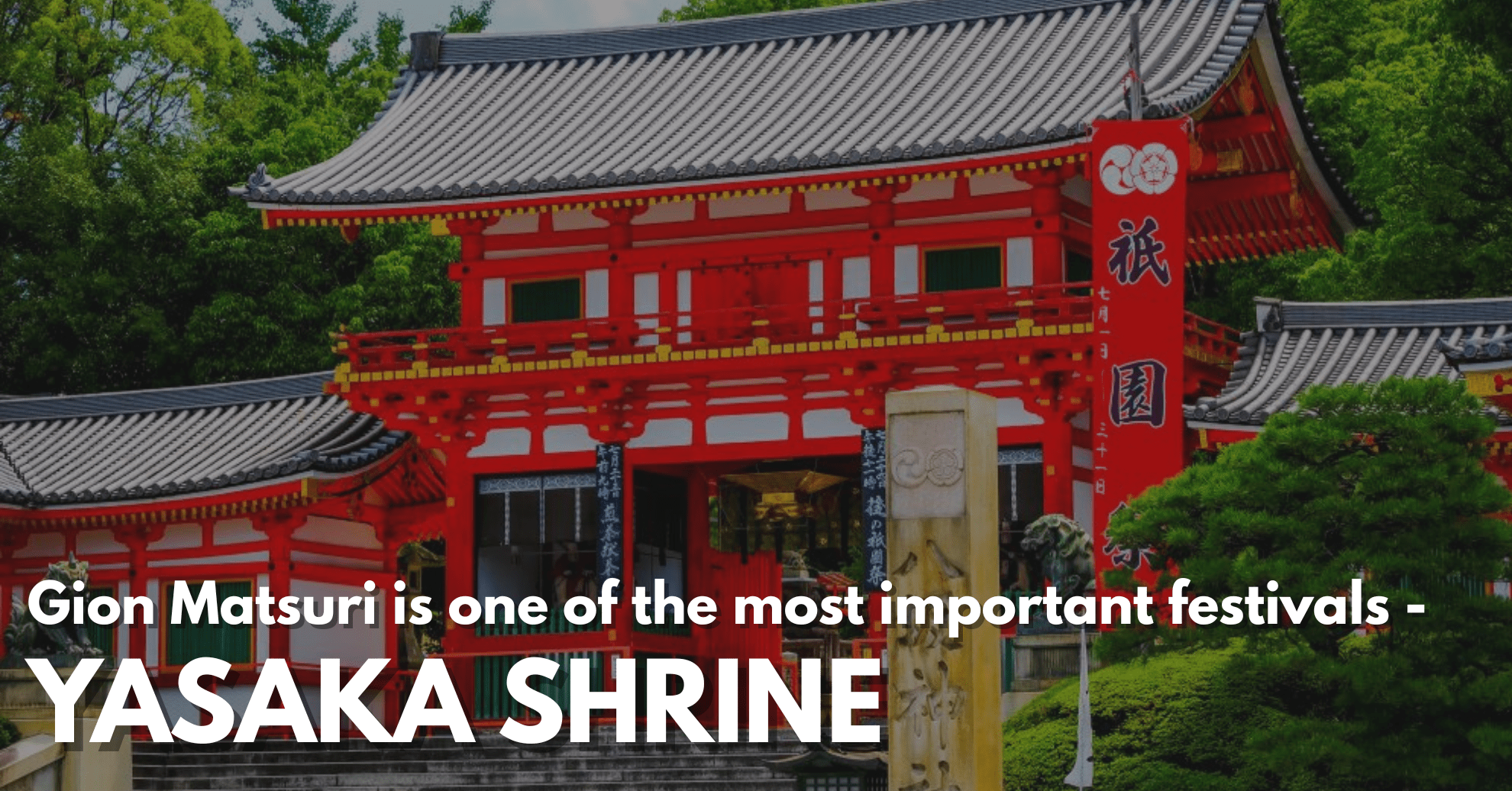
Located in the heart of Kyoto’s Gion district, Yasaka Shrine is one of the city’s most iconic shrines. Known affectionately as “Gion-san” by locals, it enshrines Susanoo-no-Mikoto, a deity believed to protect against all forms of misfortune.
In this article, we’ll explore the shrine’s highlights, the famous Gion Matsuri (Gion festival), how to access the shrine, and must-visit spots nearby. We’ll also introduce a special shrine within the grounds that’s dedicated to the god of matchmaking—a must-visit for those seeking good relationships!
What is Yasaka Shrine?
Yasaka Shrine predates the ancient capital of Heian-kyo, making it one of Kyoto’s oldest and most historically significant shrines.
The shrine is the origin of one of Japan’s three greatest festivals, the Gion Matsuri, which began over 1,150 years ago as a ritual to ward off plagues and disasters.
Held every year from July 1 to 31, the Gion Matsuri fills the streets around Yasaka Shrine, the Kamo River, and Kawaramachi with processions, mikoshi (portable shrines), and traditional music.
Main Highlights of Yasaka Shrine
National Treasure Main Hall and Historic West Gate
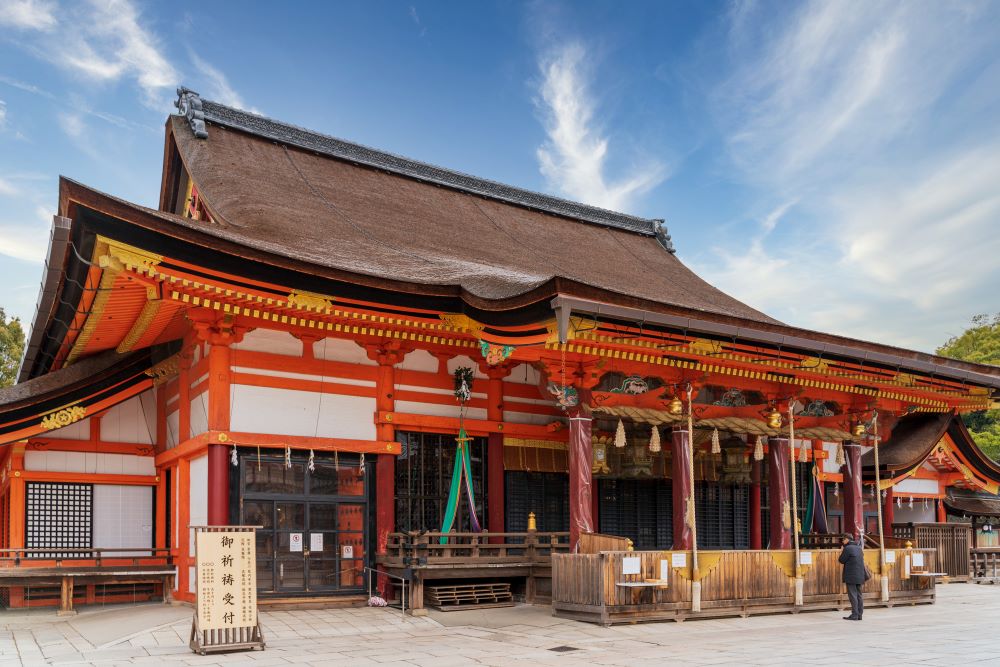
Yasaka Shrine’s top attractions include the Main Hall, designated a National Treasure in 2020, and the West Tower Gate (Seirōmon), the oldest structure on the grounds.
The Main Hall is especially notable for its unique architectural style, where the worship hall and main sanctuary share a single, grand roof. This design is rare and represents one of the largest shrine structures in Japan—an impressive sight to behold.
Recommended visit time: 1 to 2 hours.
Matchmaking Shrine: Ōkuninushi-sha
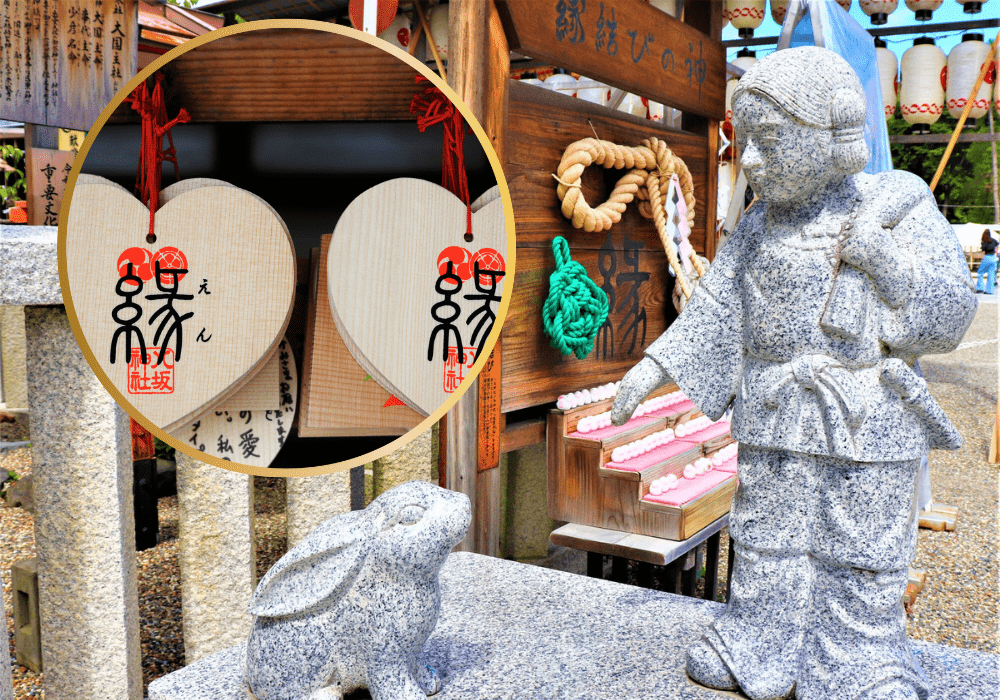
Within the shrine grounds lies Ōkuninushi-sha, dedicated to Ōkuninushi-no-Kami, the grandson of Susanoo-no-Mikoto and the deity of matchmaking.
Next to the torii gate of this smaller shrine, you’ll find a stone statue depicting the famous “White Hare of Inaba” legend. In the myth, Ōkuninushi teaches an injured rabbit how to heal its wounds. The grateful rabbit then helps connect him with the beautiful princess Yagami-hime, forming the basis of his role as a matchmaking god.
Visitors can write their wishes for love or relationships on heart-shaped ema (wooden prayer plaques) or make offerings to “Wish Rabbits” associated with this story.
Yasaka Shrine is Also Known for Cherry Blossoms and Autumn Leaves
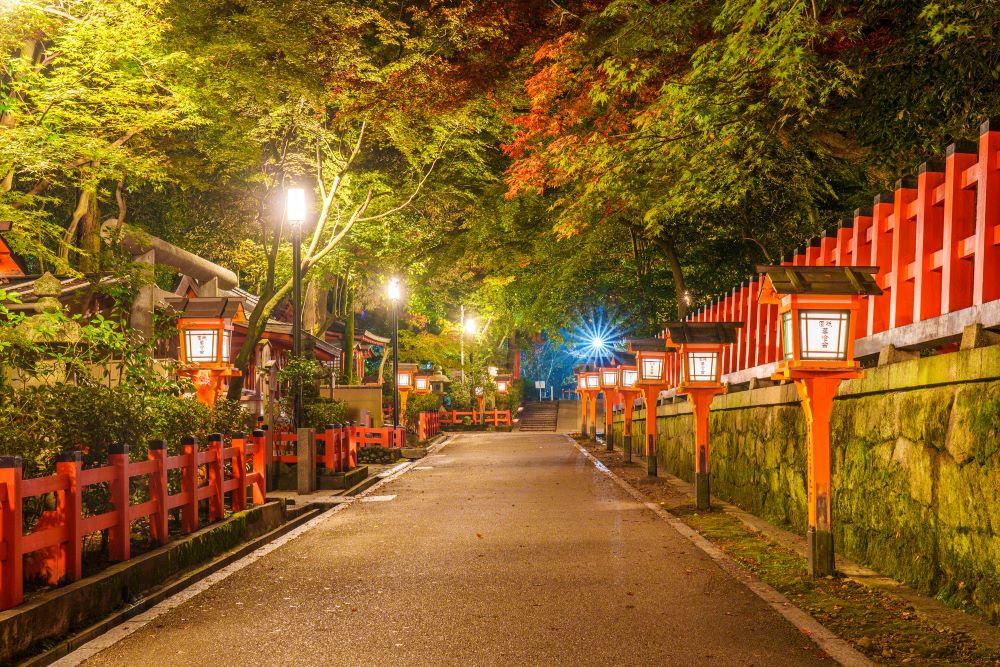
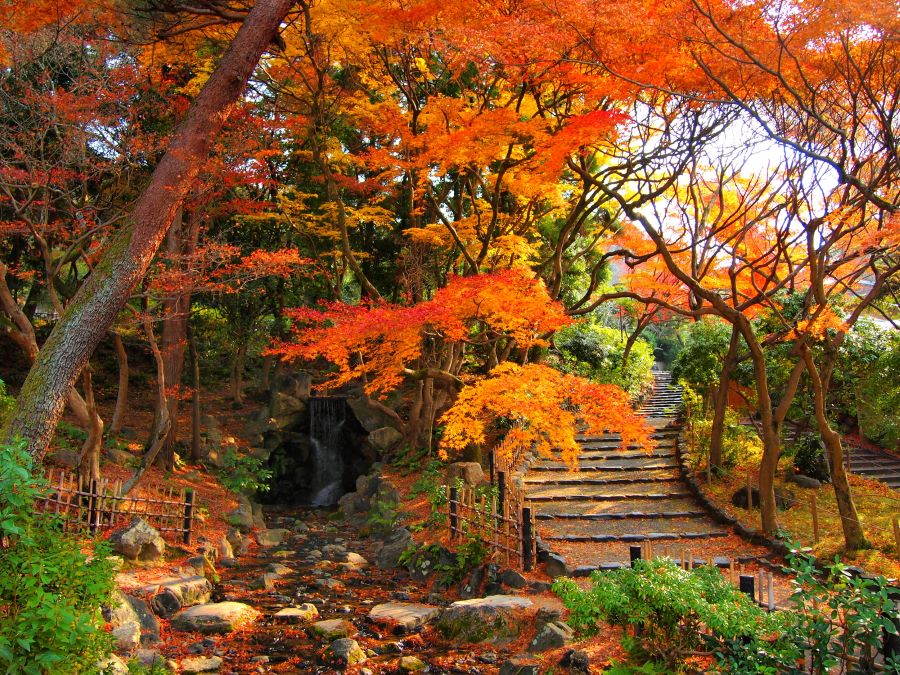
Yasaka Shrine is a beautiful spot year-round, especially in spring and autumn.
One of the most picturesque paths within the shrine grounds is lined with nearly 100 traditional lanterns. In the evening, the lanterns are illuminated, creating a magical and romantic atmosphere.

How to Get to Yasaka Shrine
From Kyoto Station, take City Bus No. 100 or 206 to the Gion stop (about 20 minutes). From there, it’s a 4-minute walk to the shrine.
If you’re traveling by train, the nearest stations are:
- Gion-Shijo Station (Keihan Line)
- Kyoto-Kawaramachi Station (Hankyu Line)
From either station, it’s less than a 10-minute walk to the shrine.
| Yasaka Shrine Address: 625 Gion-machi Kitagawa, Higashiyama-ku, Kyoto Phone: 075-561-6155 Hours: Shrine grounds: Open 24 hours Office: 9:00–17:00 Website: https://www.yasaka-jinja.or.jp/en/ |

Attractions Near Yasaka Shrine