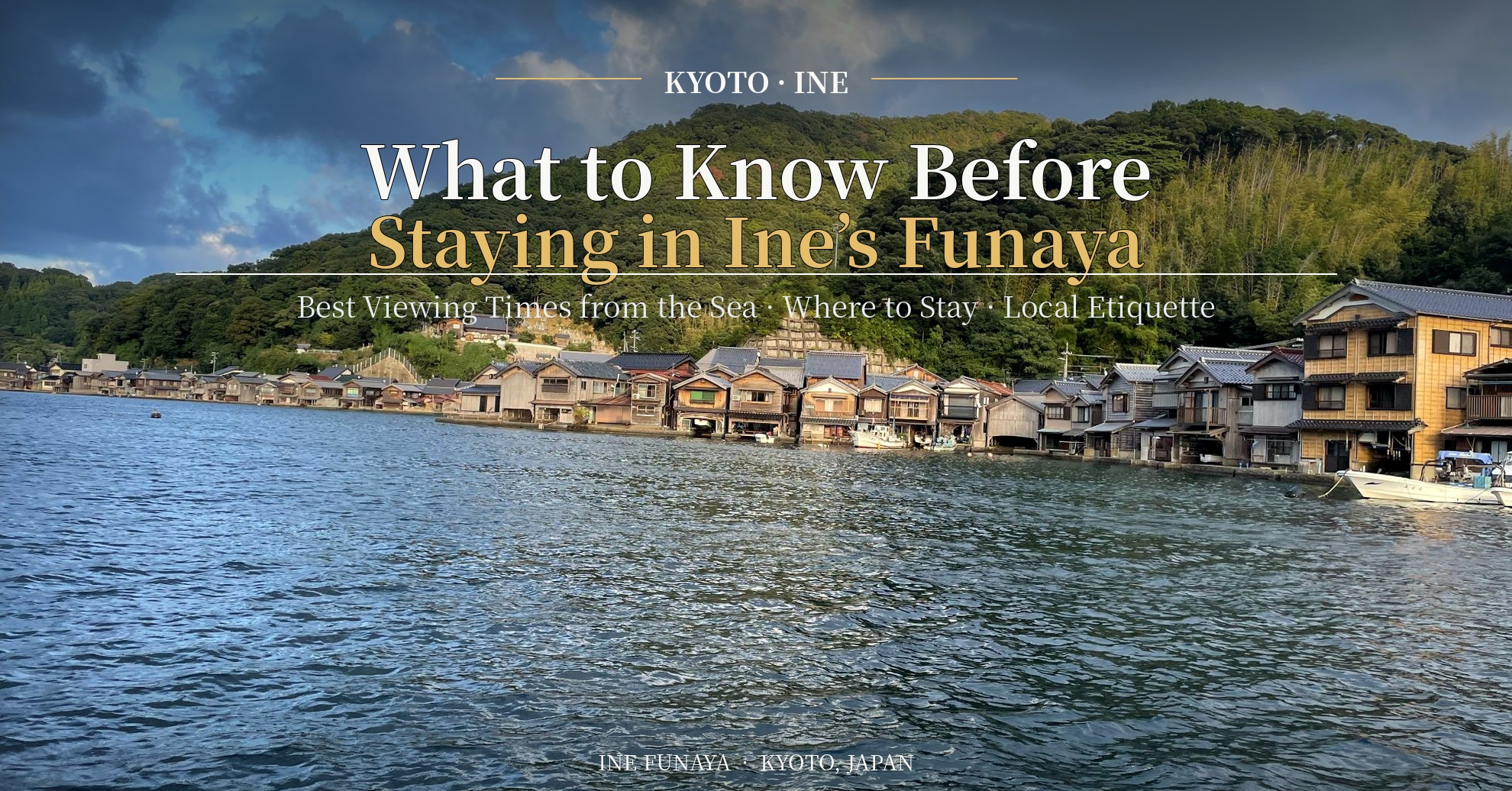
The funaya boathouses of Ine line the water’s edge, and most people who see a photo want to stay at least one night. Once you start looking for a room, though, you find that very few places take guests.
There is a reason lodging here is limited. There is also the fact that rooms facing the water are on the side the sightseeing boats pass during the day. Booking without knowing these two things can lead to a stay that feels different from what you pictured.
This guide covers what to know before staying in Ine, in this order: how to find a room, when the boats are running, and how to behave during your stay.
Ine Grows Quiet Once the Sightseeing Boats Stop for the Day
During the day, boats cross Ine Bay and visitors walk the village streets. That activity fades after late afternoon. Lights from the boathouses reflect on the water, and the only sound is an occasional fishing boat engine.
Mornings are the same. On a calm day the water turns to glass and the boathouses are mirrored in it. These hours are the main reason to spend the night rather than visit on a day trip.
What an overnight stay makes possible
Watching the bay from your room around sunrise, when the water is like a mirror
Walking the quiet village before the boats start running
Spending the evening with the boathouse lights on the water
Four Things to Know Before You Book
Very Few Boathouses Take Guests, So Book Lodging First
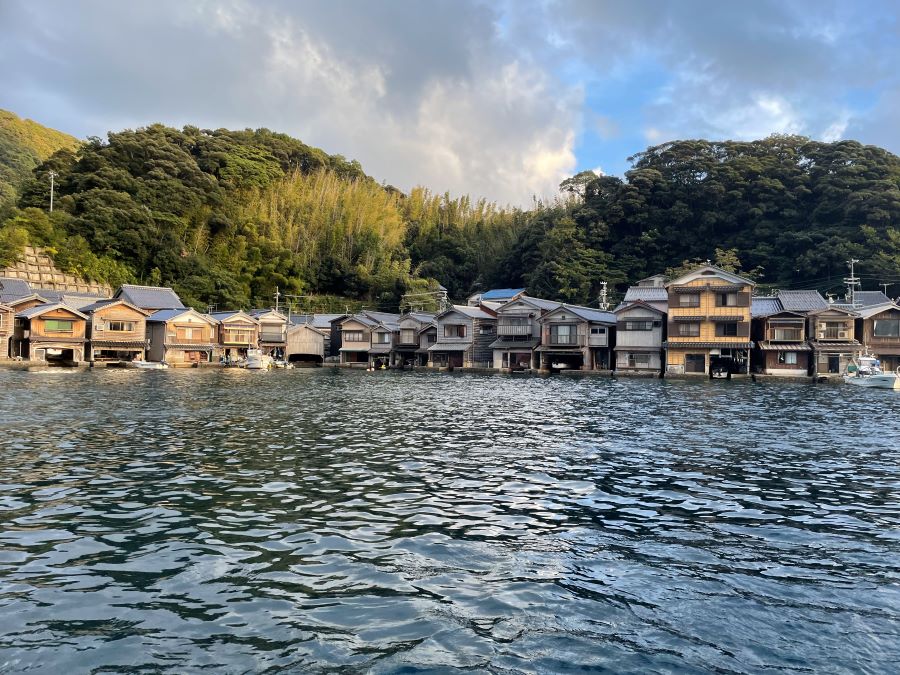
About 230 boathouses stand along Ine Bay, but only a small number are lodgings. A funaya was built as a workplace for fishing and is still used to store boats and gear. Most families live in a main house across the road, and the places you can stay are converted parts of a few of these buildings (Ine Tourism Association).
That means lodging in Ine is mostly small properties that take one group a day or have only a few rooms. Long weekends, the fall foliage season, and crab season fill up early, so reserve a room before you arrange transportation.
What the first and second floors were for
A funaya was built to pull a wooden boat out of the water and protect it from wind, rain, and insects. The first floor housed the boat, and the second floor was used to dry nets and store fishing gear, with little more than boards laid across it.
Boats are larger now and are often moored in front of the building, so the first floor is used for cleaning fish and drying laundry. Most guest rooms are converted second floors.
Rooms Facing the Water Are in View from the Bay During the Day
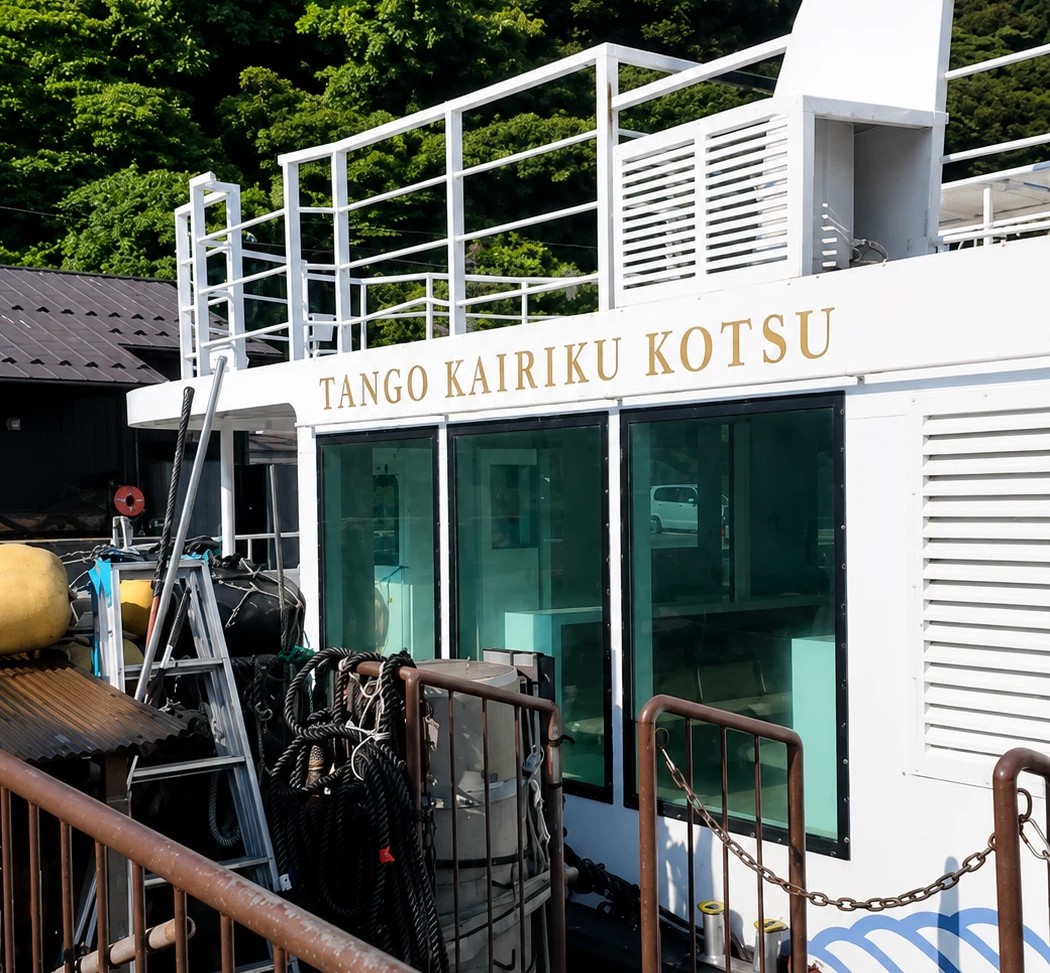
Ine Bay has daily service by the Ine Bay sightseeing boat and by sea taxis. Both exist to view the boathouses from the water, which means a room’s sea-facing windows and veranda are in view from the boats.
| Ine Bay sightseeing boat | Sea taxi | |
| Service | 9:00 a.m.–4:00 p.m., departing on the hour and on the half hour | By phone reservation (7 boats) |
| Duration | About 25 minutes | About 25 minutes |
| Fare | 1,200 yen for adults, 600 yen for children | 1,000 yen per person, 500 yen for elementary school students |
| Size | Large boat carrying up to about 150 passengers | Small boat for 11 to 12 passengers |
Using a sea-facing room during the day
Drawing the lace curtain makes the room more comfortable when you relax by the window
Hang towels or swimsuits where they are out of view from the boats
Boats finish around 4:00 p.m., after which you can open the windows and look out over the water
The other side of this is that early morning and evening feel like you have the bay to yourself. Walk the village or take a boat during the day, and spend the early and late hours in your room.
Your Choice of Lodging Decides Whether You Get the Water or the View
Lodging in Ine divides into converted boathouses and properties on the hillside or the inland side of the road. A boathouse sits right at the waterline, and some rooms let you fish from the window. A hillside property looks out over the bay and the row of boathouses. It is less a question of better or worse than closeness or view.
Four things to check before booking
Whether dinner is included (few restaurants in Ine are open at night)
Whether the bath and toilet are in the same building (some are in the main house)
Whether the room faces the water or looks down from the hillside
Whether parking is available (village lanes are narrow and used by residents)

During Your Stay: Most Boathouses Are Private Property
- Do not enter boathouse property → The Ine Tourism Association notes that most boathouses are privately owned
- Use the designated parking lots → Village lanes are residential streets and carry local buses
- Photograph the scenery → Avoid framing residents or laundry as the subject
- Keep quiet at night and early in the morning → People live right next door
- Take your trash with you → There are almost no trash cans in the village
Ine looks the way it does because people still live and work here. A little care from visitors keeps the same view available to the next person.
Access and Parking
By public transportation, local buses take about 53 minutes from Amanohashidate Station, or about 26 minutes from Moto-Ise Kono Shrine. By car, it is about 30 minutes from the Yosa-Amanohashidate interchange. From central Kyoto, allow about 3 hours by train and bus, and from Osaka about 2 hours 30 minutes by car.
| Name | Ine no Funaya (Ine boathouses) |
|---|---|
| Address | Ine-cho, Yosa-gun, Kyoto Prefecture |
| Number of boathouses | About 230 along Ine Bay |
| Viewing from the water | Ine Bay sightseeing boat (1,200 yen) / sea taxi (1,000 yen per person), about 25 minutes each |
| Access | About 53 minutes by local bus from Amanohashidate Station / about 30 minutes by car from the Yosa-Amanohashidate interchange |
| Parking | Use the designated parking lots (village lanes are residential streets) |
| Note | Most boathouses are privately owned |
Frequently Asked Questions
- Do people live in the boathouses?
-
According to the Ine Tourism Association, relatively few families live in the boathouses themselves. Most live in a main house across the road and use the boathouse to store boats and fishing gear. Some families use a boathouse as a home for a son or daughter’s family, or as a retirement annex.
- Can people on the boats see into the room?
-
Sea-facing windows are in view from the boats. Sightseeing boats run from 9:00 a.m. to 4:00 p.m., so drawing the curtain during the day makes the room more comfortable. The boats are not running early in the morning or in the evening.
- Is a day trip worthwhile?
-
A day trip still allows a boat ride and a walk through the village. The quiet bay in the morning and the boathouse lights at night, however, require an overnight stay. For a day trip, pairing Ine with Amanohashidate works well.
- Is it all right to drive there?
-
You can drive to the village, but the lanes inside are narrow and used by residents. Park in a designated lot and walk from there. Ask about parking when you book your room.
Summary
Three points to keep in mind before staying in Ine:
- Few boathouses take guests → Only a small share of about 230 buildings, so book lodging before transportation
- Sea-facing rooms are in view during the day → Boats run from 9:00 a.m. to 4:00 p.m., and early morning and evening are quiet
- Most boathouses are private property → Stay off the property, use the parking lots, and photograph the scenery
If your dates are full, you can stay in the Amanohashidate area and visit Ine for the day. The bus takes about an hour, so Ine in the morning and Amanohashidate in the afternoon is a workable plan. Start by looking for a room.