Kyoto has historic temples and shrines, cherry blossoms and autumn leaves, and a food culture that runs from sweets to kaiseki dining.
There is plenty to do as well, from kimono rental to hands-on workshops, so most people planning a trip already have a rough idea of how they want to spend their time.
But Kyoto also has customs and conditions that are easy to run into unprepared — restaurants that only accept introduced guests, and a transport network that can be awkward to use.
This article covers eleven things worth knowing before a trip to Kyoto.
Most of them concern getting around the city, and eating and sleeping while you are there.
Transport Tips for Kyoto
We start with transport, which affects almost everything else.
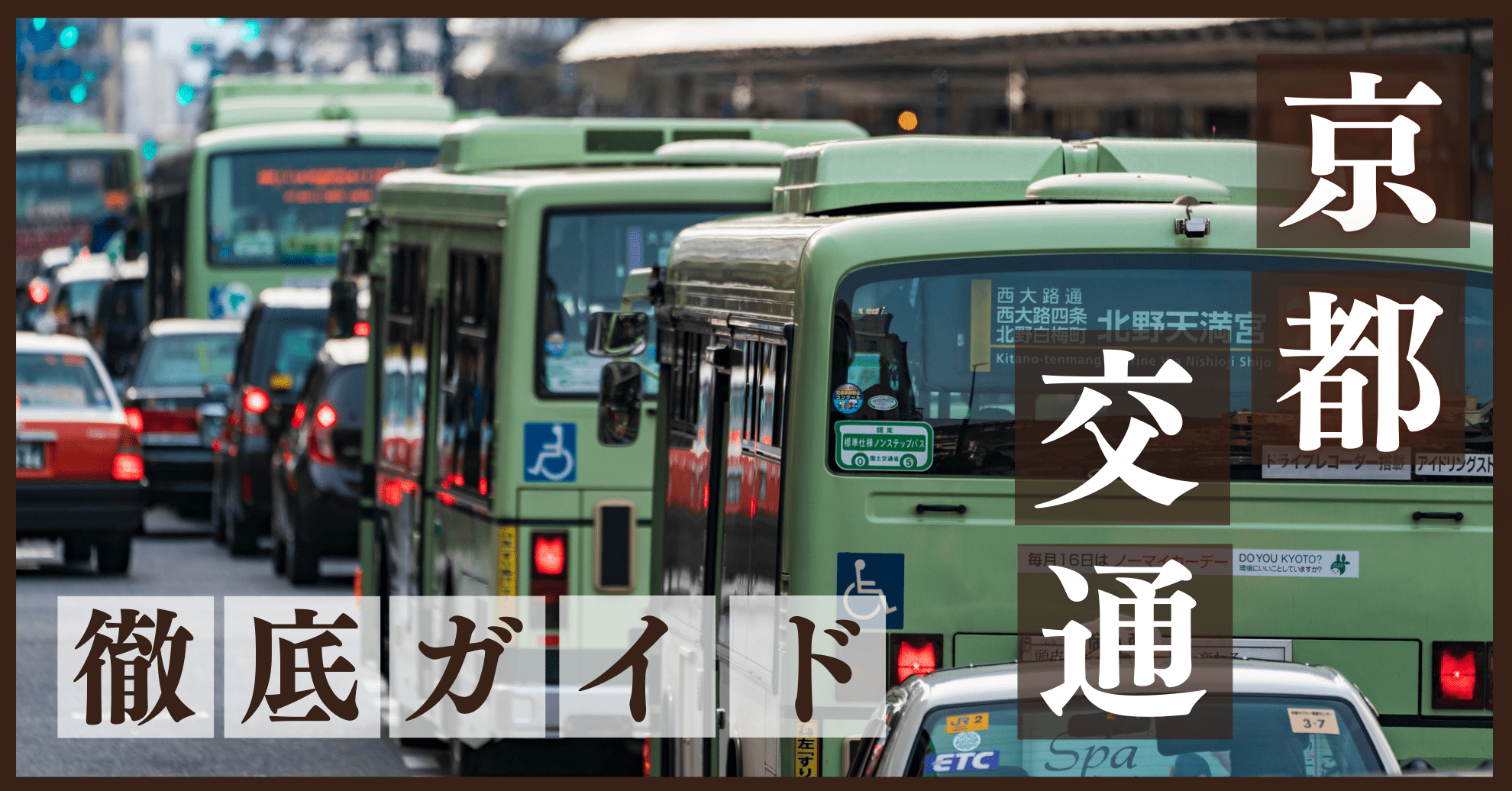
City Buses Are Complicated, Crowded and Often Delayed

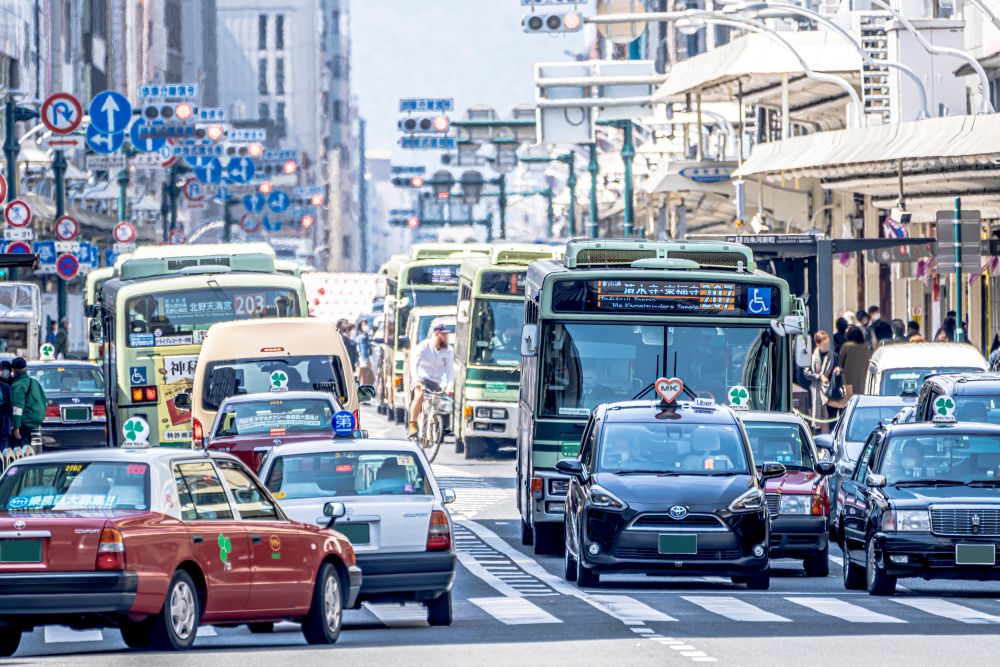
The bus is the main way to move around central Kyoto.
Trains are useful too, but Kyoto has fewer rail lines than Tokyo or Osaka, and residents use the bus constantly.
Together with the recent rise in visitor numbers, that makes city buses very crowded. During the cherry blossom and autumn leaf seasons, and around the major festivals, buses can be too full to board.
Several operators run across the city — Kyoto City Bus, Kyoto Bus, Keihan Bus and West JR Bus among them — which makes the network harder to read.
A single stop may be served by buses heading in different directions, so it is worth checking your route in advance to avoid boarding the wrong one.
During city-wide festivals such as Gion Matsuri, roads are closed or rerouted while the floats and processions pass, and journeys take longer than usual.
What to do
The practical approach is to take the train as close to your destination as possible, and use the bus only for the last stretch when walking is not realistic.
The Subway and Bus One-Day Pass saves paying each time you board and lets you get on and off freely for a day.
Cycling is another good option. The city has many bicycle parking areas and rental points, and the roads are set up for cycling, so you can get around without worrying about timetables or crowds.
Taxis Can Be Hard to Find, and Service Varies


The taxi ranks at Kyoto Station and at the Hachijo exit are large, so outside peak seasons and weekends you can usually find a taxi without much trouble.
Alongside the large taxi companies there are many owner-operated taxis, and service quality varies more among them.
An owner-operated taxi is run as a sole proprietorship by a driver licensed by the regional transport bureau under the Ministry of Land, Infrastructure, Transport and Tourism.
Drivers qualify by meeting conditions such as experience at a taxi company and a clean traffic record, and by passing an examination.
Most are therefore experienced drivers, but because each runs an independent business, the level of service is not uniform.
What to do
If you would rather not take the chance, look for MK Taxi or Yasaka Taxi, the two large operators in Kyoto.
MK Taxi trains its drivers thoroughly and offers sightseeing guidance in foreign languages. If you want to be sure of communicating easily, their foreign-language guide service is worth considering.
Yasaka Taxi is long established and has a large fleet, so you will see their cars often on the street.
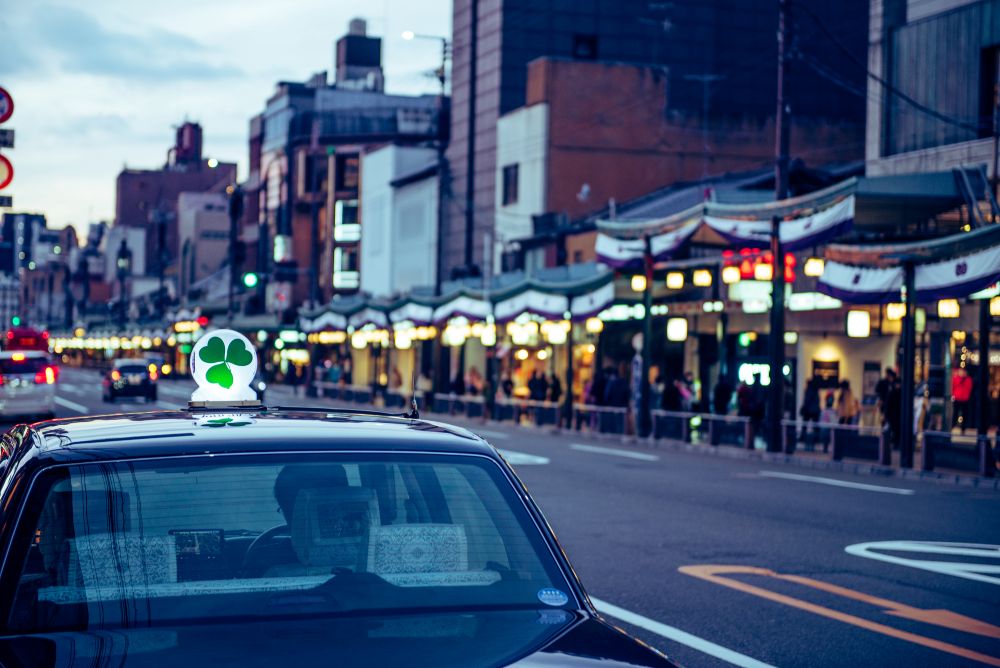
Their roof sign carries a three-leaf clover, and a small number of cars carry a four-leaf one. Catching a four-leaf car is said to bring good luck, so it is worth looking out for.
For a smoother ride, ask your hotel front desk to call a taxi, or use a booking app such as Go, Uber Taxi or DiDi.
A booking app also shows an estimated fare to your destination in advance, and both MK Taxi and Yasaka Taxi are available through them.
Roads Get Congested and Parking Takes Time to Find


Some people drive to Kyoto from Osaka or Nagoya, in a rental car or their own, and want to sightsee by car once they arrive.
Traffic builds up around the main sights — Arashiyama, Nishiki Market, Heian Jingu, To-ji and Kiyomizu-dera — and the parking lots fill, so finding a space can take a while.
What to do
If you are driving in from Osaka, Nagoya or elsewhere nearby, use Park and Ride.
Park and Ride means leaving the car in a designated lot near a suburban station or bus stop and continuing to the sights by train or bus.
The lots available for Park and Ride, both from the Osaka direction and from the Nagoya direction, are listed here.
Kyoto Addresses Confuse Car Navigation Systems


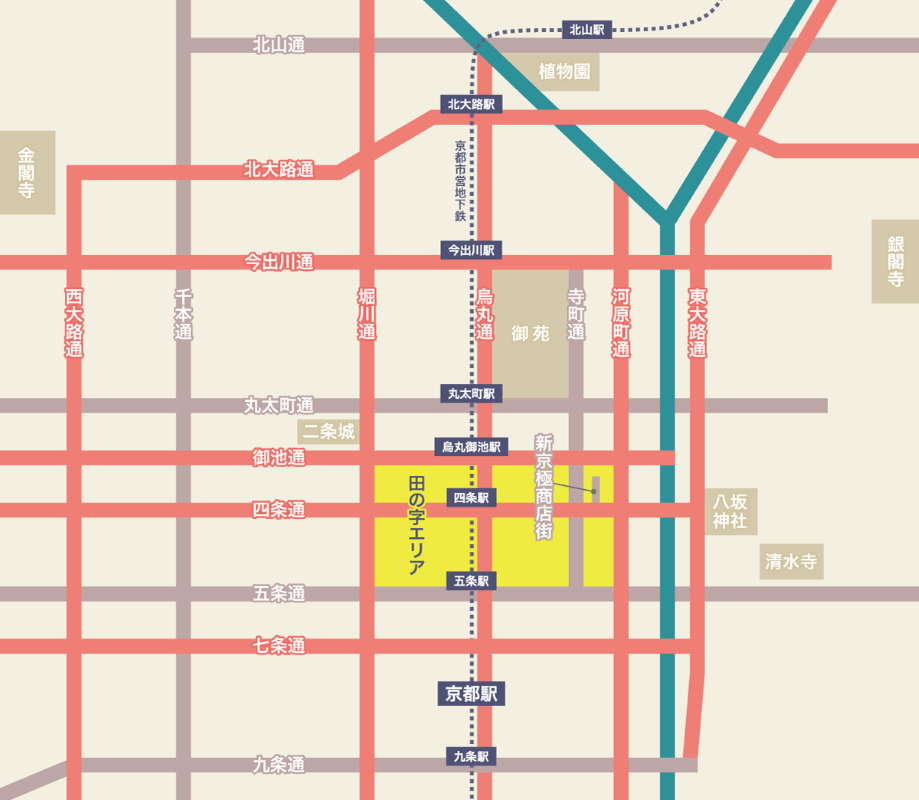
Addresses in Japan normally use block and lot numbers, but Kyoto addresses are built on street names, with directional words: agaru (north), sagaru (south), higashi-iru (east) and nishi-iru (west).
This comes from the grid layout of Heian-kyo, the old capital: agaru means going north, sagaru south, higashi-iru east and nishi-iru west.
The system applies to the central wards — Kamigyo, Nakagyo, Shimogyo and parts of Sakyo — rather than to the whole city.
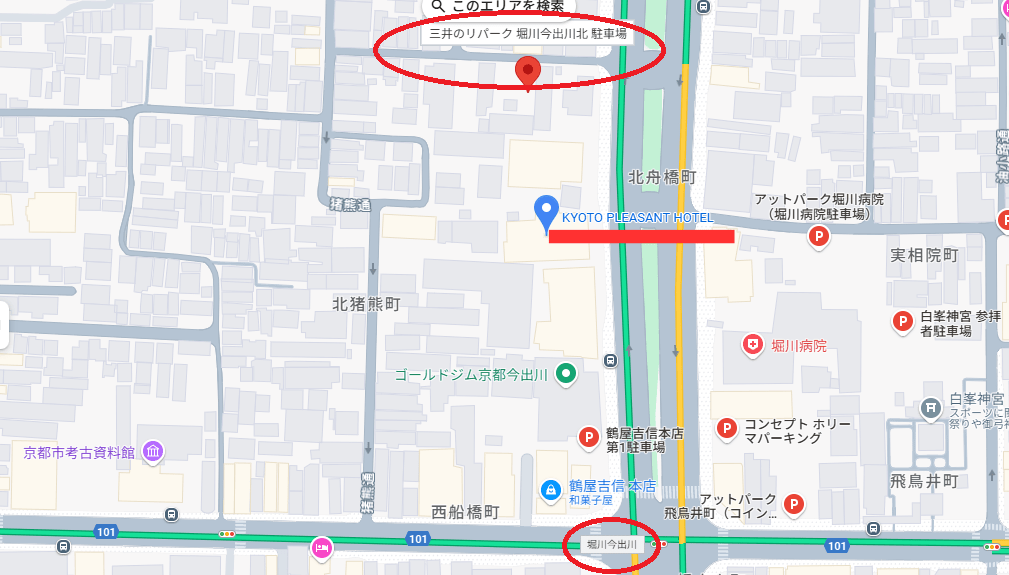
Take the address of Kyoto Pleasant Hotel, a convenient base for sightseeing, as an example.
In “857 Kitafunahashi-cho, Horikawa-dori Imadegawa agaru, Kamigyo-ku, Kyoto”, the part reading Horikawa-dori Imadegawa agaru means: from the intersection of Horikawa-dori and Imadegawa-dori, go north.
Once the logic of the street names is clear, it becomes much easier to orient yourself.
Car navigation systems are another matter. They are built around block and lot numbers, and often cannot interpret an address in the street-name form.
Entering the address as written may return nothing, or set a destination some distance from where you meant to go.
What to do


Instead of typing the address, set the destination by the name of the building, a nearby intersection, or a nearby parking lot.
For the hotel above, setting the Horikawa Imadegawa intersection, or the Mitsui no Repark Horikawa Imadegawa Kita parking lot, works well.
Map apps such as Google Maps update in real time, so they are worth using alongside the car navigation.
Tips on Restaurants and Accommodation
There are also things worth knowing about restaurants and accommodation in Kyoto. Knowing the going rate, and which seasons are busiest, makes the trip easier.
Prices Aimed at Visitors Can Run High


In areas of Japan popular with international visitors, some businesses set prices well above the local norm.
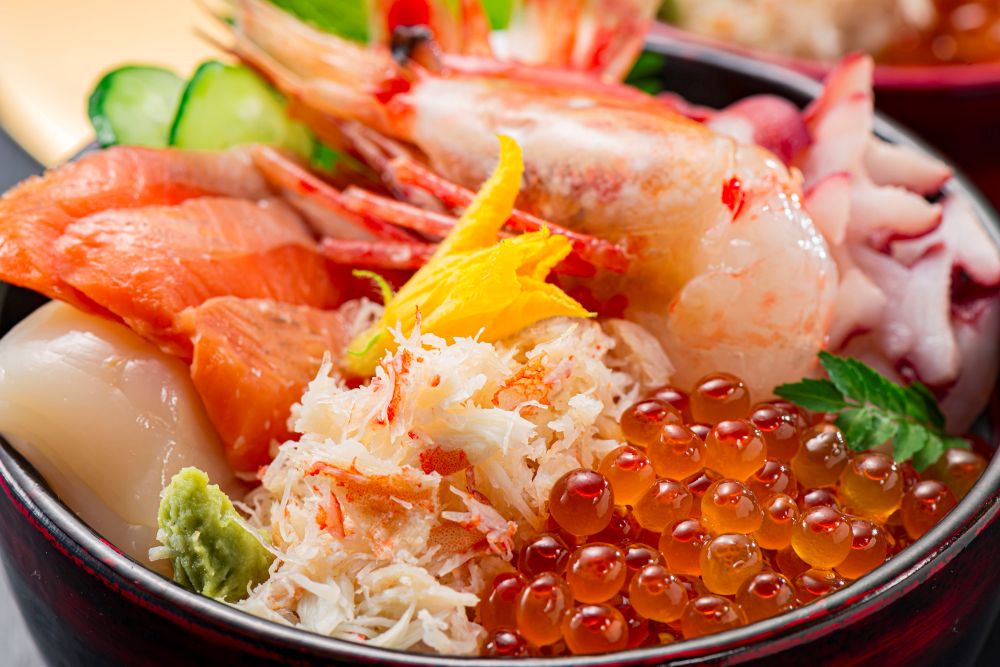
At a tourism facility that opened in Toyosu, Tokyo in February 2024, seafood bowls sell for over 8,000 yen, and similar pricing appears in the Dotonbori area of Osaka.
In Kyoto too, hamburgers made with wagyu beef sell for more than 4,000 yen, and the number of places priced beyond what local residents would pay has grown.
Many visitors come specifically for high-grade meat or fresh seafood, and those who accept that quality costs money rate these places well.
Others simply charge what the market will bear without matching it in quality, so it is worth judging whether the price fits what you are getting.
What to do


Check reviews and the menu before you go.
Places that locals use tend to be both good and reasonably priced. Look for restaurants whose reviews come from residents and regulars.
Few Places Stay Open Late


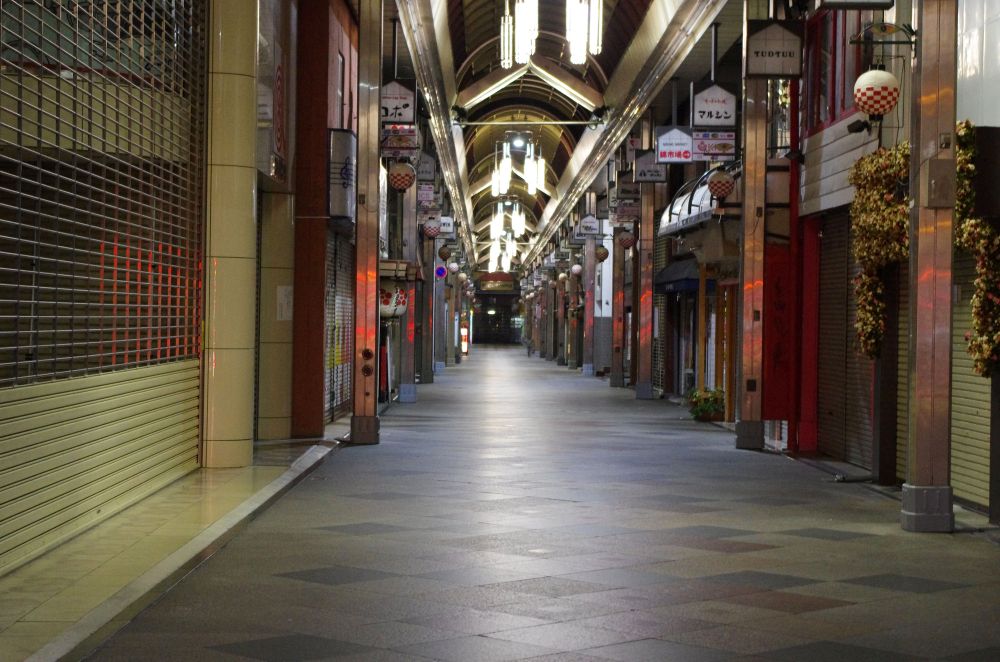
Most places in central Kyoto, izakaya included, close by around 11 p.m.
Nishiki Market, busy all day, has mostly shut by about 6 p.m., so anyone expecting a late-night eating and drinking scene should plan accordingly.
This is true of most places outside the largest cities, not only Kyoto, so check opening hours in advance.
What to do


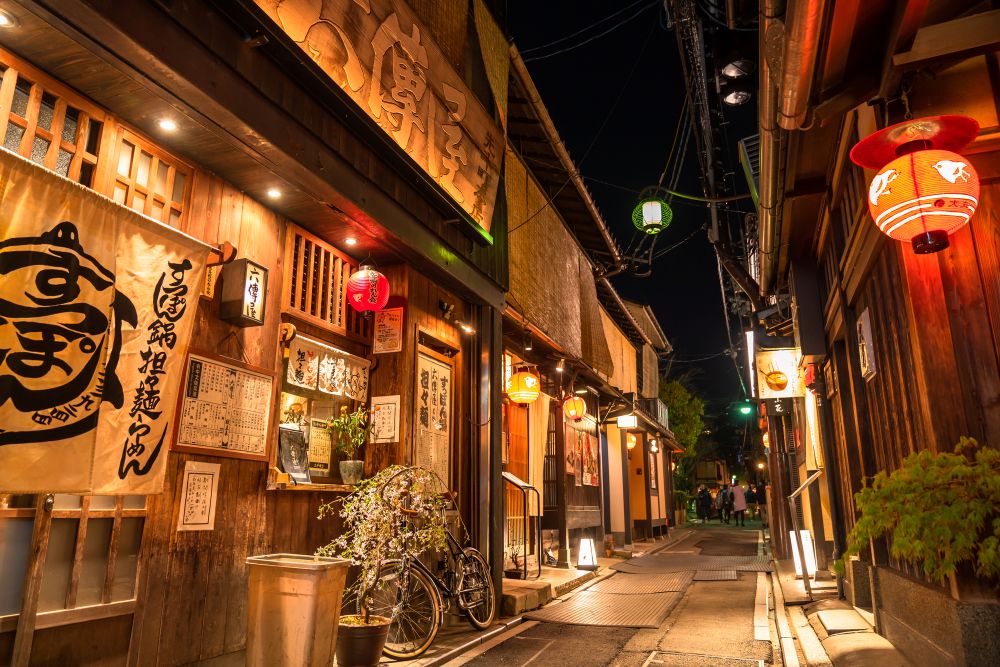
One exception is Pontocho, the narrow lane between the Kamo River and Kiyamachi-dori in Nakagyo Ward, where some places stay open until 1 or 2 a.m.
Pontocho began in the 1700s, when inns serving boat crews and travelers on the Takase River employed chatate-onna, and by the mid-1800s it ranked alongside Gion.
The district still keeps that history, and today it has bars and karaoke places as well as restaurants serving Japanese, Western and Chinese food.
Restaurants mostly close before midnight, but some bars stay open until around 3 a.m., so it is worth a look.
Chatate-onna: women who served tea to guests and also worked as courtesans.
Some Restaurants Do Not Accept First-Time Guests


Some restaurants in Kyoto operate on an ichigensan okotowari basis, meaning they do not accept first-time guests without an introduction.
The practice was mainly found at ochaya teahouses in the five hanamachi districts: Gion Kobu, Miyagawacho, Pontocho, Kamishichiken and Gion Higashi.
Some places in the hanamachi still work this way. A restaurant with no sign, no noren curtain or no website is likely to be one of them.
Why did ichigensan okotowari come about? An ochaya is a place that arranges geiko and maiko, prepares food and drink, and hosts the evening. In old Kyoto, regular guests were admitted on sight and settled their bills later rather than carrying money, because interrupting the evening to present a bill was considered poor form. More than that, the ochaya also settled what a guest had spent at other restaurants, and even kimono bought for a geiko, all on the same running account. That system depended on knowing the guest well enough to be sure the bill would be paid, which is where the practice began.
What to do
Kyoto also has many high-end restaurants and ochaya that do accept visitors. If you are unsure whether you can book, ask your hotel front desk; they can often make the reservation for you.
The article below covers kaiseki restaurants in Kyoto that welcome first-time guests. It is a good place to start if you want to try traditional Kyoto cuisine.
Room Rates Nearly Double in Some Seasons


Kyoto is busiest when the cherry blossoms are out, from late March to early May, and during the autumn leaf season from late October to early December.
The monthly figures for average room rate and occupancy make this clear.
Average room rate and occupancy at major hotels in Kyoto
| FY2024 | FY2025 | |||
| Average room rate | Occupancy | Average room rate | Occupancy | |
| Jan | ¥15,390 | 60.3% | ¥16,942 | 68.7% |
| Feb | ¥16,541 | 69.9% | ¥15,987 | 71.7% |
| Mar | ¥22,925 | 81.1% | ¥24,366 | 79.4% |
| Apr | ¥24,406 | 86.0% | ¥30,640 | 89.5% |
| May | ¥20,342 | 83.6% | – | – |
| Jun | ¥17,429 | 79.3% | – | – |
| Jul | ¥18,147 | 75.4% | – | – |
| Aug | ¥17,710 | 72.8% | – | – |
| Sep | ¥17,353 | 76.7% | – | – |
| Oct | ¥22,708 | 88.8% | – | – |
| Nov | ¥28,686 | 87.4% | – | – |
| Dec | ¥20,601 | 80.9% | – | – |
| Annual average | ¥20,195 | 78.5% | – | – |
Compiled from the sources linked below
https://www.city.kyoto.lg.jp/templates/shingikai_kekka/cmsfiles/contents/0000339/339528/02_2_kyoukaidata.pdf
https://www.kyokanko.or.jp/report/hotel202501
In the 2024 fiscal year, the cheapest month was January at an average of 15,390 yen, against 24,406 yen in April for the cherry blossoms and 28,686 yen in November for the autumn leaves.
Even at those rates, April occupancy ran close to 90 percent, which shows how strong demand is in these seasons.
What to do


If you want to come for the blossoms or the leaves, book several months ahead — six is not too early — and choose a weekday over a weekend or public holiday.
Rates near Kyoto Station rise sharply, so staying a little away from it is usually better value.
Along the subway lines, for example, you can reach both the Kyoto character and the food of Nishiki Market and Hanamikoji, and sights such as Nijo Castle and Yasaka Shrine.
If you also want Togetsukyo Bridge and the bamboo grove, look at places along the Keifuku (Randen) or Hankyu lines.


Hotels in Kyoto Charge an Accommodation Tax and a Bathing Tax


Some cities in Japan levy an accommodation tax, used for conserving cultural properties and historic streetscapes and for improving facilities for visitors.
Kyoto introduced one in 2018, and the rates are due to change for stays from March 1, 2026, to address congestion and fund city infrastructure.
Accommodation tax rates in Kyoto
| Room rate (per person, per night) | Current | From March 1, 2026 |
| Under 6,000 yen | 200 yen | 200 yen |
| 6,000 to under 20,000 yen | 400 yen | |
| 20,000 to under 50,000 yen | 500 yen | 1,000 yen |
| 50,000 to under 100,000 yen | 1,000 yen | 4,000 yen |
| 100,000 yen and above | 10,000 yen |
Room rate here means the room only, excluding meals and consumption tax.
Properties in Kyoto with hot spring baths also charge a bathing tax: 150 yen per person per night for an overnight stay, and a set amount per person for day use.
Children of elementary school age and younger are exempt, as are public bathhouses used in daily life and medical facilities.
The list of properties in Kyoto subject to the bathing tax is available here.
What to do
When staying in Kyoto, expect these taxes to be charged on top of the amount shown on booking sites and official websites. Check in advance if you want to be sure of the total.
Note that the accommodation tax applies in Kyoto City only. If you are looking at higher-priced accommodation, somewhere outside the city is worth considering.


More Tips for a Trip to Kyoto
A few more things are useful to know beyond transport, restaurants and hotels.
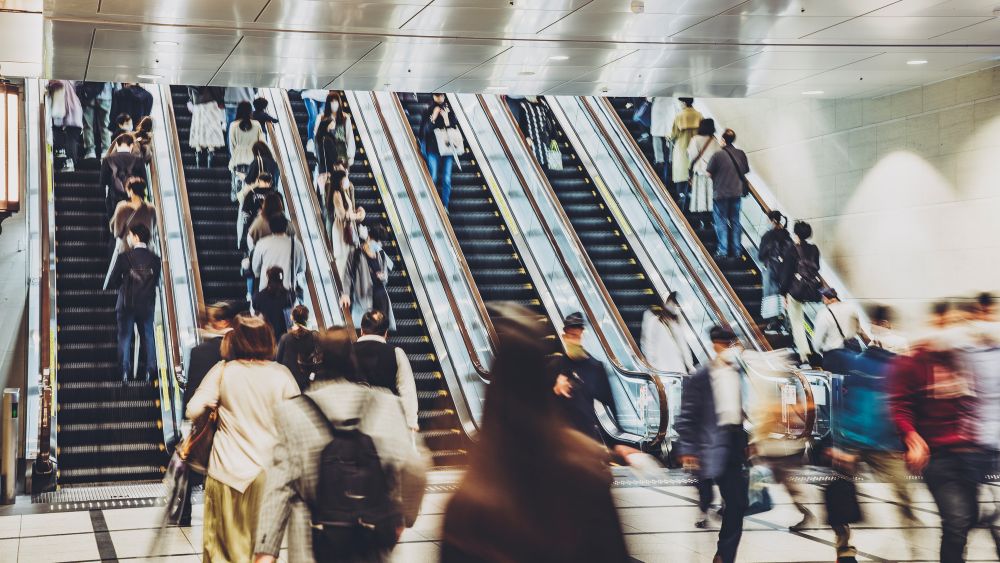
On Escalators, Follow the Person at the Front


On escalators in Japan, people generally stand in a single line on one side and leave the other side clear.
In the Kanto region people usually stand on the left and in Kansai on the right, but Kyoto has no fixed rule.
The idea that one side should be kept clear for people in a hurry is not actually correct.
Escalators are designed to be used standing still. People hurrying down can collide with others, and loading one side unevenly puts strain on the mechanism.
In practice the habit persists, and many people hesitate to stand on both sides.
What to do
In crowded parts of Kyoto you will often see people standing on both sides. If you are unsure, follow whoever is at the front.
If you are in a hurry, take the stairs; if you have large luggage, use the elevator.
Summer and Winter Are Hard Going, Even for Residents


Kyoto sits in a basin ringed by mountains. The hills block the wind, so heat builds up in summer, while cold air settles in the basin in winter and the cold cuts deep.
Summers have been severe in recent years: the high in July 2024 reached 39.4°C. In Japan, outdoor exercise is generally called off above 35°C, so plan around the heat.
Spring and autumn swing widely between day and night, so an afternoon that feels warm can turn much colder after dark.
What to do
In summer the humidity is high as well. Wear breathable clothing and carry a handheld fan and a cold pack to avoid heat exhaustion. The sun is strong, so sunscreen is worth packing.
Indoors, air conditioning can feel too cold, so a light layer or a stole is useful.
For winter, an inner down layer, gloves and a scarf work well, along with heat pads and anything else that lets you adjust easily.
Summer and winter have their own appeal. Both seasons are demanding, but each offers something the others do not. Machiya townhouses are built to let air through and keep direct sun out, so the inside often stays cool compared with the street. Kyoto vegetables are worth trying there: Kamo eggplant, in season in summer, holds a lot of water and potassium, and Fushimi peppers from the Fushimi area are mild and nutritious, long regarded as a remedy for summer fatigue. In winter, Kujo leeks and Shogoin radish grow sweeter in the cold.
Summary
This article has covered eleven things worth knowing before a trip to Kyoto.
Transport: combine trains and bicycles with the bus rather than relying on buses alone; use a taxi booking app; park away from the main sights; set car navigation by building name, nearby intersection or nearby parking lot. Restaurants and accommodation: check reviews in advance and choose fairly priced places; head to Pontocho if you want to stay out late; be aware of places that do not accept first-time guests; book early, on a weekday and away from the center; allow for the accommodation and bathing taxes when setting your budget and choosing where to stay. Other: on escalators, follow the people around you; dress in layers and enjoy the ingredients and the atmosphere particular to the season.
Knowing these in advance should make the trip easier and leave more room for what Kyoto itself has to offer.