
It takes about two hours by car from central Kyoto to reach a coastal town with no railway line. That town is Ine, known for its funaya boathouses and now one of the best-known destinations in northern Kyoto.
Getting there is not especially easy. Even so, weekends bring a steady stream of visitors, and videos of Ine on social media regularly pass several hundred thousand views.
For this article we compared reviews on Jalan, a travel site used mainly by domestic travelers, with reviews on Tripadvisor, used mainly by visitors from overseas. The short version: ratings are consistently high on both, and what separated a good visit from an average one was not which spots people saw, but how they spent their time.
What the Ine Boathouses Are: About 230 Homes on the Bay, Still Lived In Today

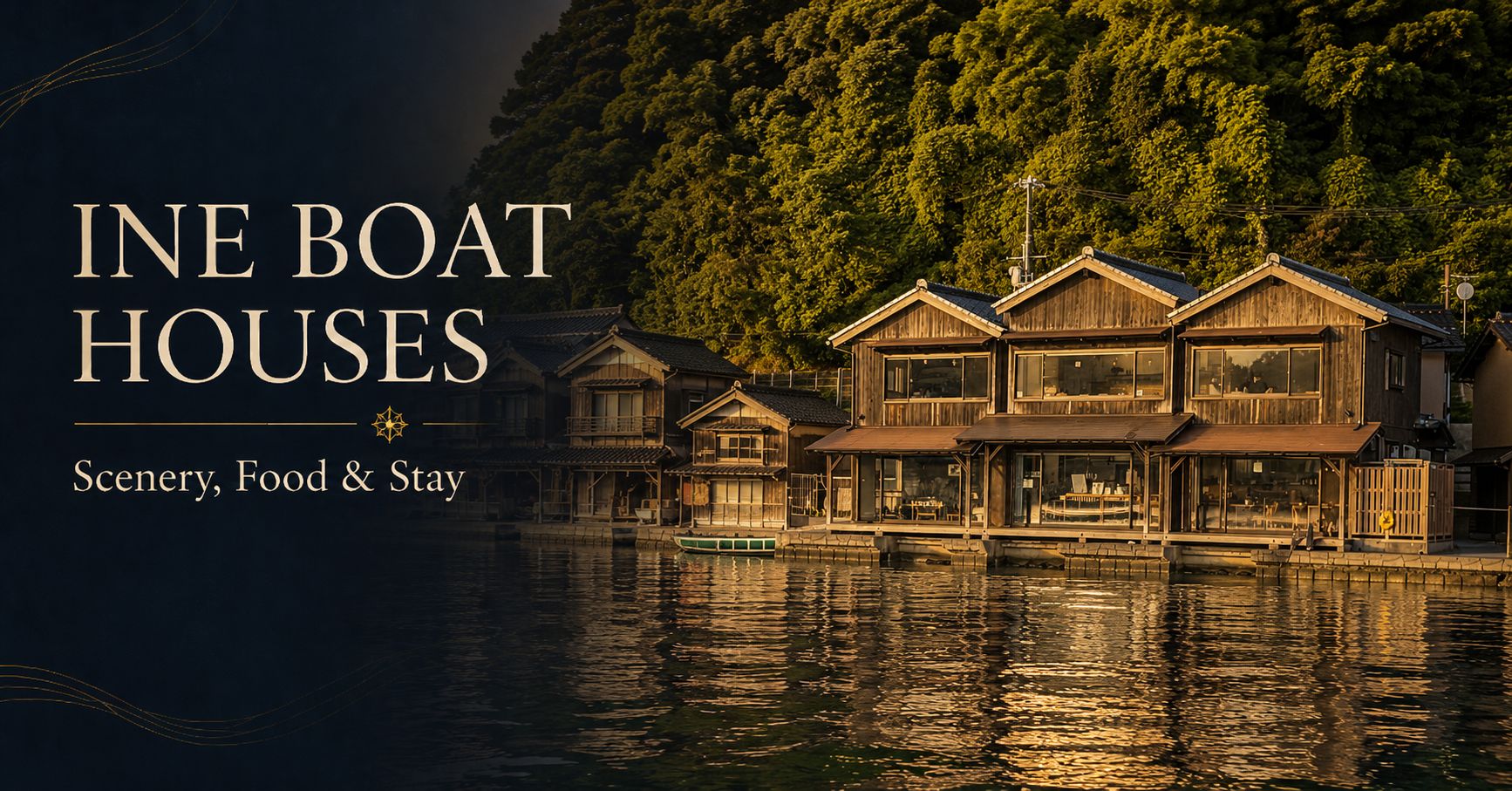
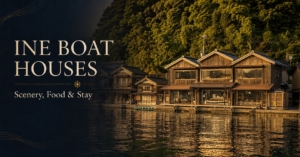
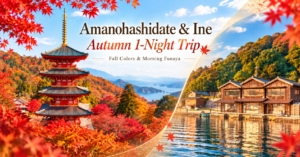
The funaya of Ine are roughly 230 buildings lined along Ine Bay, a form of architecture rarely seen elsewhere in Japan. Each one has a boat garage on the ground floor and living quarters above. This is not a preserved streetscape kept for tourism. Many of the buildings are still used for fishing and daily life.
The design comes from the shape of the bay. Hills surround it on three sides, creating a natural harbor where the water stays calm year round. The tide rises and falls only about 30 centimeters in a day, and about 70 centimeters over a year, so the water level barely changes. That is what allows the buildings to sit almost at the surface.
The water is also deep close to shore. From the Edo period into the Taisho period, whales that followed sardines into the bay were caught here using traditional shore whaling methods. A calm sea and rich fishing grounds are what shaped the town into its present form.
Ine is sometimes called the most beautiful village in Japan, or the Venice of Japan. Walk through it, though, and the phrase that fits best may simply be a quiet fishing village.
Travelers from Japan and Abroad Rate Ine Equally Highly
The first thing the comparison showed is that travelers from within Japan and travelers from overseas both rate Ine highly. Three experiences came up again and again.
The Most Common Comment: Take the Sightseeing Boat
The Ine Bay sightseeing cruise drew the most comments on both sites. Some wrote that the boathouses look best from the water, some that the fare was worth it, some that the guide made the trip more interesting. The wording differed, but the assessment did not.
One ride explains why. From the road you see the boathouses one at a time, but from the water all 230 or so line up along the bay in a single view. The scene Ine is known for really only comes together from the sea.
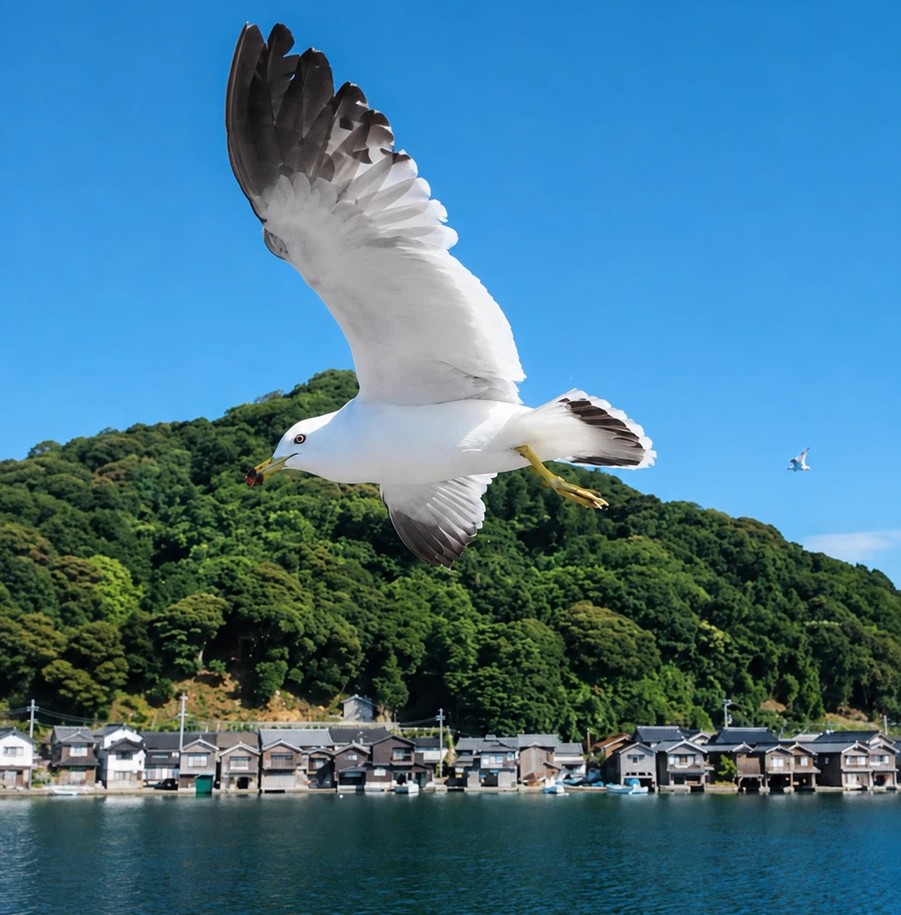
Feeding the gulls that follow the boat is the other reason people enjoy the ride. Black kites come in as well. Gulls take food with their beaks, while kites grab it with their feet. Their talons can scratch, so hold the food between your fingertips rather than flat on your palm.
| Boat | Ine Bay sightseeing cruise |
|---|---|
| Duration | About 25 minutes |
| Departures | 9:00-16:00, on the hour and half hour. Open year round, though sailings are canceled in rough weather. |
| Fare | 1,200 yen for adults (junior high and up), 600 yen for children (elementary school). One preschool child travels free with each adult. |
| Parking at the pier | Paid, 500 yen for cars and motorcycles |
Guests Who Stayed Overnight Rated Ine Highest

Reviews from people who stayed the night stood out just as much. They wrote about losing track of time watching the water from their room, about the bay at dawn, about conversations with their hosts being the most memorable part of the trip, and about the seafood. Those comments appeared on both sites.
Ine fills with day visitors in the afternoon, but the town grows quiet again toward evening. You watch the water, and the next morning you wake to a calm bay. A day trip covers the main sights, but staying one night changes the impression considerably.
What Reviewers Who Wanted to Return Had in Common

Follow the highest-rated reviews and a pattern appears. Those visitors took the boat, stayed overnight when their schedule allowed, and walked the town without hurrying. Anyone who did at least one of the three was far more likely to write that they wanted to come back.
Reviews from people who drove in, took a few photos and left tended to be less enthusiastic. Ine is a town where how you spend your time matters more than which spots you tick off.
Before You Go: Parking, Crowds and Meals
Ratings are high, but a few cautions came up repeatedly in the reviews. Knowing them in advance changes how you plan the day.
Parking Is Limited and the Roads Are Narrow
The most frequent comments concerned the small number of parking spaces and the narrow roads. Funaya no Sato Park, the roadside station on the hill above the town, is a popular spot for the view over the boathouses, and on weekends its lot starts filling up during the morning.
The streets through the village are everyday roads for residents, and some stretches leave little room to pass. If you would rather not drive them, park at the boat pier or the roadside station and walk from there.
Restaurants Fill Up Around Midday, and Seafood Options Are Limited
Waits at popular restaurants get long around midday. Several reviews also noted that there are fewer places serving seafood than visitors expect.
Cafes and restaurants have gradually increased in recent years, but on weekends it helps to allow extra time or to eat outside the peak hours.
A Working Town as Much as a Destination
People still live and fish in the boathouses of Ine. Stay out of private property and boat slips, do not park on the street, and do not photograph the interiors of homes. Those three points are all it takes to keep the town comfortable for residents and visitors alike.

Summary: Ine Rewards the Time You Give It
Travelers from within Japan and from overseas rate Ine equally highly. What they praise is not only the scenery but the time they spent there, and that is what sets this town apart.
- First visit – take the sightseeing boat. The line of roughly 230 boathouses seen from the water is the view Ine is known for
- If your schedule allows – stay overnight in a boathouse. The quiet after sunset is something day visitors never see
- To avoid the crowds – go early in the morning or late in the afternoon
- If you are driving – arrive early for parking, and expect narrow village roads
Is Ine worth two hours from central Kyoto? Going by the reviews, the answer is yes, depending on how you spend the visit. Stopping for a photo and turning back leaves most of the town unseen.
If you are combining Ine with Amanohashidate, a night in Ine makes the route easier to manage. Miyazu and Amanohashidate also have inns with hot springs and good food, so you can choose to suit your itinerary.
More on the Amanohashidate Area
-

[Kyoto] The Ine Boat Houses: Scenery, Food, Where to Stay and How to Get There
-
[Kyoto Amanohashidate] When to Visit the Ine Boat Houses: Choosing by Season, Weather and the Look of the Water
-
[Kyoto Amanohashidate] Autumn Color Seen from Above, and a Morning at the Boat Houses: A Night in Amanohashidate and Ine
-
[Kyoto] How to Enjoy Amanohashidate – A 2-Day Model Course from Kyoto to Amanohashidate & Ine
-
8 Hot Spring Ryokans with Excellent Food in Miyazu and Amanohashidate, Kyoto
-
What Is Amanohashidate? Highlights, Viewpoints and Main Attractions in Miyazu, Kyoto