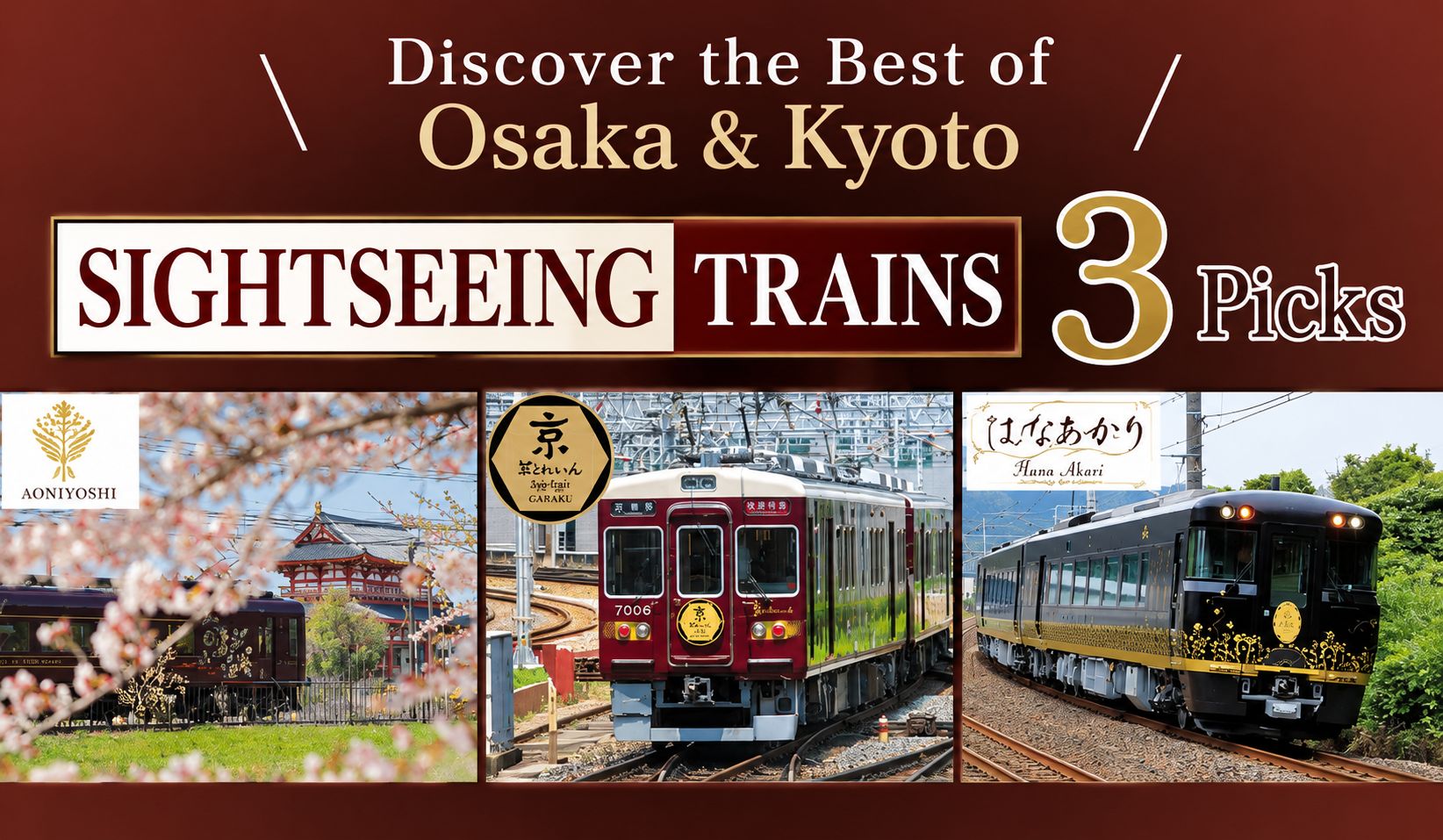
Sightseeing trains have become popular with travelers from Japan and abroad in recent years.
Japanese sightseeing trains are designed down to the exterior paint and the interior fittings, and they put traditional craftsmanship and local culture on display. On board you get the view from the window, local food and products to buy, and on some trains a chance to talk with people from the area.
This article covers the sightseeing trains that run between Osaka and Kyoto, among them Hanaakari, which entered service in October 2024, and Kyo-train Garaku, which you can ride on a standard fare alone.
Along with what makes each train worth riding, this article explains how to reserve online and where to buy tickets, so you can choose one that fits your destinations and your dates.
Three Sightseeing Trains: AONIYOSHI, Kyo-train Garaku, and Hanaakari
Here is an overview of the routes and the basic details. Each train is covered in more depth further down.
AONIYOSHI, Kyo-train Garaku, and Hanaakari at a glance
| AONIYOSHI | Kyo-train Garaku | Hanaakari | |
| Route | Osaka-Namba to Kyoto | Osaka-Umeda to Kyoto-Kawaramachi | Changes with the season Autumn 2026: Shin-Yamaguchi to Iwakuni |
| Fare | Base fare + limited express fee + special car fee | Base fare only | Base fare + limited express fee + Green Car fee |
| Reservations and seating | Reservation required, seats assigned | No reservation needed, unreserved seating | Reservation required, seats assigned |
| Operating days | Daily except Thursdays | Saturdays, Sundays, and public holidays | Set by season Autumn 2026: 20 days between October 10 and December 20, mostly weekends and holidays |
| Services per day | 8 round trips | 4 each way | 1 per day |
| Kansai Area PassCan you use it | × | 〇 | △ Limited express and Green Car fees are extra |
| On-board service | On-board sales Attendant on board Free Wi-Fi | No on-board sales No attendant Free Wi-Fi | On-board sales Attendant on board Free Wi-Fi |
Kintetsu AONIYOSHI: A Relaxed Trip Through Nara History from the Moment You Board
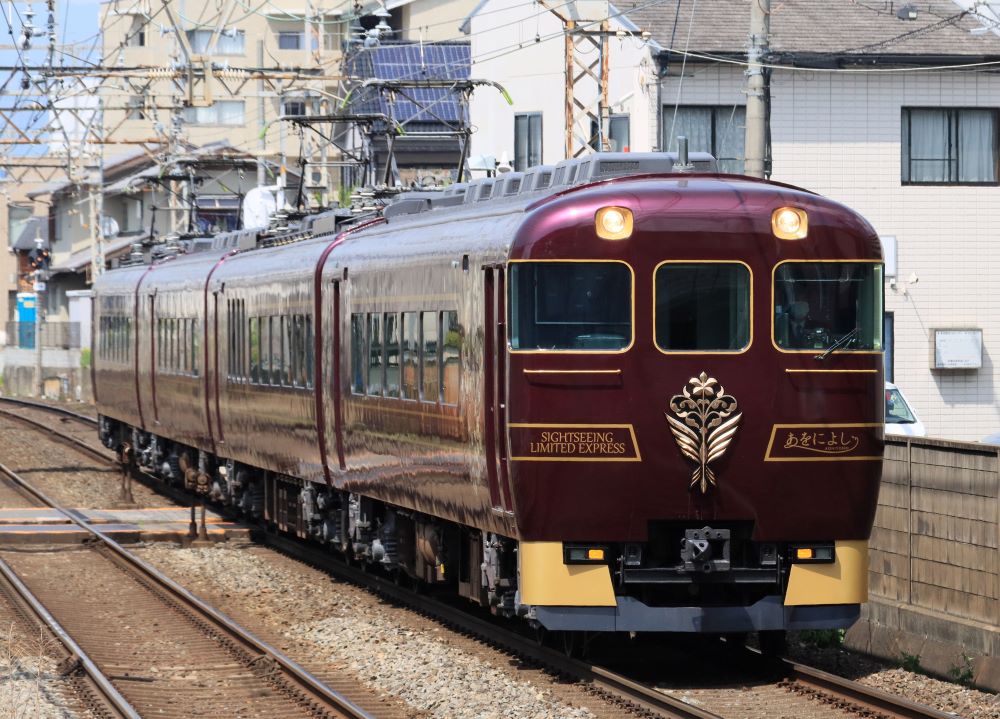
First up is AONIYOSHI, the sightseeing limited express linking Osaka, Nara, and Kyoto, with what stands out on board and how to buy tickets.
What stands out about AONIYOSHI
AONIYOSHI is styled around the beauty of Nara. The exterior uses purple, a color treated as noble when the capital was at Nara, with patterns drawn from the treasures of the Shosoin repository.
The emblem shows a bird holding a flowering branch in its beak, a motif called hanakuidori that has long been considered auspicious.
An auspicious bird, or zuicho, was taken as a sign that something good was coming, and the hanakuidori motif also appears on treasures and crafts held in the Shosoin. If you get to the Shosoin, it is worth comparing the two.
Where does the name AONIYOSHI come from?
Written in kanji, aoniyoshi means something close to the blue clay is good: ao-ni is a blue-toned clay, and yoshi means good. Nara produced high-quality blue clay, and the phrase became attached to the place. In the Manyoshu, the Kojiki, and the Nihon Shoki, aoniyoshi appears repeatedly as a set phrase introducing Nara, so the name carries a long-standing regard for the old capital.
Example, Manyoshu, Book 3-328: Aoniyoshi Nara no miyako wa saku hana no niou ga gotoku ima sakari nari
Translation: The capital at Nara, lovely with its blue clay, is at its height, glowing the way flowers glow in bloom.
Where the quality shows
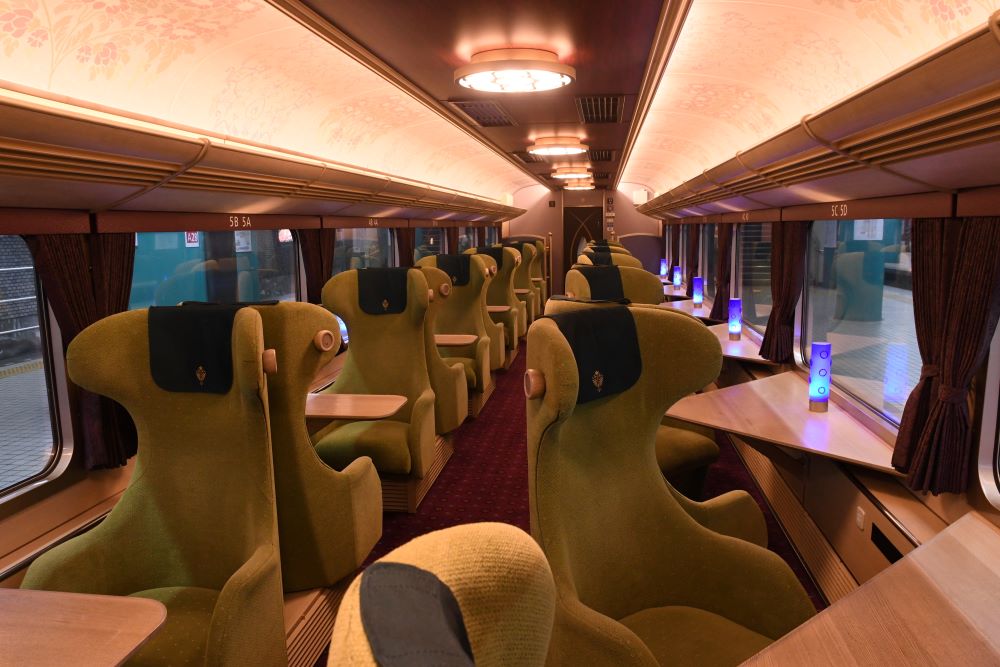
AONIYOSHI has four cars. Cars 1, 3, and 4 have twin seats arranged in pairs along both sides of the aisle. They were made to order by a furniture maker, and they are deep enough to settle into for the whole ride.
Car 2 has salon seats, built for groups of three or four. A partition separates each group from the aisle, which makes the space semi-private. Look up while you are there: the blue glass lighting is modeled on the Ruri no Tsuki, a glass cup among the Shosoin treasures.
Also on board: limited-edition sweets and Nara craft beer
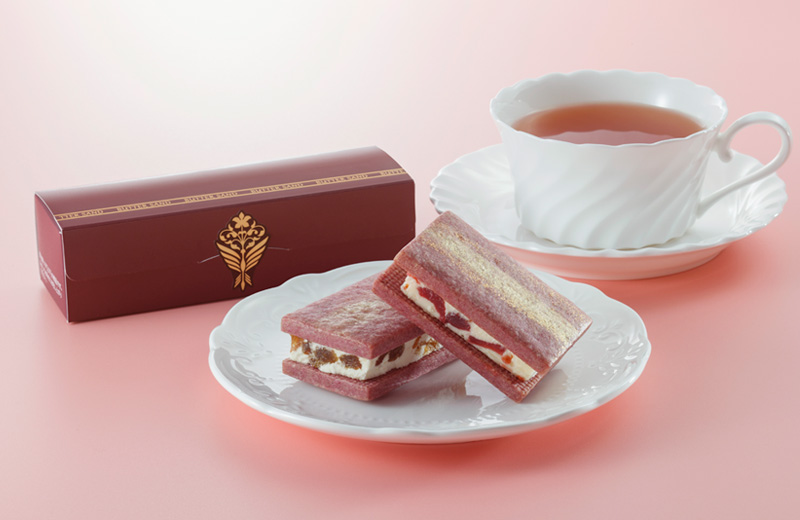
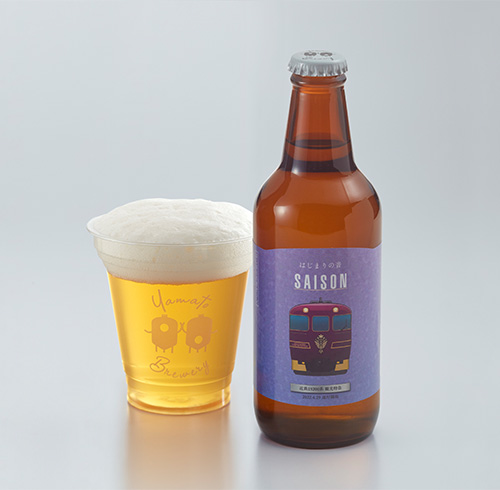
Car 2 has a counter selling original sweets, light meals, and craft beer from Nara. Items sold only on board include butter sandwich cookies with raisins and strawberries, Hyakuraku pork buns, and kakinoha-zushi, sushi wrapped in persimmon leaves. There is also smoked Yamato jidori chicken and other dishes that go with a drink. The drinks list runs from beer by the Nara brewery Yamato Jozo to soft drinks such as Mahoroba Cider, so there is something for everyone in the group.
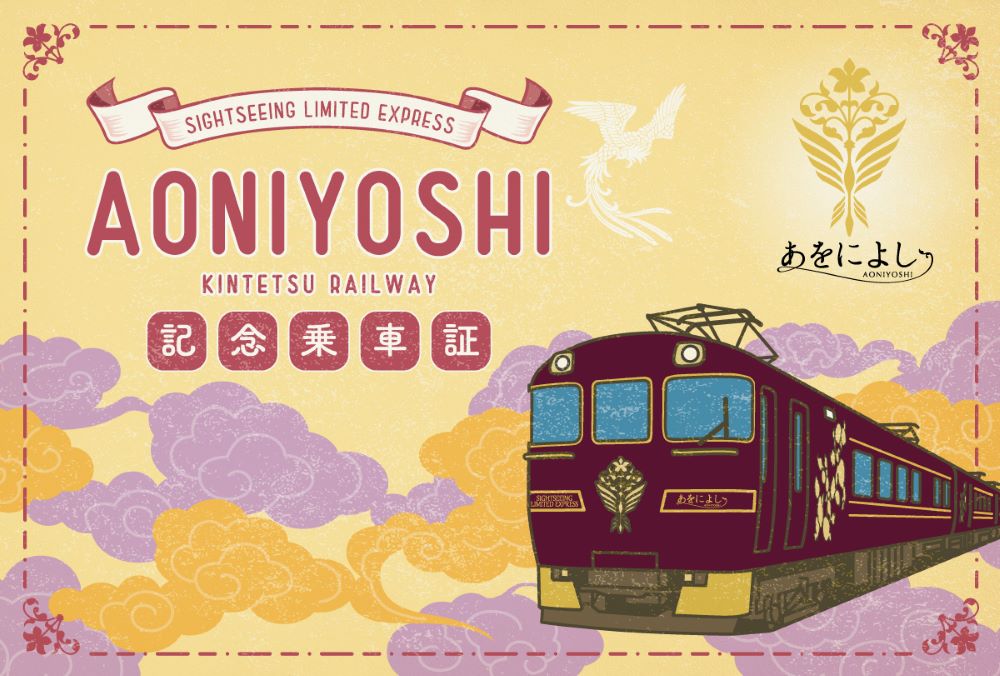
The counter also carries train-only souvenirs such as Japanese handkerchiefs and metal keychains, and there is a free commemorative boarding certificate worth asking for.
Note that what is on sale changes through the year. The items above are examples, so take a look at the counter once you board.
Schedule and stations
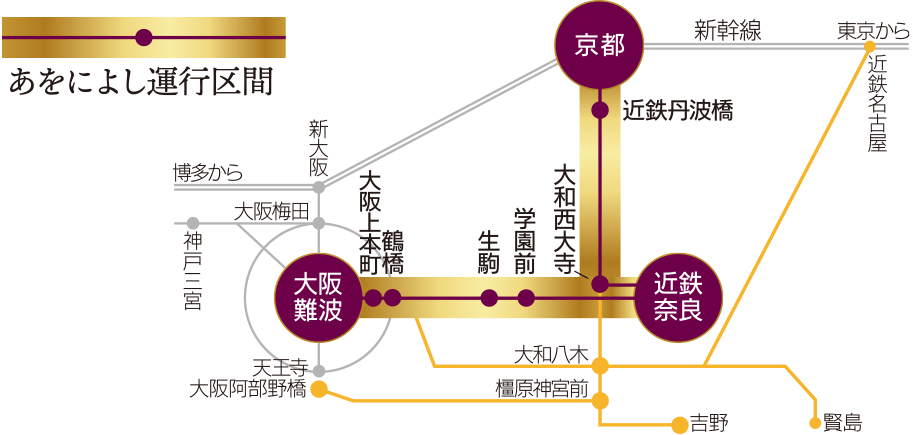
AONIYOSHI runs every day except Thursdays, with eight services a day.
| Timetable (weekdays / weekends and holidays) | Via Osaka | ||
| Service 1 | Depart Osaka-Namba Arrive Kyoto | 9:10/9:10 10:31/10:29 | 〇 |
| Service 2 | Depart Kyoto Arrive Kintetsu-Nara | 10:55/10:55 11:30/11:31 | × |
| Service 3 | Depart Kintetsu-Nara Arrive Kyoto | 11:55 12:30 | × |
| Service 4 | Depart Kyoto Arrive Kintetsu-Nara | 12:55 13:28 | × |
| Service 5 | Depart Kintetsu-Nara Arrive Kyoto | 13:55 14:30 | × |
| Service 6 | Depart Kyoto Arrive Kintetsu-Nara | 14:55 15:28 | × |
| Service 7 | Depart Kintetsu-Nara Arrive Kyoto | 15:55/15:55 16:31/16:30 | × |
| Service 8 | Depart Kyoto Arrive Osaka-Namba | 16:50/16:55 18:16/18:12 | 〇 |
As of October 2026
AONIYOSHI uses Osaka-Namba only on the first and the eighth service, so check those times if Osaka is part of your plan.
Fares
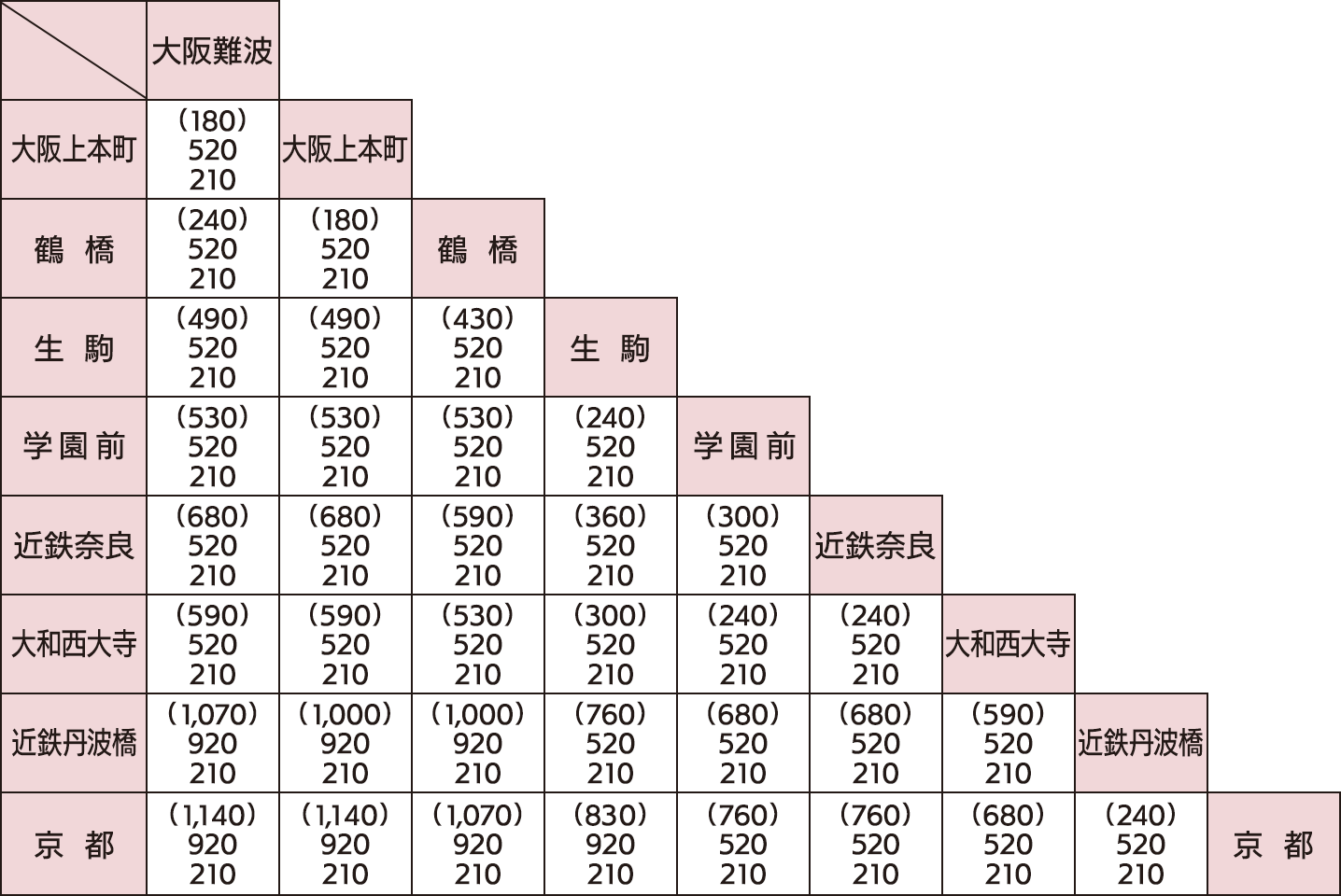
Child fares are half the adult fare
As of October 2026
Source: https://www.kintetsu.co.jp/senden/aoniyoshi/
The table shows the price per adult when two people share a twin seat, or three to four people share a salon seat.
Seats are sold by the unit, so riding a twin seat alone means buying one adult base ticket, limited express ticket, and special car ticket, plus one child limited express ticket and special car ticket on top of that.
Salon seats are limited to groups of three or four, so both seat types suit couples, families, and small groups traveling together.
How to buy tickets
AONIYOSHI is fully reserved, so you need to book in advance.
Tickets go on sale one month before departure at 10:30 a.m. Japan time, through the online reservation service or at a Kintetsu station counter. The online service does not require creating an account.
There is also a ticketless option with nothing to collect at the station, which saves time on the day.
When booking, choose either a twin seat for two or a salon seat for three to four, and buy a base ticket, a limited express ticket, and a special car ticket.
One more thing: the Osaka-Namba to Kyoto route is popular and sells out quickly, while the Kintetsu-Nara to Kyoto run is shorter but easier to book.
Pair It with the Kintetsu Rail Pass for Better Value
If your plans include other stations on the Kintetsu network, consider the Kintetsu Rail Pass.
The pass covers the base fare on AONIYOSHI, so you only add the limited express fee and the special car fee. The pass comes in one-day, two-day, five-day, and five-day plus versions.
Note that the Kansai Area Pass is a JR pass and cannot be used on AONIYOSHI, which is a Kintetsu train.
| AONIYOSHI at a glance Route: Osaka-Namba to Kyoto Operating days: daily except Thursdays Details: https://www.kintetsu.co.jp/foreign/chinese-han/aoniyoshi/ Reservations: https://www.ticket.kintetsu.co.jp/vs/en/e-ticket/ |
Hankyu Kyo-train Garaku: No Reservation, No Surcharge, and Four Seasons of Kyoto on Board
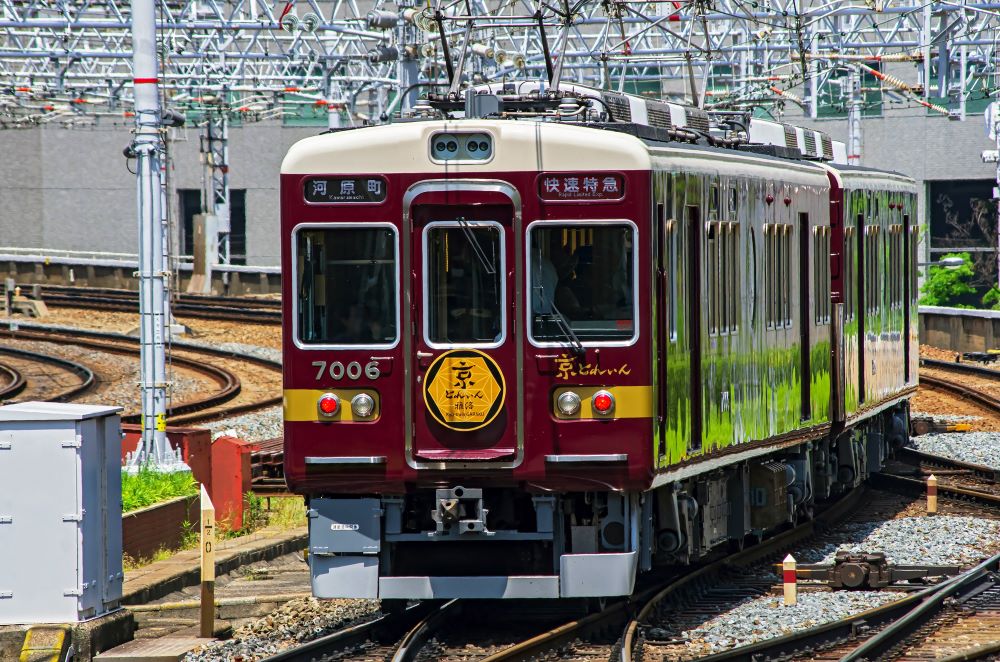
Next is a train with no reservation and no extra charge: the sightseeing train Kyo-train Garaku.
What stands out about Kyo-train Garaku
Kyo-train Garaku runs on the Hankyu Kyoto Line between Osaka-Umeda and Kyoto-Kawaramachi.
The name points to the elegant capital, meaning a train bound for Kyoto, and each of its six cars carries a Kyoto design built around a season.
The character raku also means capital, and it still shows up in the way Kyoto is divided: Rakuchu for the center, with Rakusai, Rakuto, Rakunan, and Rakuhoku for west, east, south, and north.
The idea behind the train is that the trip to Kyoto starts the moment you step aboard.
A Japanese garden on a train: six cars designed around six seasons
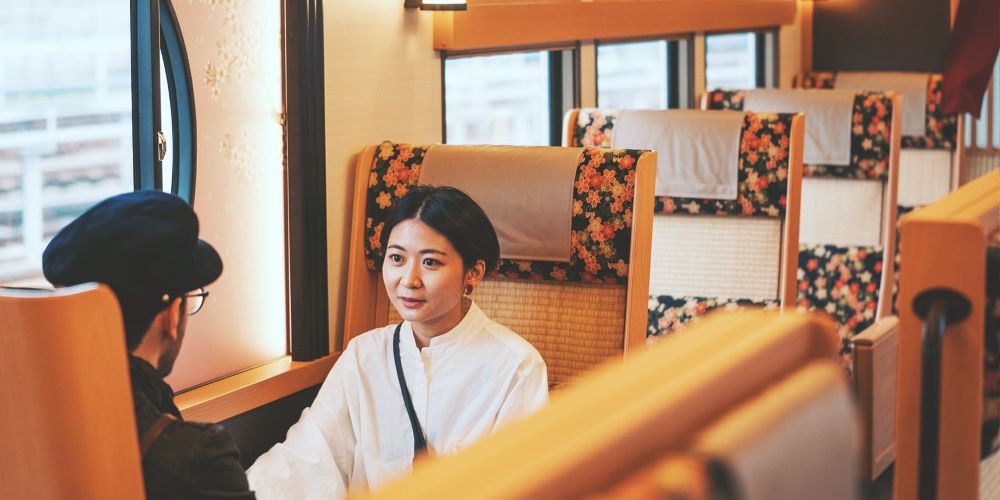
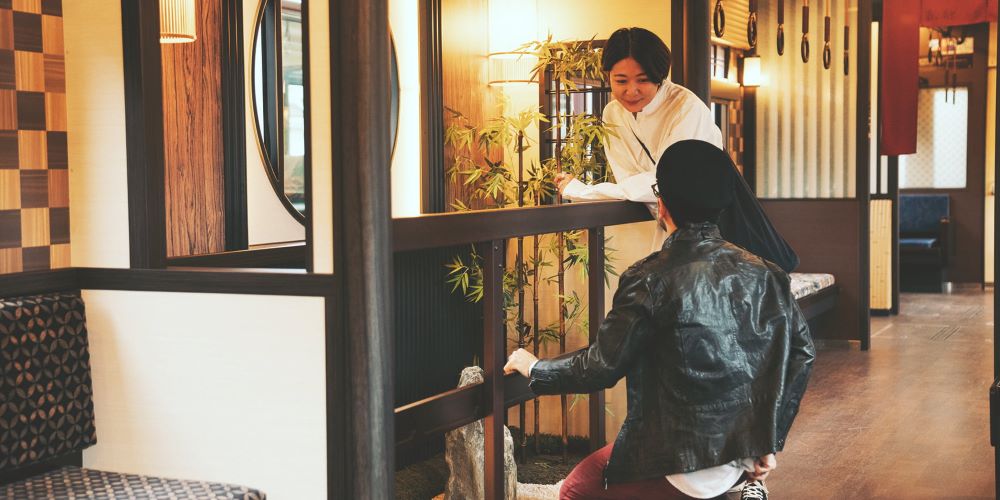
All six cars are themed on the seasons and the plants that go with them, with a different design in each one.
Car 1, autumn and maple: a flowing-water-and-maple pattern associated with fall color
Car 2, winter and bamboo: a dry landscape courtyard and snow-viewing shoji
Car 3, spring and cherry: a scattered cherry blossom pattern
Car 4, summer and hollyhock: the rabbit-ear iris favored by the old court
Car 5, early autumn and pampas grass: the turn from late summer into early fall
Car 6, early spring and plum: the brightness of Kyoto at the start of the year
Car 2 has a dry landscape courtyard and car 5 has a machiya courtyard. The interiors evoke Kyoto streets closely enough that a kimono-clad proprietress walking through would not look out of place.
Because each car has its own season, walking through to look at the seats and the decoration is part of the ride, and that is something Kyo-train Garaku offers that other trains do not.
Schedule and stations
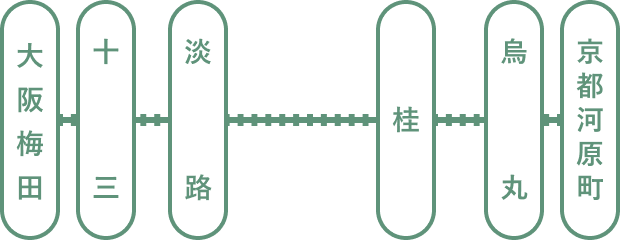
Kyo-train Garaku runs on Saturdays, Sundays, and public holidays, with four services in each direction.
Outbound: Osaka-Umeda to Kyoto-Kawaramachi
| Stop | Depart Osaka-Umeda | Depart Juso | Depart Awaji | Arrive Katsura | Arrive Karasuma | Arrive Kyoto-Kawaramachi |
| Service 1 | 9:32 | 9:36 | 9:41 | 10:07 | 10:13 | 10:15 |
| Service 2 | 11:32 | 11:36 | 11:41 | 12:07 | 12:13 | 12:15 |
| Service 3 | 13:32 | 13:36 | 13:41 | 14:07 | 14:13 | 14:15 |
| Service 4 | 15:32 | 15:36 | 15:41 | 16:07 | 16:13 | 16:15 |
Return: Kyoto-Kawaramachi to Osaka-Umeda
| Stop | Depart Kyoto-Kawaramachi | Depart Karasuma | Depart Katsura | Arrive Awaji | Arrive Juso | Arrive Osaka-Umeda |
| Service 1 | 10:41 | 10:43 | 10:49 | 11:15 | 11:22 | 11:28 |
| Service 2 | 12:41 | 12:43 | 12:49 | 13:15 | 13:22 | 13:28 |
| Service 3 | 14:41 | 14:43 | 14:49 | 15:15 | 15:22 | 15:28 |
| Service 4 | 16:41 | 16:43 | 16:49 | 17:15 | 17:22 | 17:28 |
The run from Osaka-Umeda to Kyoto-Kawaramachi takes about 45 minutes.
That is barely enough time to walk through all six cars at an unhurried pace.
Because a standard fare is all you need to ride Kyo-train Garaku between Osaka and Kyoto, local residents use it as an everyday train. Keep the noise down, watch your luggage, and move between cars with care.
One more note: Awaji Station along the way has nothing to do with Awaji Island in Hyogo.
Fares and tickets
Kyo-train Garaku needs no reservation and no surcharge. You ride on the standard fare, and you can get on and off freely along the route. The most you pay is 410 yen between Osaka-Umeda and Kyoto-Kawaramachi, or 210 yen for children. If you plan to visit other areas on the Hankyu network, a Hankyu one-day pass is worth a look.
| Kyo-train Garaku at a glance Route: Osaka-Umeda to Kyoto-Kawaramachi Operating days: Saturdays, Sundays, and public holidays Details: https://www.hankyu.co.jp/kyotrain-garaku/zh-tw/ |
Get More out of It with the Kansai Area Pass
The Kansai Area Pass makes getting around the Kansai region a lot easier.
The JR West Kansai Area Pass comes with a voucher you can exchange at stations on the Keihan, Kyoto Municipal Subway, and Hankyu networks for a one-day ticket, which means pass holders can ride as much as they like on Kyo-train Garaku, which Hankyu operates.
There is also the Hankyu Hanshin one-day pass, so pick whichever fits your route.
Note: the Kansai WIDE Area Pass does not include the exchange voucher for the Keihan, Kyoto Municipal Subway, or Hankyu one-day tickets. Riding Kyo-train Garaku with that pass means paying the fare separately.
JR West Hanaakari: Changing Routes with the Season, with Local Food, Crafts, and a Warm Welcome
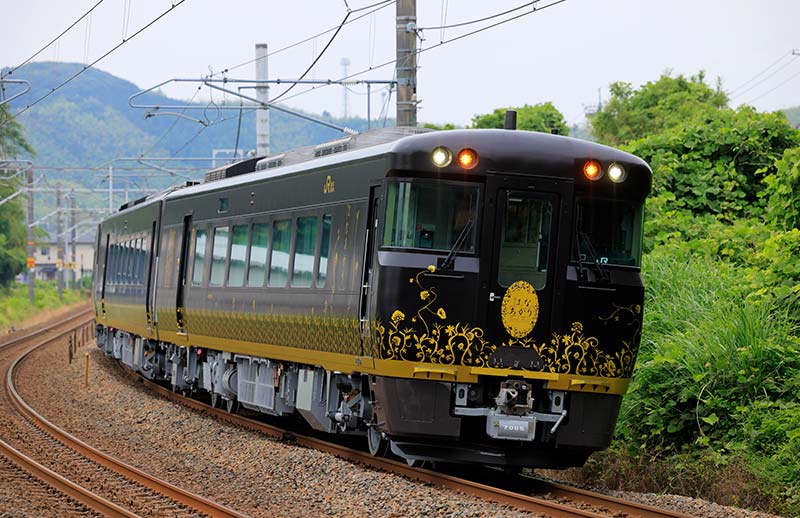
Last is the newest of the three, introduced by JR West in October 2024: the sightseeing train Hanaakari.
Hanaakari changes its operating area with the season, shining a light on a different part of western Japan each time. Because the section it runs changes every time, check where it will be running during the period you want to travel.
The seasonal routes are explained in detail below. To go straight to them, click here.
The section it runs changes with the season
The table below lists the sections it has run since its debut.
Check which section is scheduled for the period you want to travel before you build plans around it.
| Period | Section |
|---|---|
| Autumn 2024 (October 5 to December 22) | Tsuruga to Kinosaki Onsen (debut) |
| Winter 2025 (January 6 to March 14) | Coupled to the Kani Kani Hamakaze limited express, Osaka to Hamasaka |
| Spring 2025 (April 5 to June 29) | Osaka to Onomichi |
| Summer 2025 (July 5 to September 28) | Osaka to Tsuruga |
| Autumn 2025 (October 11 to December 21) | Tsuruga to Kinosaki Onsen |
| Winter 2026 (January 5 to March 8) | Coupled to the Kani Kani Hamakaze limited express, Osaka to Hamasaka |
| Spring 2026 (March 20 to June 28) | Hiroshima to Iwakuni |
| Summer 2026 (July 4 to September 27) | Osaka to Ogoto Onsen and Otsu |
| Autumn 2026 (October 10 to December 20) | Shin-Yamaguchi to Iwakuni (current) |
What stands out about Hanaakari
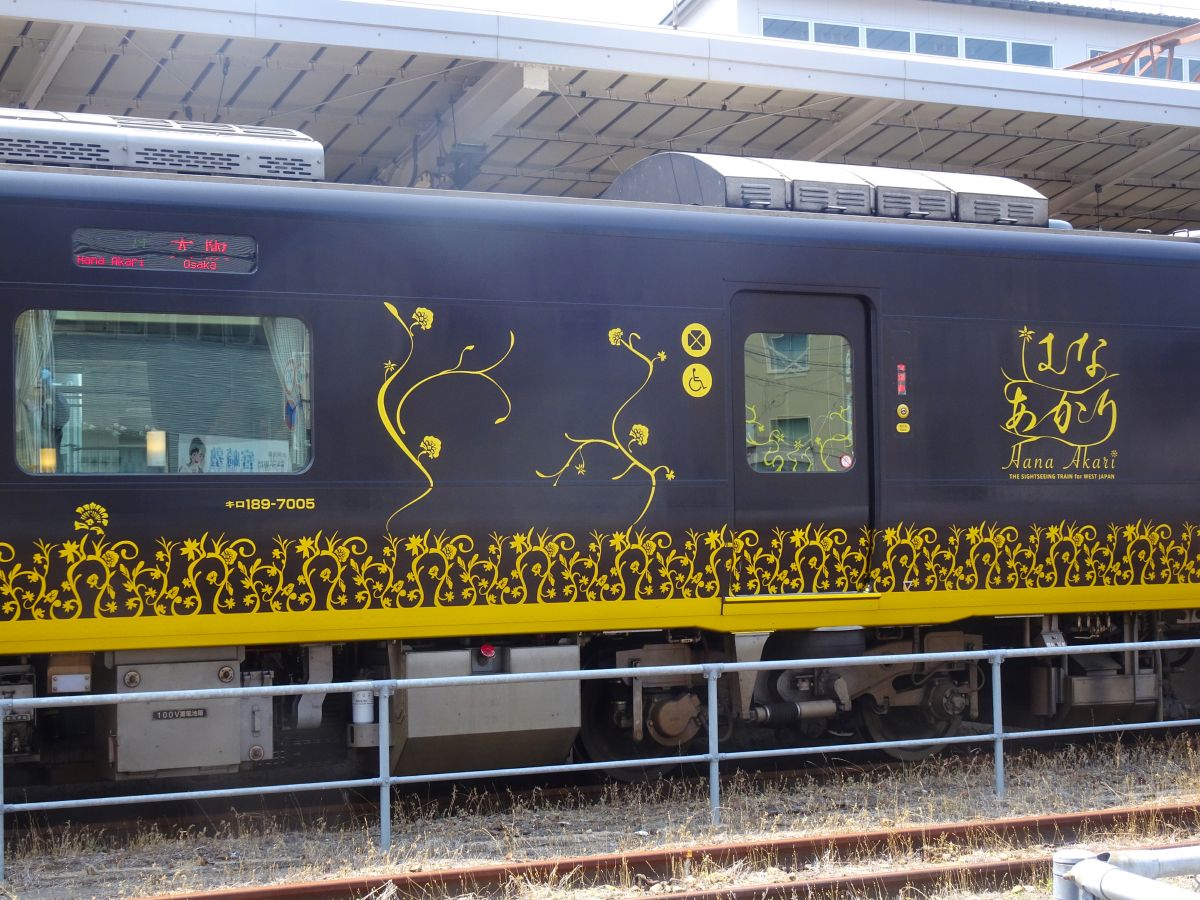
Western Japan has no shortage of places to visit, food to try, scenery, and people worth meeting along the way.Hanaakari takes its name from that idea: to light up those places and connect visitors with the areas the train passes through.
The exterior takes its color from binrojizome, regarded as the finest of the montsuki dyeing techniques used for formal kimono, and chosen to sit well against the landscapes of western Japan.
Inside, the design draws on the flowers and plants that mark the Japanese seasons.
A comfortable space surrounded by crafts and artwork
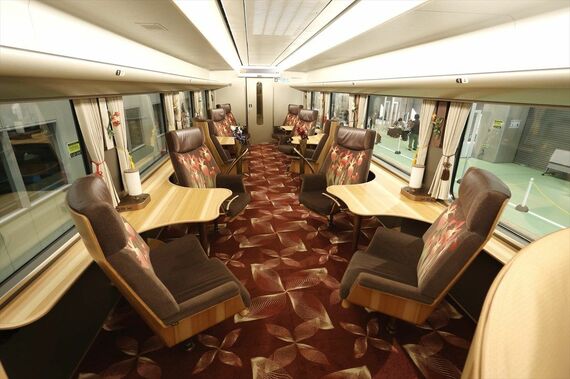
Hanaakari has three cars. Car 1, the Superior Green car, has private compartment seating, with wide leather seats and a large table in each compartment, and craftwork placed throughout the car.
For example, the autumn route from October to December 2024 featured an Izumo tatara iron flower vase, made by the tatara ironmaking method handed down in Izumo for more than a thousand years, and produced specifically to catch the light from the train windows.
In the spring route from April to June 2025, the cars were decorated with work from the Kojima district of Okayama, the birthplace of Japanese jeans: denim art, Kurashiki in Okayama: temari balls, and Fukuyama in Hiroshima: flower art built around roses, the symbol of the city.
Using local crafts as interior decoration is a direct way to learn what each area is known for.
Cars 2 and 3 are Green cars with roomy seating: pairs of seats and three- to four-person facing box seats. Some seats rotate a full 360 degrees, which suits groups of friends or families who want to talk.
Food, decoration, and hospitality that change with the season
At the stations along the way and on board there are local products and food for sale, and people from the area come out to meet the train, which makes each stop worth getting off for.
There are also bento made with local ingredients, sold only on Hanaakari and only for that season. The contents change with the route, so here are the four routes that ran in 2025 as examples.
Winter 2025 (January to March): Osaka to Hamasaka
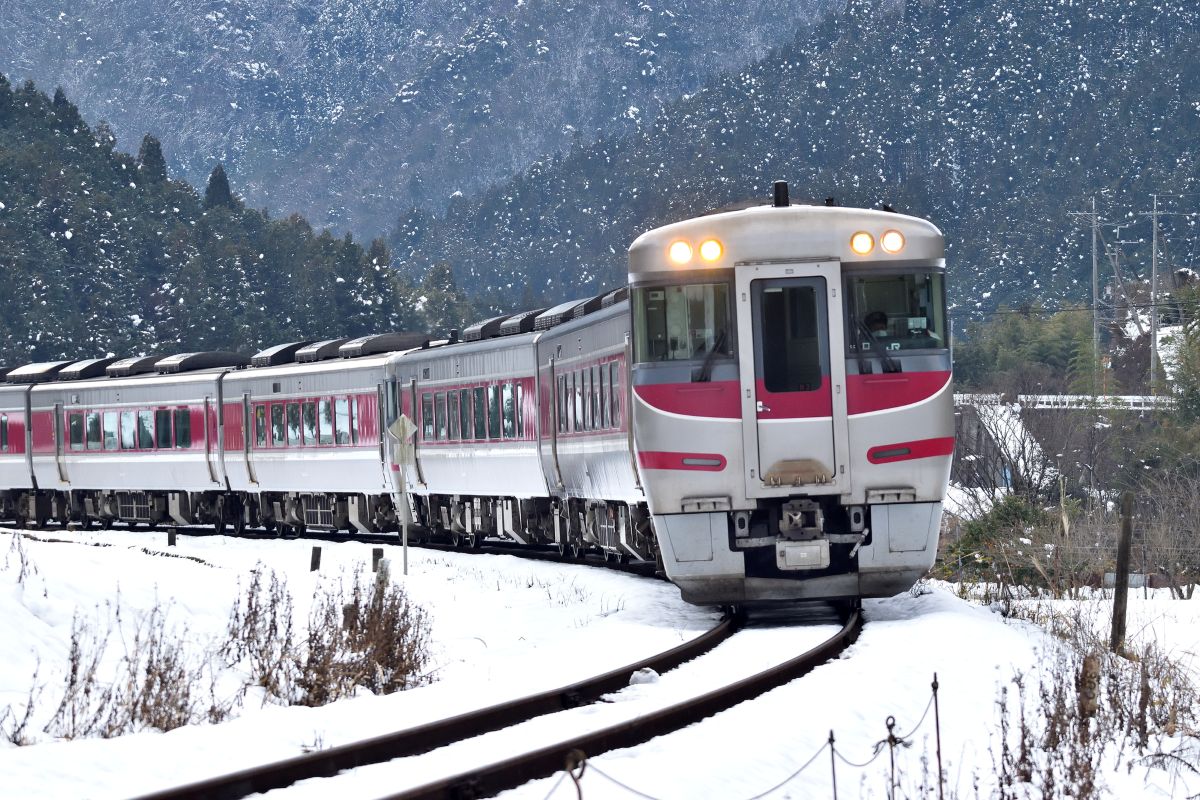
From January to March 2025, Hanaakari was coupled to the winter-only Kani Kani Hamakaze limited express and ran from Osaka to Hamasaka. The San-in Main Line takes you out to the Sea of Japan coast, past crab ports such as Kasumi and Hamasaka, and many people used it as a way to go and eat crab in season from Osaka.
During this period there was also a popular plan that included a crab lunch made with ingredients from along the line.
The crab season starts in early November. On the same Sea of Japan coast, Amanohashidate and the Tango area also turn to crab at that time of year. If you are planning a trip around winter seafood, the articles below are worth a look.
Spring 2025 (April to June): Osaka through Hyogo and Okayama to Hiroshima
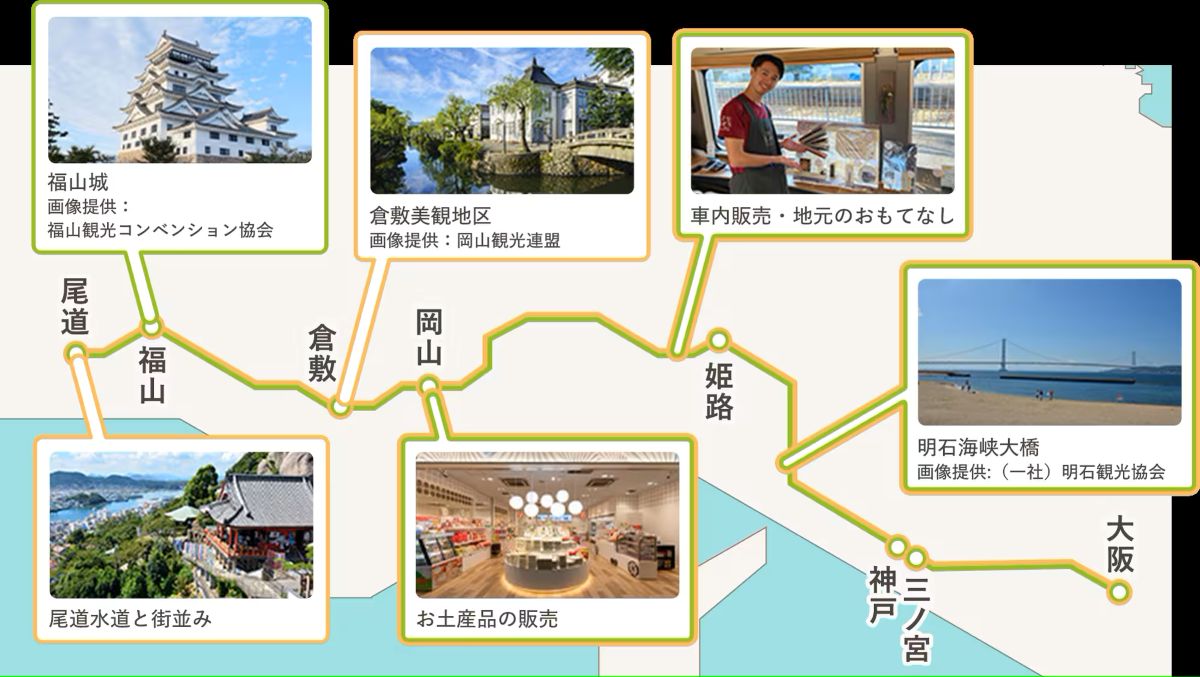
On the spring route from April to June 2025, the train ran from Osaka through Hyogo, stopping at Sannomiya, Kobe, and Himeji, then on through Okayama to Okayama and Kurashiki, and finally into Hiroshima at Fukuyama and Onomichi.
At Kurashiki Station in Okayama, tourism staff met the train with a welcome banner. A stand selling denim goods, one of the local products, gave passengers a chance to talk with people from the area.
At Onomichi Station in Hiroshima, an optional plan with a local guide showed passengers around the town.
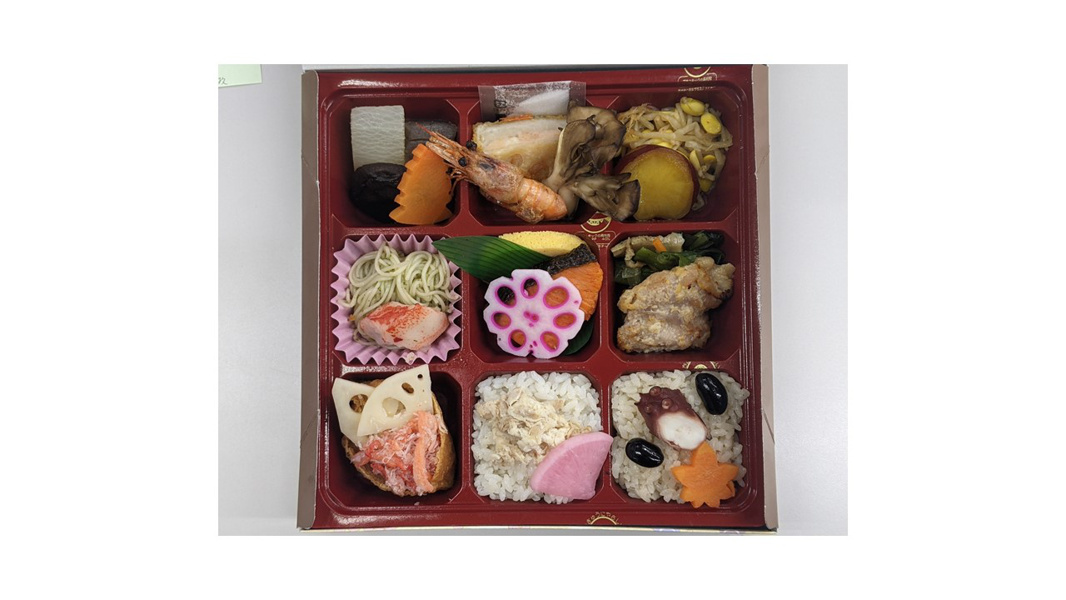
Hyogo Hanaakari bento set, 1,550 yen
Carefully seasoned dashi rice, lotus root pickled to a pale pink, and a kesho-inari filled with crab meat and sweet vinegared vegetables: a box meant to be looked at as much as eaten.
Image source: https://www.jr-odekake.net/railroad/hanaakari/
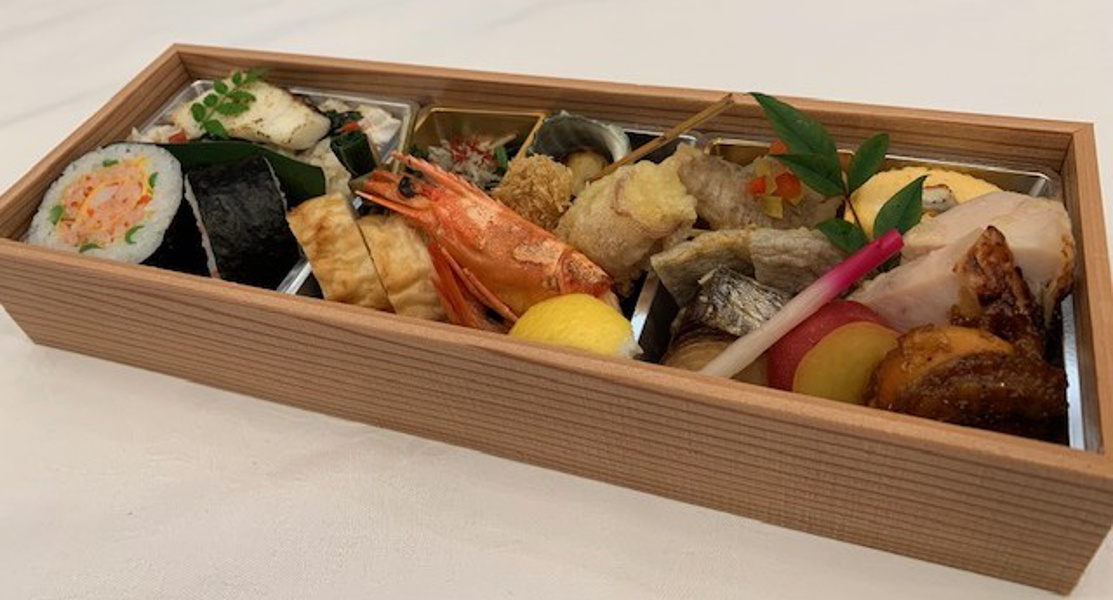
Fukutsumami Hanaakari bento, 3,200 yen
Fukutsumami refers to snacks made from small fish caught around Fukuyama, such as nebuto and the chewy chii-chii-ika, along with tai chikuwa packed with small sea bream, simmered or fried. The box also holds local dishes such as tai-meshi and barumaki-zushi, which together add up to the flavors of Fukuyama.
Image source: https://www.jr-odekake.net/railroad/hanaakari/
Summer 2025 (July to September): Osaka through Kyoto and Shiga to Fukui
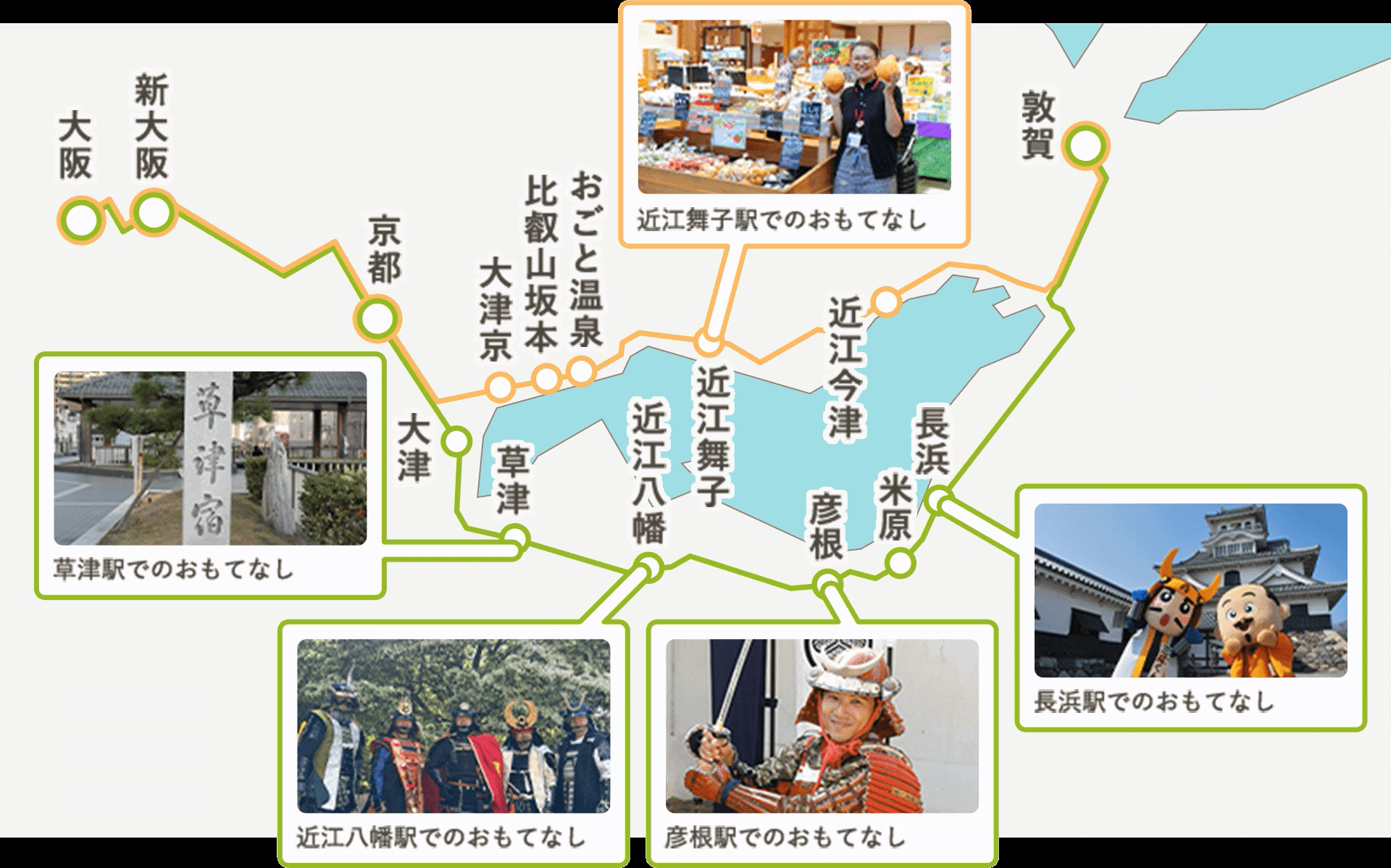
The summer 2025 route focused on Lake Biwa in Shiga Prefecture.
Omi Jingu in Shiga, for example, hosts the national high school karuta championship every July, which has made the shrine the home of competitive karuta. At nearby Otsukyo Station, Otsu Hikaru-kun, the Otsu city tourism character, comes out holding an oversized karuta card.
At Nagahama Station, the city tourism characters Hideyoshi-kun and Mitsunari-kun meet the train, so anyone who likes local mascots should keep an eye out.
Nagahama carries a lot of history as well. It is where Toyotomi Hideyoshi first held a castle of his own and began his rise, and Ishida Mitsunari, who served alongside him, came from the city.
Picking up Japanese history along the way, without setting out to, is part of what Hanaakari offers.
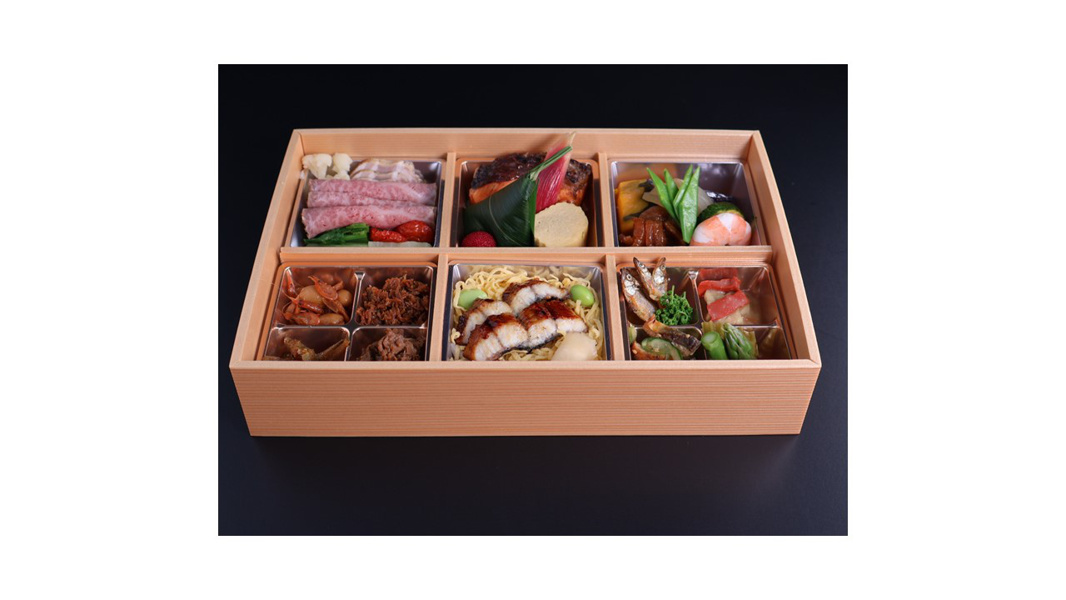
Ogoto Onsen Omi tamatebako, 5,700 yen
The long-established restaurant Omi Kaiseki Kiyomoto, on the shore of Lake Biwa, fills this box with fish from the lake, Omi beef, and local vegetables.
In 2023 the chef at Omi Kaiseki Kiyomoto received the Medal with Yellow Ribbon for contributing to tourism through food. The medal goes to people whose skill in their trade sets an example for others.
A bento is a rare chance to try the work of a chef at that level.
Image source: https://www.jr-odekake.net/railroad/hanaakari/
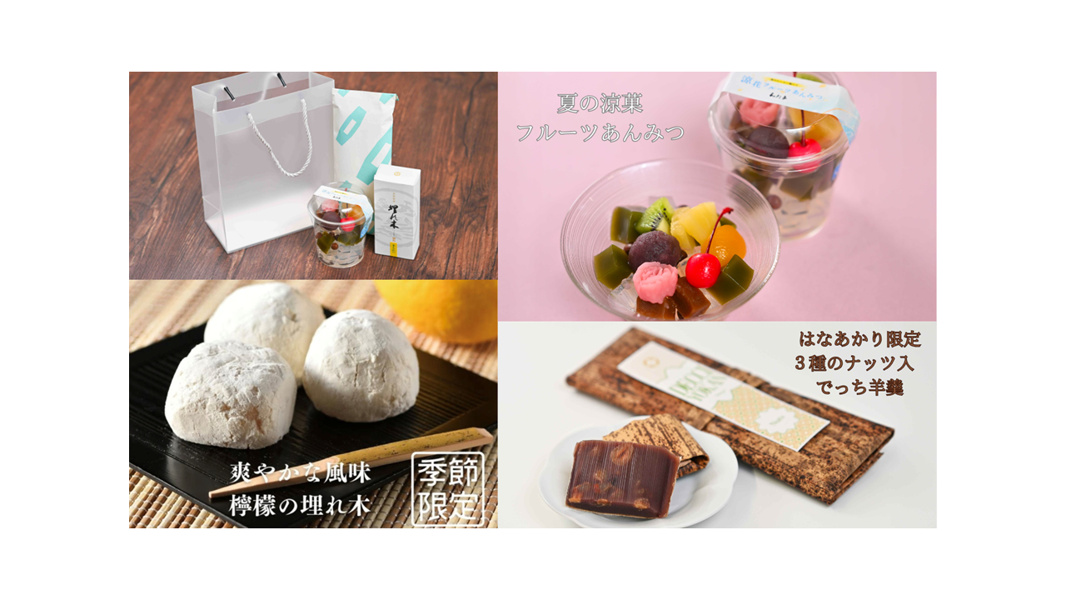
Sweets set: two Koto confections with a fruit anmitsu, 1,800 yen
A set bringing together Umoregi from the long-established Shiga confectioner Ito-ju Kaho and decchi yokan from Watayo, paired with a chilled fruit anmitsu.
Decchi yokan takes its name from the decchi, boys who ran errands for Omi merchants and carried the sweet home as a gift when they returned to their villages.
Mentioning that history when you hand it over as a souvenir tends to go over well.
Image source: https://www.jr-odekake.net/railroad/hanaakari/
More on what Shiga has to offer
Autumn 2025 (October to December): Tsuruga to Kinosaki Onsen
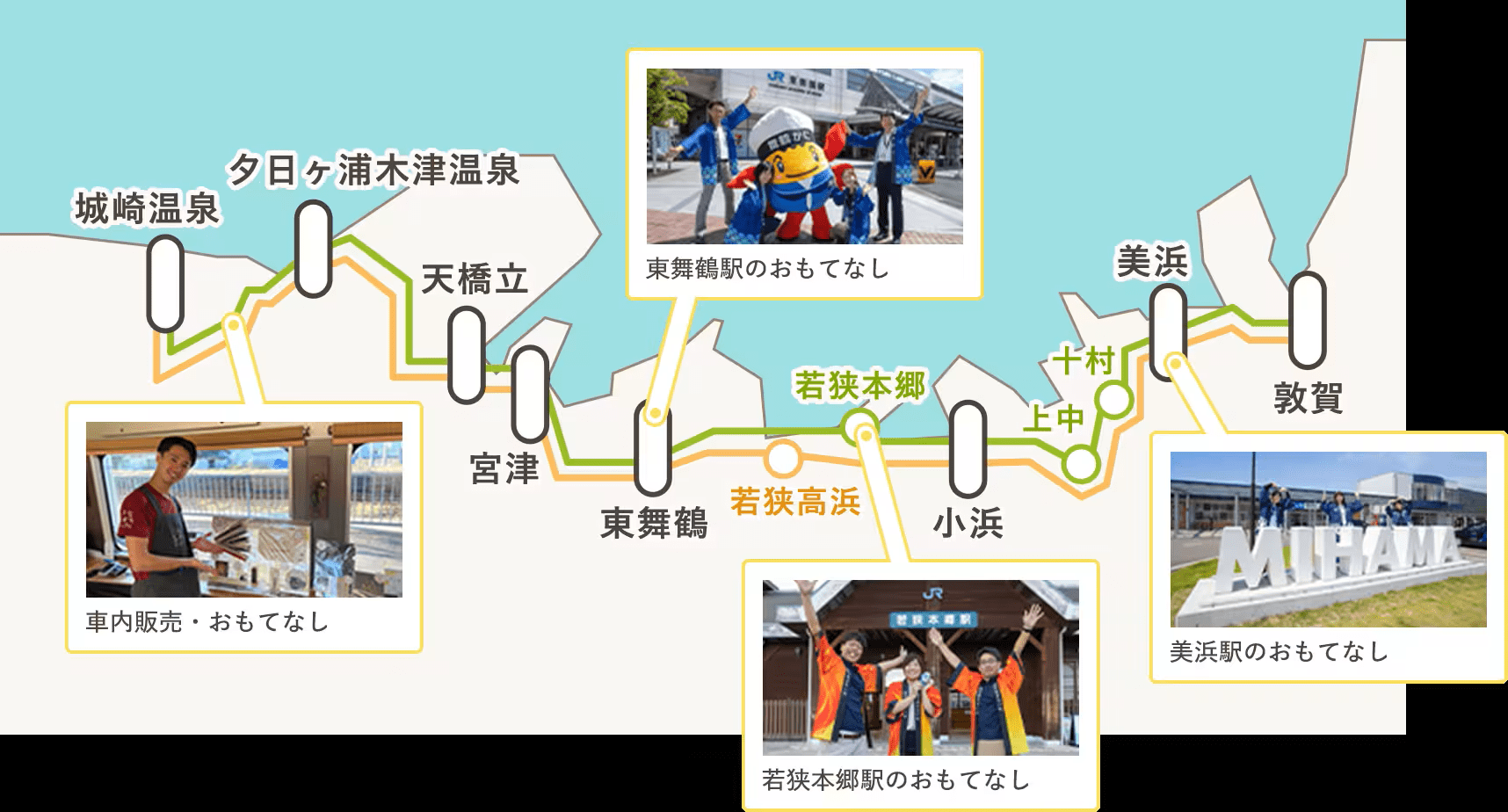
The autumn route follows Wakasa Bay, passing Suishohama Beach with its fine white sand, the five lakes of Mikata at Mihama, and Amanohashidate, one of the three famous views of Japan.
At Tsuruga, Mihama, Higashi-Maizuru, Yuhigaura-Kitsuonsen, and Kinosaki Onsen, local preschoolers, mascots, and inn proprietors come out to meet the train.
Each stop has a photo spot and a stand selling local products, so there is time to talk with people from the area.
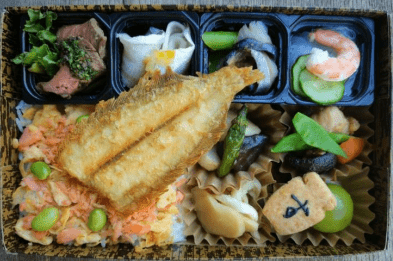
Wakasa machiya bento and dessert set, 3,900 yen
A box filled with Wakasa ingredients: Wakasa beef, sasa-garei flounder shaped like a bamboo leaf, and kodai sasazuke, small sea bream packed in a barrel with bamboo leaves.
The set also comes with a local pudding from Obama in Wakasa, eaten with salt made from Wakasa Bay seawater.
Image source: https://www.jr-odekake.net/railroad/hanaakari/
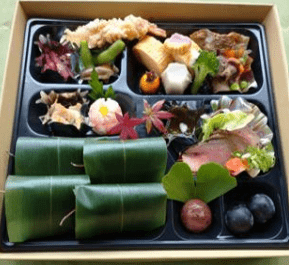
Amanohashidate sasazushi bento and dessert set, 3,900 yen
In myth, Amanohashidate is the floating bridge that Izanagi and Izanami used to cross between heaven and earth, left behind after it fell.
The sasazushi in this box is said to be what the deities carried at their waists as they crossed. Alongside it are Tango specialties such as shiro-bai sea snails.
For dessert there is Amanohashidate cheesecake, with bright jelly colors and packaging designed around the matanozoki pose, which also makes it a good souvenir.
Image source: https://www.jr-odekake.net/railroad/hanaakari/
More on Amanohashidate
-

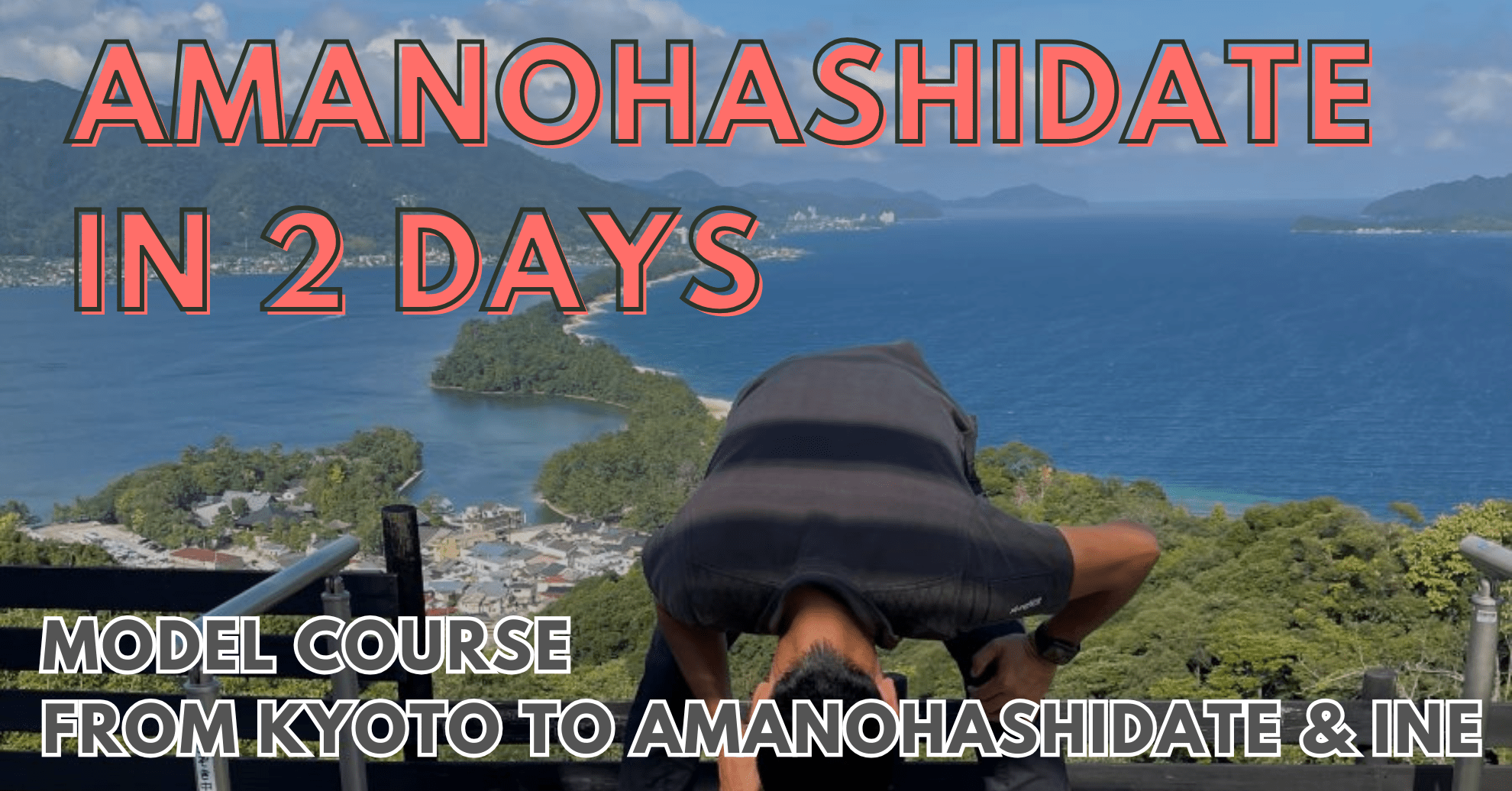
[Kyoto] How to Enjoy Amanohashidate – A 2-Day Model Course from Kyoto to Amanohashidate & Ine
-
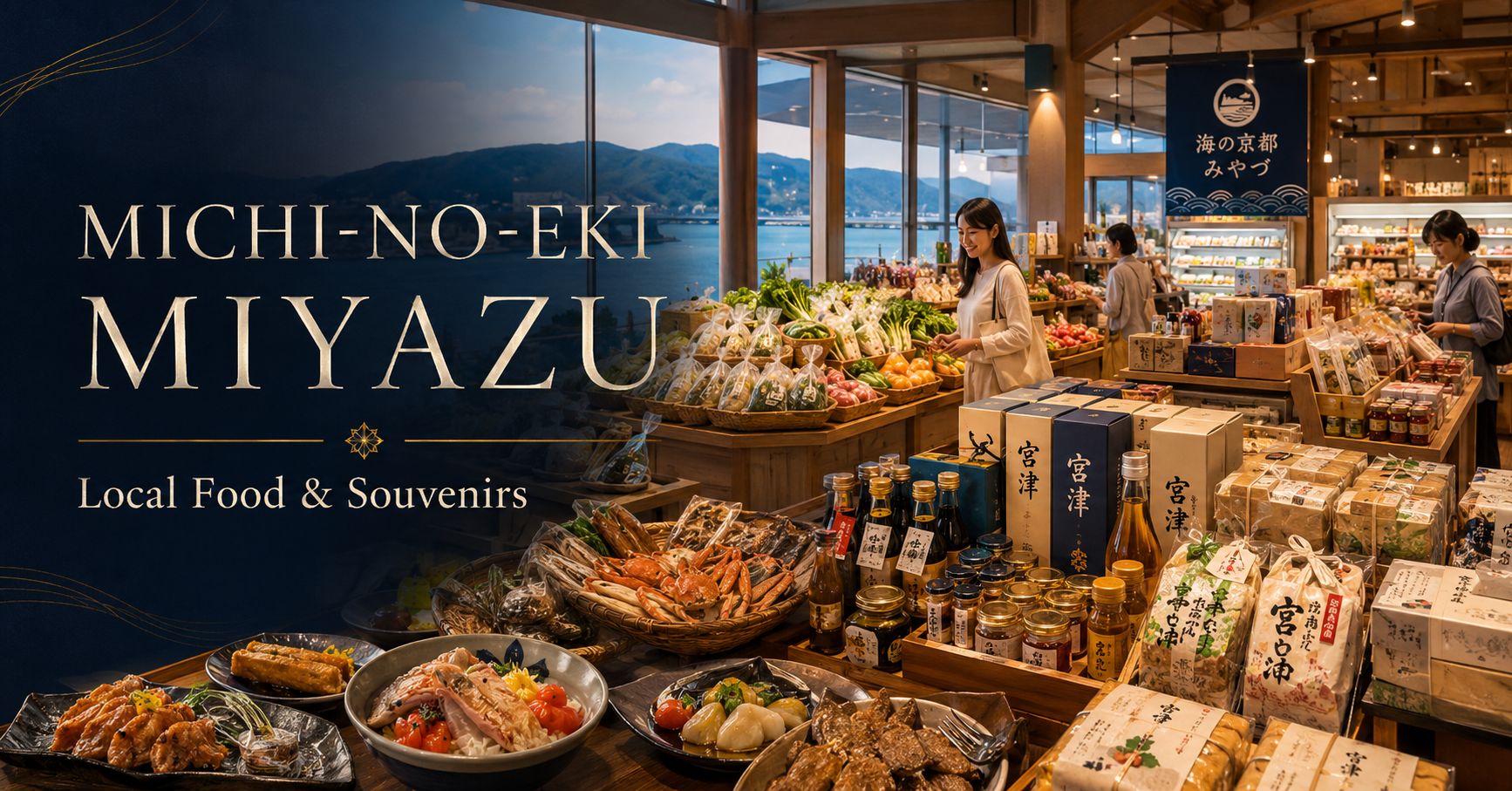
[Kyoto Amanohashidate] Michi-no-Eki Umi-no-Kyoto Miyazu: Limited-Edition Souvenirs and Local Food Worth the Stop
-
Amanohashidate Guide: What Makes Japan’s Famous Sandbar Special, the Five Great Views, Access, Food, and Seasons
-
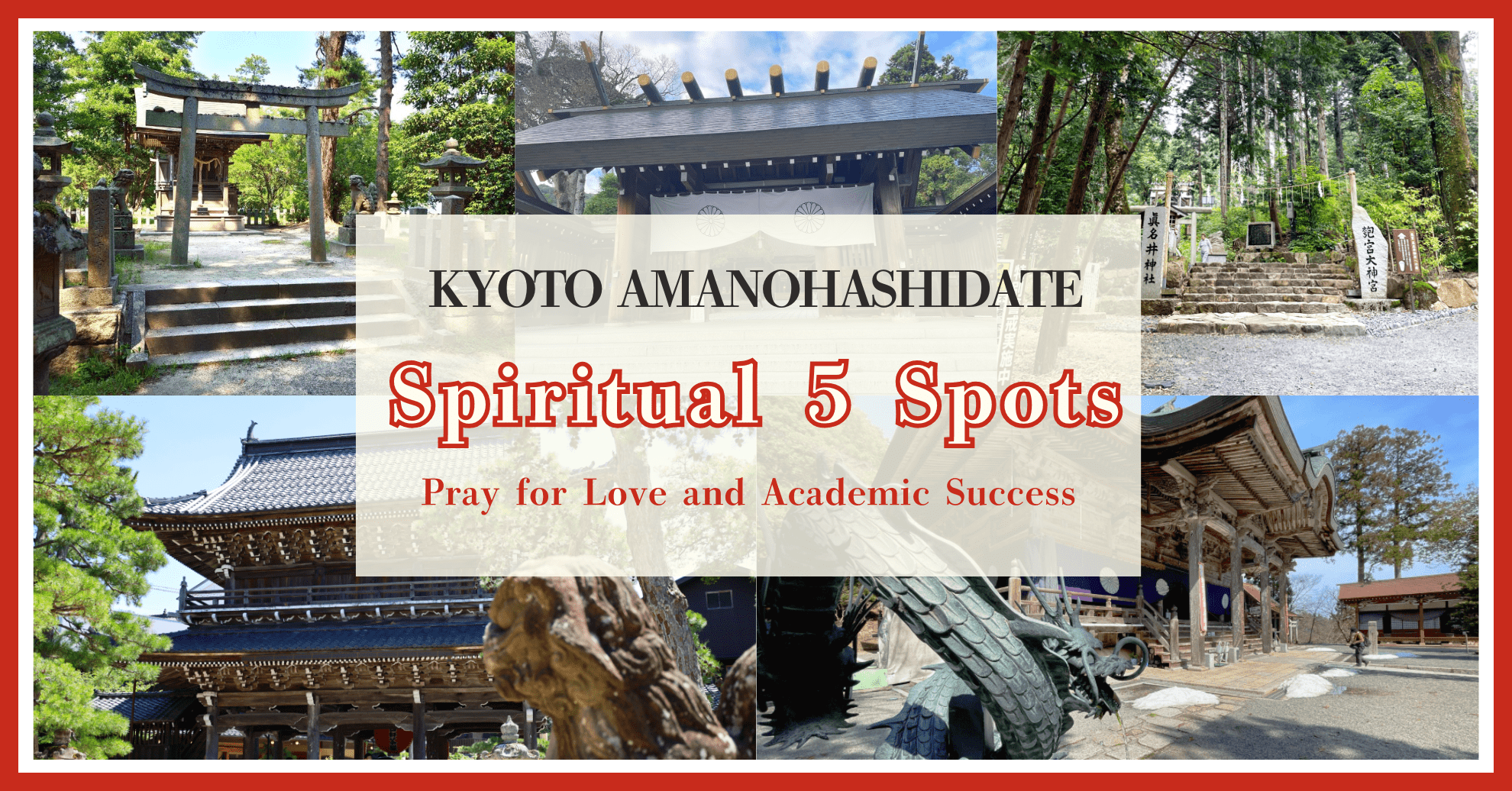
Explore the Sacred Shrines & Temples of Amanohashidate: Pray for Love, Wisdom & Success

In Winter It Couples to the Kani Kani Hamakaze: Riding for the Crab
Since the winter of 2024, Hanaakari has run every crab season coupled to the Kani Kani Hamakaze limited express. This runs separately from the seasonal routes and takes you straight from Osaka to the crab ports on the Sea of Japan coast.
| Coupled with | Kani Kani Hamakaze limited express |
|---|---|
| Section | Osaka to Hamasaka, via the San-in Main Line |
| Times | Depart Osaka 9:38, arrive Hamasaka 13:10 / depart Hamasaka 15:14, arrive Osaka 18:51 |
| Operating days | In 2026 it ran between January 5 and March 8; the days of the week vary by period |
On January 14 and 28, 2026, it also ran from Osaka to Tottori coupled to the Hamakaze limited express. Because the service is timed to the crab season, the plan for the following winter is usually announced between mid-October and November. If you are thinking about a winter trip, check the official site around then.
Fares
Fares on Hanaakari change with the season and the section. As a guide, these were the prices for Shin-Yamaguchi to Iwakuni in autumn 2026.
Guide prices (October to December 2026, Shin-Yamaguchi to Iwakuni, one adult, one way, regular season)
Car 1, Superior Green6,390 yen*
Cars 2 and 3, Green Car box seats and reserved Green Car seats4,190 yen
Price when two people travel together. For one person it is 9,890 yen. Includes the base fare, the limited express fee, and the Green Car fee
Prices change when the section changes, so check the fare for your season on the official site
As with AONIYOSHI, traveling alone costs more per person.
Also, the Green Car box seats in cars 2 and 3 take a minimum of three people, so one or two travelers cannot book them. Both seat types suit groups of friends or families traveling together.
How to buy tickets and meals
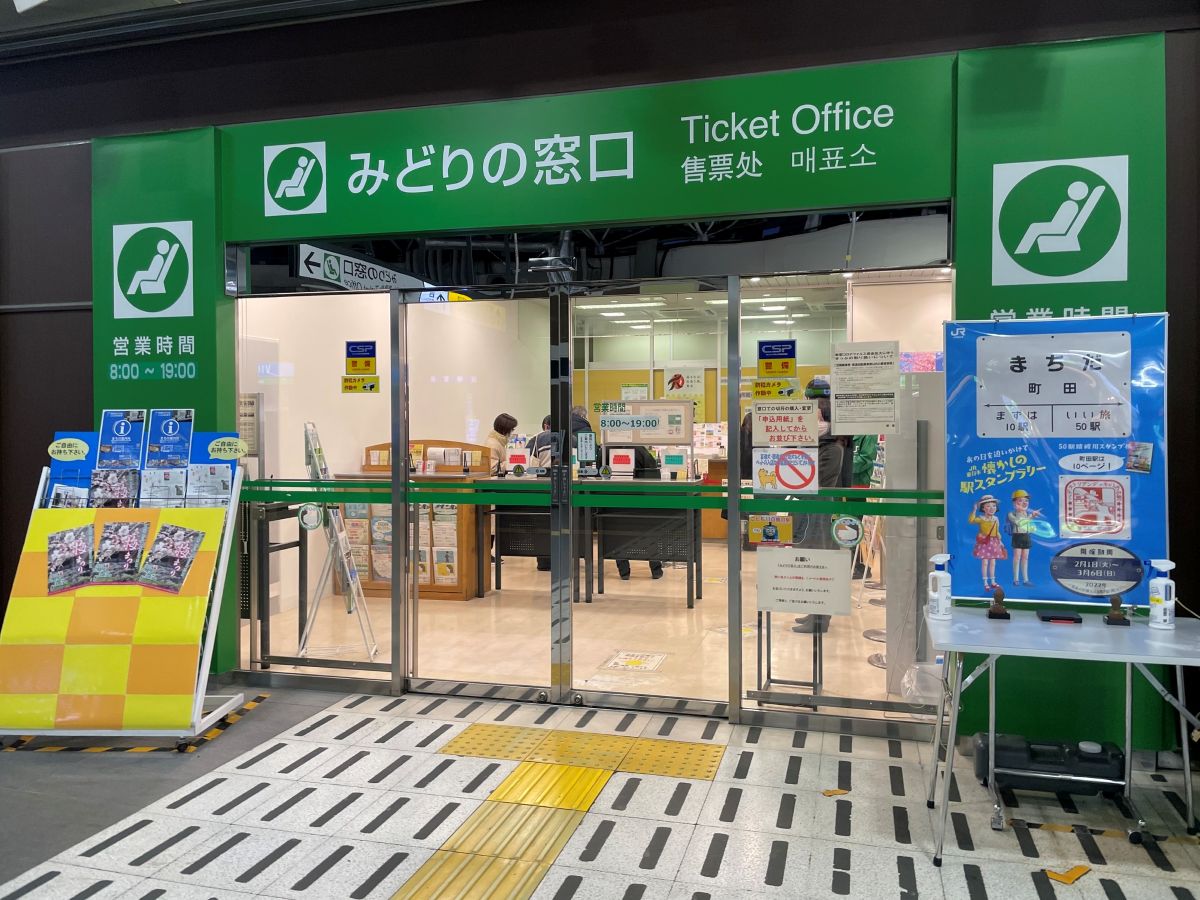
Every seat must be reserved in advance.Tickets are sold through the JR West online service e5489 or at a Midori no Madoguchi ticket office.Booking opens one month before the travel date at 10:00 a.m., and the sightseeing train ticketless option lets you buy the limited express ticket on your phone instead of queuing at a counter. The base ticket is purchased separately.
Note that e5489 only covers reserved Green Car seats. Green Car box seats and the Superior Green car are sold as tabiwa travel products, which must be bought 31 to 32 days before departure. You need a free WESTER account and a credit card. The advantage is that you can secure a seat before general sales open.
The food service on board must be reserved in advance through the tabiwa by WESTER travel app, and the contents change with the area the train is running in. A free WESTER account and a credit card are required.
Note that only passengers riding through the station where the food is handed over can order it. The meal cannot be bought on its own without riding the train.
| Hanaakari at a glance Operating days: set by season (autumn 2026: 20 days between October 10 and December 20, mostly weekends and holidays) Section: changes with the season (autumn 2026: Shin-Yamaguchi to Iwakuni) Website: Section: changes with the season (autumn 2026: Shin-Yamaguchi to Iwakuni) Reservations: https://www.jr-odekake.net/railroad/hanaakari/buy_2610/ |
Summary
This article covered three sightseeing trains in the Kansai area. AONIYOSHI and Kyo-train Garaku both link Osaka and Kyoto, which makes them easy to fit into a Kansai itinerary. Hanaakari changes its section with the season, so check where it runs during the period you want to travel. All three give you local food, local craft, and a welcome from the areas they pass through.
Whether you are into trains or simply interested in Japanese tradition, history, food, and scenery, these are worth building a day around.
In northern Kyoto there are also the Kyoto Tango Railway sightseeing trains, Tango Aomatsu, Tango Akamatsu, and Tango Kuromatsu. The article below covers them in detail.