In a residential neighborhood along Miyazu Bay in northern Kyoto Prefecture, close to Amanohashidate, one restaurant serves French cuisine with projection mapping.
This article walks through the projection mapping and French cuisine at fujiwara for elanvital and introduces the appeal of its dishes and Miyazu ingredients.
It may be helpful for anyone who feels French restaurants are hard to visit with small children, or who wants to give someone a special experience for an anniversary or birthday.
fujiwara for elanvital, in a Row of Old Wooden Houses

The restaurant stands among nostalgic wooden houses on a quiet residential street, and the owner-chef, Mr. Fujiwara, greets guests at the door.
The interior is as relaxing as a friend’s home. On the table are cards printed with mysterious words, a curious box, and an elegantly wrapped napkin.

These words are actually the names of the dishes.
Chef Fujiwara explains that many French dish names are hard to picture from the name alone, so he uses words inspired by each dish and lets guests imagine what might come next.
The words are listed in random order, adding to the anticipation.

Guests are invited to open the white box, which holds a wooden masu cup, something resembling white tablets, and a small spoon shaped like a shovel. Their purpose becomes clear later in the meal.
Seasonal Tradition

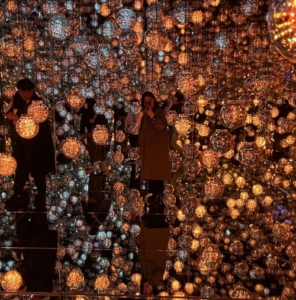
The room goes dark, sparkling lights appear like a planetarium, and the sound of fireworks begins.
The lights then turn into fireworks of all sizes that fill the surroundings.
The mapping recreates the star mine, the rapid-fire display that closes a Japanese fireworks festival.
The dish is a puree of chestnuts and new onions coated in gelatin with vegetables. The small pieces on top that resemble natural stones are candy work.
The soft texture contrasts with popping and crunchy bites, and the mellow sweetness of the chestnuts combines with the savory vegetables. It pairs well with white wine.
Fireworks are usually considered a summer tradition in Japan, but Miyazu also holds a fireworks festival in winter, when they rise through the clear, cold air.
Secret
For the next course, guests are asked to place a hand towel in the masu cup from the box.
Japanese music begins to play, and a box is set on the table.
The traditional patterns of the projection and the music evoke the old streets of Kyoto.
Hot water scented with hinoki cypress is poured over the towel. Wiping the hands with it adds the fragrance of hinoki, which completes the dish.
The patterned box in front of each guest does not open right away.
It is a yosegi-zaiku puzzle box, made with traditional wood marquetry, which opens only when its panels slide in a set order.
Following the instructions, guests slide the panels until it opens.


Inside, a cute plum-patterned package holds a heart-shaped monaka, a crisp wafer shell with a filling.
The filling combines foie gras terrine with plum jam, red beans, and fresh cream, giving it the feel of a dessert.
It is an unexpected combination, but the gentle sweet-tartness of the plum jam blends with the mellow foie gras and cream.
From the hinoki-scented towel to the puzzle box, each detail is designed to delight guests.
Crystal


Gemstones spread across the projection to bright music, and a dish topped with glistening salmon roe is set among them.
When Chef Fujiwara gently places a stone into a plate of liquid,
white crystals quickly spread like snow.
Beneath the lid are avocado and isaki (threeline grunt) seasoned with balsamic vinegar, soy sauce, and olive oil, topped with fresh salmon roe to create a jewel-like dish.
The mellow avocado, the pleasantly firm isaki, and the rich salmon roe spread flavor across the palate.
Good Fortune


In the fourth course, four-leaf clovers sway in soft light, creating a peaceful scene.
Lifting the lid of a round container reveals a small egg, chicks, and four-leaf clovers.
The egg-shaped vessel holds scrambled eggs made with eggs from Ayabe, along with chicken skirt meat and mushrooms in red wine sauce. On the side is a matcha pastry shaped like a four-leaf clover.
The creamy egg and savory chicken come together with the red wine sauce.
Eaten with the scrambled eggs, the pastry adds a matcha aroma and an elegant Japanese note.
The dish evokes lying on the grass listening to birdsong, matching its name, Good Fortune.
Amanohashidate

As the fifth projection begins, the scene is recognizable as Amanohashidate.
A waka poem by Koshikibu no Naishi from the Heian period is among the most famous literary references to Amanohashidate.
The ingredients on the plate are arranged in the shape of an ascending dragon.
Fresh vegetables from Miyazu and Yosano and Amanohashidate ham are served with ravigote, a refreshing sauce of chopped tomatoes, cucumbers, and onions. Miyazu oil sardines are topped with basil sauce.
Turnips, red turnips, tomatoes, Romanesco, and other vegetables bring freshness and aroma.

The potted rose that seems to be a table decoration is part of the course.
What looks like soil is actually a black olive powder.
Sprinkling it over the dish adds another layer of flavor.
It expresses the idea that a region’s ingredients are born from its soil.
Details like this reflect Chef Fujiwara’s affection for his hometown and his careful attention to guests.
Signs

Cherry blossoms bloom and dance to romantic music.
The plate is decorated with small cherry blossoms, a tree, and a fish.
The design represents the signs of spring.
With the fish on the left and the image of spring on the right, the plate also echoes 鰆 (sawara), the kanji for Japanese Spanish mackerel, which combines the characters for fish and spring.
On this late-February visit, the dish matched the season’s anticipation of the cherry blossoms.
The mackerel is pleasantly firm, and its simple flavor pairs well with the shrimp sauce and sakura shrimp powder. The sweetness of the green onions underneath brings out the flavor of the fish.

Partway through, guests can add the truffle oil from the white box to change the flavor.
The aroma of truffle adds another dimension to the mackerel and sauce.
Bonfire

Leaves dance through the projection while crackling embers and the sound of insects suggest a bonfire.
The meat, wrapped in smoke, is venison quickly smoked over cherry wood chips.
Game meat is often associated with a strong smell, but this venison has none and offers a deep, savory flavor.
It comes from Kamiseya Junikuten, a game meat shop regarded as one of the finest in the Tango region.
Chef Fujiwara says that one of his reasons for opening the restaurant was that few places in the area served this game meat.
The tomato sauce represents flames, and potatoes dusted with charcoal powder represent firewood. They look like real charcoal, but they are simply potatoes.
Shared Love


The final dessert is prepared at the table.
As space-themed music plays and the Earth appears in the projection, Chef Fujiwara uses sauce to trace the movement of the stars.
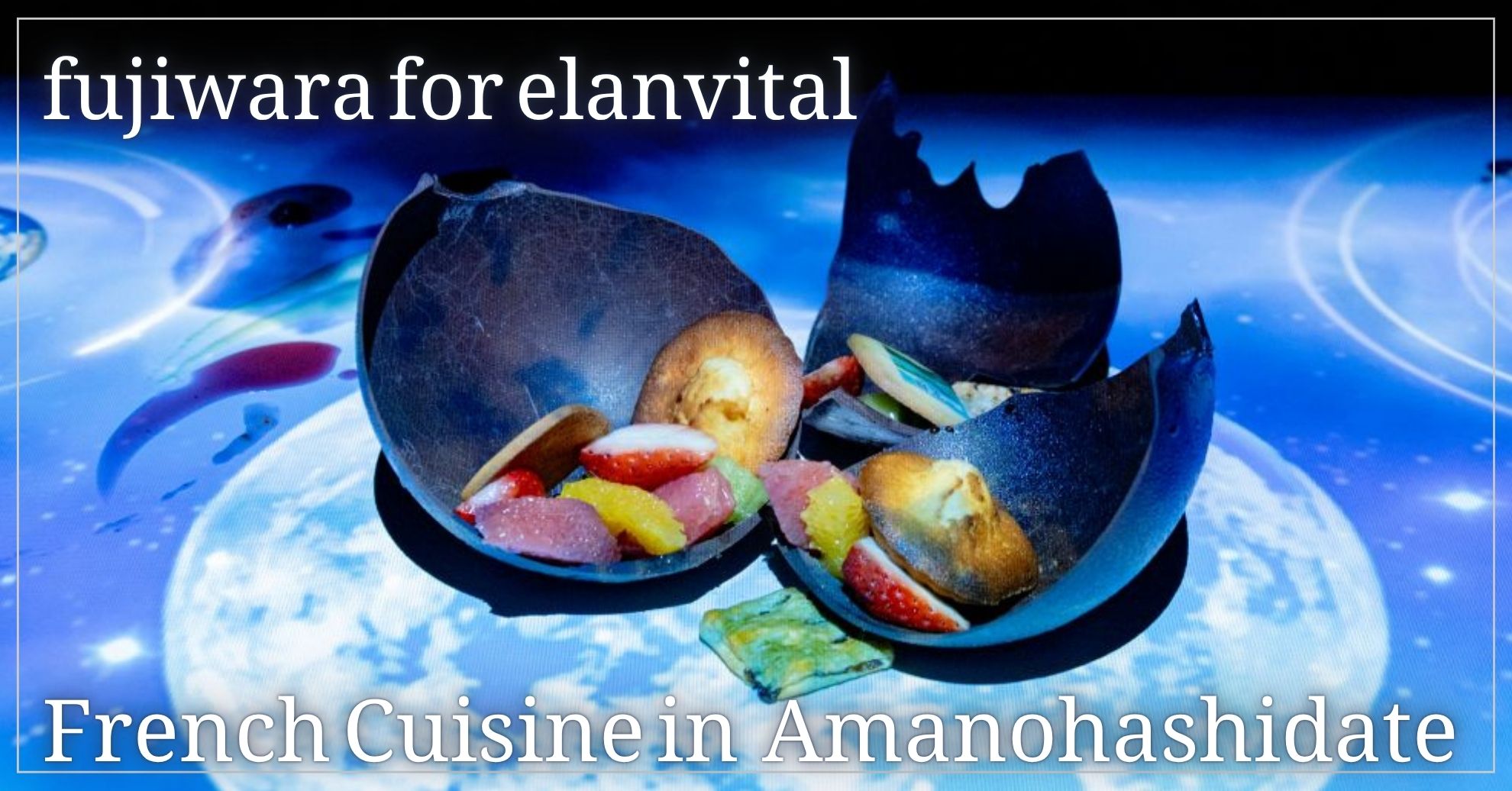
A round chocolate Earth then appears, and breaking it open reveals sweets and fruit inside.
The filling reflects the charm of Miyazu, with yuzu madeleines, colorful fruit, and cookies decorated with Amanohashidate and the matanozoki view through the legs.
Chef Fujiwara packs in as many local sweets as possible so that guests can sample them and perhaps buy their favorites as souvenirs.
The tart strawberries, bittersweet chocolate, and sauces around the plate complete the dessert.
The name is a play on the Japanese word for sharing, and sharing the dessert is meant to express the bond between the two guests.
Careful consideration runs through the course from the first dish to the dessert.
The projection mapping also creates a relaxed mood, so guests need not feel they must eat in silence just because the meal is French.
With seasoning that highlights the ingredients, the restaurant suits family birthdays, meals with friends, celebrations for parents, and other special occasions.
What Makes fujiwara for elanvital Unique

The combination of French cuisine and projection mapping comes from elan vital, a French restaurant in Tokyo where Chef Fujiwara used to work.
He was moved by how guests there simply enjoyed their meals while watching the projections.
French dining often brings to mind formal dress and strict table manners.
That style has its own appeal, but it can feel out of reach for people with small children or those unsure of their table manners.
fujiwara for elanvital hosts one group per day in a fully private setting, so guests can enjoy the meal without worrying about table manners, clothing, or other diners.
Chef Fujiwara’s cooking and projection mapping are also filled with the charm of the Tango region, including Amanohashidate.
He also uses ingredients that even local people may not know, often surprising local guests with what Miyazu produces.
Beyond seeking out local ingredients and studying how to cook them, he carefully creates projections that reflect the region.
The course is designed so that neither the projection nor the food overshadows the other.
Chef Fujiwara’s Path to French Cuisine

Chef Fujiwara’s father was a Japanese-cuisine chef, so he knew Japanese food from childhood.
He had few chances to try French cuisine, however, and first tasted it in his late teens. He was struck by how directly its complex flavors came through.
Around that time, he saw a television program about a chef working in France, and he began to want to see that kitchen for himself.
He later gained experience at French restaurants in Tokyo, saved money, and went to France to train. That experience supports his work today.
His love of French cuisine, his affection for Miyazu, and his wish to share these flavors with everyone are all expressed at fujiwara for elanvital.
Courses Tailored to Guests’ Requests

fujiwara for elanvital now welcomes a wide range of guests, including travelers, local residents, couples, and families with children.
If you share your budget in advance, you can also request a children’s plate with items such as fried shrimp and hamburger steak.
Children can also be served the same menu as adults on request.
The restaurant accepts up to four guests, and reservations are required.
Reservations are accepted by Instagram DM, phone, or SMS.
A Set Price of 15,000 Yen per Person

Fine wines and shaved truffles can make the final bill at a French restaurant hard to predict.
At fujiwara for elanvital, the price is set at 15,000 yen per person, including drinks, so guests can enjoy the meal knowing the total in advance.
Both alcoholic and non-alcoholic drinks are available. If you share your preferences for sake or wine, the restaurant will suggest pairings to match the food.
The pricing reflects Chef Fujiwara’s wish that young people and those new to course dining can enjoy a meal here.
What’s Next for fujiwara for elanvital

Chef Fujiwara has worked across a broad range of French cooking, from classic to avant-garde.
Looking ahead, he says it might be interesting to create obanzai, Kyoto-style home-cooked side dishes, based on French home cooking.
The young man once inspired by a chef on television has since moved beyond conventions and genres, creating his own style at fujiwara for elanvital to share the appeal of Miyazu.
fujiwara for elanvital Basic Information


| fujiwara for elanvital Address: 1603 Ryoshi, Miyazu, Kyoto Prefecture Phone: +81-80-5732-5240 Hours: Lunch: 11:00 a.m. to 3:00 p.m. Dinner: 6:00 p.m. to 10:00 p.m. Closed: Irregular days Instagram: https://www.instagram.com/fujiwara_for_elanvital/ Reference: https://tabelog.com/en/kyoto/A2609/A260901/26038456/ |