Every year, visitors from across Japan and around the world flock to Kyoto during the autumn foliage season.
According to the Japan Meteorological Agency, the peak of the 2025 autumn colors in Kyoto is expected to arrive around November 17.
Because Kyoto stretches long from north to south, the timing of the foliage varies by region:
in the northern areas, the leaves begin to change from late October to mid-November, while in the southern areas, the color peak arrives about a week later.
This means that throughout Kyoto, the best period to enjoy autumn foliage lasts from late October to early December. Even after the leaves have fallen, you can still enjoy the beautiful “yuka-momiji” scenes, where fallen leaves blanket the temple floors and gardens in red, often continuing into mid-December.
In this article, we’ll introduce the most scenic autumn foliage spots in eastern Kyoto, including temples and shrines offering limited-period special viewings and illuminated night events.Many of these places remain relatively uncrowded and feature stunning combinations of historic temple gardens and natural beauty—a must-see for anyone who loves traditional landscapes and serene atmospheres.
Characteristics of Kyoto’s Eastern Area
This area is home to many of Kyoto’s most iconic temples and shrines — including Kiyomizu-dera, which has appeared in countless anime and is beloved both in Japan and abroad; Ginkaku-ji, whose quiet elegance contrasts beautifully with the golden splendor of Kinkaku-ji; and Yasaka Shrine, famous for the Gion Festival.
The charming streets leading to Kiyomizu-dera, such as Ninenzaka and Sannenzaka, as well as Hanamikoji Street near Yasaka Shrine and the traditional machiya townscape of Gion, are perfect for strolling and soaking up the old Kyoto atmosphere.
Along the Kamo River, you’ll find a beloved local retreat where people relax by the water. In summer, the riverside dining terraces known as kawadoko are a seasonal tradition not to be missed.
This area is ideal for visitors who want to experience Kyoto’s most famous temples and shrines, as well as its historic alleyways and preserved cityscape.
Now, let’s take a look at the autumn foliage illumination events and limited-time special openings in this area!
Kiyomizu-dera Temple & Jōju-in Garden: Experience the Compassion of Kannon Amid a Sea of Autumn Leaves
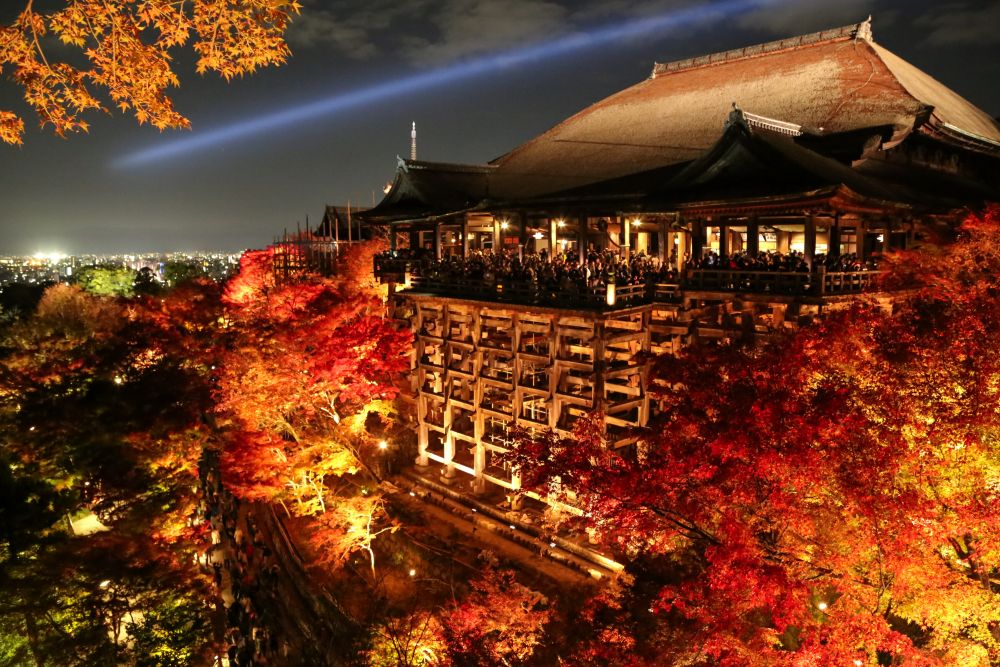
The view of autumn leaves spreading beneath the “Stage of Kiyomizu” is known as one of Kyoto’s most breathtaking sights—an experience everyone should see at least once. During the special nighttime illumination, a striking beam of blue light extends from the temple, symbolizing the compassion of the temple’s principal deity, the Eleven-Faced Thousand-Armed Kannon Bodhisattva. This illumination has become a cherished seasonal tradition of Kyoto.
From the stage adorned with autumn colors, you can look out over the city of Kyoto and feel the merciful spirit of Kannon, long revered by worshippers praying for good health, success, and harmonious relationships.
Just a two-minute walk from Kiyomizu-dera lies the Jōju-in Garden, which opens to the public only during this special season. Originally built as the residence of the monk Gana Shōnin, who restored Kiyomizu-dera after it was destroyed in the Ōnin War, Jōju-in is also said to have been the site of secret meetings held by Saigō Takamori and his allies during the late Edo period.
The garden, called the “Moon Garden” (Tsuki-no-niwa), was designed using the surrounding Kōdaiji Hill as a borrowed landscape. Its name comes from the serene beauty of the moon rising over the Higashiyama mountains, illuminating the garden with a soft glow.
Take your time to savor the quiet, ethereal beauty of the moonlight blending with the elegant landscape.
| Kiyomizu-dera Temple Nighttime Special Viewing Period: November 22 (Sat) – December 7 (Sun), 2025 Time: 17:30–21:30 (last admission at 21:00) Location: Kiyomizu-dera Temple Admission: Adults ¥500 / Elementary & Junior High School Students ¥200 Details: Official Website |
| Special Opening of Jōju-in Garden Period: November 22 (Sat) – December 7 (Sun), 2025 Hours: 9:00–16:00 (last admission 16:00) / 18:00–20:30 (last admission 20:30) Location: Kiyomizu-dera Temple Admission: Adults ¥600 / Elementary & Junior High School Students ¥300 Details: https://www.kiyomizudera.or.jp/event/jojuin.php |
Kōdai-ji Temple: Projection Mapping Show Depicting the Deep Friendship of Nene, Wife of Toyotomi Hideyoshi
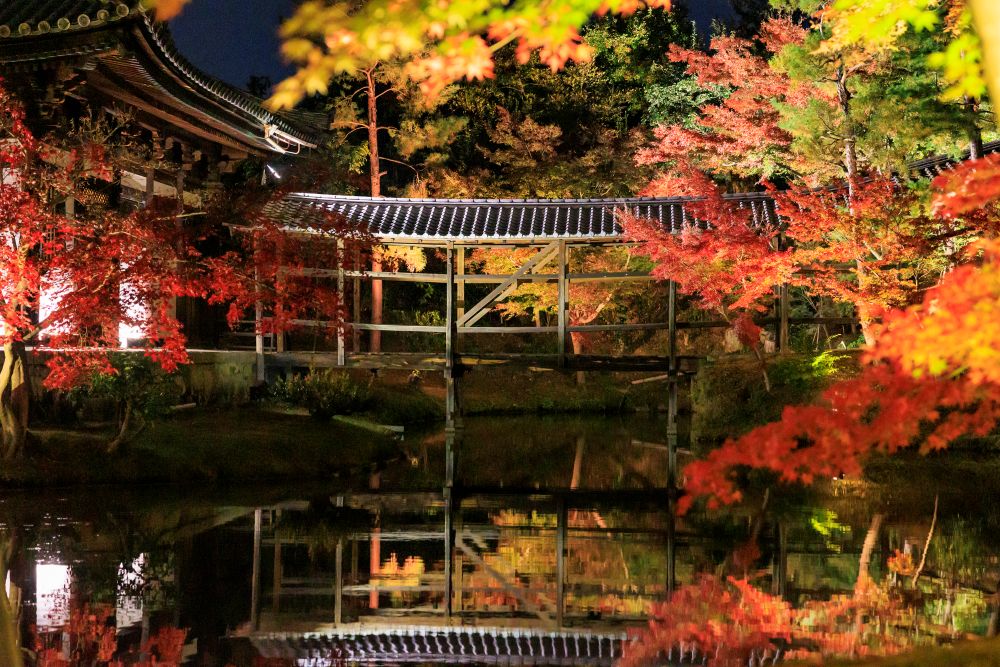
Kōdai-ji Temple was founded by Kita-no-Mandokoro (commonly known as Nene), the wife of Toyotomi Hideyoshi, and is affectionately called “Nene’s Temple.”
In spring, the famous “Nene-no-Michi” street leading to Entoku-in—where Nene spent her later years—is lined with blooming Somei Yoshino and weeping cherry trees. In autumn, the temple grounds come alive with brilliant autumn foliage, a captivating projection mapping display, and a bamboo grove beautifully illuminated by lights.
At the Hashin-tei garden in front of the main hall, a special projection mapping show titled “Eternal Bond – Nene and Matsu” depicts the deep friendship between Nene and her close friend Matsu of Echizen.
Enjoy this limited-time light performance along with the stunning reflection of the autumn leaves on Garyō Pond.Across Nene-no-Michi from Kōdai-ji stands the Sho Museum, where you can view exquisite makie lacquerware and furnishings that embody the opulent aesthetic of the Momoyama culture—offering a glimpse into the refined beauty prized by Japan’s warlords of the era.
| Autumn Special Admissio Period: October 24 (Fri) – December 14 (Sun), 2025 Hours: 9:00 – 22:00 (last admission 21:30) Location: Kōdai-ji Temple (526 Shimokawarachō, Higashiyama-ku, Kyoto) Admission: Regular admission only Adults: ¥600 Junior and senior high school students: ¥250 Combined ticket (Kōdai-ji, Entoku-in, and Shō Museum): ¥900 Details: Official Website (Japanese) |
| Special Night Viewing Period: October 24 (Fri) – December 14 (Sun), 2025 Time: 17:00–22:00 (last admission 21:30) Admission: Same as daytime admission Note: While daytime and nighttime visits are not separated, re-entry is not permitted once you leave the temple grounds. Details: https://www.kodaiji.com/saiji.html |
Entoku-in Temple : Admire the Delicate Maple Leaves Loved by Nene, Together with Kōdai-ji
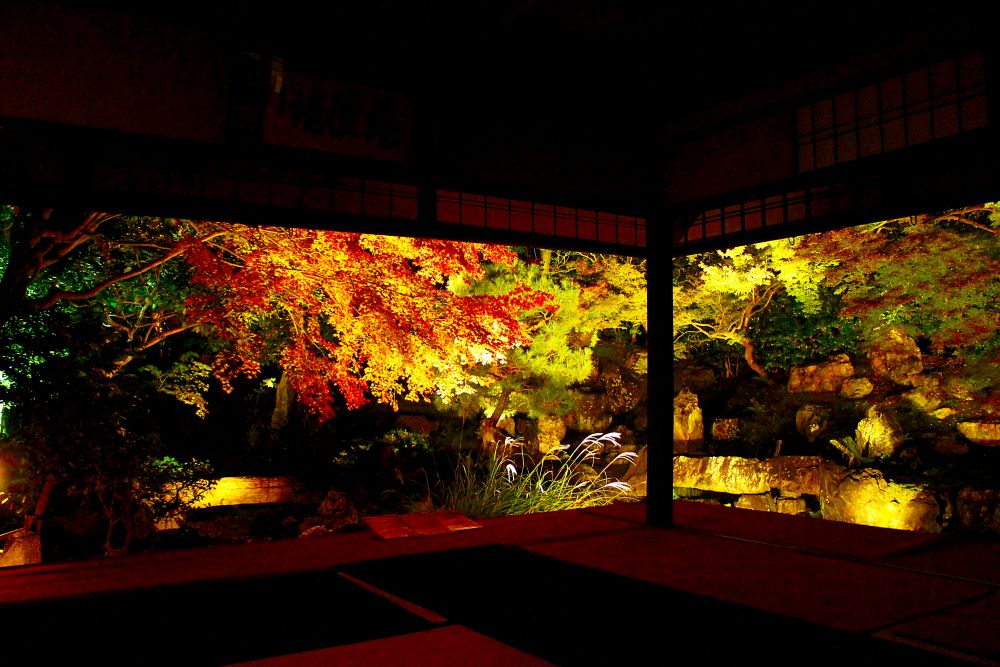
Entoku-in is one of the sub-temples (tatchū) of Kōdai-ji Temple, where Nene—Toyotomi Hideyoshi’s wife—spent the last 19 years of her life as her personal residence.
A tatchū refers to a small temple located within the precincts of a larger main temple. Originally, in Zen Buddhism, these were hermitages or temples built by disciples to honor and protect the graves of their masters.
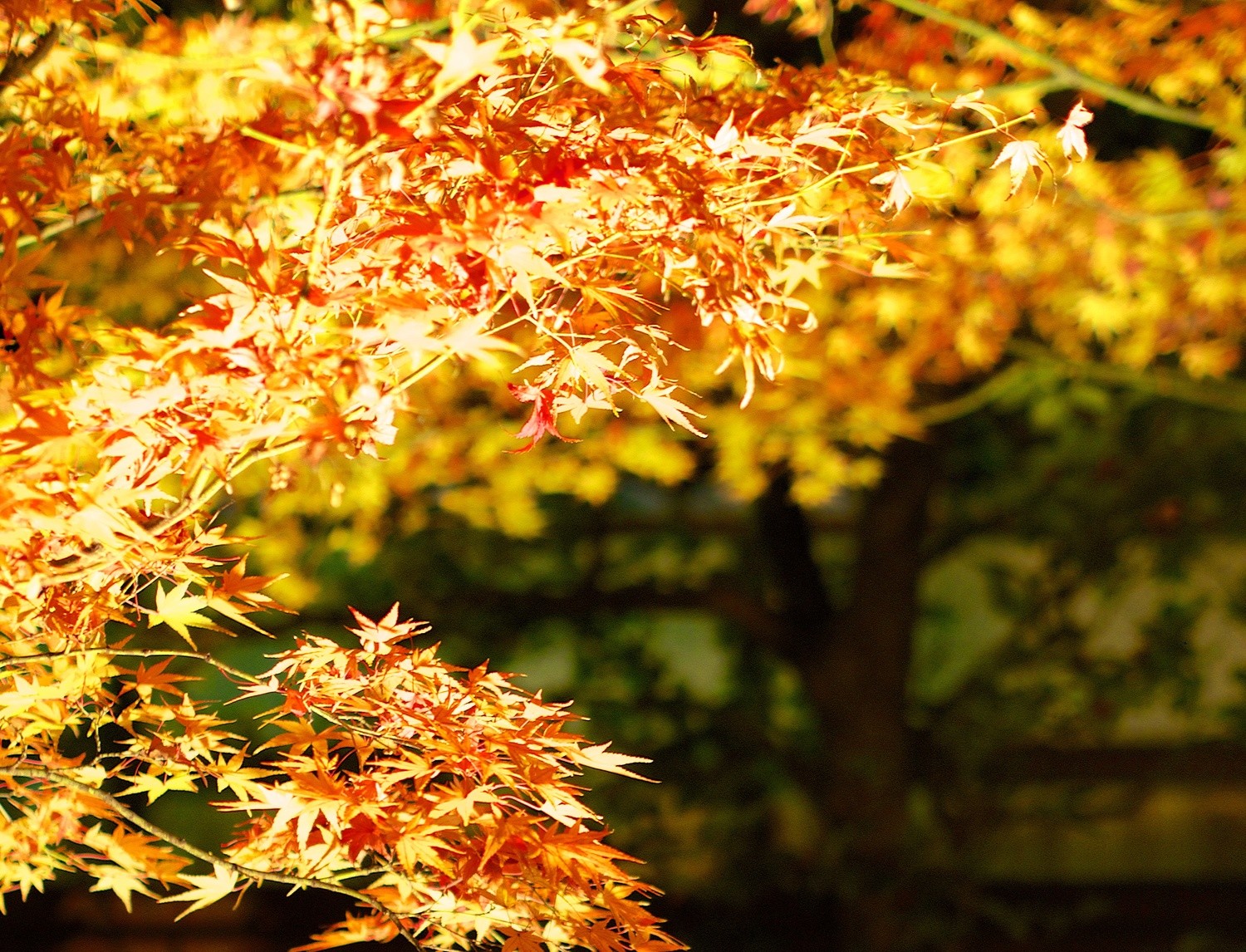
Around 100 small maple trees favored by Nene herself are planted throughout Entoku-in, beautifully coloring the temple grounds in vivid reds and oranges during autumn.
The North Garden, with its numerous massive rocks, symbolizes the luxurious aesthetic of the Momoyama period. During the autumn illumination, the striking contrast between the glowing boulders and the deep crimson foliage creates a mystical atmosphere.
Entoku-in is located just across Nene-no-Michi Street from Kōdai-ji Temple, making it an ideal spot to visit together with Kōdai-ji.
| Nighttime Special Viewing Period: October 24 (Fri) – December 14 (Sun), 2025 Closed on December 12 (Fri) and 13 (Sat) due to temple services Hours: 17:00–22:00 (last admission 21:30) Location: Entoku-in Temple 530 Kodaiji Shimokawaracho, Higashiyama-ku, Kyoto Admission: Adults: ¥500 Junior high & high school students: ¥200 Details: Official website (Japanese) |
Eikan-dō Zenrin-ji Temple: Be soothed by the profound beauty of autumn leaves and the “Mikaeri Amida” Buddha
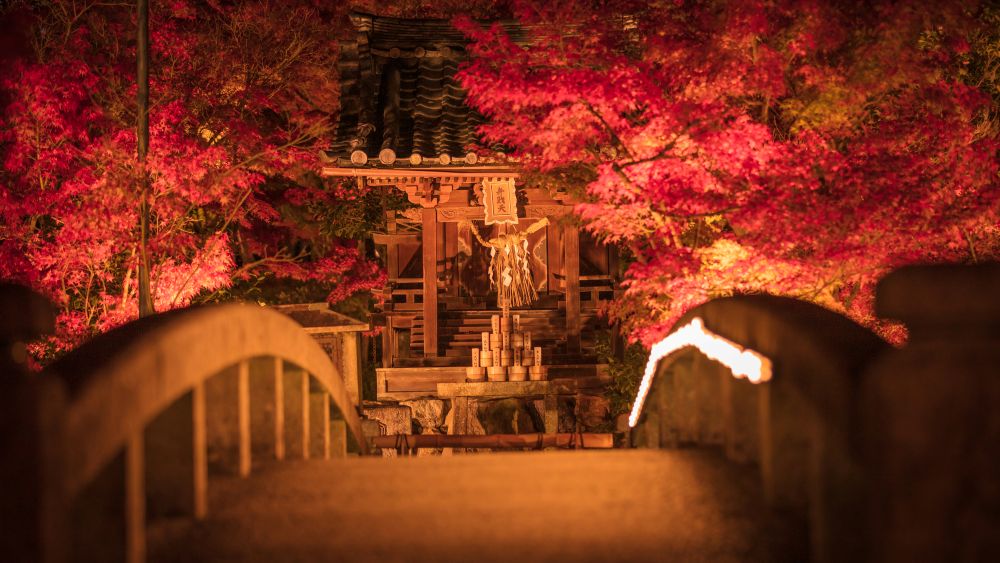
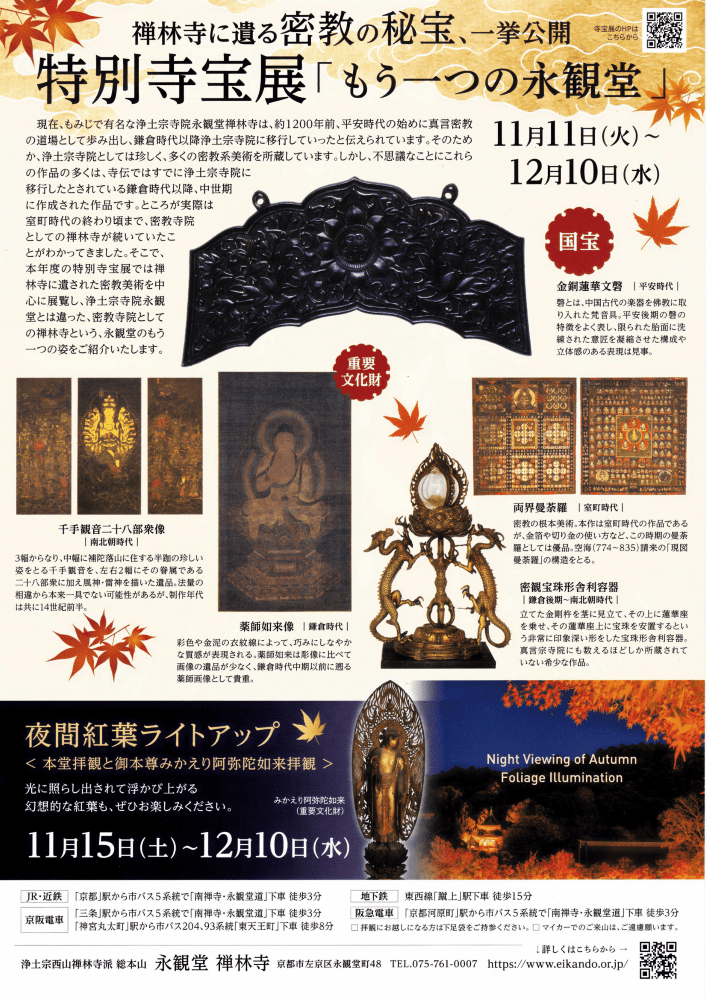
Eikan-dō Zenrin-ji Temple
The official name of Eikan-dō is Zenrin-ji Temple. Founded about 1,200 years ago, it was originally established as a training hall for Shingon Esoteric Buddhism. Over time, it transitioned into a temple of the Jōdo (Pure Land) sect, and today it preserves many priceless works of art and cultural properties rooted in its Shingon heritage.
Renowned as one of Kyoto’s most celebrated autumn foliage spots since ancient times, the temple grounds are adorned with approximately 3,000 maple trees that beautifully color the gardens, Tahōtō pagoda, and Mieidō hall.
During the nighttime illumination, the combination of glowing autumn leaves, the main hall, and the statue of Mikaeri Amida Nyorai (the “Looking-Back Amida Buddha”) creates an enchanting, almost mystical atmosphere. The Buddha’s gentle backward gaze symbolizes his deep compassion, watching over all beings with kindness and mercy — a sight to be truly grateful for.
| Autumn Night Illumination Period: November 15 (Sat) – December 10 (Wed), 2025 Hours: 17:30–21:00 (last admission 20:30) Location: Eikan-dō Zenrin-ji Temple Admission: 700 yen (junior high school students and older) Details: https://www.eikando.or.jp/gyouji.html |
Chion-in Temple: Marvel at the Majestic Sanmon Gate and the Crimson Autumn Leaves of Yūzen-en Garden
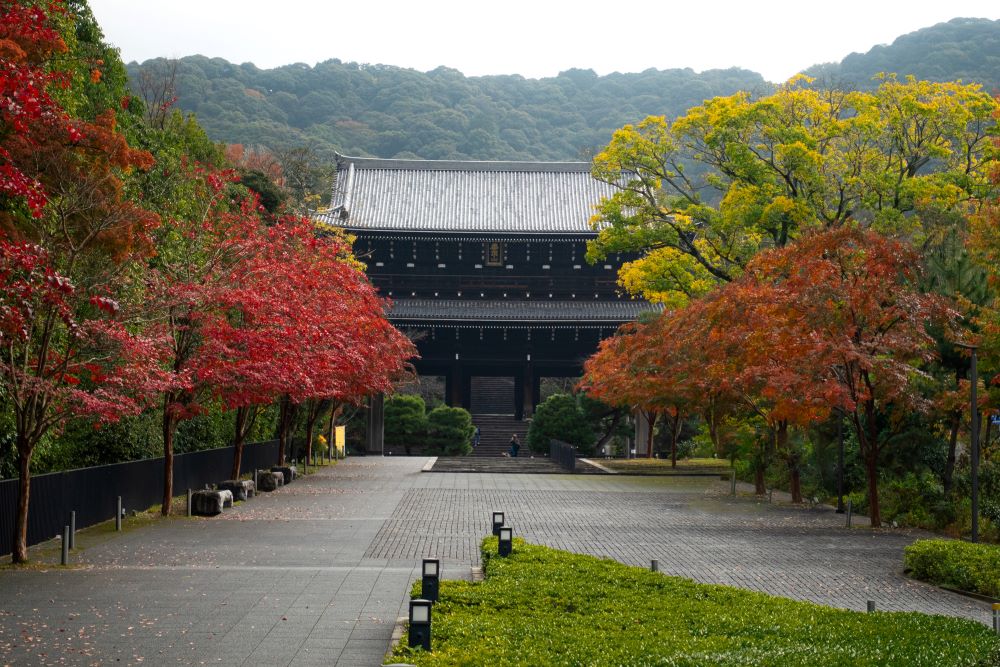
Chion-in Temple, the head temple of the Jōdo (Pure Land) sect of Buddhism, was founded by Hōnen Shōnin, who taught that one could attain salvation through the simple act of chanting the Nembutsu (“Namu Amida Butsu”).
During a time when Japan was afflicted by political turmoil, famine, epidemics, and earthquakes, this faith offered people hope and spiritual comfort.
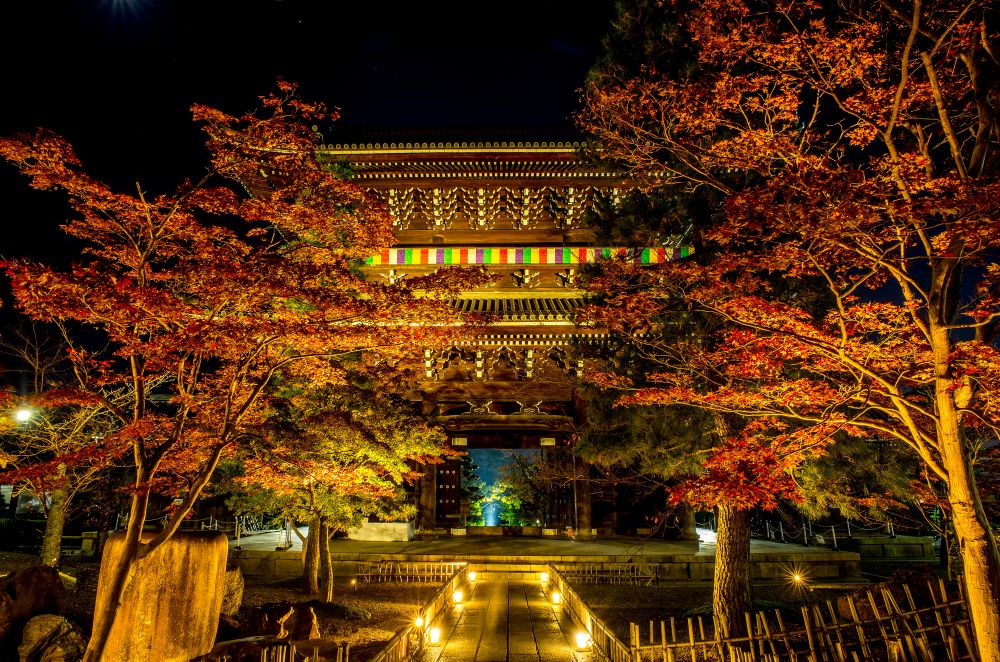
One of the temple’s main highlights is the Sanmon Gate, a National Treasure and one of the largest wooden two-story temple gates in Japan. Another is the beautiful Yūzen’en Garden, which was named after Miyazaki Yūzen, a fan painter who once lived near the temple’s gate. The garden combines a pond fed by the spring water of the Higashiyama hills with a refined dry landscape garden.
Both cherry blossoms in spring and brilliant autumn foliage adorn the garden, and the temple grounds are illuminated in both seasons.
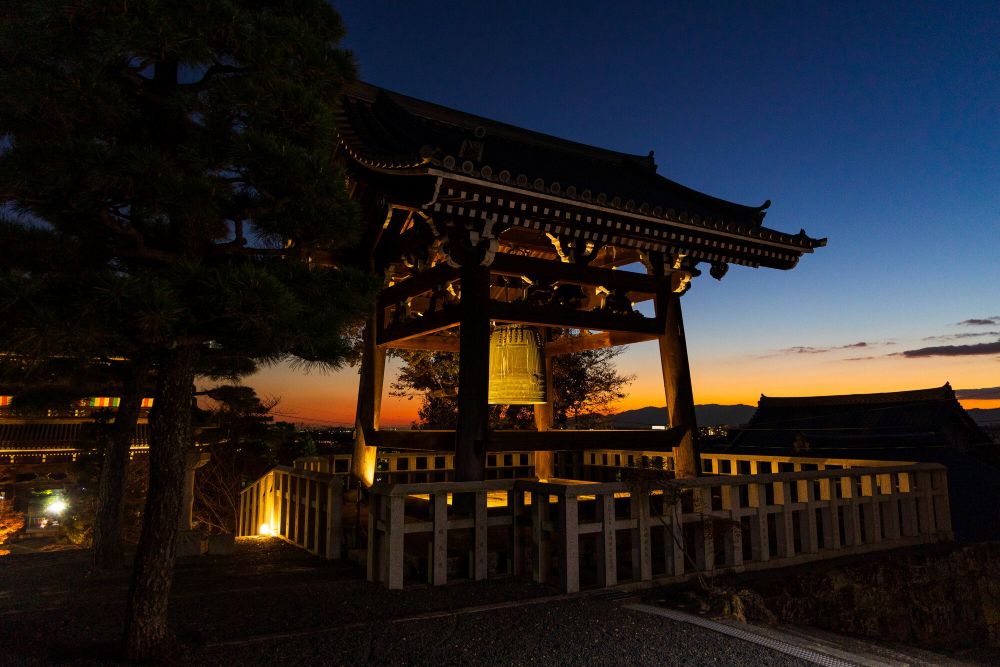
Within the precincts, visitors can also see the Onna-zaka (Women’s Slope), where maple trees on both sides glow beautifully when lit up at night, the Great Bell Tower, famous for the New Year’s Eve bell ringing, and the Amida Hall (exterior view only).
The solemn atmosphere of this historic temple, enhanced by the vivid colors of the illuminated maple leaves, offers an unforgettable and deeply moving experience.
| Autumn Illumination 2025 Period: November 19 (Wed) – December 7 (Sun), 2025 Time: 17:30–21:30 (last admission 21:00) Location: Chion-in Temple Admission: Adults ¥800 / Elementary & Junior High School Students ¥400 Details: https://www.chion-in.or.jp/event/event/1489/ |
Konkai Kōmyō-ji Temple: A Serene Spot to Feel the Deep “Autumn Dusk” of Kyoto
Konkai Kōmyō-ji Temple was founded after Hōnen, the founder of the Jōdo (Pure Land) sect, was deeply moved when a brilliant light illuminated the mountaintop as he chanted the Nembutsu.
Perched on a hill overlooking the city of Kyoto, the temple offers one of the most breathtaking views of the city bathed in the glow of dusk. Especially in autumn, the mountains and city below turn vivid shades of red and gold, earning it a reputation as one of Kyoto’s most famous spots for experiencing “autumn at twilight.”
Highlights of the Illumination
The nighttime illumination showcases:
- The Mieidō Hall, which enshrines a seated statue of Hōnen and many important cultural properties.
- One of Japan’s largest Buddhist banners (Tōban) displayed within the precincts.
- The 2.6-meter-tall Kibi Kannon, an awe-inspiring statue of the bodhisattva.
- The “Shiun Garden”, where the illuminated maple trees reflect beautifully on the surface of the pond, creating a mesmerizing “upside-down maple” view.
Premium Viewing Plan
Admission to the evening illumination does not require reservations, but those who wish to explore at a slower pace can opt for the Premium Viewing Plan, which includes an exclusive 30-minute guided tour.
- Fridays, Saturdays, and Sundays: Guided by a master craftsman or a garden concierge affiliated with Konkai Kōmyō-ji, who will lead visitors through the Main Hall and garden.
- Mondays through Thursdays: Guided by an official Kyoto SKY Tour Guide (Kyoto City Tourism Association), offering insights into the temple’s history and design.
If you wish to experience the depth and spiritual beauty of Konkai Kōmyō-ji to the fullest, this special plan is highly recommended.
| Special Night Viewing Period: November 15 (Sat) – December 7 (Sun), 2025 Time: 17:30–20:30 (last entry at 20:00) Location: Konkai Kōmyō-ji Temple Admission: Adults ¥1,000 / Elementary school students ¥500 Details: https://www.kurodani.jp/lightup/ |
| [For Individuals] Premium Temple Viewing Plan – Fridays, Saturdays & Sundays Premium Temple Viewing Plan (for Individuals) Available on Fridays, Saturdays, and Sundays between November 15 (Sat) and December 7 (Sun), 2025 Reception Time: From 16:30 Viewing Time: 17:00–20:30 Includes a 30-minute guided tour followed by free viewing time. Venue: Konkai Kōmyō-ji Temple (金戒光明寺) Admission Fee: Adults ¥2,000 / Elementary School Students ¥1,500 (Free for preschool children) Capacity: 30 participants per session Reservation: Click here to reserve |
| Premium Viewing Plan (for Individuals) [Premium Viewing Plan – Monday to Thursday] Period: November 15 (Sat) – December 7 (Sun), 2025 (Monday–Thursday only) Reception Time: From 16:30 Viewing Hours: 17:00–20:30 Includes a 30-minute guided tour followed by free viewing. Location: Konkai Kōmyō-ji Temple Admission Fee: Adults: ¥1,500 Elementary school students: ¥1,000 Preschool children: Free Capacity: 30 people Reservation: Click here to book |
Shōren-in Monzeki Temple: Admire the graceful beauty of maple leaves glowing in blue light
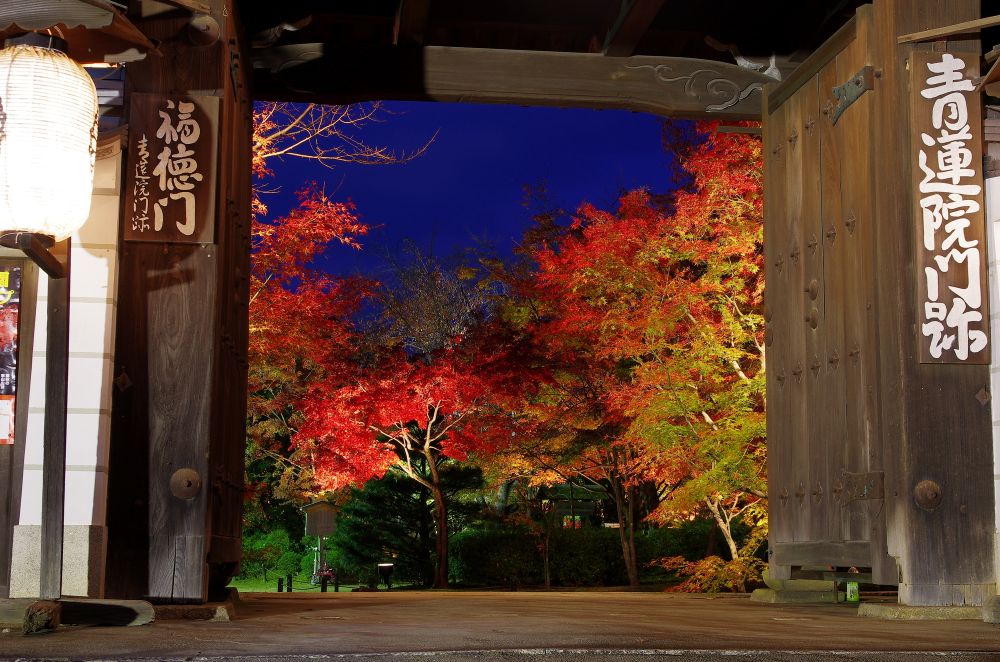
Shōren-in Monzeki Temple — Experience the Grace of Blue Illumination and Autumn Leaves
Shōren-in traces its origins back to Shōrenbō, one of the monks’ quarters established by Saichō, the founder of the Tendai sect, when he opened Enryaku-ji Temple on Mount Hiei.
Known as Shōren-in Monzeki, this temple has a distinguished lineage of head priests from the Imperial family. It is one of the three major Monzeki temples—alongside Sanzen-in and Myōhō-in—where the imperial tradition continues to this day.
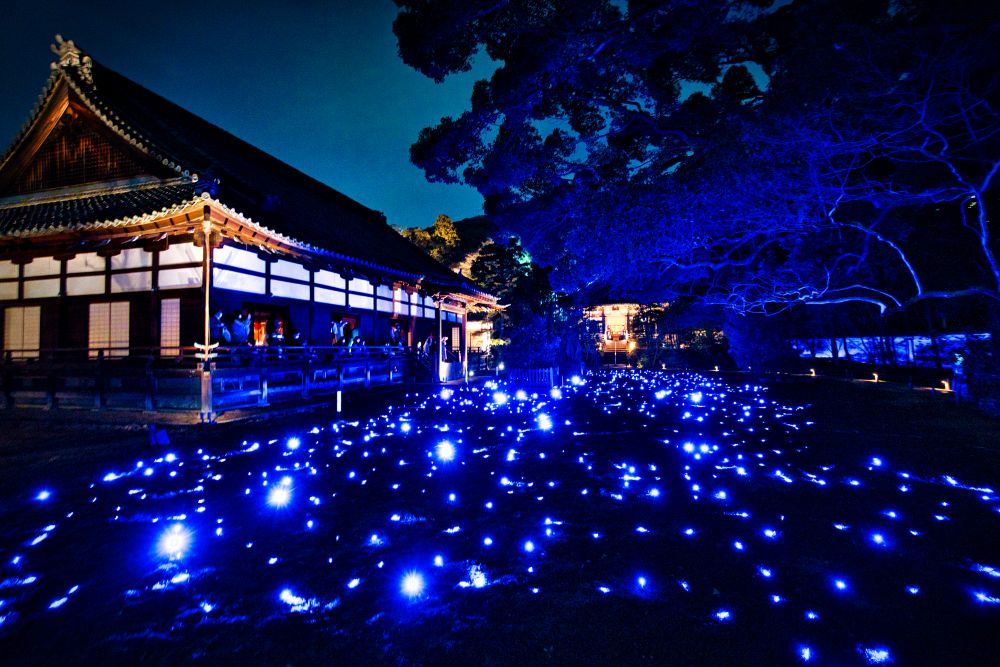
The principal image of worship is Sicchōkō Nyorai (Achishōkō Nyorai), the Buddha of Light and Wisdom. Symbolizing the vastness of the universe, this Buddha is expressed in deep ultramarine blue. During the spring and autumn illumination events, the entire temple grounds are enveloped in ethereal blue light, creating an otherworldly atmosphere.
The giant camphor tree, a designated natural monument, and the surrounding bamboo grove are also bathed in blue, while the autumn foliage glows with refined elegance.
Unlike the typical illuminations that emphasize warm reds and yellows, Shōren-in’s blue-lit maple leaves offer a rare and mesmerizing contrast. As you gaze upon the scene, you may feel the serene expanse of the cosmos itself.
| Nighttime Special Viewing Period: November 7 (Fri) – December 7 (Sun), 2025 Time: 18:00–22:00 (last admission at 21:30) Location: Shōren-in Temple (Awataguchi Sanjōbōchō, Higashiyama-ku, Kyoto) Admission: ¥1,000 Details: https://www.shorenin.com/night/ |
Useful Tips for Enjoying Kyoto’s Autumn Foliage
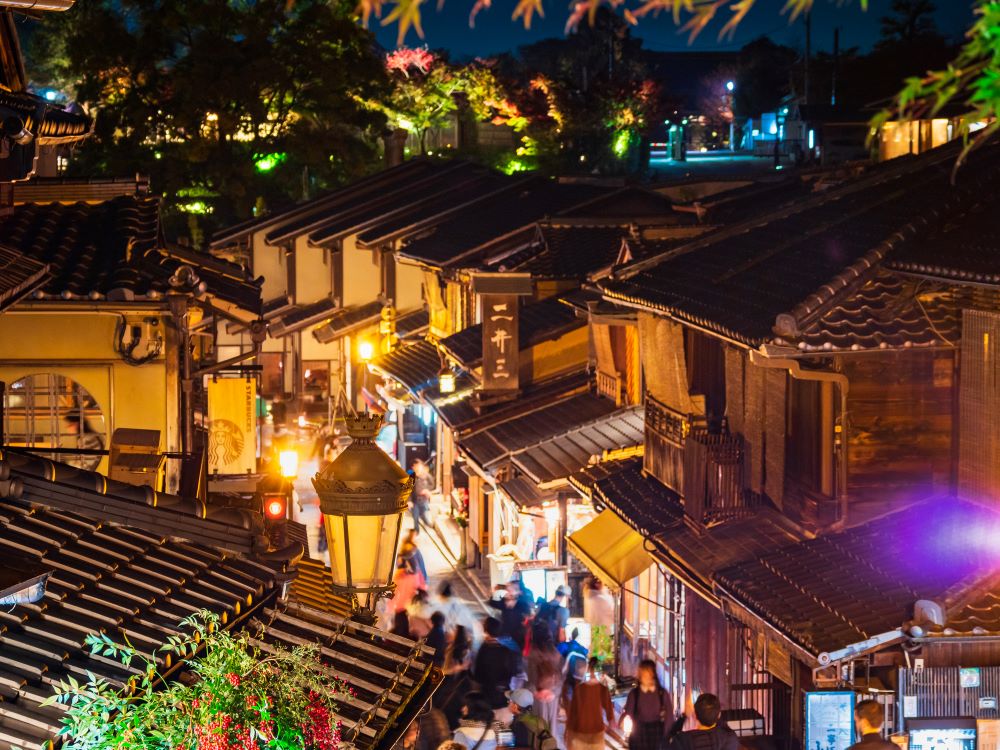
From November onward, when Kyoto enters its autumn foliage season, the temperature difference between day and night becomes quite large.
It’s best to bring a jacket or outerwear that can be easily put on and taken off.
Also, since Kyoto has many slopes and gravel paths, comfortable walking shoes such as sneakers are essential!
Popular sightseeing spots like Kiyomizu-dera tend to be most crowded from late morning to evening.
If you wish to enjoy a more relaxed visit, go early in the morning for daytime viewing, or visit later in the evening for the illuminated night view.
Conclution
This time, we’ve selected special autumn foliage spots in Kyoto’s eastern and Rakusai areas that feature nighttime illuminations and limited-time openings.
Although there are countless places to see autumn leaves in Kyoto, illuminated or special-access sites are often hidden gems that many visitors overlook.These locations offer not only the beauty of the autumn colors, but also Kyoto’s deep traditions, history, spirituality, and breathtaking night scenery—making them well worth a visit during the fall season!