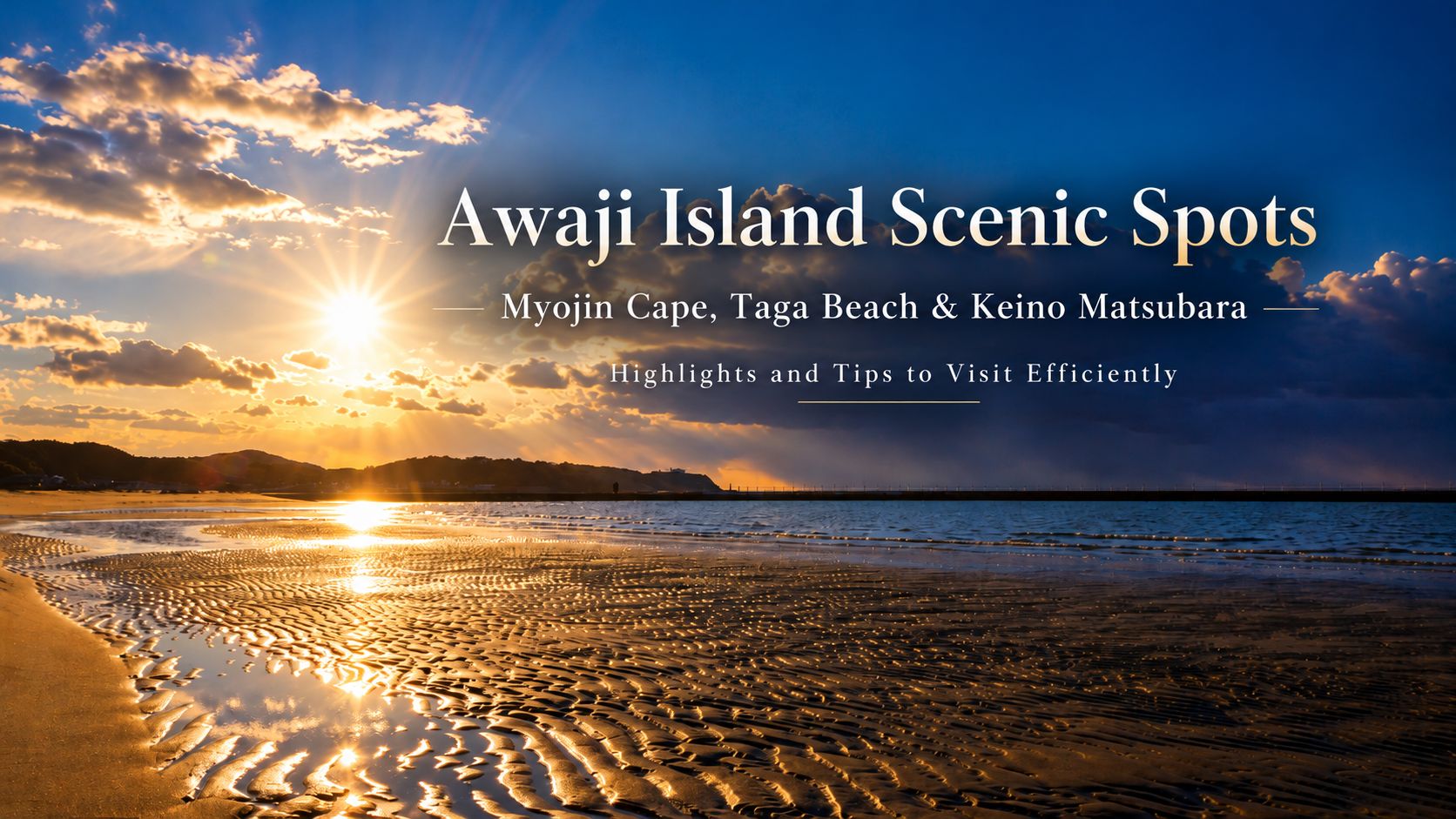
Hyogo Prefectural Route 31 runs north to south along the west coast of Awaji Island. It is known as the Awaji Sunset Line, and it is a popular route for drives and motorcycle rides.
Because it is popular, two things go wrong often: the parking lot fills up, or you arrive after the sun has already gone down.
This article covers when the sun sets by season, and what to expect at the three viewpoints along the route: Myojin Cape, Taga-no-hama Beach, and Keino Matsubara.
It is written for anyone planning a trip around the sunset, hoping to avoid the crowds, or deciding how to spend the afternoon before evening.
What Time Does the Sun Set on Awaji Island?
Sunset times shift considerably through the year. Check the season before you decide when to arrive.
| Season | Approximate sunset |
|---|---|
| April | 6:35 – 6:50 p.m. |
| July – August | 7:00 – 7:30 p.m. |
| September – October | 5:35 – 6:10 p.m. |
| December | 5:05 – 5:10 p.m. |
Arrive 30 minutes to an hour before sunset. You will see the sky change color, and you are far more likely to find a parking space. If you arrive just before sunset, the sun may go down while you are still waiting for a spot.
Three Sunset Viewpoints Along the Awaji Sunset Line
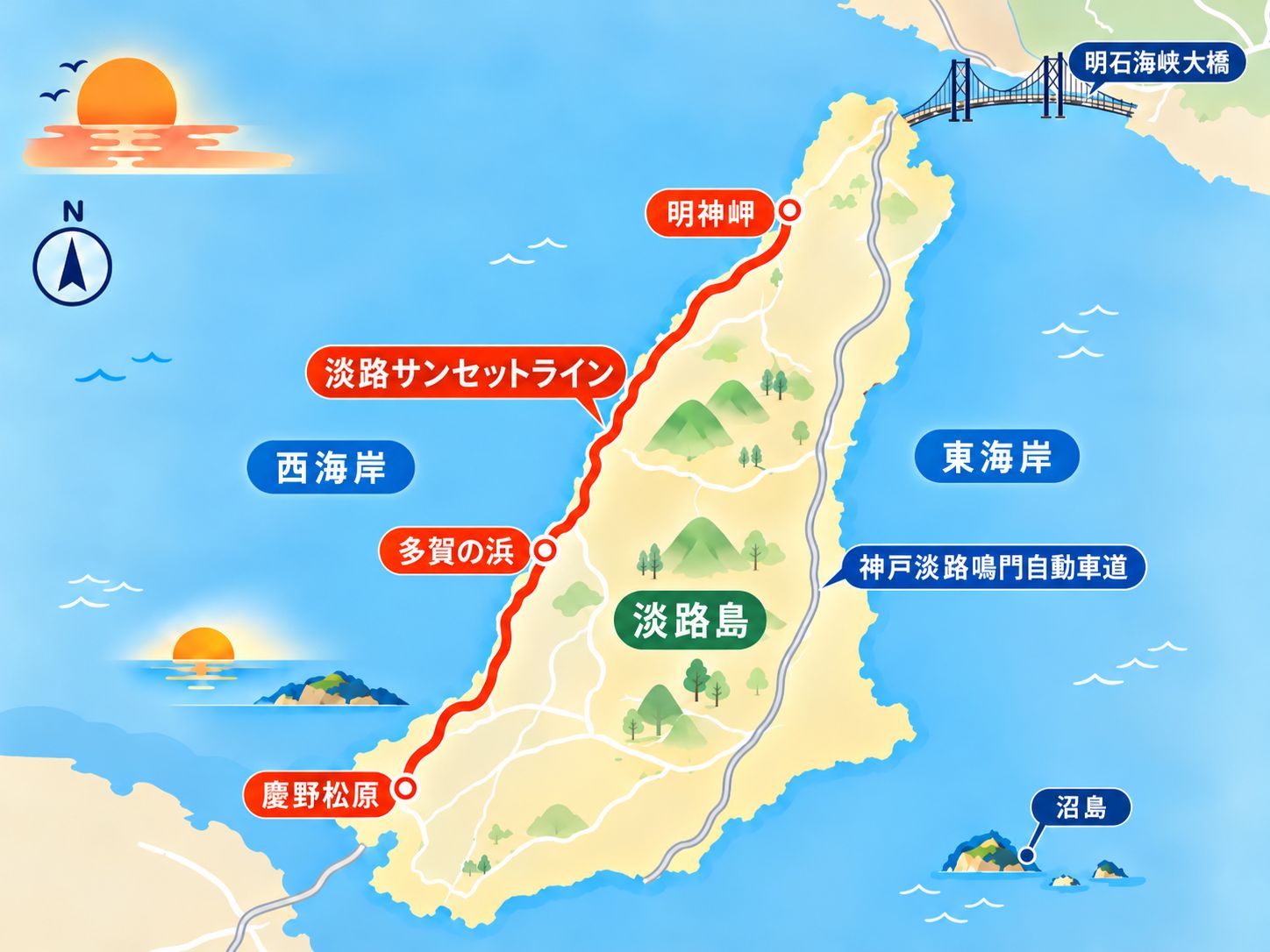
Route 31 starts near the Akashi Kaikyo Bridge in the north and follows the west coast down to Minamiawaji City. Several places along the way face the sunset, but they differ a great deal in parking capacity and atmosphere. The three below are listed from north to south.
Myojin Cape: Watching the Sun Set from the Rocks
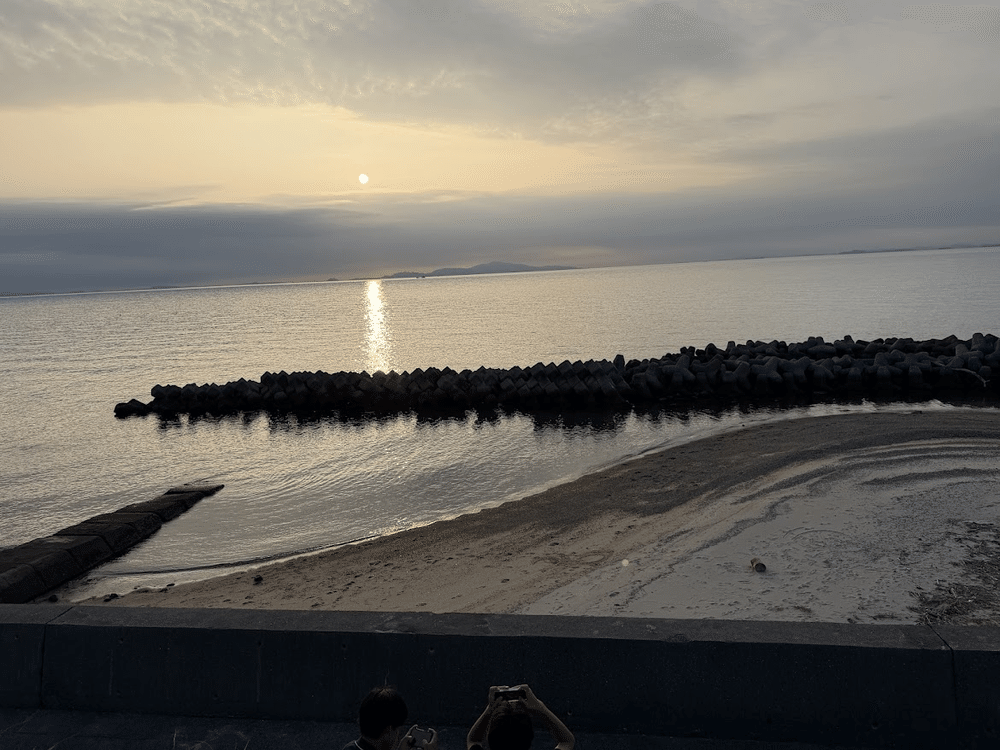
This area developed early as Myojin Port and grew on the shipping trade. A shrine called Nishihama Daimyojin stands on the cape, and its grounds hold a stand of Chinese juniper designated as a cultural property by Hyogo Prefecture.
According to local accounts, sailors brought these junipers back from Kyushu and planted them here during the shipping era. The bark has been stripped away by wind and salt, which gives you a sense of the conditions on this coast facing the Harima Sea. If you have time before sunset, walk up to the top of the cape.
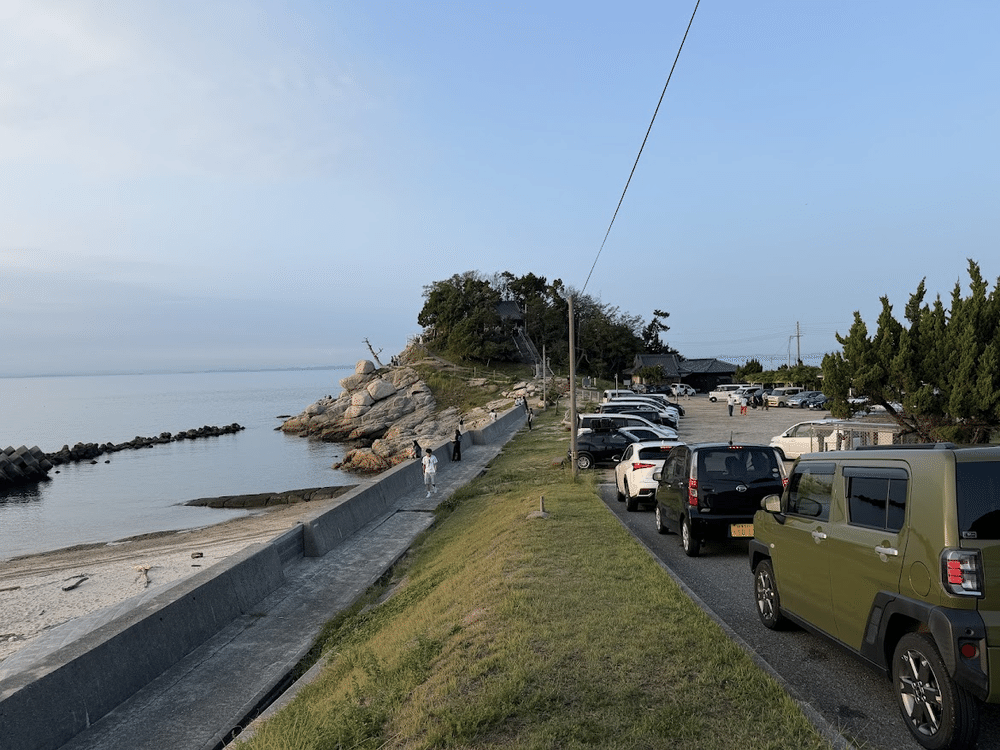
Myojin Cape lets you watch the sun go down from the end of a rocky point. Mornings are quiet, but the place fills quickly in the late afternoon.
There is space for only 20 to 25 cars, and the lot often fills at sunset. People gather along a narrow path, so watch your footing. Getting out can take a while after dark, so allow extra time.
| Name | Myojin Cape (Myojinmisaki) |
|---|---|
| Address | Myojin, Awaji City, Hyogo Prefecture |
| Admission | Free, no set hours |
| Parking | About 20 to 25 cars. Often full around sunset |
| Footing | Rocky ground and a narrow path. Wear shoes you can walk in |
| Leaving | Exiting can be slow after sunset, so allow extra time |
Taga-no-hama Beach: About 250 Parking Spaces and Room to Settle In
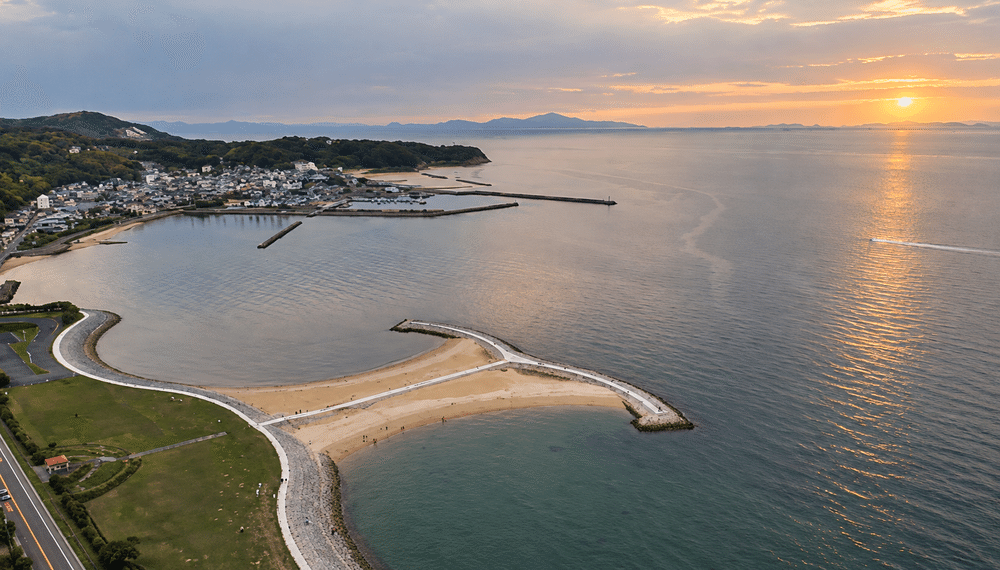
Taga-no-hama is a sandy beach about 4.6 km from Myojin Cape, roughly a 13-minute drive. The lot holds about 250 to 260 cars, around ten times the capacity at Myojin Cape, so parking in the evening is usually manageable.
The beach was developed together with the adjoining Taga-no-hama Park under the theme of sound and light. Sound-dampening blocks sit in the shallow water, which keeps the waves quiet, and the water quality ranks among the best in Hyogo Prefecture.
A tiled, T-shaped breakwater extends offshore and draws anglers. Sitting on the wide sand and waiting for the sun to drop, with the water barely making a sound, is particular to this beach.
Parking is free outside the summer swimming season, when a fee applies. The beach draws a crowd, but it is wide enough that you can choose your spot.
| Name | Taga-no-hama Beach |
|---|---|
| Address | 2476-3 Taga, Awaji City, Hyogo 656-1521 |
| Phone | 0799-72-3420 |
| Parking | About 250 to 260 cars. Free outside the swimming season; a fee applies during it |
| From Myojin Cape | About 4.6 km, roughly 13 minutes by car |
| Swimming season | Mid-July to late August in most years |
Keino Matsubara: Pine Grove and Beach, Named One of Japan’s Best Sunset Spots
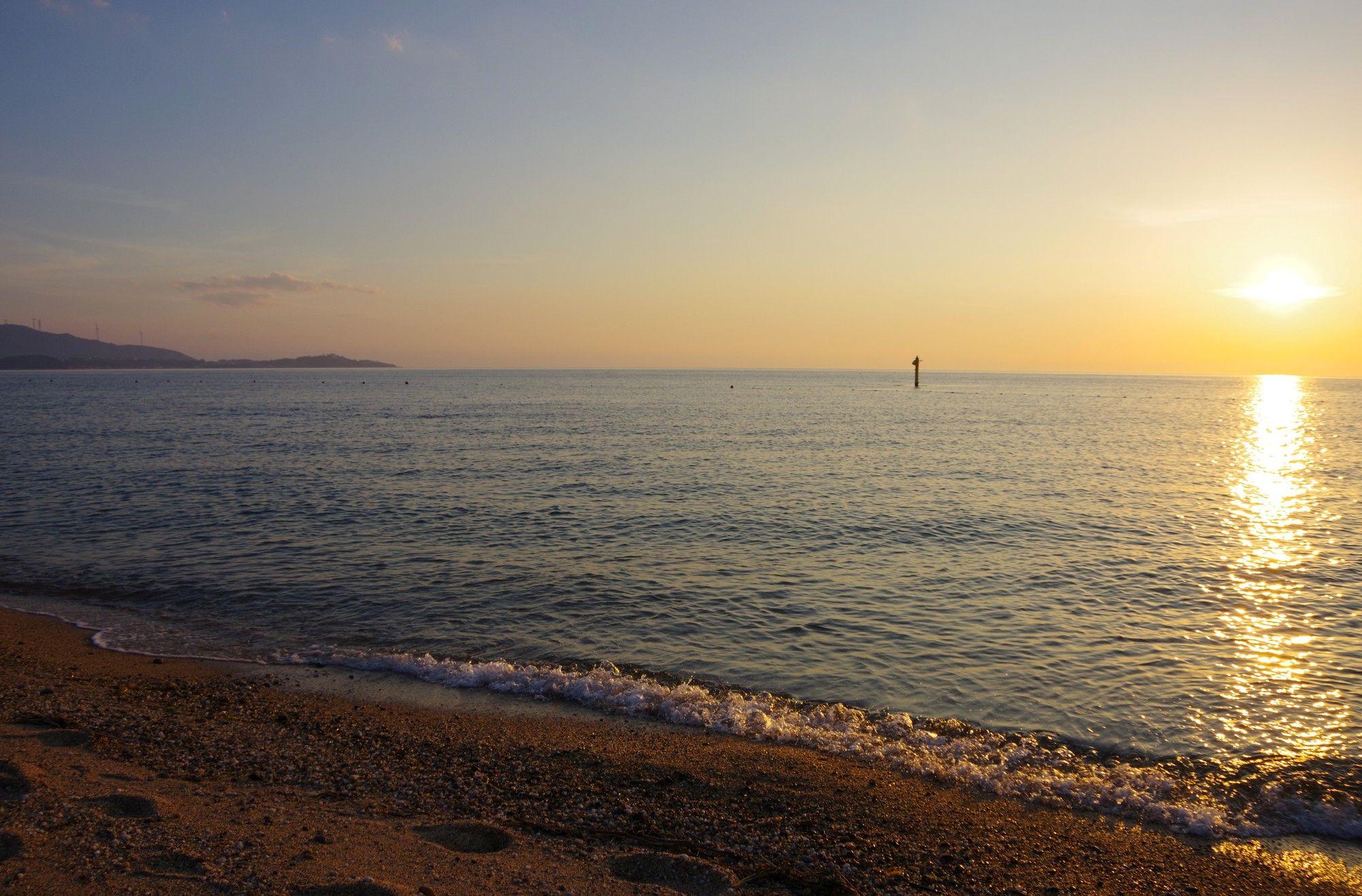
Keino Matsubara sits at the southern end of the Sunset Line, where black pines and sand run along the shore. It is listed among Japan’s 100 best sunset views. The silhouettes of the pines against an orange sky make for a different scene from Myojin Cape.
The site covers about 50,000 Awaji black pines and roughly 2,500 meters of white sand. It was designated a national Place of Scenic Beauty in 1928 and included in Setonaikai National Park in 1955. It also appears on national lists of 100 best beaches, 88 best swimming areas, and 100 best sunset views.
The scenery here has been known for centuries. The Man’yoshu, Japan’s oldest poetry anthology, includes a poem about this stretch of sea by Kakinomoto no Hitomaro. In the Edo period, the writer Ihara Saikaku noted that each pine had an unusual shape. Some of the trees are several hundred years old.
A path through the grove, laid out in 1997, is lined with roof tiles that couples have inscribed with messages. A small shrine called Kiai Jinja stands along it. Walking the path after you have seen the sunset shows you another side of the grove.
The lot holds 160 cars, which is generous, though it fills at sunset and on summer afternoons. Seidan-Mihara IC is about five minutes away, which makes the drive home straightforward.
| Name | Keino Matsubara |
|---|---|
| Address | 970 Matsuho Kotsuro, Minamiawaji City, Hyogo Prefecture |
| Admission | Free, no set hours |
| Parking | 160 cars. About 700 yen per day for a standard car during the swimming season. For rates outside that period, contact the Minamiawaji City commerce and tourism division at 0799-43-5221 |
| Access | About 3 km from Seidan-Mihara IC on the Kobe-Awaji-Naruto Expressway via Route 31, roughly 5 minutes |
| What to see | The pine grove and the beach, with pine silhouettes against the setting sun |
How to Plan the Afternoon
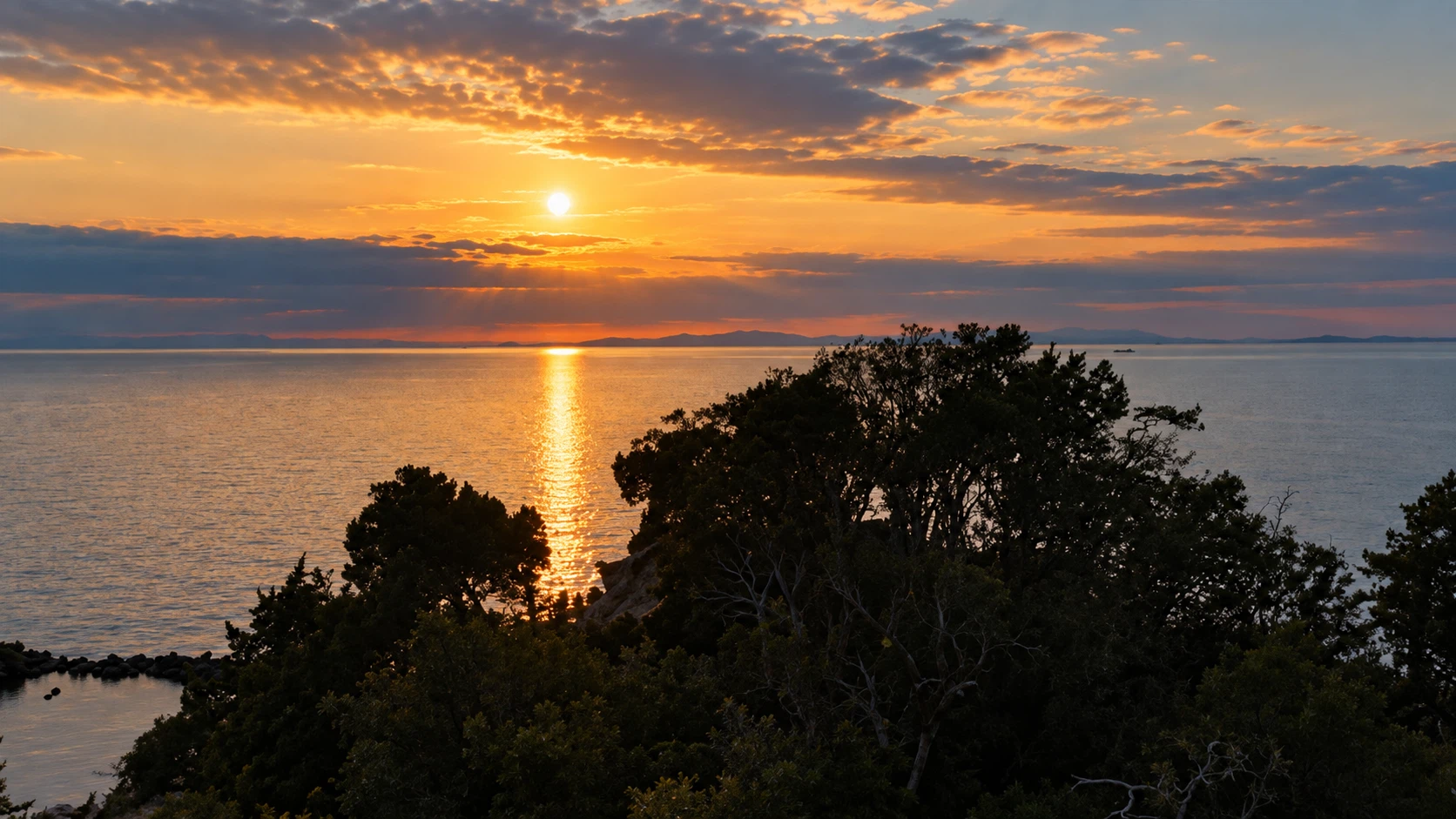
You cannot move the sunset, so decide where you will watch it before you set out. The schedule below follows the Sunset Line from north to south.
| Time | What to do |
|---|---|
| 2:00 p.m. | Join Route 31 at the northern end and drive south along the coast |
| 3:30 p.m. | Stop at a roadside station or cafe and see how the sky looks that day |
| 1 hour before sunset | Arrive at the spot you chose and find a place to stand |
| Sunset | Watch the sun go down over the water |
| After sunset | Dinner at your accommodation. A room facing the coast lets the evening carry on |
The three spots are far apart from north to south, so plan on one of them rather than all three in a day. If parking is a concern, choose Taga-no-hama or Keino Matsubara. If you want the sun close at hand, choose Myojin Cape. Roads get busy after dark, so it helps to stay somewhere you can reach directly after sunset. Several places along the west coast face the water, which lets you watch from your room instead.
Frequently Asked Questions
- What time does the sun set on Awaji Island?
-
Roughly 6:35 to 6:50 p.m. in April, 7:00 to 7:30 p.m. in July and August, 5:35 to 6:10 p.m. in September and October, and 5:05 to 5:10 p.m. in December. Arriving 30 minutes to an hour early lets you watch the sky change color.
- Which of the three should I choose?
-
Myojin Cape if you want the sun close at hand from the rocks. Taga-no-hama or Keino Matsubara if you want room to park. Myojin Cape holds only 20 to 25 cars, while Taga-no-hama has about 250 and Keino Matsubara 160.
- Can I visit all three in one day?
-
Myojin Cape is in the northwest of the island and Keino Matsubara in the southwest, more than an hour apart by car. Timing all three around sunset is not realistic, so pick one.
- What if the sky is cloudy?
-
Even with the sun behind cloud, the sky often takes on color around sunset. Wait until the listed time before giving up. On rainy or windy days, watching from a room along the coast is another option.
Summary
Arriving 30 minutes to an hour before sunset is what makes the difference on Awaji Island. Of the three spots along the Sunset Line, Myojin Cape in the north puts you closest to the water but has the smallest lot; Taga-no-hama holds about 250 cars and Keino Matsubara 160. On days when you expect a crowd, going straight to Taga-no-hama or Keino Matsubara is a reasonable call.
The three are far apart, so decide where you will watch before you leave. Staying along the coast cuts the driving after dark and lets you spend the evening and the next morning on the island.