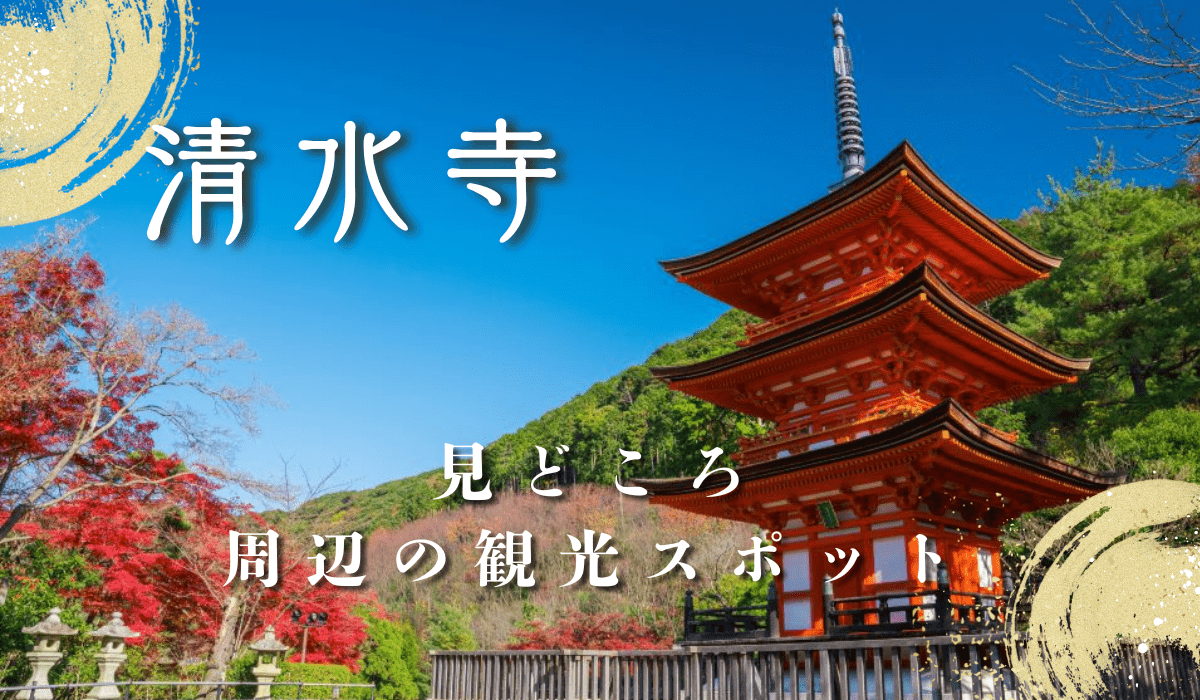
Kiyomizu-dera is one of the best-known temples in Kyoto.
The streets just below it — Kiyomizu-zaka, Ninen-zaka and Sannen-zaka — are lined with souvenir shops and places to eat, which is part of why so many people make the trip.
This article covers what to see at Kiyomizu-dera, how to get there, and the sights in the surrounding area.
The main hall’s wooden stage is built in a traditional style, and it is far stronger than it looks.
Knowing how it was put together gives you more to look at once you are standing on it.
We also explain the saying “to jump off the stage at Kiyomizu” and the legends attached to Ninen-zaka and Sannen-zaka nearby.
About Kiyomizu-dera
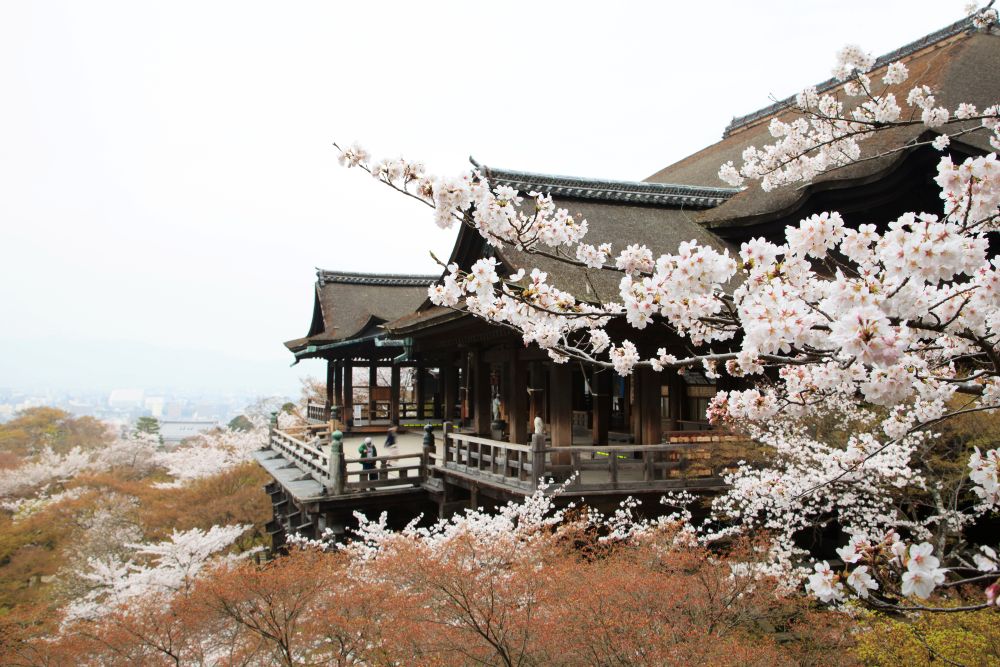
The temple’s full name is Otowa-san Kiyomizu-dera.
It stands partway up Mount Otowa and takes its name from the clear water of the Otowa waterfall on the mountain. It has been a part of Kyoto life for about 1,250 years.
The principal image is the Eleven-Headed, Thousand-Armed Kannon. The eleven faces and forty-two arms represent a compassion wide enough to reach anyone in difficulty.
Kannon is also called the one who turns toward every direction, and is believed to take thirty-three different forms in order to reach everyone.
For centuries people have come here to pray for health, success at work and a good marriage, and have called the deity the Kannon of Kiyomizu.
Kannon, the word that means “you and I”
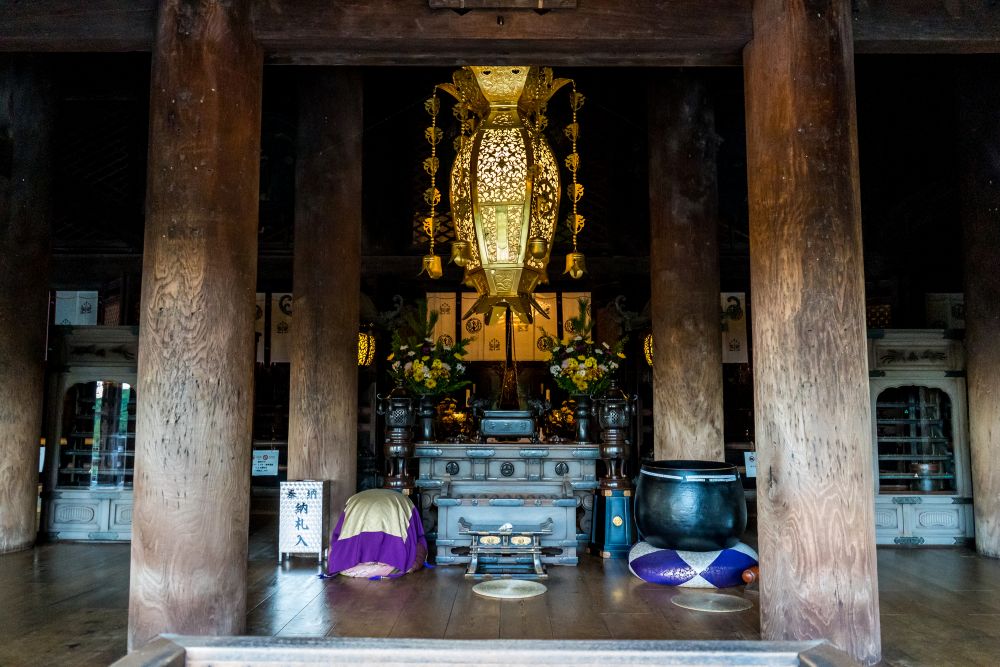
The word Kannon is written with characters meaning to observe sound: to look at the world and at other people, and to offer help.
Kan also carries the sense of one’s own view, and on refers to what is around you and to other people, so the word can be read as “you and I”.
None of us can see inside another person’s mind, so it is easy to judge from our own point of view alone.
The Eleven-Headed, Thousand-Armed Kannon is understood differently: as taking a wide view of things and trying to help those around her.
That outlook is something people can share.
Even without knowing what someone else is thinking, anyone who considers whether a person needs help, or who tries to help someone in difficulty, is acting in the same spirit.
It is a quality worth carrying into everyday life.
What to See at Kiyomizu-dera
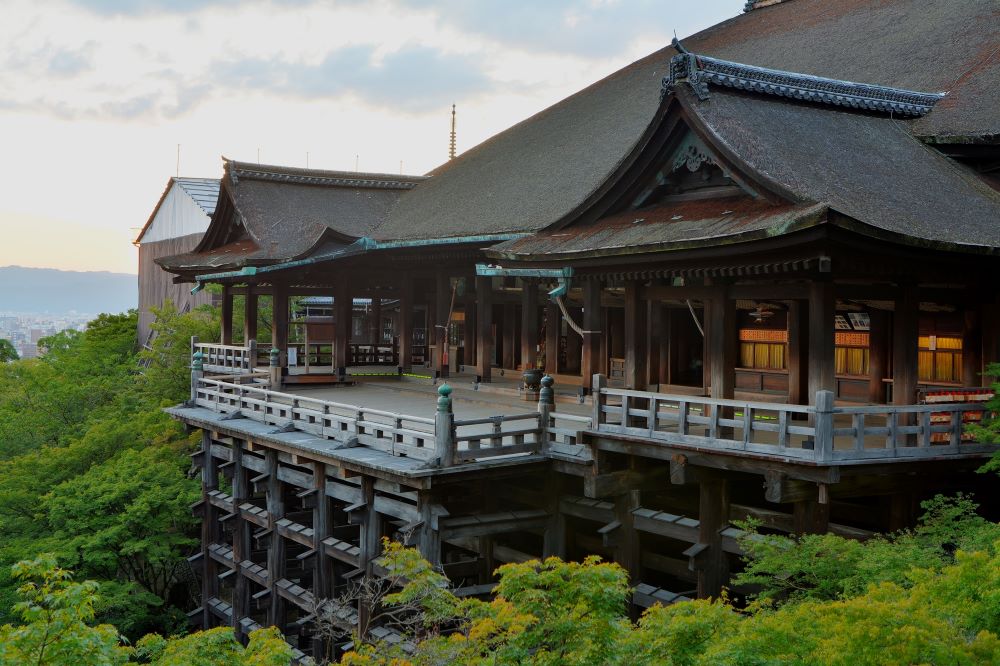
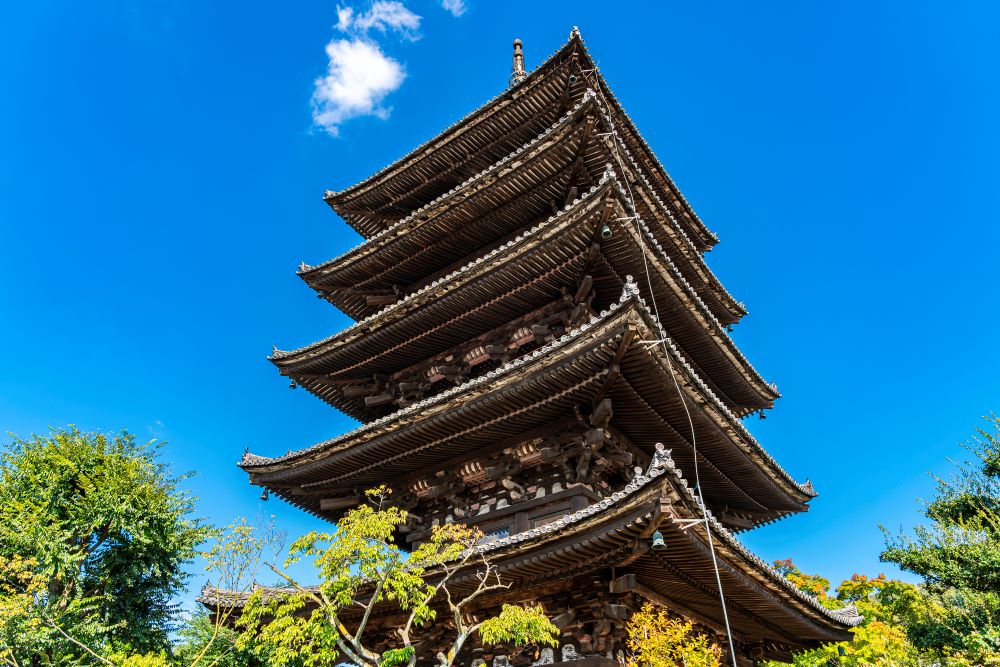
Along with the stage looking out over the city and the valley, Kiyomizu-dera has the imposing Nio-mon gate, a three-storied pagoda that is one of the largest in Japan and a National Treasure, and the West Gate.
The Stage: Why It Does Not Collapse, and the Technique Behind Expo 2025
The stage that has carried visitors for centuries was rebuilt in 1633.
It stands about 13 meters above the slope, roughly the height of a four-story building.
If you have ever wondered whether it could give way under the weight of the crowd, there is no cause for concern.
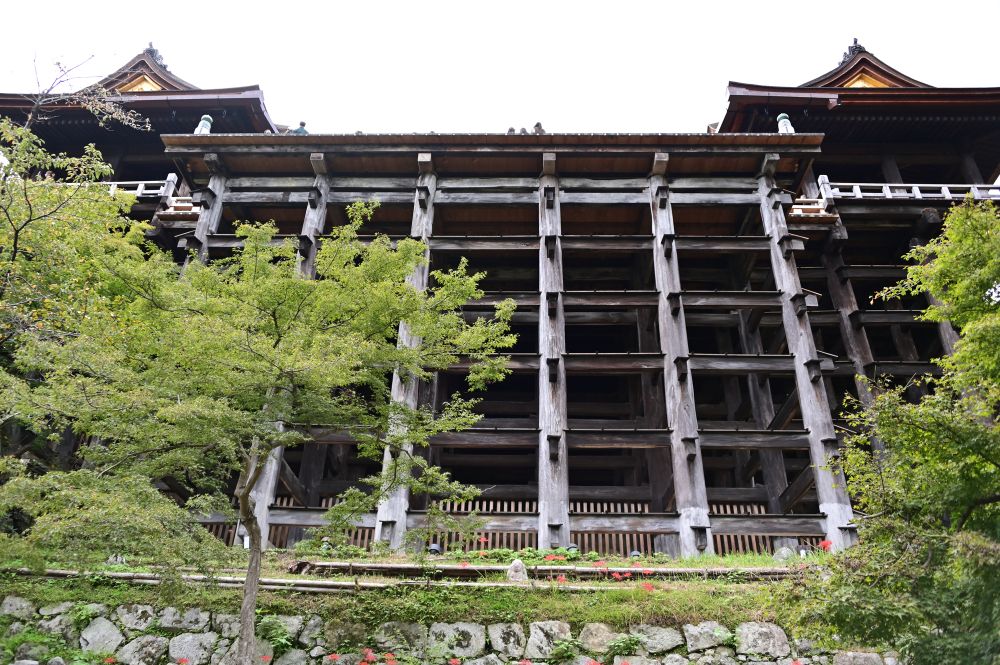
To sit on the steep slope of Mount Otowa, the stage is built in the kakezukuri style, in which long pillars and beams support the floor from below.
Kakezukuri uses no nails: the timbers are fitted together in a lattice, which is what gives the structure its resistance to earthquakes. Eighteen zelkova pillars, from trees around 400 years old, carry the stage.
Wedges of wood and metal fill the small gaps that remain.
The Grand Ring at Expo 2025 used the same technique
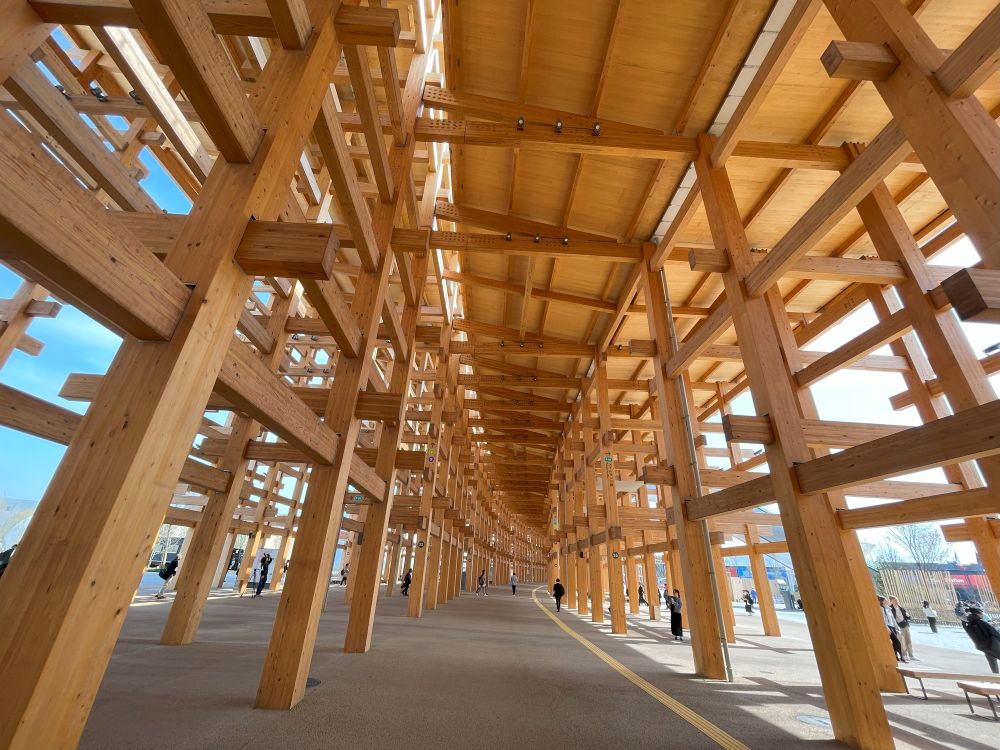
The Grand Ring, the symbol of Expo 2025 Osaka, Kansai, was built with the same kakezukuri joinery as the stage at Kiyomizu-dera. In March 2025 it was recognized by Guinness World Records as the largest wooden structure.
The Expo’s theme of unity in diversity was about bringing people together from around the world. Kiyomizu-dera draws visitors from Japan and abroad in much the same way, and the two structures share a method of building as well.

The stage is also built to keep the timber from rotting.
Wood is vulnerable to water, and trapped moisture leads to decay, so the floor is set at a slight angle to keep rain from pooling.
Look at the joints between the timbers and you will see small caps shaped like umbrellas. These throw off the water running down from the stage and protect the joint underneath.
Even so, some pillars are damaged by insects or decay. Where that happens, the damaged section is cut away and new timber is spliced in — a technique called netsugi — so the stage can be passed on to the next generation.
The stage stands through a long accumulation of small refinements and repairs.
Did anyone really jump off the stage at Kiyomizu? The saying “to jump off the stage at Kiyomizu” describes approaching something with a resolve as great as leaping from the stage of the main hall, which juts out over the cliff. In earlier times some people did jump, as a way of declaring that resolve. About 85 percent are said to have survived, though not unharmed, and in the Meiji period an order was issued prohibiting it. Jumping is not something to try, but the phrase is a useful one when you are making a major decision, or taking a step forward you have been putting off.
The West Gate: Watching the Sunset as an Image of the Pure Land
Kiyomizu-dera belongs to the Kita-Hosso school, which grew out of Yogacara, a branch of Buddhist thought that began in ancient India.
Yuishiki, the Japanese term, is written with characters meaning “only” and “mind”. Everything that happens is understood as a reflection of one’s own mind, so the teaching is to find your own mind in what happens to you, and to set it right.
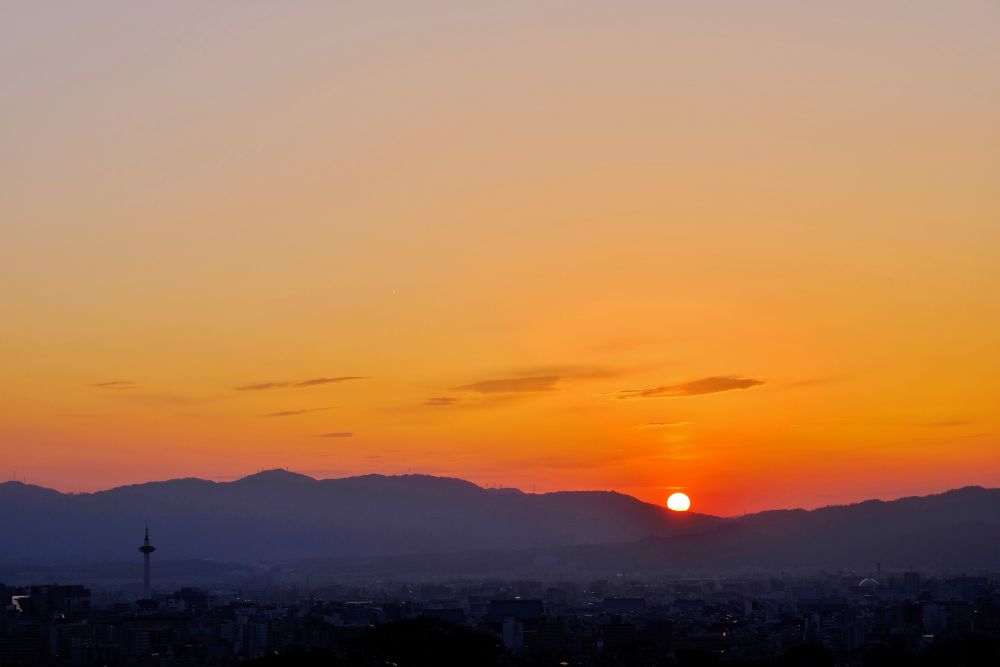
One Buddhist practice that follows from this is nissokan, sitting with the setting sun in the west and turning the mind toward itself.
The Pure Land is said to lie to the west, so you look quietly at the western sun, face your own mind, and hold it at peace by picturing that land.
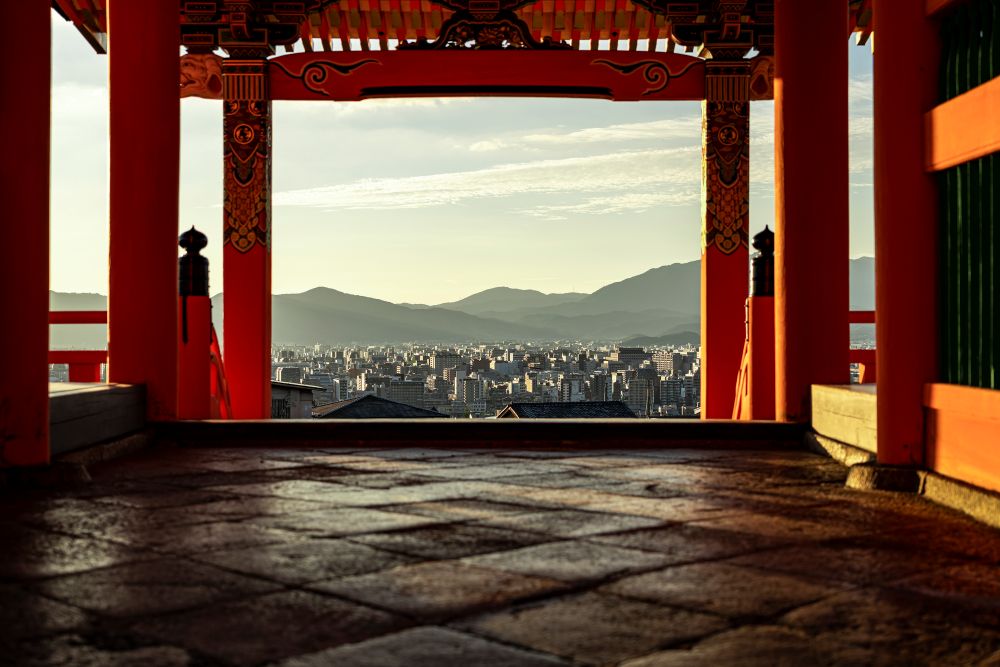
The West Gate at the entrance to Kiyomizu-dera is the right place for this practice.
Stand at the West Gate as the sun goes down and look out at the evening light. It is a quiet way to end a visit.
Events: Reasons to Visit Outside Cherry Blossom and Autumn Leaf Season
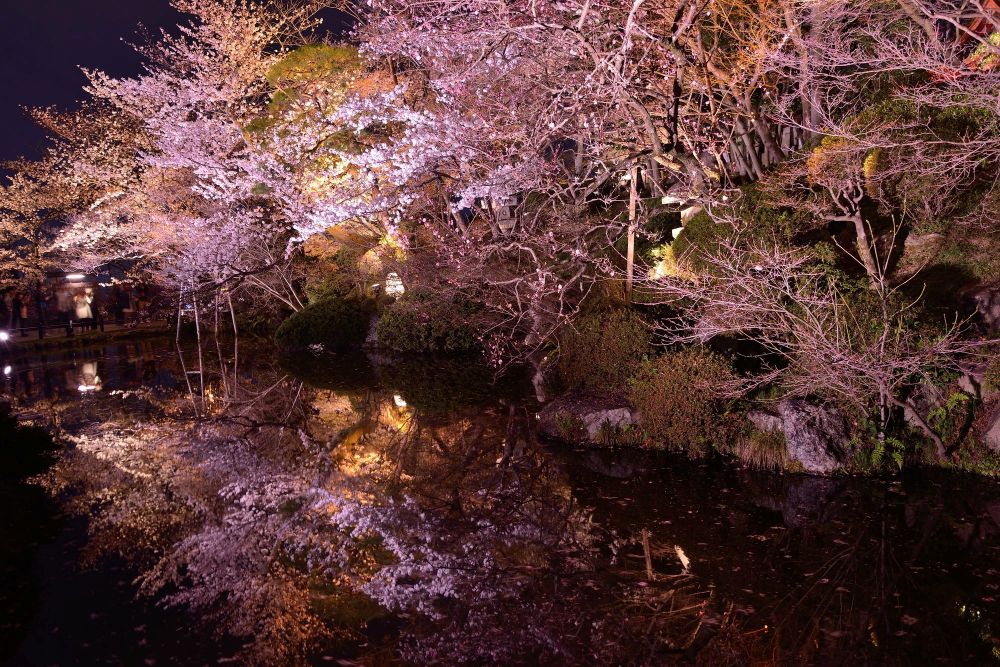
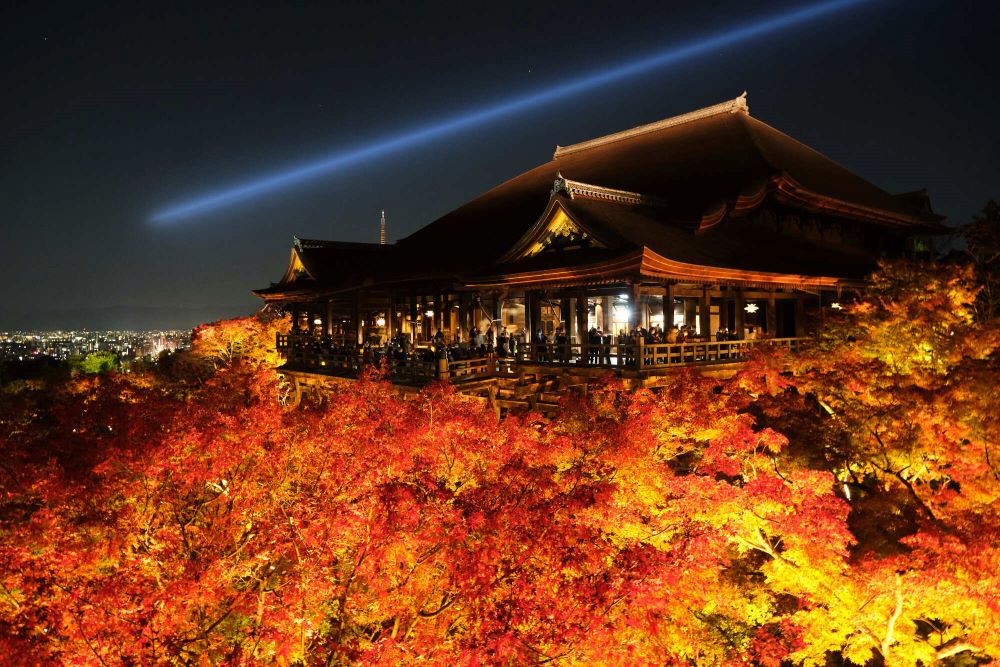
Kiyomizu-dera is also known for cherry blossoms and autumn leaves.
The temple is lit up when the cherry blossoms are at their best, from late March to early April, and again for the autumn colors from mid-November to early December, with special evening openings during those periods.
The blossoms and autumn leaves stand out against the dark around the gates and halls, and the main hall and three-storied pagoda are worth seeing lit from a distance as well.
Events are held at the temple throughout the year.
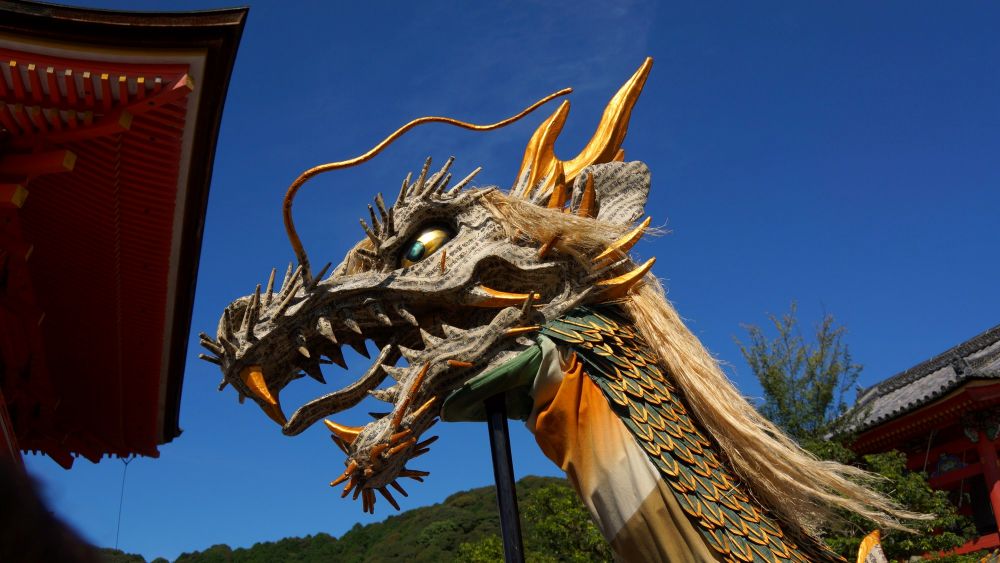
Among them, the Seiryu-e is the most striking. It takes place three times a year.
An 18-meter blue dragon moves through the temple grounds and the streets below, followed by attendants in traditional dress, in a prayer for the protection of the area and for warding off misfortune. The dragon’s scales are made from about 8,000 sheets of washi paper.
| Event | Dates | Hours | Details |
| Special evening opening | Spring: Mar 25–Apr 3 Summer: Aug 14–16 Autumn: Nov 22–Dec 7 | Until 9:30 p.m. (last entry 9:00 p.m.) | Illuminated; no reservation needed |
| Seiryu-e (Blue Dragon Festival) | Mar 15, Apr 3, Oct 15 | 2:00–3:30 p.m. | An 18-meter blue dragon moves through the grounds and the streets nearby |
| Sennichi-mairi (Thousand-Day Pilgrimage) | Aug 9–16 | 9:00 a.m.–5:00 p.m. Evening visits are possible Aug 14–16 (last entry 9:00 p.m.) | A single visit is said to carry the merit of a thousand; the inner sanctuary of the main hall is opened |
| Special opening of the Joju-in garden | Nov 22–Dec 7 | 9:00 a.m.–4:00 p.m. and 6:00–8:30 p.m. | The celebrated garden known as the Moon Garden is opened; no reservation needed |
| Nehan-e (Nirvana Ceremony) | Feb 15 | — | The large painting of the Buddha entering nirvana, normally not on view, is shown to the public |
Full event details are on the temple’s official website.
Allow one to two hours for a visit. Adjust your timing if you want to see a particular event.

Getting to Kiyomizu-dera
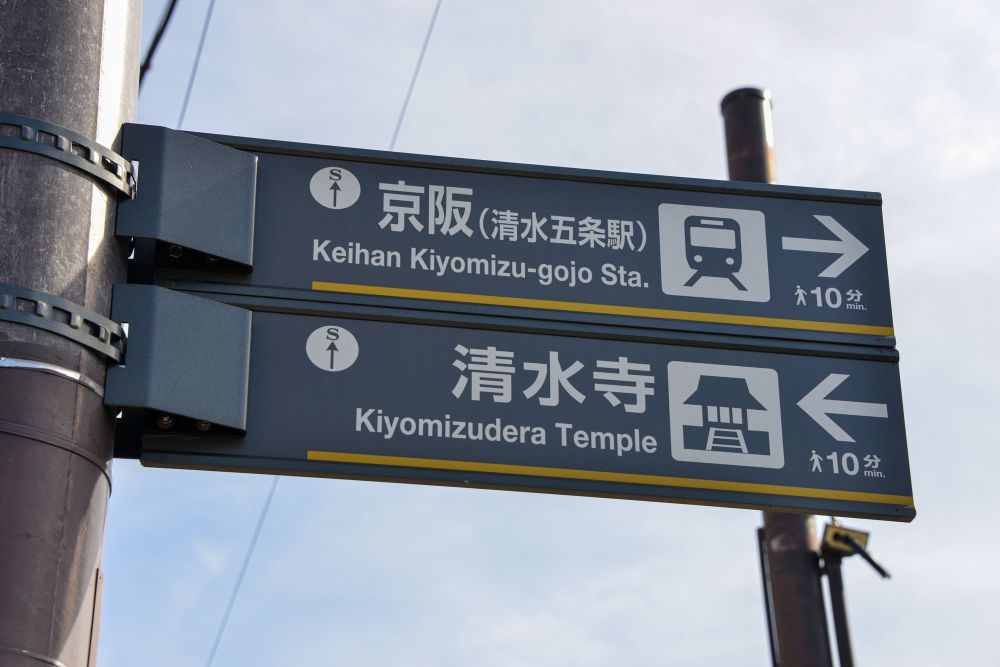
From JR Kyoto Station, take city bus 206 bound for Higashiyama-dori Kitaoji Bus Terminal, or city bus 100 bound for Kiyomizu-dera, Gion and Ginkaku-ji, and get off at Gojo-zaka. The temple is a 10-minute walk from there.
Coming from Nishiki Market and that area, take city bus 207 from Kyoto-Kawaramachi Station bound for Tofuku-ji and Kujo Shako, and get off at Kiyomizu-michi. The temple is a 10-minute walk away.
Either route takes you up Kiyomizu-zaka and Sannen-zaka, so you can shop or stop to eat along the way.
| Kiyomizu-dera Address: 294 Kiyomizu 1-chome, Higashiyama-ku, Kyoto, Kyoto Prefecture Phone: 075-551-1234 Hours: 6:00 a.m.–6:00 p.m. (see the official website for special evening openings) Official website: https://www.kiyomizudera.or.jp/ |

Sights Nearby
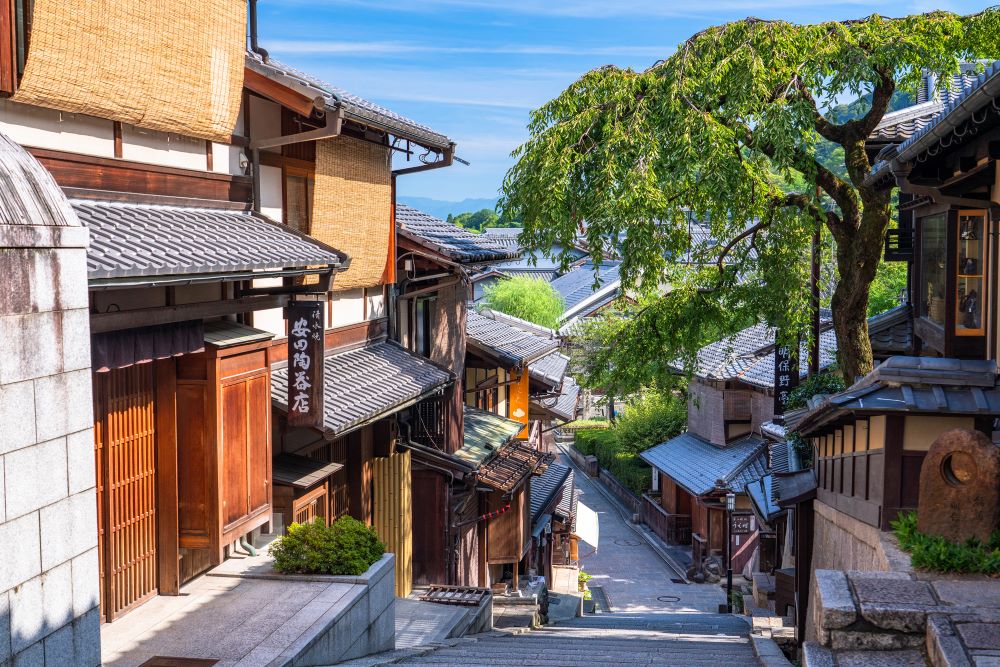
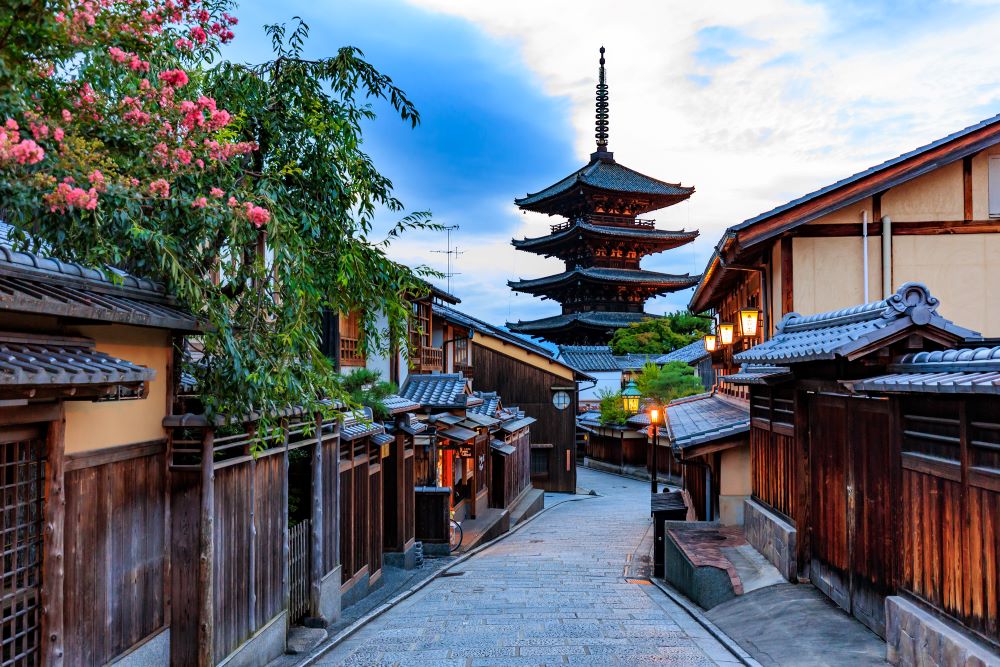
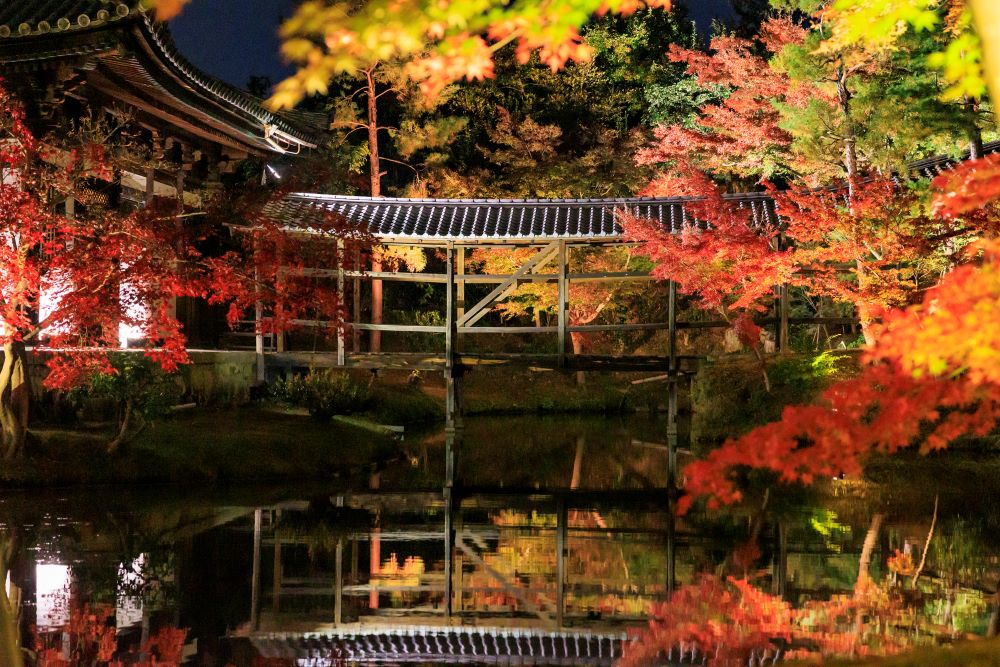
In the mid-1600s the approach from Gojo Bridge up to Kiyomizu-zaka was busy with teahouses where pilgrims rested, and with people who had come to see the cherry blossoms in the grounds and the view from the stage.
Even in the uncertainty of the late Warring States period, the temple was a place people came to for pleasure as much as for prayer.
Crowds gathering for the view, then eating and shopping on the streets below, is a pattern that has not changed in four centuries.
Ichinen-zaka, Ninen-zaka and Sannen-zaka
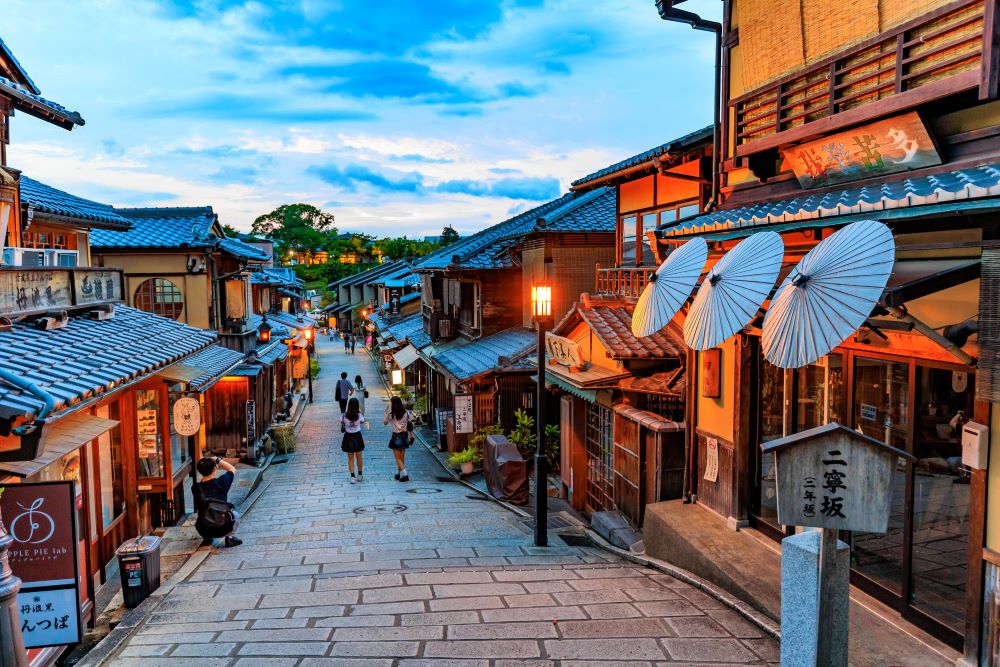
Several sloping streets run below Kiyomizu-dera, and three of them — Ichinen-zaka, Ninen-zaka and Sannen-zaka — are lined with restaurants and souvenir shops.
Each of these streets has its own history and the stories that go with it.
Ichinen-zaka
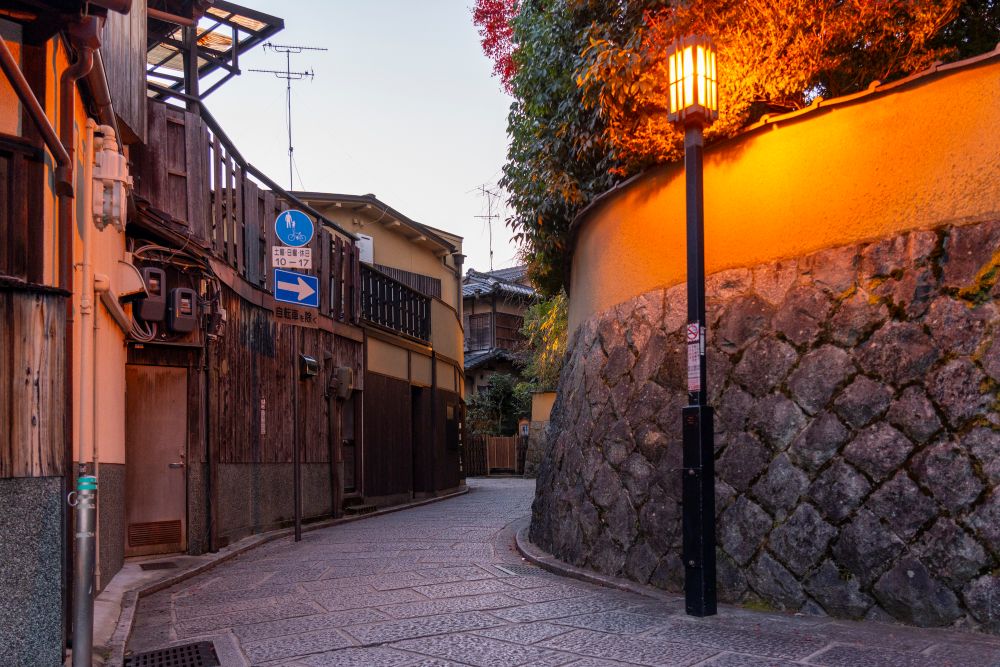
Ichinen-zaka is the lane that leads from Nene-no-Michi, the path toward Yasaka Shrine and Kodai-ji, out in the direction of Kiyomizu-dera.
It was laid out comparatively recently, in 1992, and is also written Ichinen-zaka with the character for prayer, in the sense of praying for the blessings of Kiyomizu-dera.
Ninen-zaka
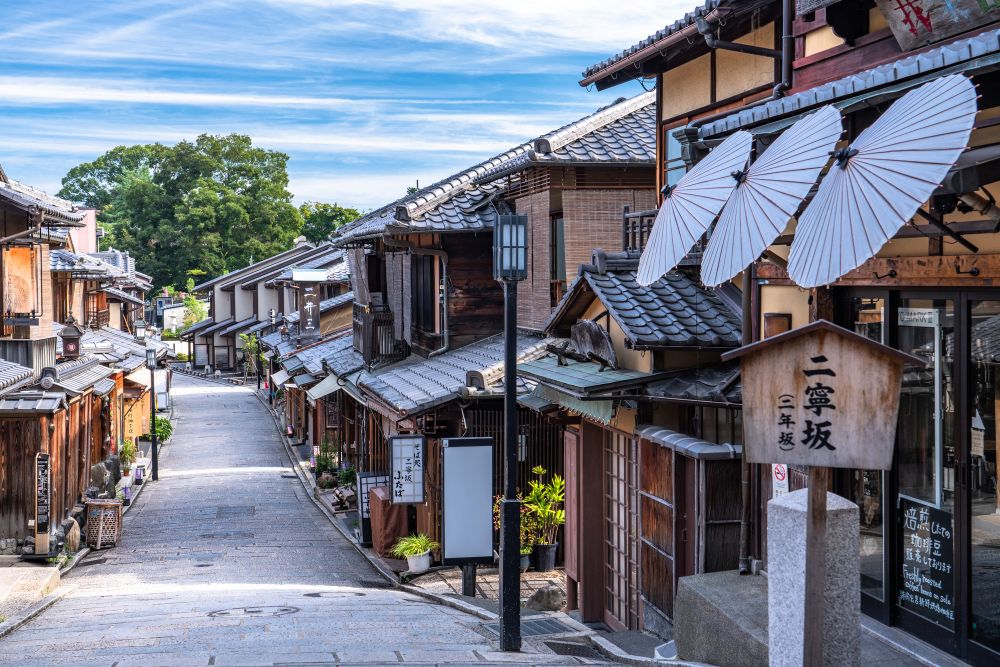
Ninen-zaka connects Ichinen-zaka to Sannen-zaka.
The name is usually explained by its position just before Sannen-zaka.
Stone paving and sukiya-style machiya townhouses with mushiko-mado windows give the street much of the character Kyoto had in the Taisho era.
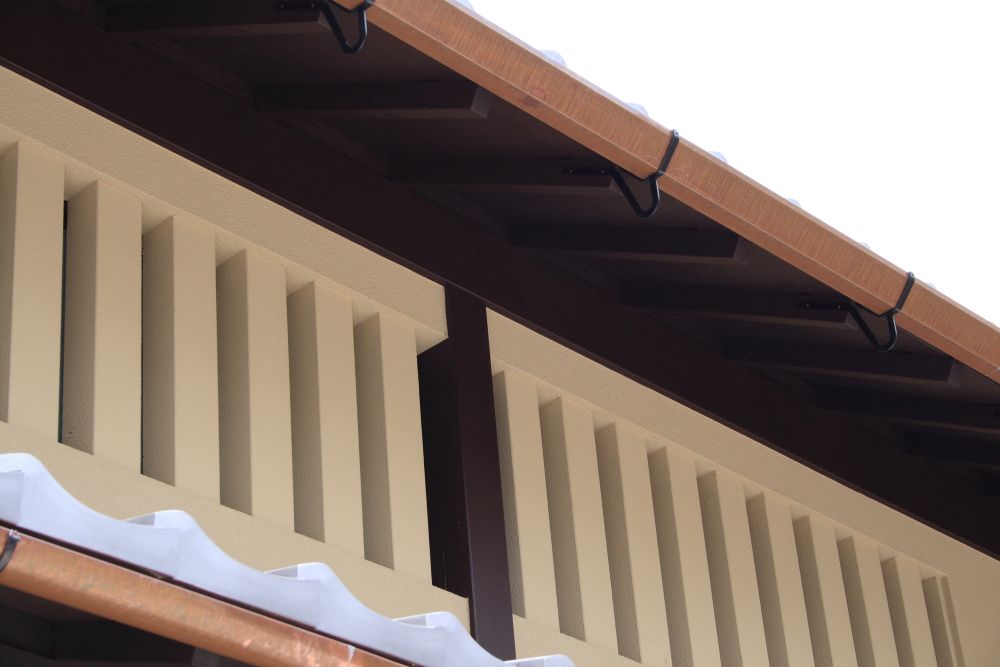
Mushiko-mado are the windows on the second floor. The lattice fitted across them controls the airflow and the light, and the look of it gives the window its name, which means insect-cage window.
Sukiya style strictly refers to buildings with a tea room for the tea ceremony and flower arrangement, but it also describes Japanese architecture that uses natural materials such as earthen walls and bamboo.
Ninen-zaka is also known for the site of the house where Takehisa Yumeji, one of the representative painters of the Taisho era, lived with Hikono.
Takehisa Yumeji, an early figure in Japanese illustration
Takehisa Yumeji painted the distinctive, lyrical portraits of women associated with Taisho romanticism. He also designed magazine covers, advertisements, letter paper, fans and yukata, which makes him an early figure in what is now illustration and graphic design.
Taisho romanticism refers to the mix of Western and Japanese culture in that period, and it carries a nostalgic quality for Japanese readers.
That blend of Japanese and Western elements is a large part of why his work is still valued today.
Sannen-zaka
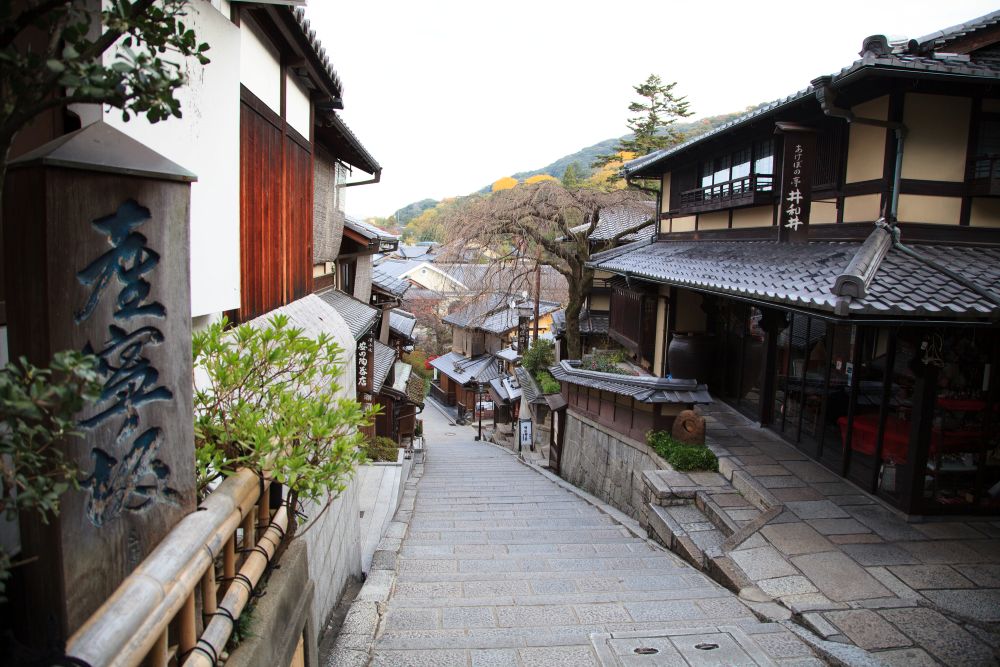
Sannen-zaka begins where Ninen-zaka meets the street coming from Yasaka Pagoda. The sukiya-style machiya and tiled roofs along it have earned the area designation as an Important Preservation District for Groups of Traditional Buildings.
Taisan-ji, a sub-temple of Kiyomizu-dera, has the Koyasu Pagoda, where people pray for a safe birth. Because of that connection, the street is also written Sannei-zaka, with characters meaning a safe and easy delivery, and visiting Kiyomizu-dera by way of this street is said to bring the same blessing.
There is also a darker piece of folklore: that anyone who falls on Sannen-zaka will die within three years, or lose three years of their life.
The street once led toward Toribeno, a burial ground, which is where the story comes from. It also carries a practical warning to watch your footing on a sloping street.
Another version holds that if you do fall and your soul leaves you, a gourd will restore it. That is why there is a gourd shop at the foot of Sannen-zaka.
If the story leaves you uneasy, you can buy a gourd there and carry it as a charm.
Shops to Visit on Ichinen-zaka, Ninen-zaka and Sannen-zaka
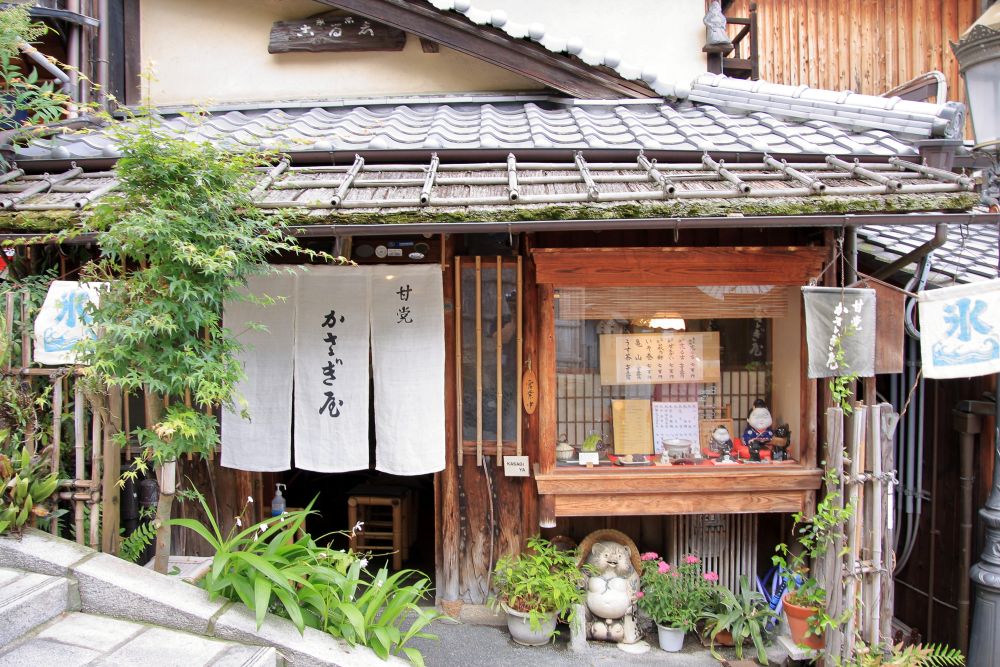
Kasagiya, a traditional sweet shop. The painter and poet Takehisa Yumeji was a regular here.
The interior has the feel of the Taisho era, and the sweets are built around the shop’s own red bean paste.
The menu has barely changed since the shop opened. The ohagi, made with a lightly sweetened bean paste, is the mainstay, and the kori uji kintoki shaved ice with matcha syrup is also worth ordering.
▶ Kasagiya
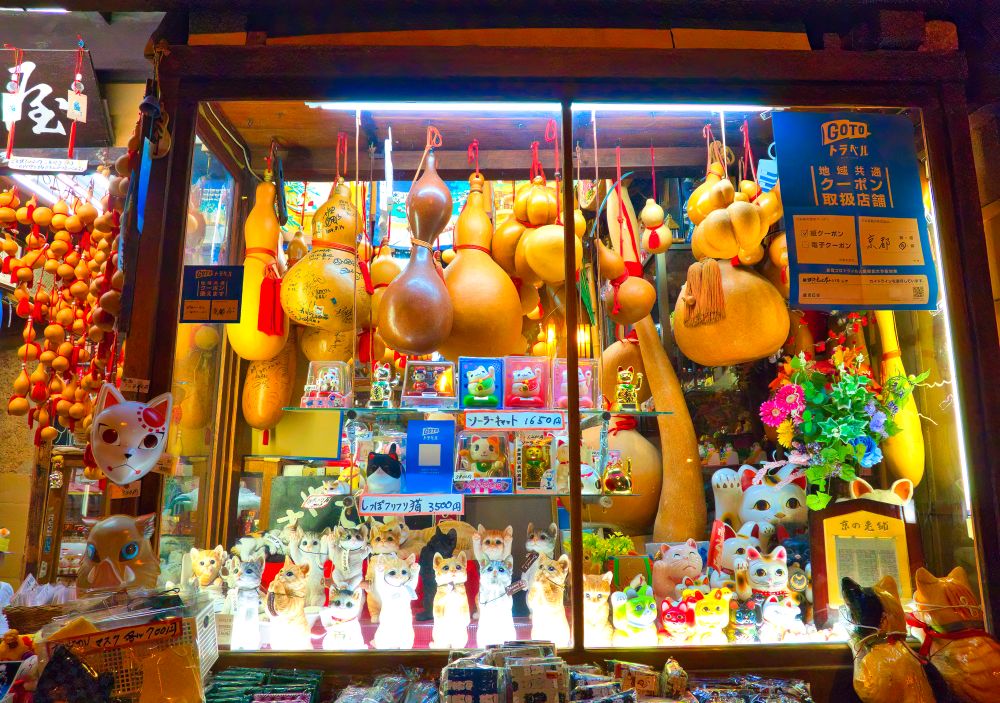
Hyotanya sells gourds in every size. Alongside them the shop stocks cat goods the owner likes. Some people come as much to talk with the owner as to buy anything.
▶ Hyotanya
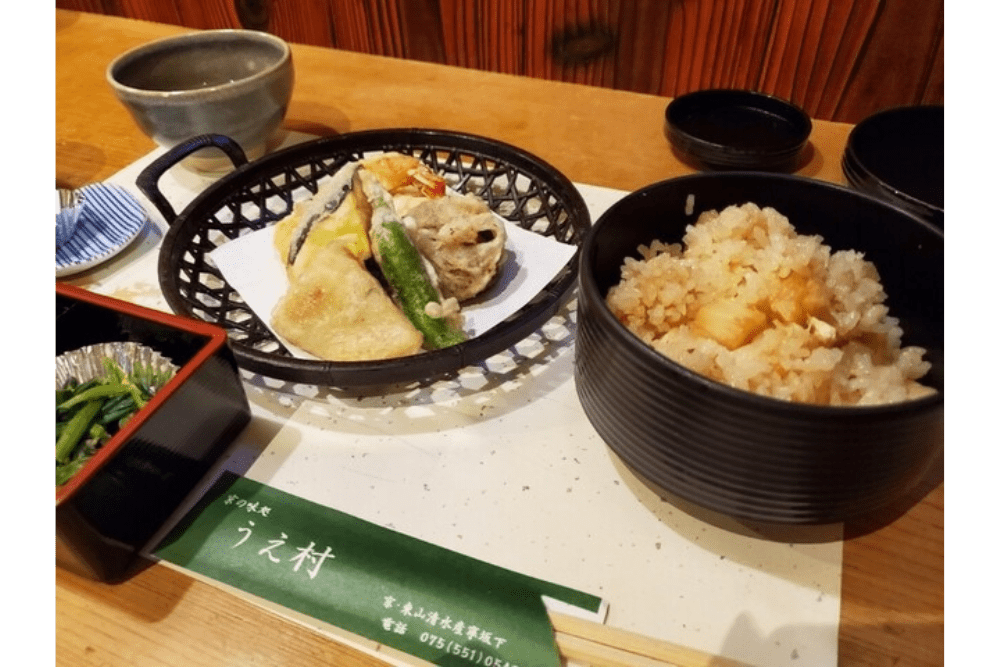
Kyo-no-Ajidokoro Uemura is a Japanese restaurant serving obanzai home-style dishes and tempura. The calm interior is a welcome break when the crowds outside get tiring. The cooking is gently seasoned to bring out the ingredients, and the vegetable tempura and scallop rice are good choices.
▶ Kyo-no-Ajidokoro Uemura Image source: https://tabelog.com/kyoto/A2601/A260201/26013756/