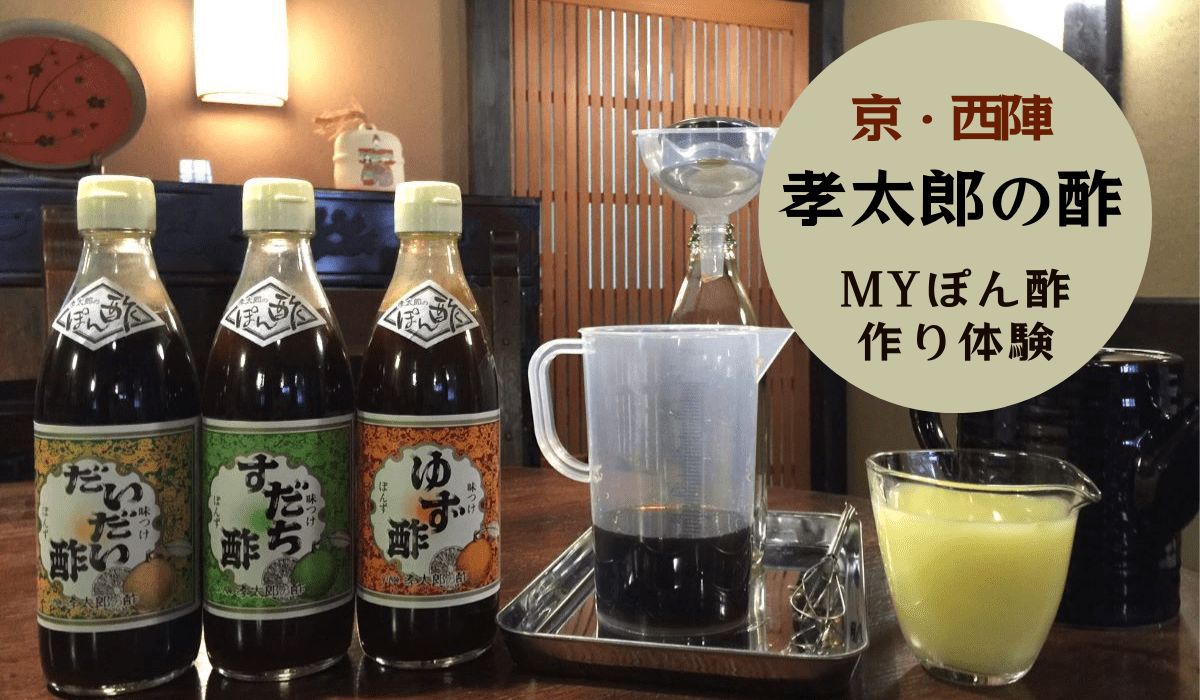
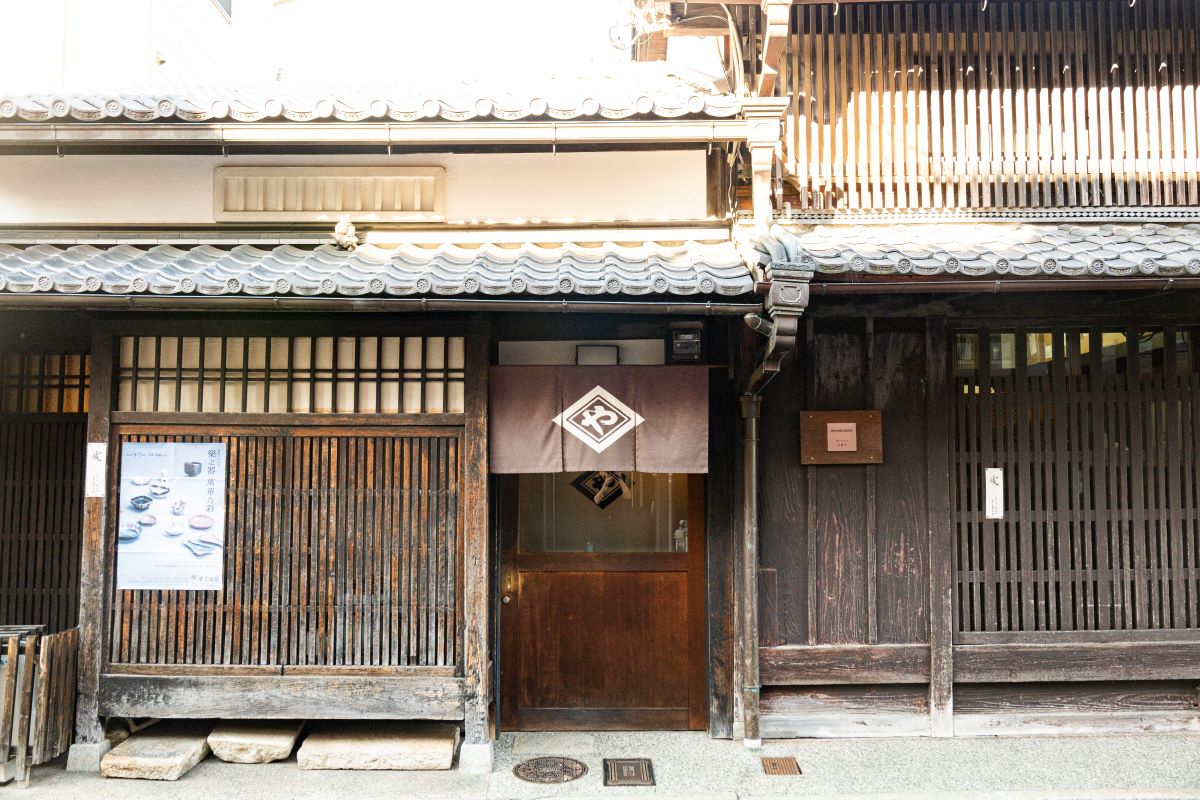
Among the machiya of Kyoto, with a Shoki figure glaring down from the tiled roof, stands Kyo-Nishijin Kotaro no Su.
For more than 180 years the shop has made vinegar and ponzu by the same methods, with no additives or chemical seasonings, and the cooks of Kyoto have long relied on it.
This article covers what makes Kotaro no Su worth a visit, the make-your-own ponzu session, and the restaurant where you can eat what you made.
It also touches on recipes that use vinegar and ponzu, and on the Shoki figures, so it is worth a read for anyone interested in the traditions of Kyoto.
What Kotaro no Su Is
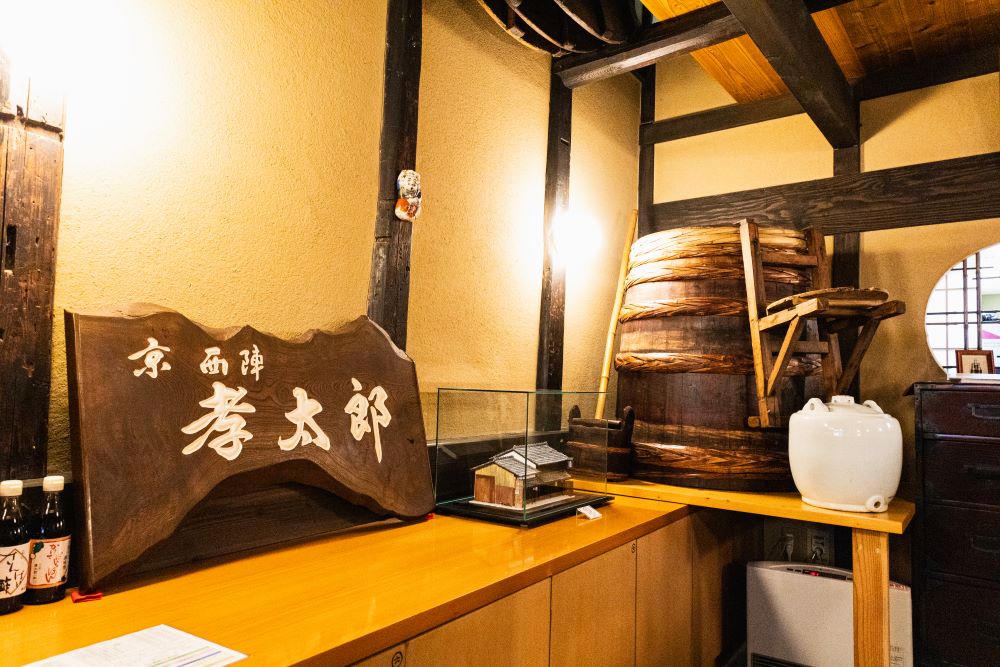
Vinegar is a supporting ingredient: it brings out the flavor of a dish, and it makes food that is good for you worth eating.
Kotaro no Su chooses its ingredients with that in mind and takes the time the process needs, with no additives or chemical seasonings.
Without preservatives the shelf life is short, though it is arguably stranger for food to keep for half a year without spoiling.
As the shop puts it, that is simply what food is. Its vinegar is a reminder of what ingredients are worth, and of the pleasure of tasting them as they are.
Supported by Kyoto cooks who know how to bring out the flavor of an ingredient, the quality and the taste are of the first order.
Vinegar, Ponzu and Drinking Vinegar
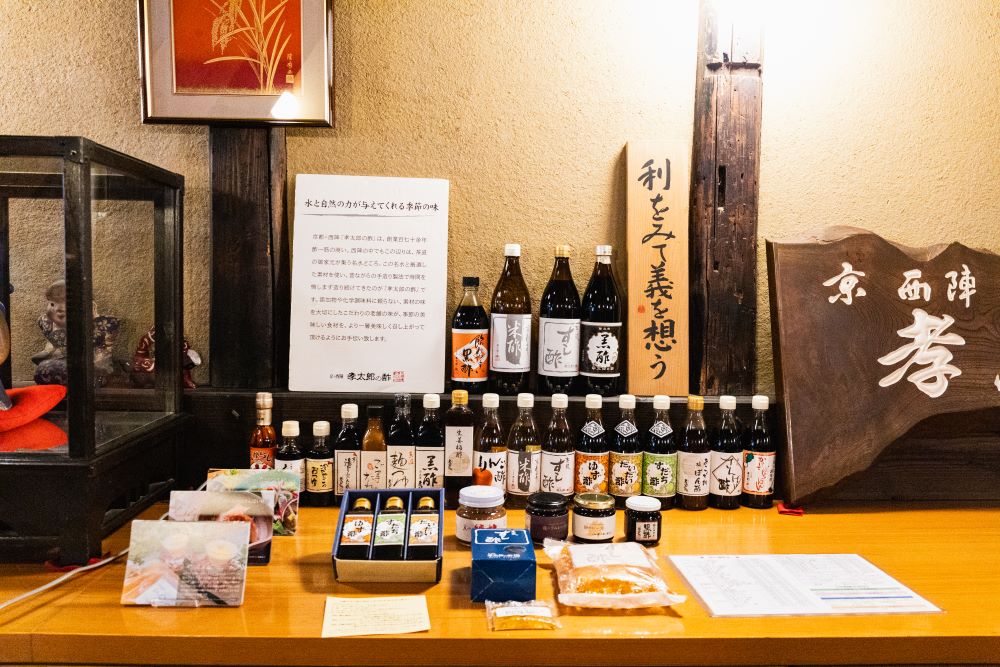
Along with the standard rice vinegar there are ponzu and a drinking vinegar range. Here is what each one is like and how to use it.
Vinegar
Kyo Amari Rice Vinegar is the one to start with. Made from Kyoto spring water and Japanese rice and slowly aged, it suits dishes built around the ingredients themselves.
The black vinegar uses barley and brown rice for a mild result, which works in dressings and simmered dishes.
The shop’s website has recipes using both. Chicken wings simmered in black vinegar is the easy one to copy.
If you find vinegar too sharp, try Kakete Pon Pon.
Dashi made from katsuo and kombu softens the acidity, and it goes with a wide range of dishes. Poured over boiled spinach, it makes a dish on its own.
Ponzu
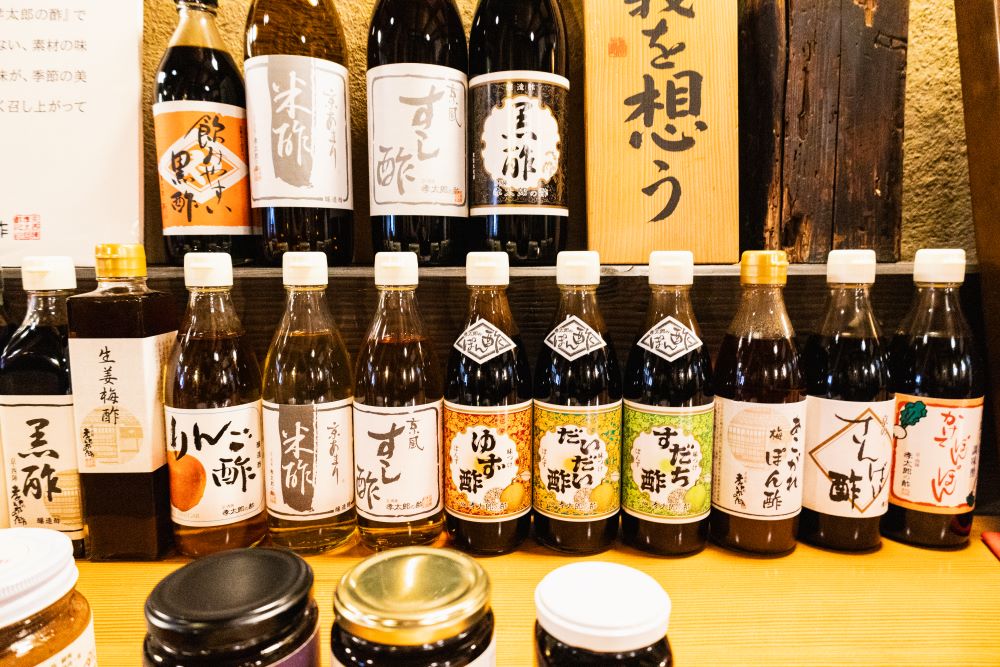
The ponzu range runs to yuzu, sudachi, daidai, plum and sesame.
The standard yuzu pairs fragrant yuzu juice with dashi drawn over a full night.
Try it with a hot pot first. As the shop’s phrase ponzu you can drink suggests, once the broth of the ingredients has soaked into it you will want to finish the bowl.
For something gentler, the daidai ponzu is the one.
It has the mildest taste and scent of the range and suits white fish such as cod and sea bream. A well-known pufferfish restaurant in Kyoto uses it.
If you cannot decide, there is a tasting set with all three of yuzu, sudachi and daidai.
Drinking Vinegar
The drinking vinegar range is popular with anyone who thinks about health and skin. Ginger-plum vinegar and the seasonal strawberry vinegar are the two to try.
Ginger-plum vinegar mixed with hot water warms you through in cold weather. Strawberry vinegar mixed with milk tastes close to strawberry yogurt, which works for children.
If supermarket drinking vinegars have put you off, these are easier to drink.
Blend Your Own Ponzu
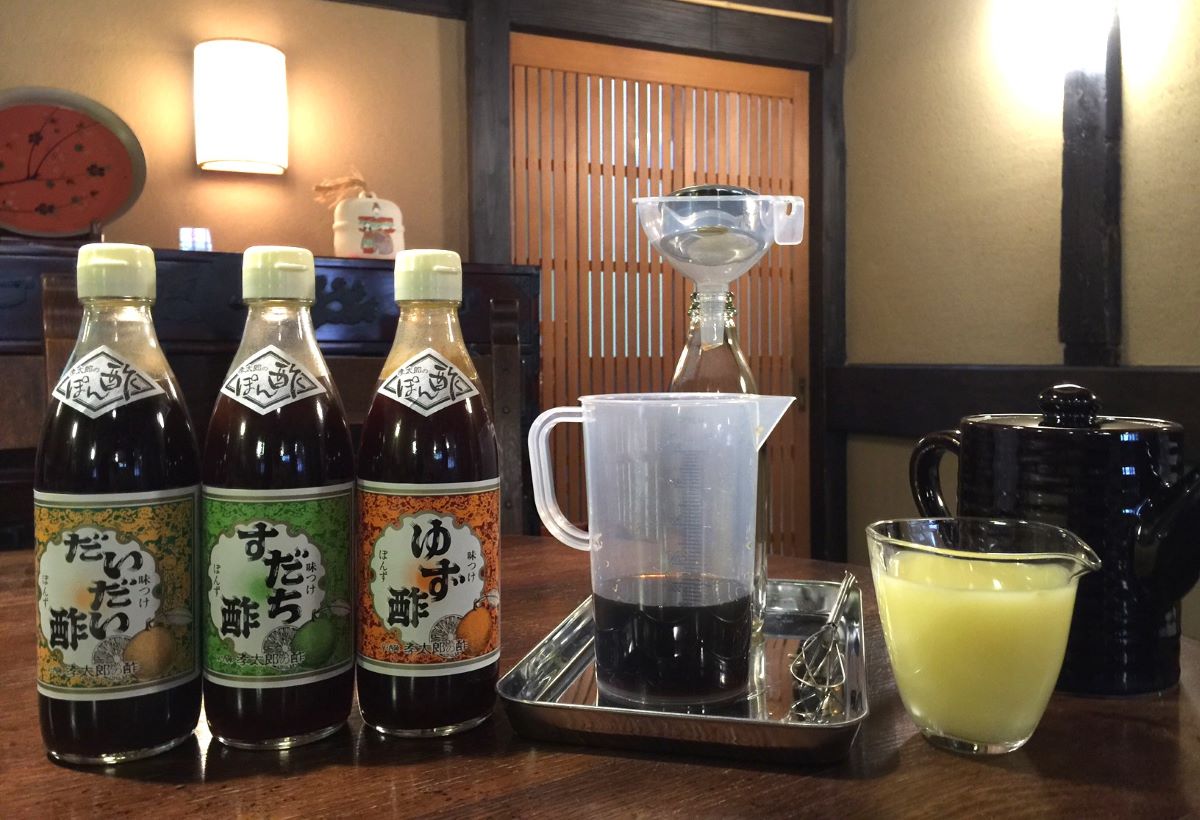
Have you ever wished a ponzu had more dashi in it, or more yuzu?
At Kotaro no Su you can blend the ratio of dashi to juice yourself, in the make-your-own ponzu session.
The owner has a first dashi ready when you arrive. You add fresh juice — yuzu, sudachi, daidai — until it tastes the way you want.
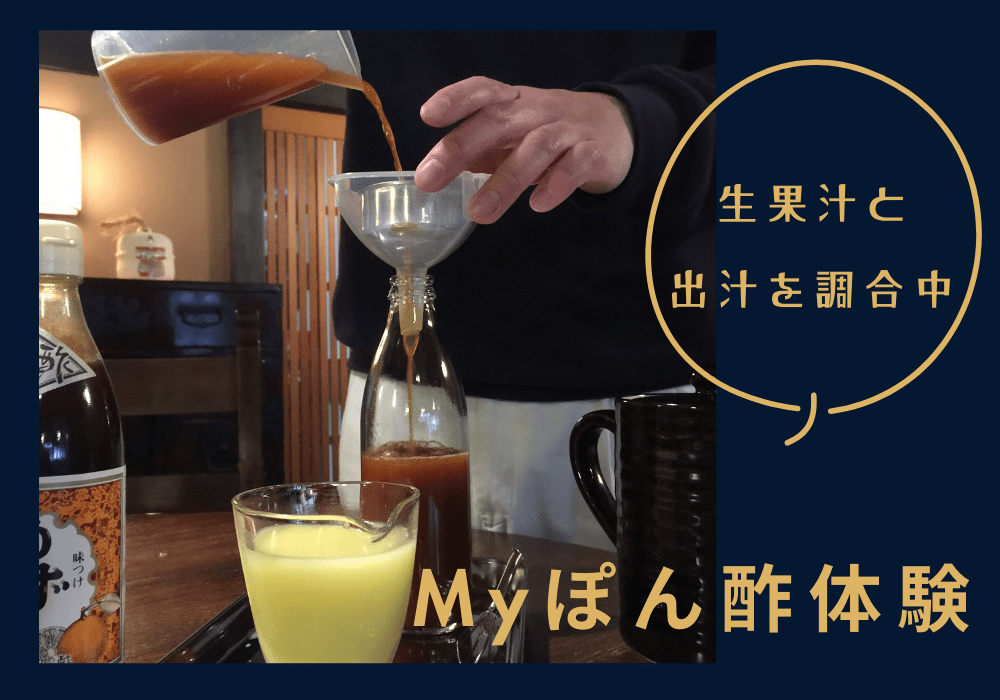
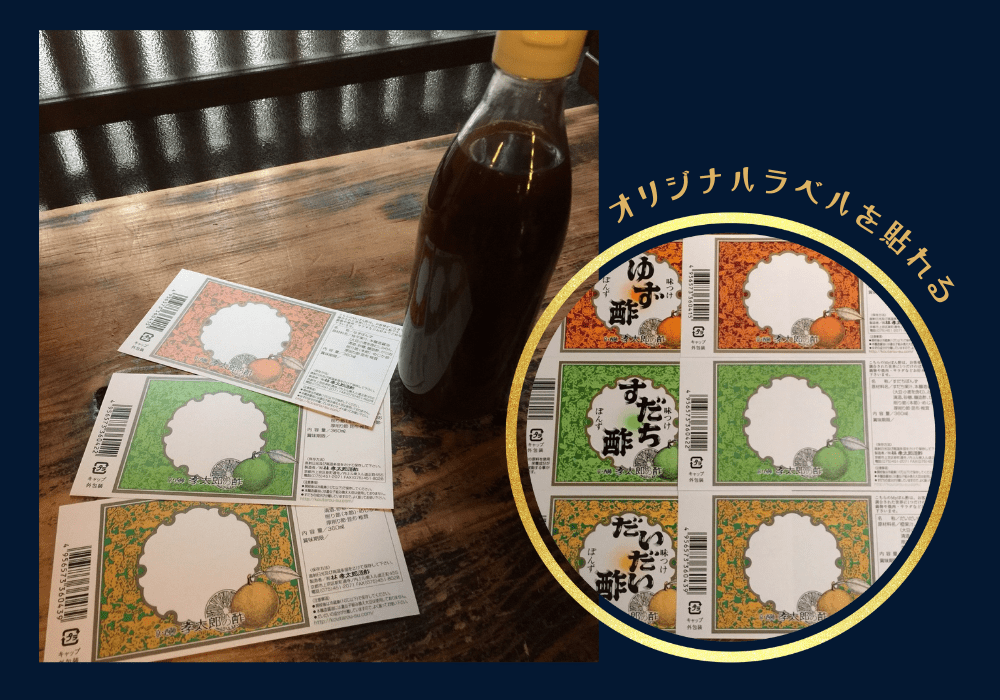
Taking the time to settle on a blend of your own is not something you can do in many places.
Once you have settled on your own taste, the shop keeps the recipe, and a phone order will have the same blend made up and sent.
It works as a souvenir and as a gift at midsummer or year-end. Ponzu alone decides the taste of a dish, so it is also welcome as a new-baby gift.
Kotaro no Su is sold in department stores and some supermarkets, but the blending session is only here.
It is worth doing for the setting as much as for the ponzu: an old machiya with an atmosphere of its own.
The session is by reservation only. The dashi has to be prepared in advance, so call at least three business days ahead.
Booking the make-your-own ponzu session
Phone: 075-451-2071
Price: one 360ml bottle, 1,620 yen (tax included)
Capacity: 1 to 5 people
Duration: about one hour
Times: 10:00 / 12:00 / 14:00 / 16:00
Closed: second and fourth Saturdays, Sundays and public holidays
Note: cancellations by the customer, and no-shows, are charged at 50% the day before and 100% on the day
Details: https://koutarou-su.com/files/pdf/myponzu190620.pdf
| Kotaro no Su Address: 455 Dosho-cho, Shinmachi-dori Teranouchi-agaru Higashi-iru, Kamigyo-ku, Kyoto TEL:075-451-2071 Hours: 9:00–17:00 Closed: second and fourth Saturdays, Sundays and public holidays Website: https://koutarou-su.com/ |
Eat It Straight Away at Shungyo Shokusai Nonki
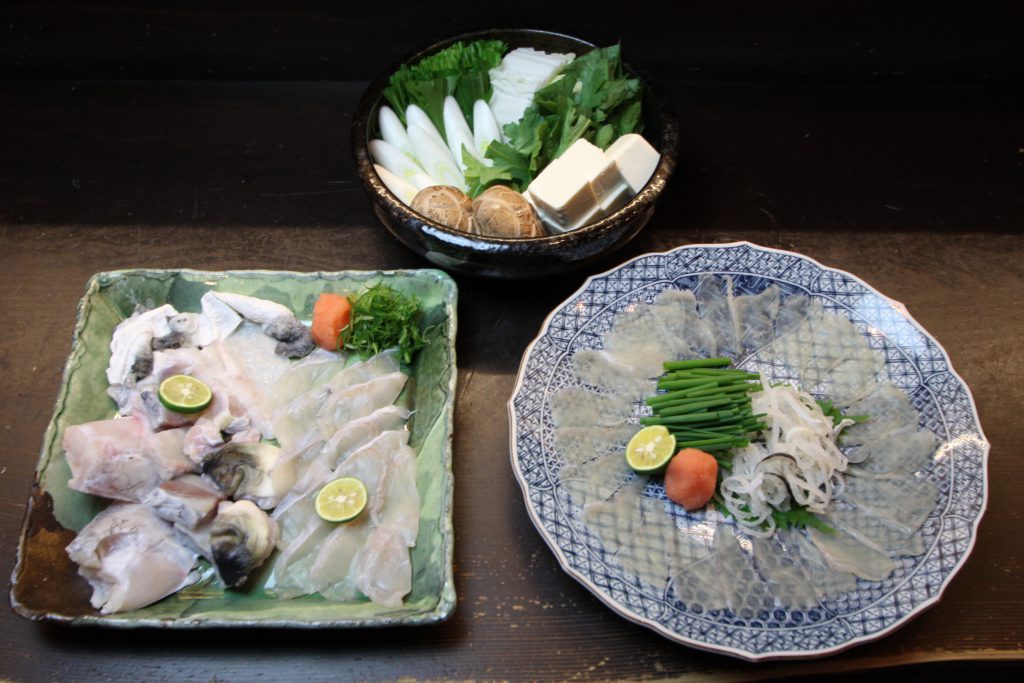
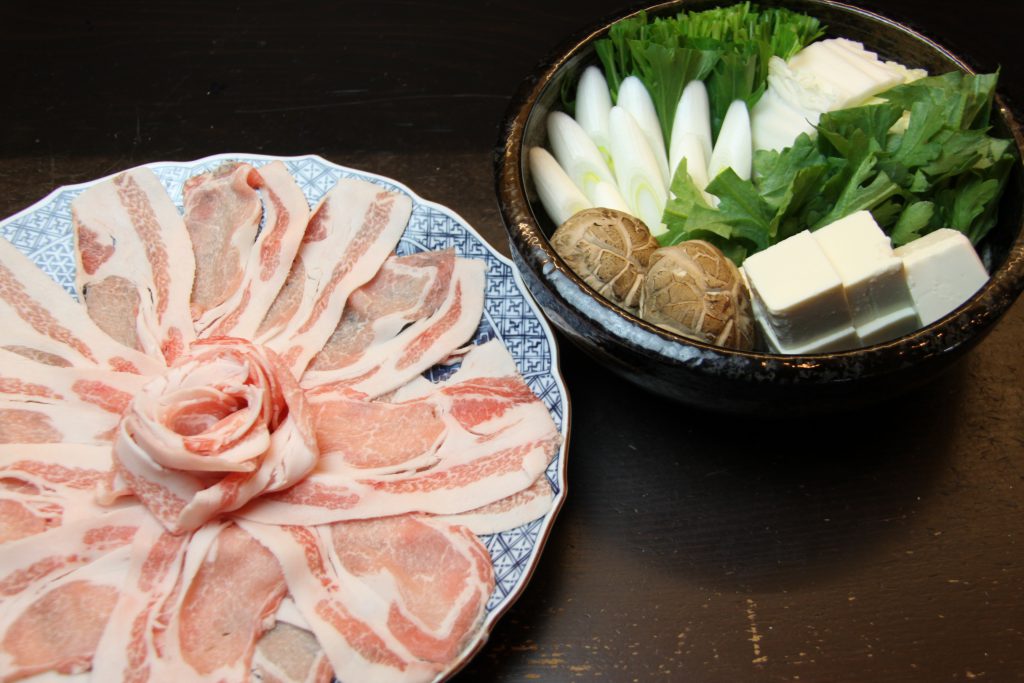
If you want to eat what you made straight away, book the hot pot set and you can have it at Shungyo Shokusai Nonki, the partner restaurant.
The hot pots at Nonki run to pork shabu, with pufferfish, sea bream and hamo in season.
There are other dishes too, such as karaage, which takes a generous pour of ponzu and some condiments.
The hot pot set is only for those who take the make-your-own ponzu session at 4 p.m.
You take home both the small 100ml bottle used for the hot pot and a regular 360ml bottle.
At 1,728 yen including tax, with the session and two bottles, it is good value. Nonki is easy to walk into alone, so the session works for solo travelers too.
Book through Kotaro no Su, not through Nonki.
Make-your-own ponzu with the hot pot course
Phone: 075-451-2071 (Kotaro no Su)
Price: two bottles (100ml + 360ml), 2,052 yen (tax included)
The hot pot is charged separately.
· Pufferfish set (November to the end of February): 6,050 yen
· Sea bream shabu set (March to the end of May): 4,400 yen
· Hamo shabu set (May to the end of October): 5,500 yen
· Pork shabu (year-round): 4,400 yen
(each includes one drink)
Session time: 16:00
Closed: second and fourth Saturdays, Sundays and public holidays
Note: cancellations by the customer, and no-shows, are charged at 50% the day before and 100% on the day
Details: https://koutarou-su.com/files/pdf/myponzu-nabe200305.pdf
| Shungyo Shokusai Nonki Address: 92 Shimoseizoguchi-cho, Shinmachi-dori Kamigoryo Nishi-iru, Kamigyo-ku, Kyoto TEL:075-432-5830 Hours: 17:00–23:00 (last order 22:30) Closed: Sundays (open on public holidays) Website: https://koutarou-su.com/ |
The Machiya and Its History
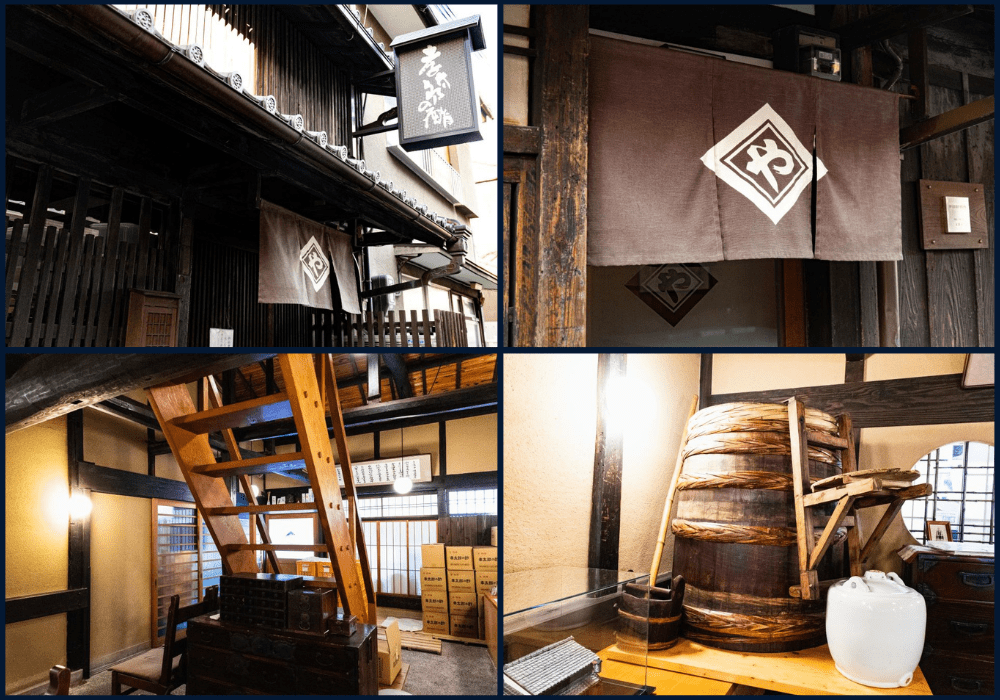
For 180 years Kotaro no Su has been part of the taste of Kyoto.
The building carries the traditions of the city as much as the vinegar does.
The Shoki figure on the roof is a guardian placed there to ward off misfortune, and worth looking up for.
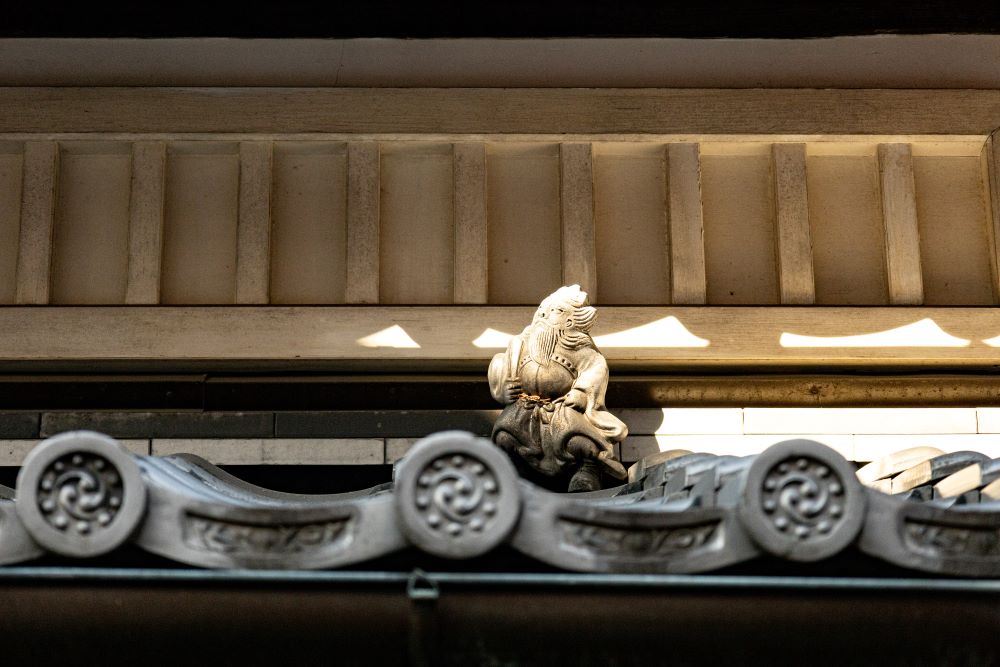
Shoki is a bearded deity said to be stronger than demons, who came to Japan from Tang China.
In Kyoto the custom of setting Shoki on the roof tiles took hold after a wife who had fallen ill is said to have recovered thanks to him.
Look around and you will see Shoki figures turned slightly away, so that neighbors do not glare at each other, and machiya that answer with an Otafuku face instead.
There is something of Kyoto in that consideration for the neighbors.
Take a look at the Shoki on Kotaro no Su and on the houses around it.