Amanohashidate in Kyoto is home to a variety of spiritual “power spots” believed to bring good fortune in love, academic success, business prosperity, and more. Steeped in dragon legends, this lesser-known destination is believed to bring good fortune simply by being there..
While Amanohashidate is famous for attractions such as Kasamatsu Park and Amanohashidate View Land, its sacred shrines and temples are also not to be missed.
Here, we introduce five must-visit shrines and temples in the Amanohashidate area — each known for blessings in love, studies, health, and other wishes. Visit the spots that match your personal hopes and prayers, and experience the spiritual energy of this enchanting place.

If you wish for success in love, prosperous business, and good fortune with protection from misfortune, visit the three sacred shrines of Amanohashidate.
“The Amanohashidate Sansha Mairi” refers to visiting three important shrines in the Amanohashidate area: Amanohashidate Shrine, Motoise Kono Shrine, and Manai Shrine.
It is said that visiting the shrines in the order of Amanohashidate Shrine → Motoise Kono Shrine → Manai Shrine will enhance the blessings you receive. If you have a particular wish you hope to fulfill, it’s recommended to follow this order when making your pilgrimage.
【Amanohashidate Shrine】Receive blessings for success in love
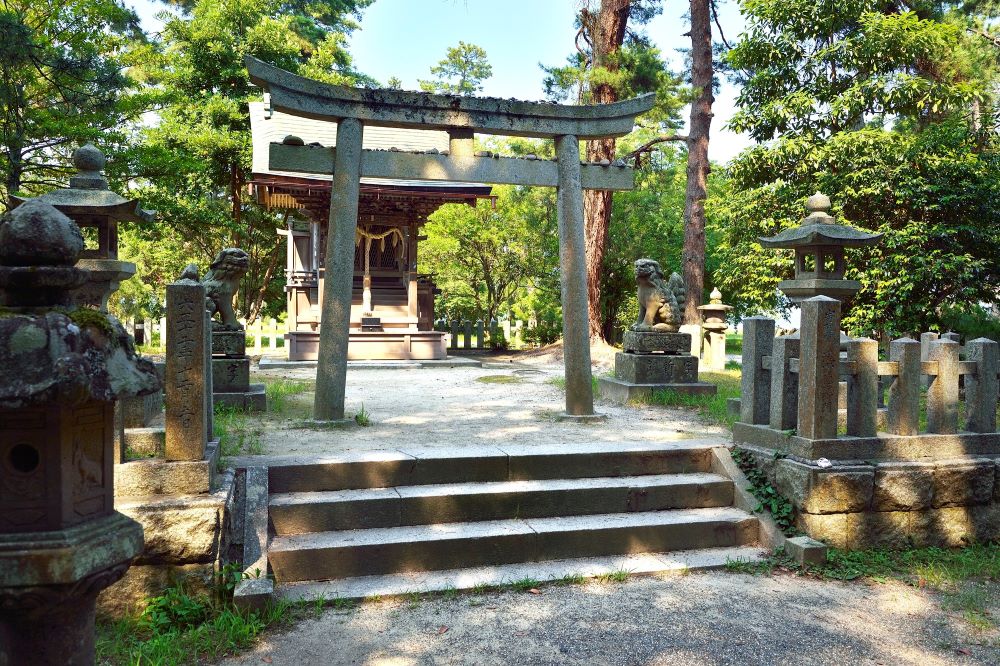
About a 15-minute walk along the pine-tree-lined path of Amanohashidate lies Amanohashidate Shrine.
This shrine serves as the guardian of Chion-ji Temple, which will be introduced later.Its enshrined deities are Toyouke Ōmikami, Ōkawa Daimyōjin, and the Hachidai Ryūō (Eight Great Dragon Kings)—the same deities worshipped at Chion-ji.
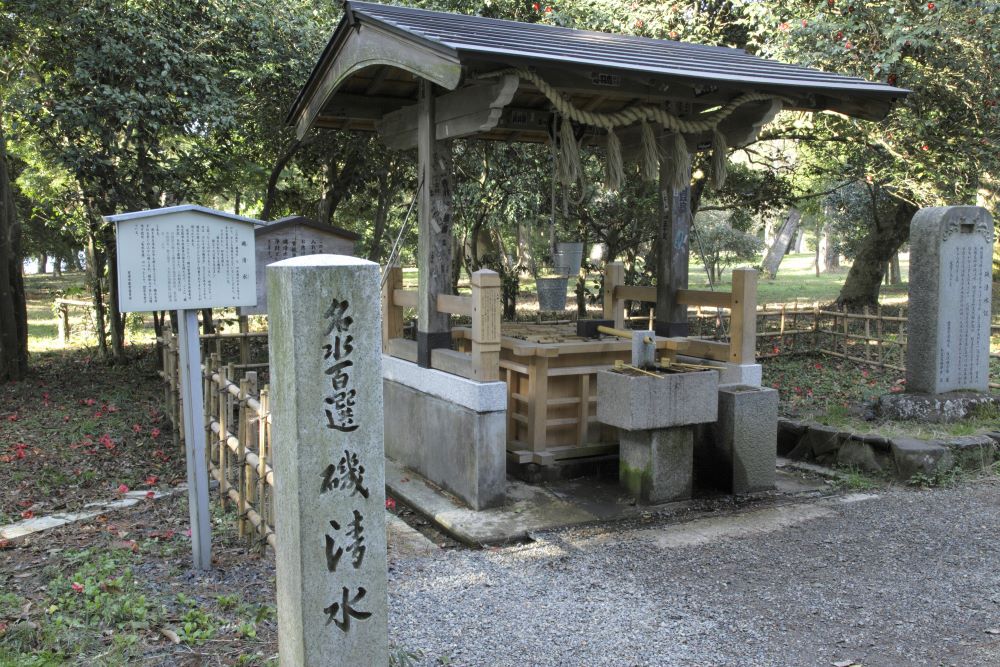
Located beside the main shrine, Iso no Shimizu, one of Japan’s “Top 100 Famous Waters,” is a mysterious spring known for producing fresh water despite being surrounded by the sea.
The pure and powerful nature of this water, which remains unmixed with seawater, is revered as a symbol of regaining one’s innate strength and purity. As the water is not for drinking, visitors are encouraged to use it for purification at the temizuya (water basin) when visiting the shrine.
In addition, Amanohashidate is said to have served as a heavenly bridge connecting the male deity Izanagi-no-Mikoto and the female deity Izanami-no-Mikoto. Because of this legend, Amanohashidate Shrine is also a popular power spot for romantic fulfillment and love blessings.
| Amanohashidate Shrine Address: 643-1 Monju, Miyazu City, Kyoto Prefecture TEL: 0772-22-8030 (Amanohashidate Station Tourist Information Center) Opening Hours: Open for worship at any time Website: https://www.amanohashidate.jp/spot/ |
Motoise Kono Shrine — The predecessor of the Ise Grand Shrine and the most important shrine of the ancient Tango Province.
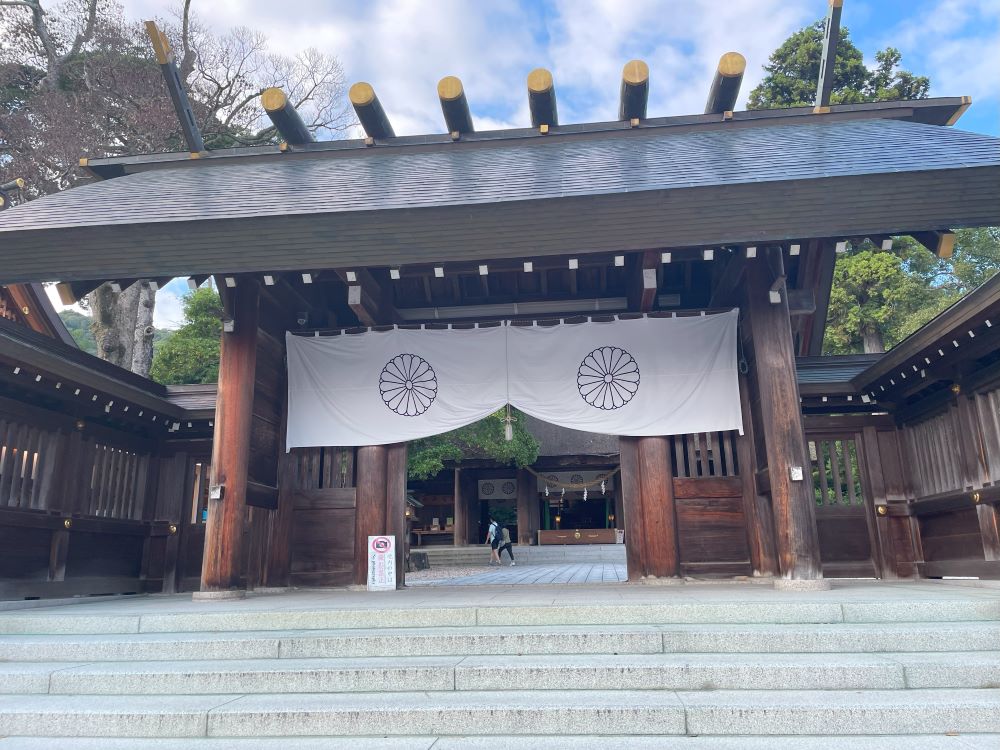
Motoise Kono Shrine is considered the predecessor of Ise Grand Shrine in Mie Prefecture. It is affectionately known as “the birthplace of Ise” or “Moto-Ise” (the Original Ise).
“The Ancestral Home of Ise Grand Shrine” — Kono Shrine
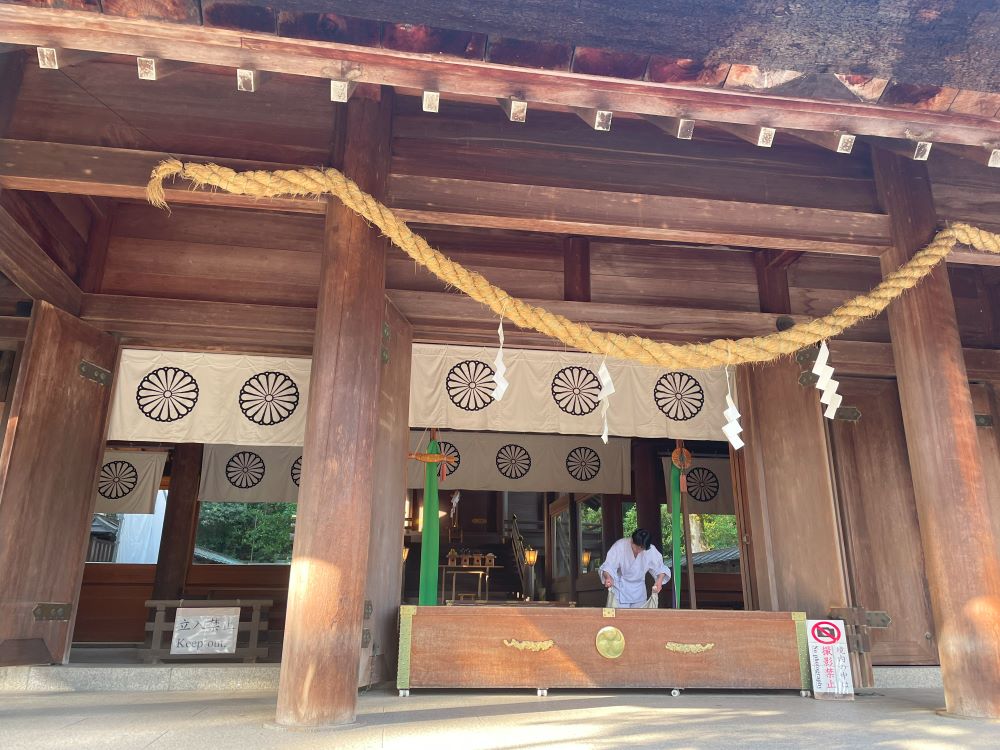
The official name of Motoise Kono Shrine is Kono Shrine (Kono Jinja). Due to its exceptionally high status, it is also referred to as “Tango Province’s Ichinomiya”, meaning the highest-ranking shrine in the region.
The main deity enshrined is Hikohoakari no Mikoto, and the associated deities are Toyouke Ōmikami, Amaterasu Ōmikami, Watatsumi (the sea god), and Amanomizunomemochi no Kami.
In front of the worship hall at Kono Shrine stands the “Sixteen-Petal Chrysanthemum Crest,” the imperial emblem that represents the Emperor and the Imperial Family.
The main sanctuary of Kono Shrine is built in the Shinmei-zukuri (a traditional Shinto architectural style) architectural style, identical to that of Ise Grand Shrine. Additionally, the five-colored “sutama” beads adorning the railings of the main sanctuary are found only at Ise Grand Shrine and Kono Shrine.
These distinctive features clearly show just how noble and prestigious Kono Shrine was, standing alongside Ise Grand Shrine in its sacred status.
Pay attention to the right front paw of the guardian dog statue in front of the shrine.
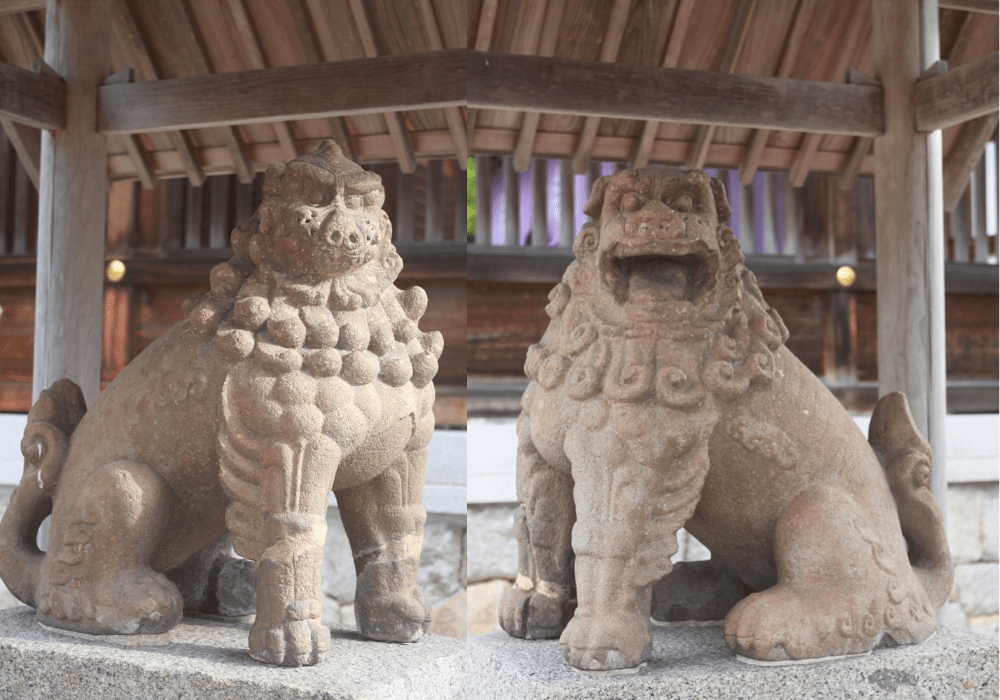
In front of Kono Shrine stands a pair of komainu (guardian lion-dogs) that have been designated as Important Cultural Properties.
According to legend, long ago the spirit of the sculptor who created the statues came to dwell within one of the komainu. It began rampaging around Amanohashidate, startling passersby. The famous swordsman Iwami Jūtarō lay in wait and struck the creature’s leg with his powerful blade. The komainu finally yielded and returned to the shrine, where it came to be revered as a talisman against evil.
When you visit, be sure to take a close look at the statue’s leg to see the scar said to be from that legendary strike.
Get a limited-edition amulet
If you walk further back into Kono Shrine, you will find the Inner Shrine “Manai Shrine”, which will be introduced later.
After paying your respects at Manai Shrine, be sure to stop by the shrine office of Kono Shrine to pick up a special amulet.
Among the items available are the “Michimori” (Guiding Amulet), which carries the wish for things to move in a positive direction, and the “Tengan-mamori” (Heaven Wish Amulet), illustrated with the spring scenery of Amanohashidate and imbued with prayers for your wishes to reach the heavens.
In addition, there are some particularly rare amulets that are only available to those who visit Manai Shrine. These include the Shinriki-mamori (Divine Power Amulet) and the Omomo-mamori, both of which are difficult to obtain.
They are sold only twice a month on weekends and public holidays, and cannot be purchased online. If your visit happens to coincide with these special dates, it’s well worth stopping by to get one.
| Motoise Kono Shrine Address: 430 Ōgaki, Miyazu City, Kyoto Prefecture TEL: 0772-27-0006 Opening Hours: 7:30 AM. – 4:30 PM. Website: https://www.motoise.jp/ |
Manai Shrine – The Inner Sanctuary of Kono Shrine, Home to Sacred Water Believed to Grant Wishes
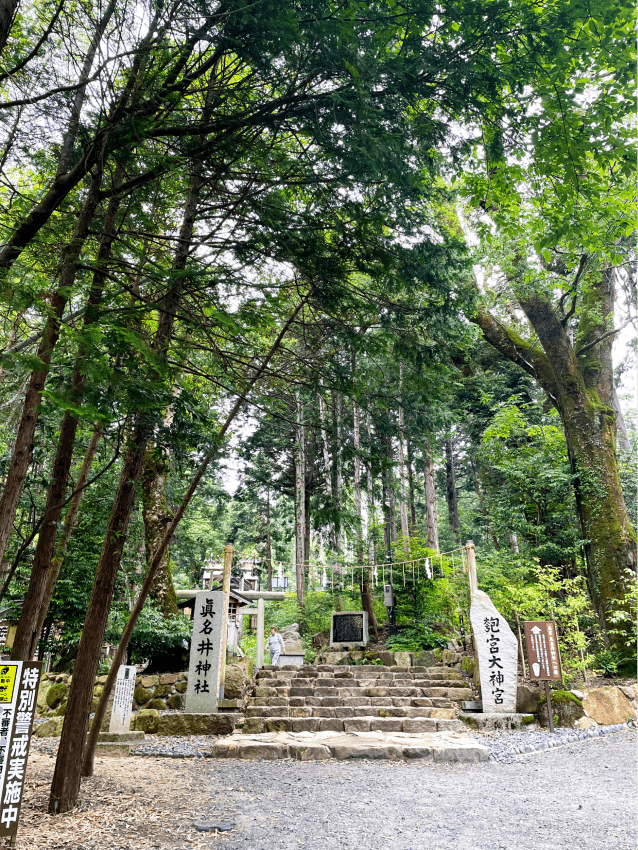
About a 15-minute walk deeper into the grounds of Kono Shrine lies its inner sanctuary, Manai Shrine, where you can find a sacred “Iwakura” — a stone believed to be the dwelling place of the gods.
A sacred stone where the deity is believed to dwell
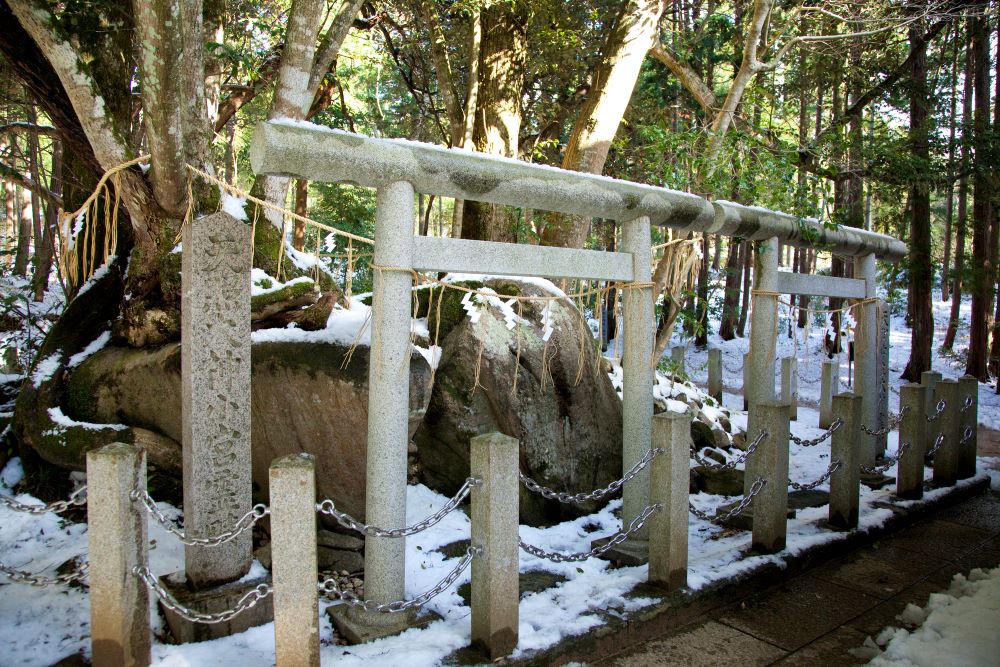
Behind the main hall of Manai Shrine stands a sacred Iwakura (sacred rock formation) enshrining an illustrious assembly of deities, including Toyouke Ōmikami and Amaterasu Ōmikami, the principal deities of Ise Grand Shrine, as well as Izanagi no Ōkami and Izanami no Ōkami, Japan’s most ancient divine couple.
Before shrines were built, it was believed that the gods resided in natural objects such as trees, rocks, islands, and rivers. These sacred rocks, known as Iwakura, were revered as divine abodes and became important objects of worship.
Deities and Blessings of Manai Shrine
The enshrined deities at Manai Shrine are Toyouke Ōmikami and Amaterasu Ōmikami, whose sacred stone (Iwakura) stands behind the main hall, as well as Izanagi no Ōkami and Izanami no Ōkami, Japan’s primordial divine couple.
Visitors come here to pray for a wide range of blessings, including abundant harvests, prosperity in business, romantic relationships and marital harmony, family safety, and longevity.
Because Manai Shrine is home to so many powerful deities, the Amanohashidate Tourism Association has posted a notice advising visitors to refrain from visiting with impure or frivolous intentions.
Many worshippers have reported feeling a strong, almost overwhelming spiritual energy emanating from the Iwakura. When you visit, approach the shrine with a sincere heart, pay your respects to the many deities enshrined here, and open yourself to the divine power that fills this sacred place.
The Sacred ‘Ame no Manai no Mizu’ Spring — Even Famous Figures Come to Draw Its Water
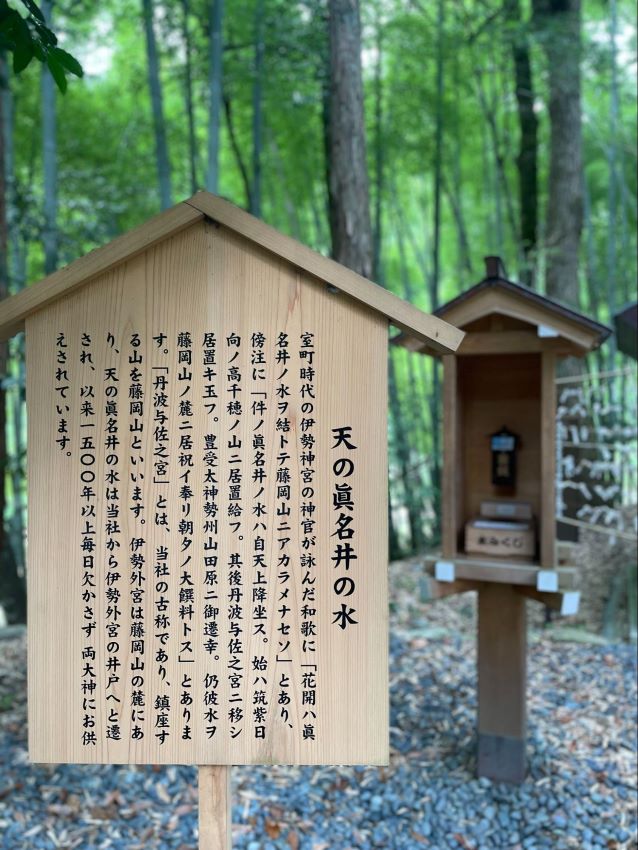
Next to the torii gate of Manai Shrine flows the sacred spring known as “Ame no Manai no Mizu” (The Heavenly Manai Water).
According to shrine tradition, this water was originally brought back in a golden bowl by Ame no Murakumo no Mikoto, the third-generation ancestral deity, for the gods to use.
It is believed that this sacred water brings blessings such as wish fulfillment and good relationships, and many people — including celebrities — visit the shrine to collect it.
| Manai Shrine Address: 905 Nakano, Miyazu City, Kyoto Prefecture TEL: 0772-27-0006 Opening Hours: 7:30 AM – 4:30 PM Website: https://www.motoise.jp/about/okunomiya/ |
There are also other power spots around Amanohashidate.
There are also other spots around Amanohashidate that are recommended for those wishing to have their dreams fulfilled or to pray for academic success.
Nariaiji Temple — A Temple Where Wishes “Come True”
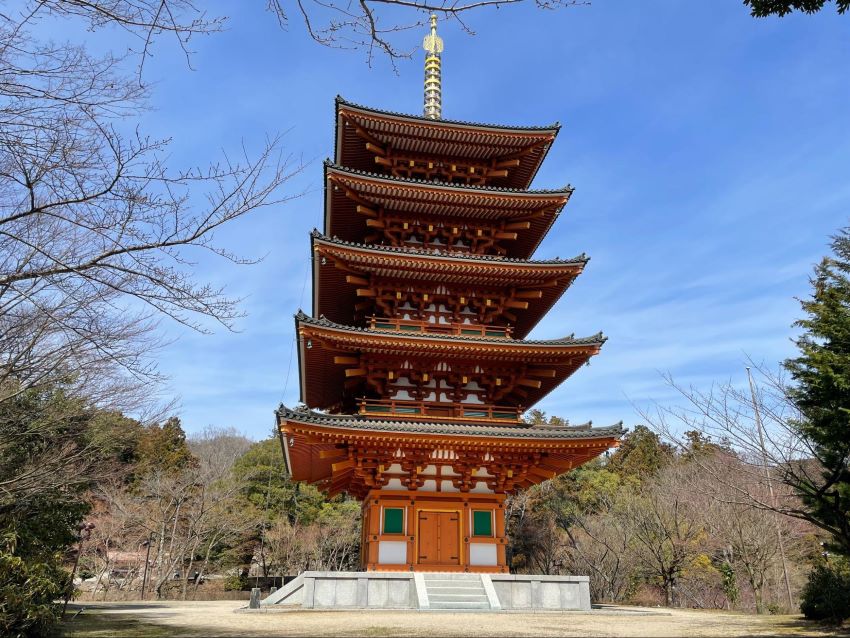
“Nariaiji Temple” is located beyond Amanohashidate, past Motoise Kono Shrine and Kasamatsu Park, on the slopes of Mt. Nariai.
In spring, the temple is beautifully adorned with rhododendron blossoms, while in autumn, the vibrant autumn foliage creates a stunning landscape.
During winter, however, the area becomes deeply covered in snow, and in the past, it served as a sacred training ground for mountain ascetics.
The origin of Nariaiji Temple is said to be connected to the “Substitute Kannon” (Migaeri Kannon).
The origin of Nariaiji Temple is said to be connected to the “Substitute Kannon” (Migaeri Kannon).
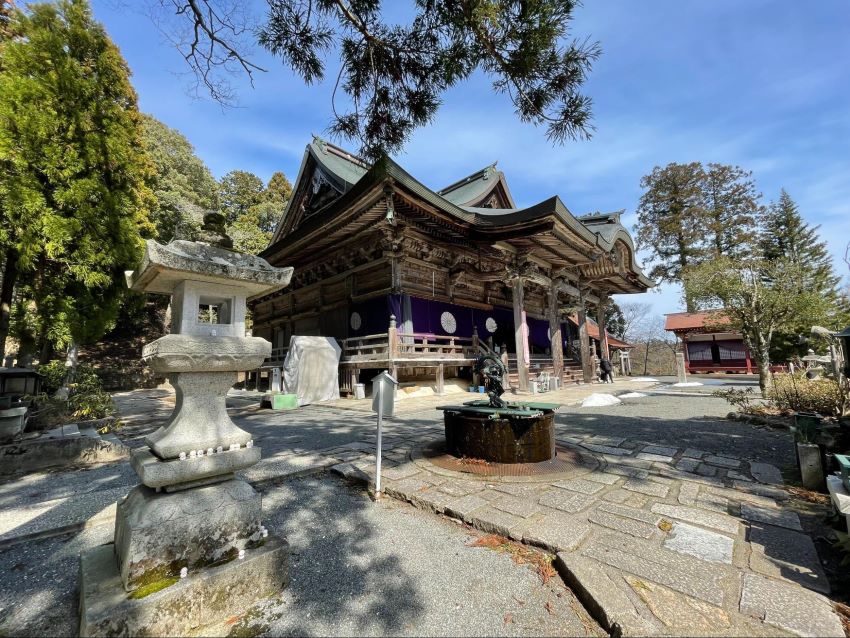
The name “Nariai-ji” is derived from the temple’s connection to the worship of the Sacred Kannon Bodhisattva (Shō Kannon), who is revered as the “Substitute Kannon”—a compassionate deity believed to take on people’s suffering and misfortune in their place.
This miraculous event led to the temple being named Nariai-ji, which means “the temple where wishes come true” (from nari-au = “to come to fruition”).
There are also some eerie tales and strange legends.
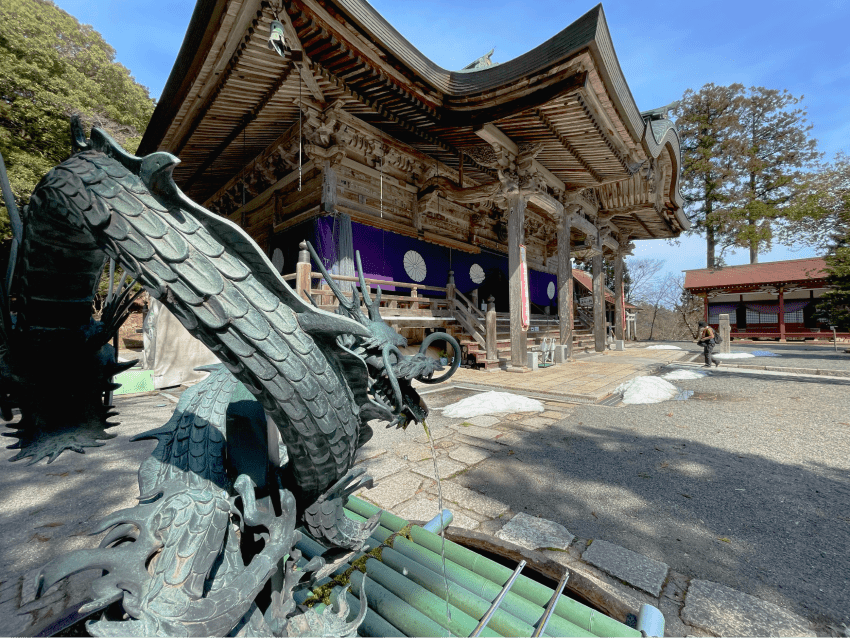
Within the temple grounds of Nariai-ji, you’ll find features such as the “Bottomless Pond” and the “Unstruck Bell,” each with its own intriguing story.
The name “Bottomless Pond” is said to come from a frightening tale in which a giant serpent swallowed one temple boy after another into its seemingly endless depths. A story remains about what happened to the serpent afterward:
For example, “Bottomless Pond” was named after a giant serpent that swallowed up young temple acolytes one after another into its bottomless depths. The following tale tells what became of the serpent afterward.
As you walk along the path leading to Nariai-ji Temple’s main hall, take a moment to reflect on this haunting legend that still lingers along the way.
Panoramic Observatory on Mt. Nariai — A Must-Visit Spot for Even More Breathtaking Views!
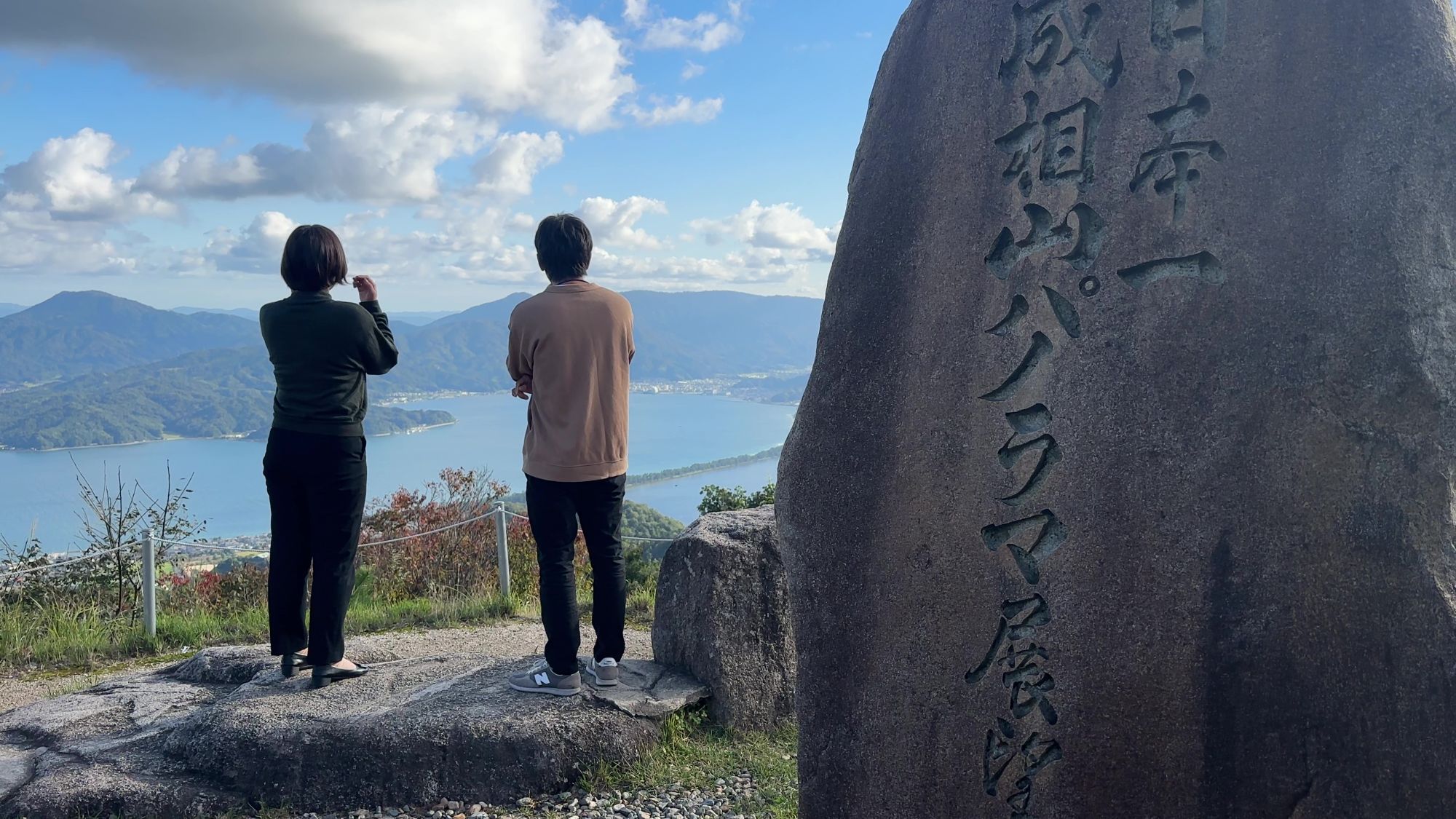
Near the five-story pagoda of Nariai-ji Temple stands the Benten-yama Observatory, and if you continue climbing further up the mountain, you’ll reach the Nariai-yama Panorama Observatory.
Located at the very top of the mountain, the journey to get there is quite a workout — but the view is absolutely worth it. Many visitors have praised it as “the best spot to admire Amanohashidate.”
At the observatory, you’ll find Café Bijin Saryō, which serves sets of drinks with cakes or traditional Japanese sweets — a perfect reward after the climb.
It takes about 5 minutes by car or 20–30 minutes on foot from Nariai-ji Temple to the Nariai-yama Panorama Observatory. Because the path is quite steep, it’s best suited for those confident in their physical fitness.
(Please note that Café Bijin Saryō is open only on weekends and national holidays, and it is closed from mid-December to mid-March due to snow.)
Keep an eye out for the resort’s charming mascot character, “Sokaka the Adventurer”
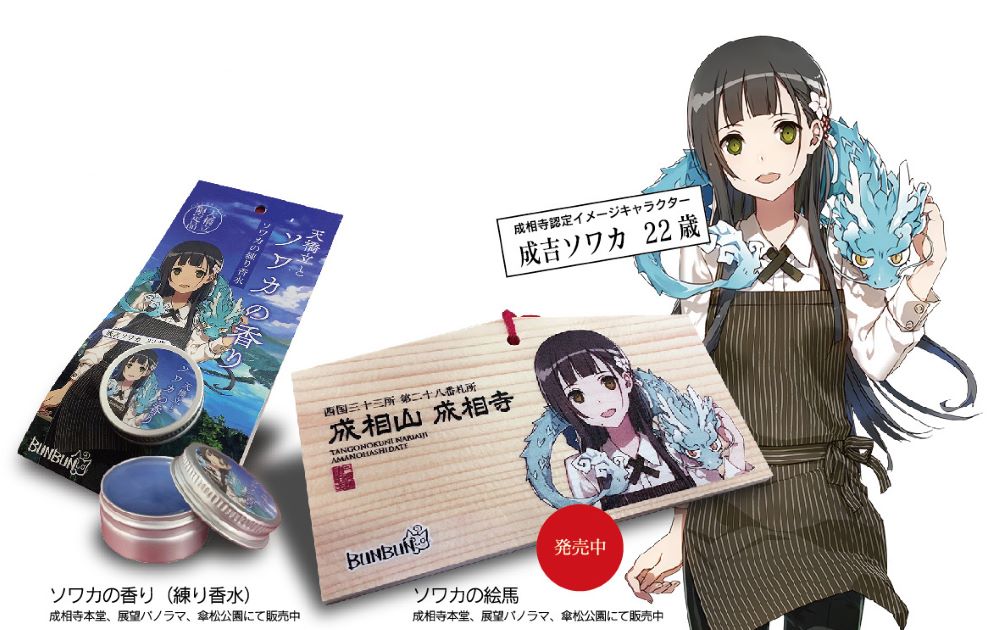
Don’t miss the temple’s official mascot, “Narukichi Sowaka” (age 22)!
This charming character was designed by the famous illustrator BUNBUN, and themed merchandise such as “Sowaka’s Fragrance” (solid perfume) and “Sowaka ema” (votive plaques) are available at the main hall of Nariai-ji Temple, the Panorama Observatory, and Kasamatsu Park.
If you’re a fan of BUNBUN’s works like “Rose Maria” or “Yuki Yuna is a Hero,” be sure to check it out!
| Nariai-yama Nariai-ji Temple Address: 339 Nariai-ji, Miyazu City, Kyoto Prefecture, Japan TEL:0772-27-0018 Opening Hours: 8:00 AM – 4:30 PM Website: https://www.nariaiji.jp/ |
【Chion-ji Temple (Amanohashiyama)】More than Just Academics — A Temple Where Wisdom Is Bestowed
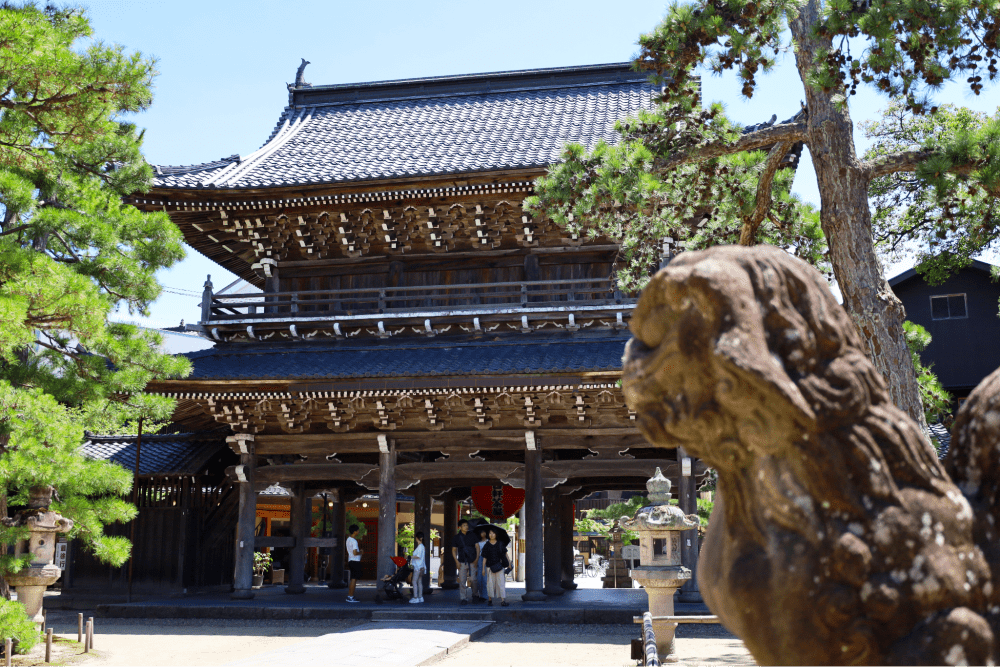
Located in the Monju area—near Amanohashidate Station and Amanohashidate View Land—is Chion-ji Temple.
More than a place for academic success, Chion-ji is deeply connected to the Monju faith.
The Japanese proverb “San-nin yoreba Monju no chie” (literally, “When three people gather, they have the wisdom of Monju”) means that when three people come together to discuss something, they can come up with surprisingly good ideas—wisdom comparable to that of Monju Bosatsu (Manjushri Bodhisattva), the Buddhist deity of wisdom.
This proverb is exemplified by the concept of “Japan’s Three Monju Temples”, three temples across Japan that are revered as sacred sites of Monju worship.
One of these three is Chion-ji Temple, located on Mount Amanohashidate.
“Monju” is an abbreviation of Monju Bosatsu (Manjushri Bodhisattva), the bodhisattva who governs wisdom. In Buddhist terms, “wisdom” refers to the ability to correctly perceive and judge things as they truly are.
Therefore, Monju Bosatsu is not only revered for academic achievement and success in entrance exams, but also as a deity to visit when you wish to make sound, insightful decisions in life.
There’s so much to see at Chion-ji Temple.
There are many highlights to see at Chion-ji Temple.
For example, the entrance gate to Chion-ji Temple, called the Sanmon (Golden Pavilion Gate), is a Kyoto Prefectural Cultural Property.
The temple’s principal image of Monju Bosatsu (Manjushri Bodhisattva), enshrined in the main hall (Monjudō), is both an Important Cultural Property and a hidden Buddha statue, meaning it is only unveiled to the public a few times each year.
Because opportunities to view Monju Bosatsu are extremely rare, it is highly recommended to plan your visit around these special dates if possible.
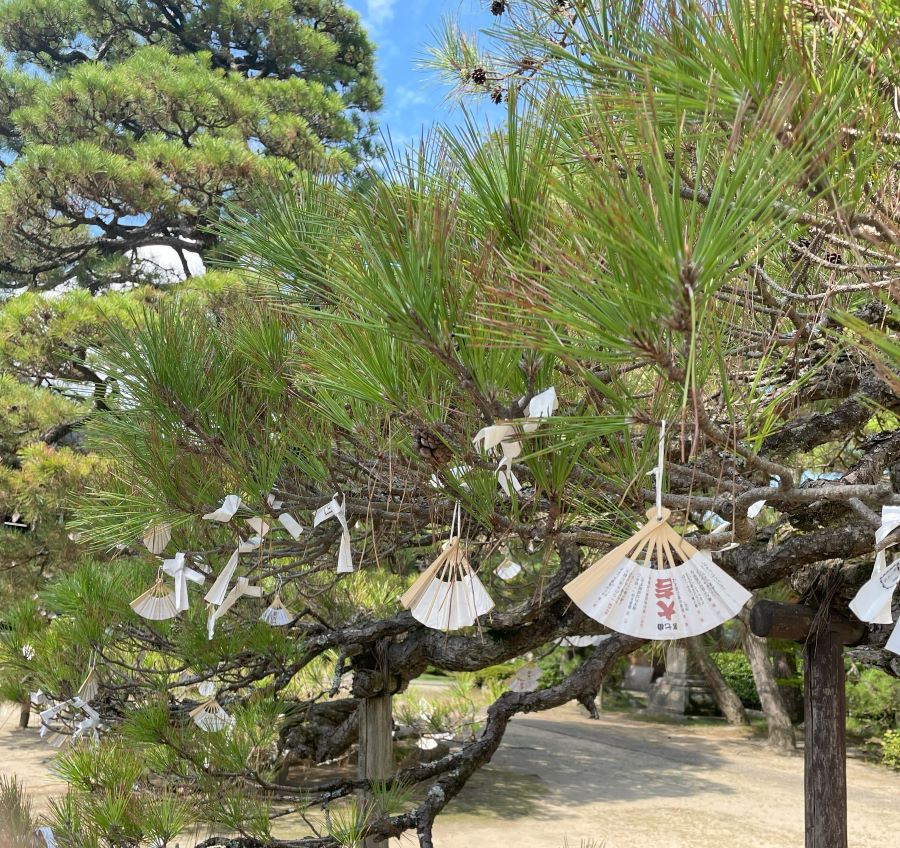
In addition, throughout the temple grounds you’ll notice many “Suehiro Sensu Omikuji” (fan-shaped fortunes) tied to pine trees. These auspicious omikuji are shaped like folding fans, and when opened, they reveal a fortune.
The sight of countless colorful fans tied around the grounds is said to resemble flowers in bloom, delighting visitors.
| Chion-ji Temple Address: 466 Monju, Miyazu City, Kyoto Prefecture TEL: 0772-22-2553 Hours: Open for worship at any time Parking: 8:00 – 17:00 Website: https://www.monjudo-chionji.jp/ |
Recommended accommodations for sightseeing in the Amanohashidate area
[Marinetopia The Suite] Gather Around the Irori for Quality Family Time
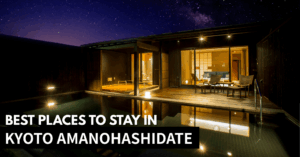
When exploring the Amanohashidate area, why not stay at Marinetopia Resort, where you can enjoy the fresh seafood of northern Kyoto along with private hot springs in an exclusive setting?
Among the various accommodation options, Marinetopia The Suite is especially recommended. Each luxurious villa features a private hot spring bath, a private pool, and a private garden, providing the ultimate retreat. In addition to in-room hot springs, the resort also offers “Umi,” a private bath facility featuring rare Kin Onsen (golden hot spring)—a unique experience even within the Kansai region.
For dining, guests can choose from a BBQ plan featuring premium domestic wagyu beef or a room dining plan, where you can enjoy fresh local seafood sashimi and sushi around a traditional irori hearth, creating an authentic Japanese atmosphere and culinary experience.
| Marinetopia The Suite Address: 4054 Hioki, Miyazu City, Kyoto Prefecture TEL: 050-3161-4574 (Reception hours: 10:00–18:00) Website: https://www.marinetopia-suite.com/ |
[Hanashobu] Recommended for Hot Spring Lovers
Limited to 4 groups per day, Hanashobu is an exclusive private villa available for rent as an entire unit.
Each villa features an open-air bath with kin-onsen (golden hot spring), a rock salt bath, and a medicinal bath, making it ideal for guests who want to fully enjoy the hot springs in complete privacy without worrying about their surroundings.
Each villa is individually themed, with a refined and sophisticated interior design that adds to its appeal. While the popular crab course plan is highly recommended, guests who choose the room-only plan can also enjoy nearby restaurants such as Sushi Zabou, known for its fresh seafood, Tenkou, offering exquisite Japanese cuisine, and Cielo, serving Italian dishes.
You can freely choose according to your preferred cuisine or the menu you’re in the mood for.
| Hanashobu Address: 4267 Hioki, Miyazu City, Kyoto Prefecture, Japan Check-in Location: Rurihama Activity Center (Kani Marche) Tel: 050-3161-4572 Website: https://www.hana-syoubu.jp/ |