Kaiseki is built on bringing out what the ingredients already have.
That is the image many people hold of eating in Kyoto, but Kyoto ramen is another matter.
Much of the ramen that has been eaten here for decades is heavy soy sauce, rich pork bone broth or a bowl topped with plenty of back fat. It is strong food.
Kyoto keeps what it values while taking on what is new: the shops that have run since the days of street stalls, and the newer waves of ramen alike.
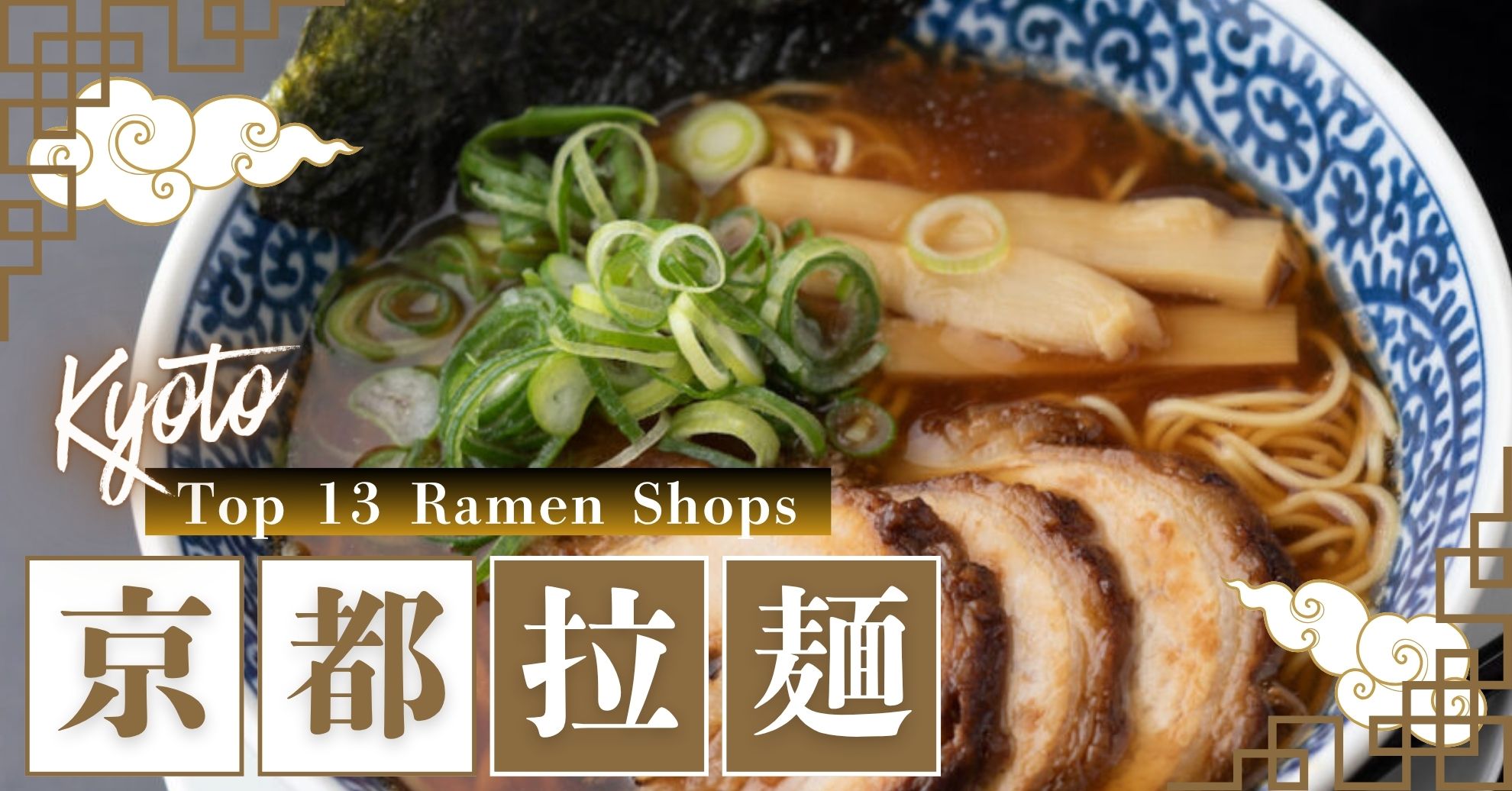
This article covers thirteen ramen shops in Kyoto: the chains that started here and spread across the country, the long-standing shops, and the newer ones.
It also covers a ramen ticket and a hotel where you can eat ramen.
Four Ramen Chains That Started in Kyoto
Some of the best-known ramen chains in Japan began in Kyoto. Here are four of them.
Tenkaippin: The Original Rich Broth, with Beef Tendon Ramen at the Main Shop
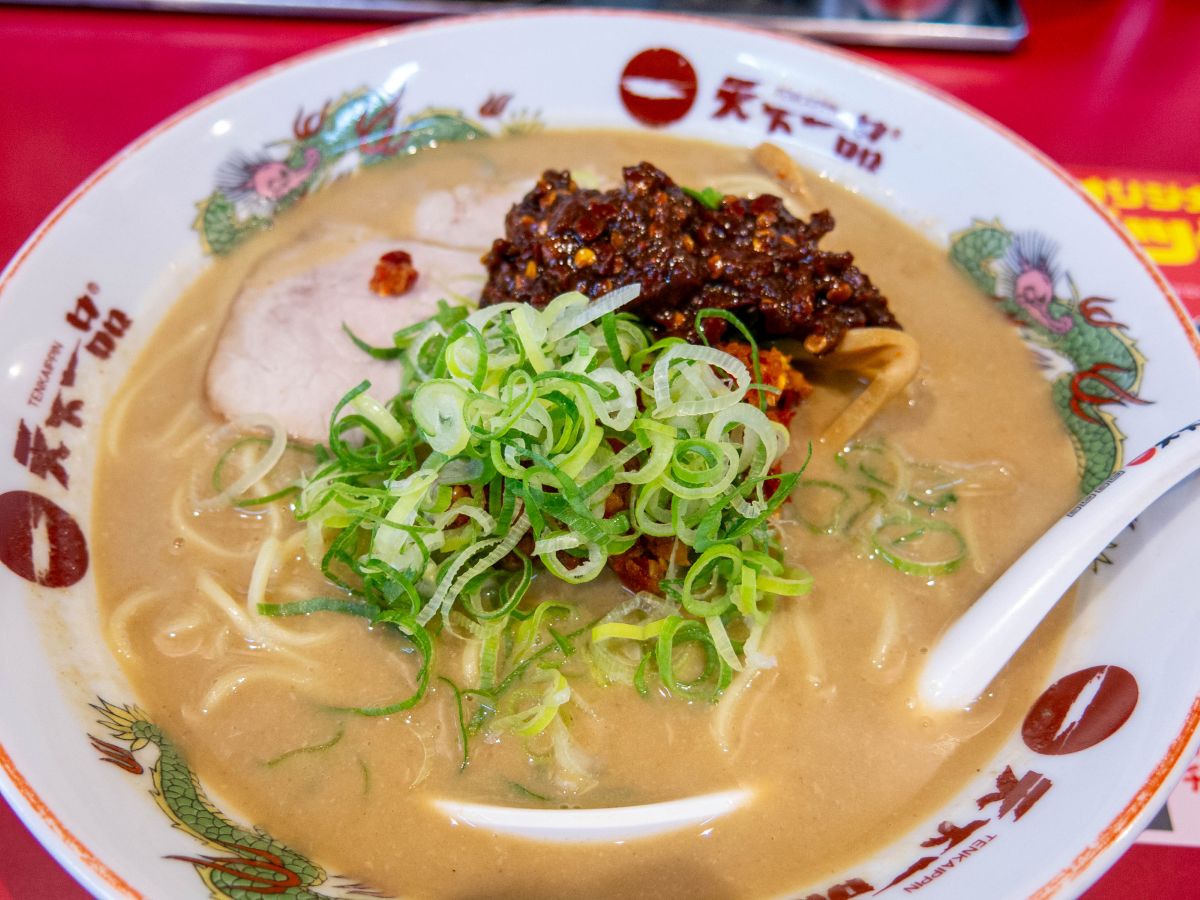
Tenkaippin now has shops across Japan and in Honolulu.
Its broth is thick enough that the shop calls it a soup you eat rather than drink, but it is based on chicken bones and vegetables, so it does not sit heavily. There is a middle option between the rich and the lighter versions.
The main shop, near Ichijoji, where ramen shops compete, serves dishes available only there: the beef tendon ramen and the beef tendon kimchi ramen.
Beef tendon that releases more flavor as you chew, konnyaku that has taken on the broth, and a thickened soup work together better than you would expect. For heat and acidity, order the kimchi version.
Within Kyoto Prefecture there are shops near Kyoto Station Hachijo exit, Ginkaku-ji and Kiyomizu-dera, and some serve kotteri yukimi, a daifuku ice cream with ramen tare poured over it.
| Tenkaippin main shop Address: 94 Ichijoji Tsukidacho, Sakyo-ku, Kyoto 📍 Map of shops in Kyoto Tel: 075-722-0955 Hours: 11:00–01:00 Open daily Payment: cash, QR code Website: https://www.tenkaippin.co.jp/ Instagram: https://www.instagram.com/tenkaippin_jp/ |
Rairaitei: Soy Sauce and Back Fat You Can Finish
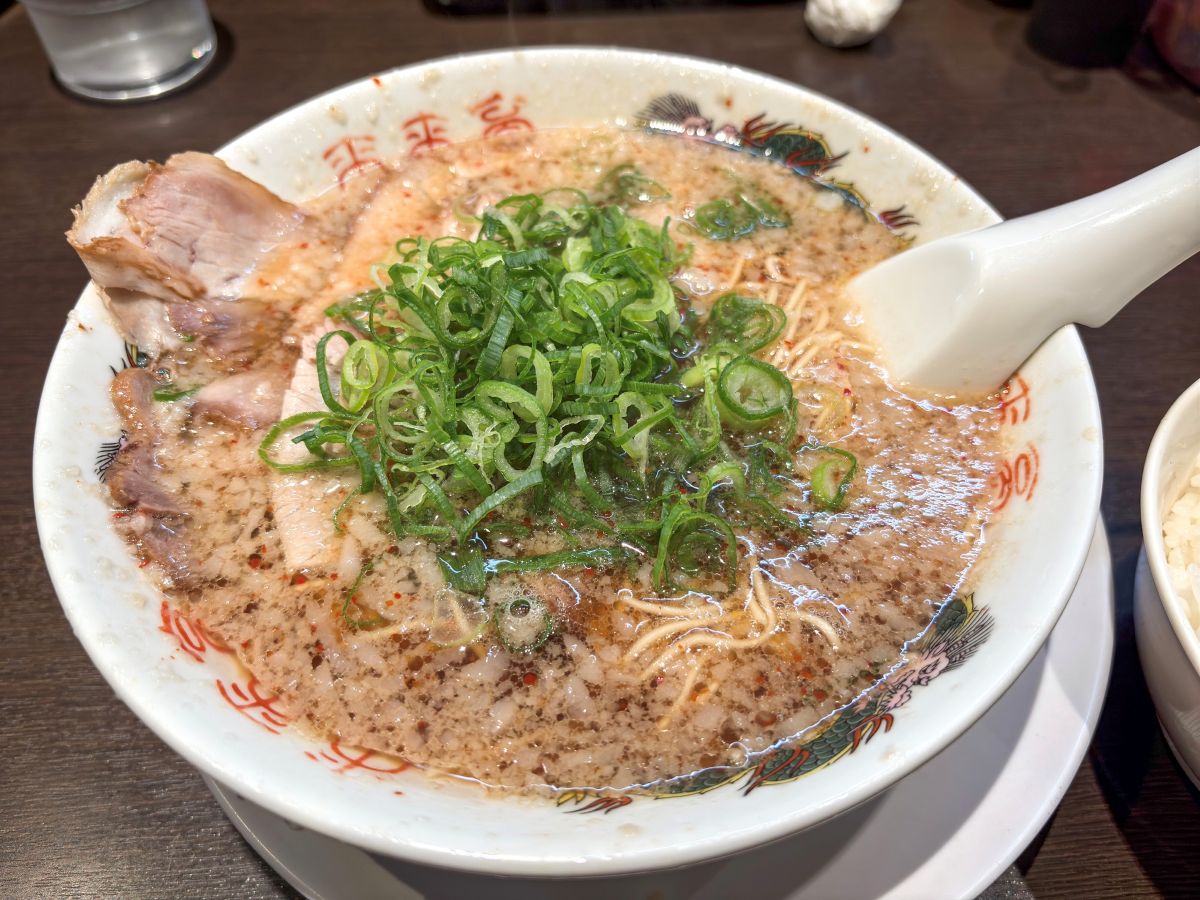
Rairaitei grew out of a ramen shop in Fukakusa, Fushimi-ku, the area around Fushimi Inari Taisha.
Its head office is now in Yasu, Shiga, but there are shops in Kyoto near Fushimi Inari Taisha, at Jujo Takeda and at Ichijoji.
The ramen is a soy sauce bowl with plenty of back fat floating on top. The clear chicken broth underneath keeps it clean on the palate despite the depth, so you can finish the bowl.
There is a lot you can adjust: ask for stronger soy sauce if you want it heavier, or for the chashu if you like it soft.
| Rairaitei 📍 Map of shops in Kyoto Hours: varies by shop Closed: varies by shop Payment: credit card, QR code, e-money, cash Website: https://www.rairaitei.co.jp/ Instagram: https://www.instagram.com/rairaitei_2000/ |
Ramen Kairikiya: Firm Noodles and a Jet-Black Soy Sauce
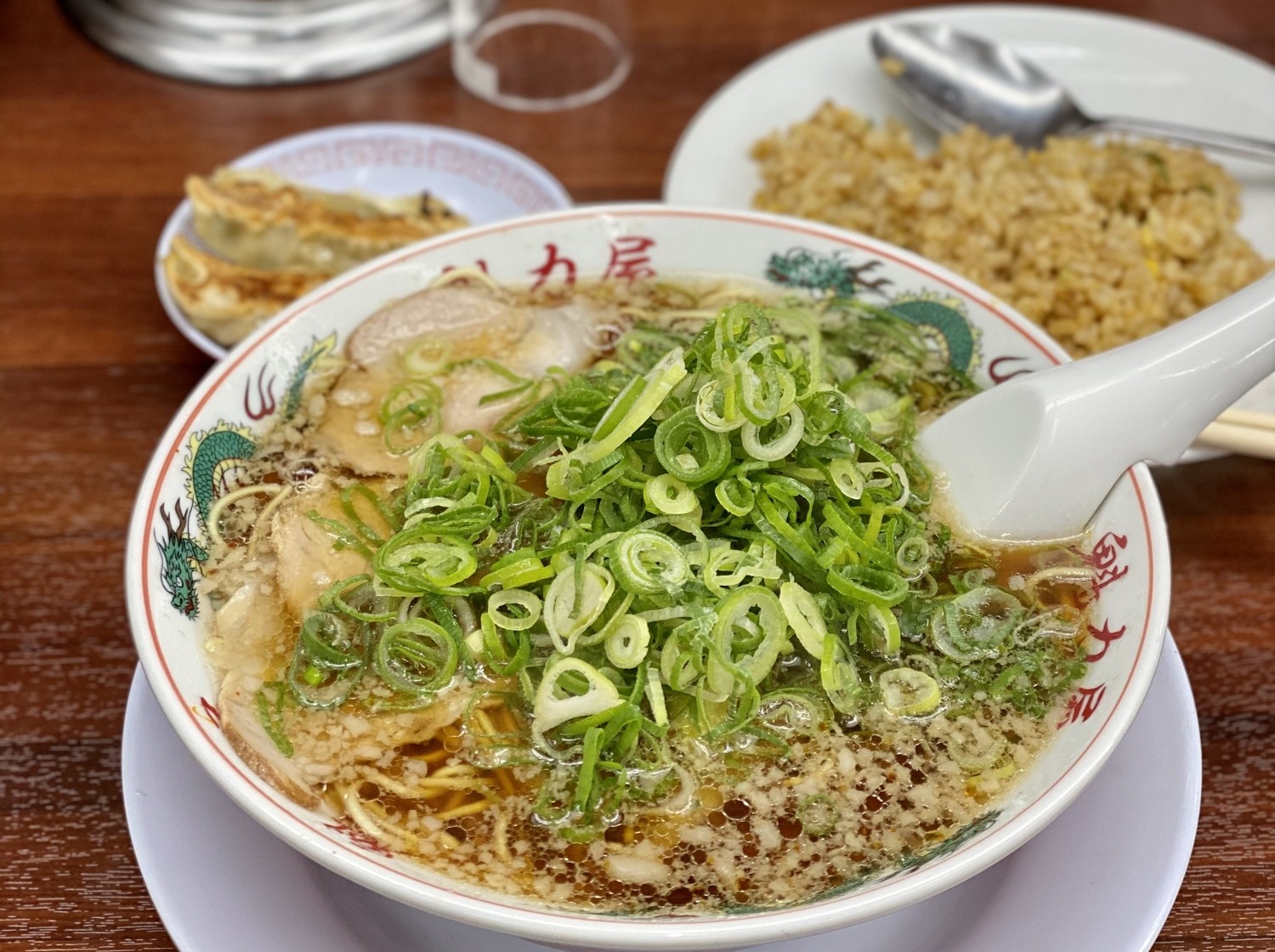
Ramen Kairikiya is built on a jet-black soy sauce that draws the flavor out of the soybeans, with low-hydration noodles made from selected wheat flour.
The chashu, steeped well in soy sauce, takes on the back fat and the broth and comes apart as you eat.
Garlic, gochujang and vinegar sit on the table, along with free refills of chopped spring onion.
The fried rice goes with the broth, so arrive hungry and order the yakimeshi set.
Besides the main shop near Ichijoji, there are shops around the city center, including Shijo-Karasuma and Nishioji.
Low-hydration noodles: noodles made with water at 30 percent or less of the flour.
| Ramen Kairikiya Kyoto Kitashirakawa 📍 Map of shops in Kyoto Hours: varies by shop Closed: varies by shop Payment: credit card, QR code, e-money, cash Website: https://www.kairikiya.co.jp/ Instagram: https://www.instagram.com/ramen.kairikiya/ |
Ramen Yokozuna: Japanese Spring Onion with a Deep Pork Bone Soy Sauce
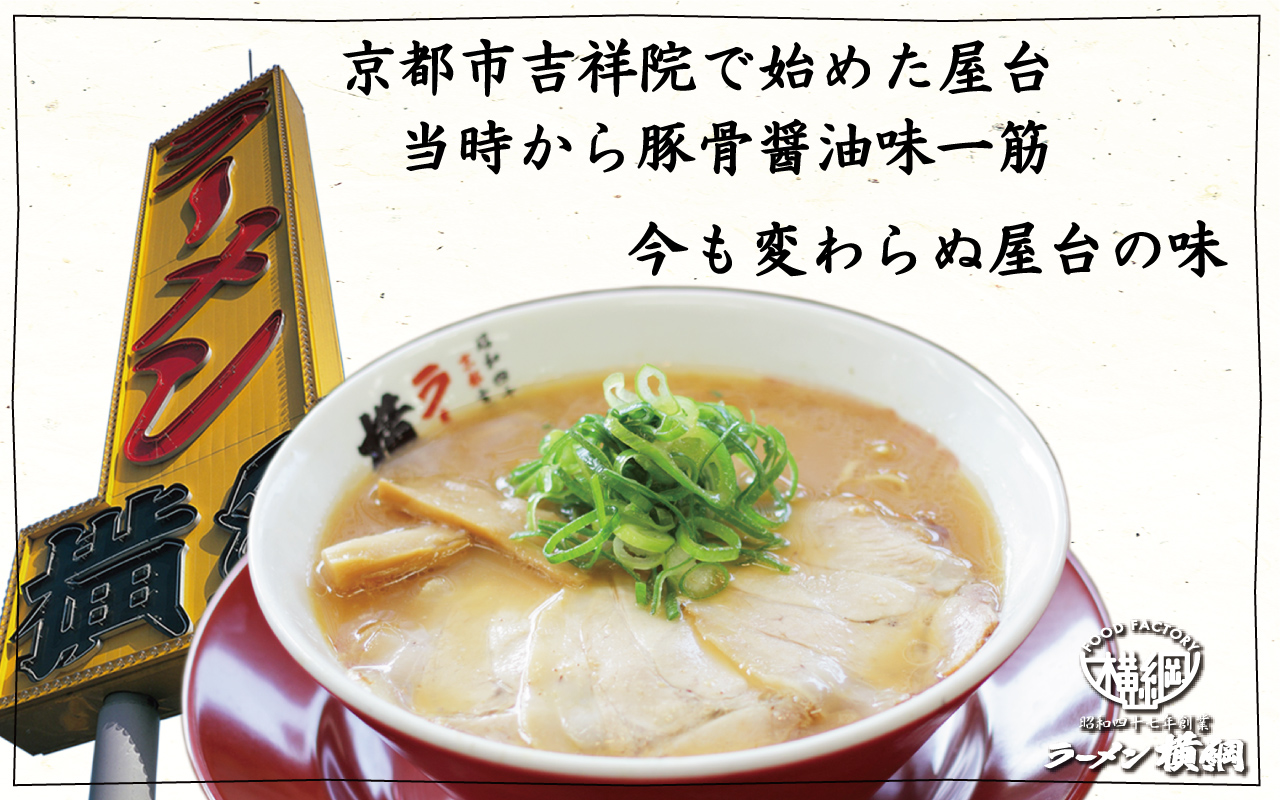
Ramen Yokozuna began as a street stall in Kisshoin, in the south of the city, and has kept the taste of that stall for more than forty years.
Pork bone broth simmered at length, the shop’s own soy sauce tare and firm straight noodles make a pork bone soy sauce ramen with real depth.
Once you are used to the broth, try the garlic chili or the freshly grated garlic, along with the free spring onion.
Besides the standard bowl, there is a vegetable ramen with plenty of fresh vegetables and the mildly spicy gyoza.
There are shops in Kyoto near Nishiki Market and Nishi Hongan-ji, among other places, as well as around Ichijoji.
All four of these chains have a shop in Ichijoji, which makes comparing them straightforward.
| Ramen Yokozuna 📍 Map of shops in Kyoto Hours: varies by shop Closed: varies by shop Payment: credit card and cash (QR code and e-money at some shops inside shopping centers) Website: https://www.4527.com/ |
Five Long-Standing Shops That Kyoto Recommends
Here are five shops for anyone who wants the original heavy soy sauce or back fat bowls, or a full meal with sides.
Shinpuku Saikan: One of the First, with a Black Broth and Black Fried Rice
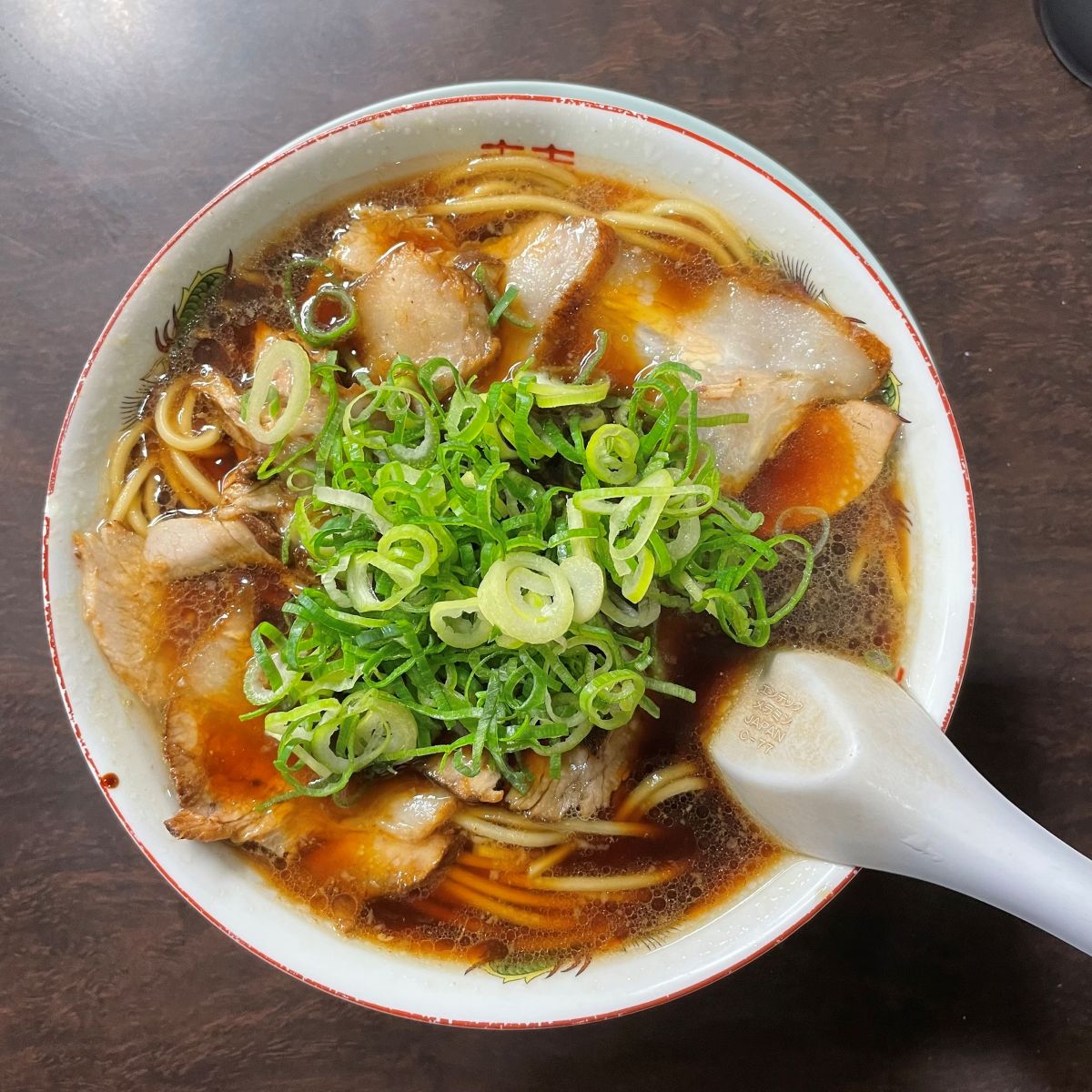
Shinpuku Saikan began as a street stall near Kyoto Station in 1938 and opened as a shop in 1945, which makes it one of the first ramen shops in Kyoto.
The jet-black broth, chicken and pork bones seasoned with soy sauce, makes an impression.
Despite how it looks, the soy sauce broth is light. The chewy medium-thick straight noodles and the chashu, balanced between meat and fat, are easy to keep eating.
The black yakimeshi, made with the same soy sauce tare, is worth ordering. Eaten in turn with the broth, it is hard to stop.
| Shinpuku Saikan Address: 569 Higashi-Shiokoji Mukaihata-cho, Shimogyo-ku, Kyoto Tel: 075-371-7648 Hours: 9:00–20:00 Closed: Wednesdays Payment: cash Website: https://shinpukusaikan.net/ |
Honke Dai-ichi Asahi: Lean Chashu with Kyoto Soy Sauce
Honke Dai-ichi Asahi stands next door to Shinpuku Saikan.
It has kept its character since 1947 while continuing to change.
What sets it apart is a broth that pairs a pork bone base with the soy sauce of a long-standing Kyoto maker, and a chashu made from leaner pork.
Chashu from younger, fattier pork clouds the broth; the leaner cut here keeps it clean while adding depth.
The fragrant kujo negi, a traditional Kyoto vegetable, and the Kyoto-grown mung bean sprouts add to it.
| Honke Dai-ichi Asahi Address: 845 Higashi-Shiokoji Mukaihata-cho, Shimogyo-ku, Kyoto Tel: 075-351-6321 Mail: info@honke-daiichiasahi.com Hours: 6:00–01:00 Closed: Thursdays Payment: credit card, e-money, QR code, cash Website: https://www.honke-daiichiasahi.com/ Instagram: https://www.instagram.com/honke_daiichiasahi/ |
Chuka Soba Masutani: Where Back Fat Soy Sauce Ramen Began
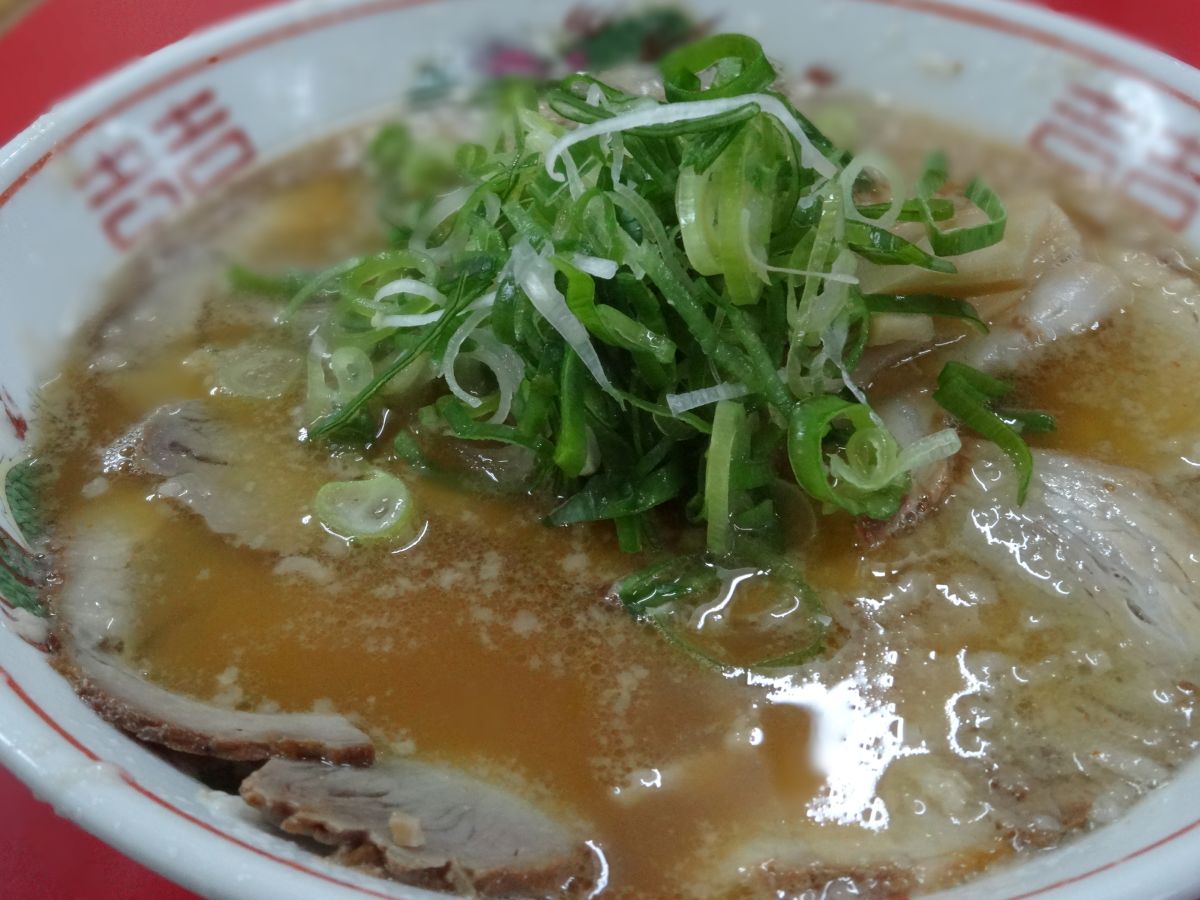
Chuka Soba Masutani, which opened in 1947, is regarded as the shop that started back fat soy sauce ramen, scattering back fat over a soy sauce bowl.
The Kitashirakawa main shop near Ginkaku-ji closed indefinitely on July 19, 2026 because of the age of the building, and the Umekoji shop, in the COJICCO complex outside Umekoji-Kyotonishi Station, now serves the same bowl.
The cloudy broth under all that back fat looks heavy, but the soy sauce beneath is light with real depth, and the thin, firm noodles carry the wheat.
A little of the chili powder on the table sharpens the bowl.
| Chuka Soba Masutani Umekoji Address: 7-3 Sujaku Uchihata-cho, Shimogyo-ku, Kyoto (COJICCO 1F) Hours: 11:00–14:45 and 17:00–21:45 Closed: Tuesdays Payment: cash Website: https://tabelog.com/kyoto/A2601/A260203/26043954/ |
Ramen Tengu Nishijin: Pork Bone Soy Sauce with Freshly Cut Spring Onion
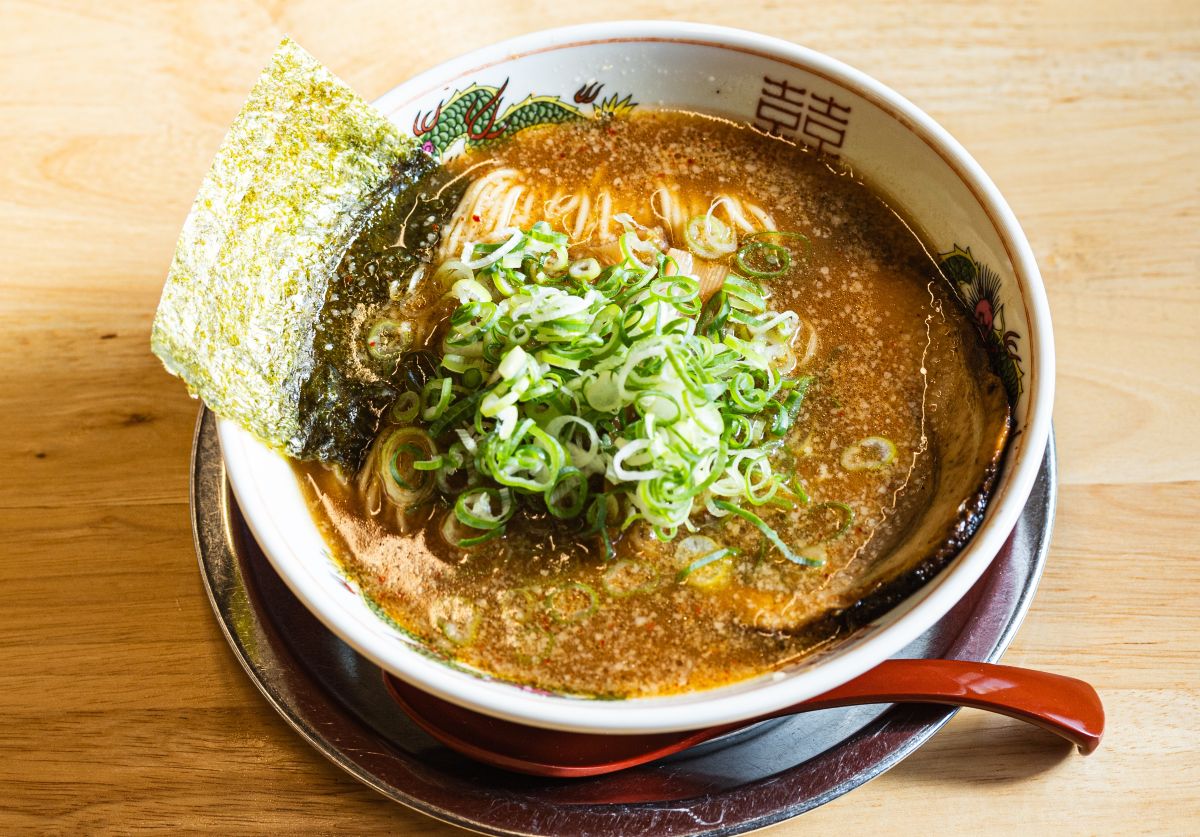
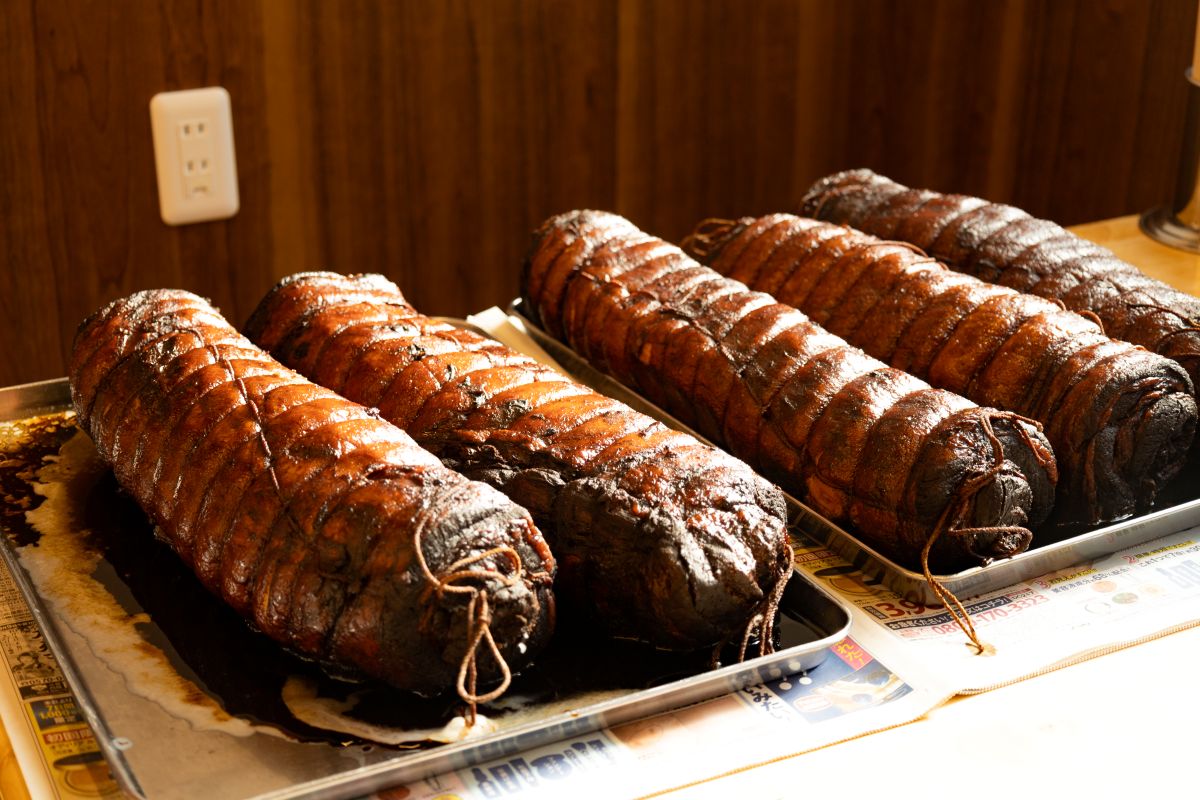
Ramen Tengu pairs a pork bone broth with Japanese dashi, which makes it rich and light at once. The chashu is simmered and seasoned at length, and the noodles are thin.
Spring onion is cut to order and brought in a basket, so you add it when you want it.
There is the Nishijin shop, in the area around Shokoku-ji and Seimei Shrine, and the Tokiwa shop near Toei Kyoto Studio Park and Arashiyama.
For fried rice, gyoza and karaage alongside, the Nishijin shop is the one.
| Ramen Tengu Nishijin Address: 199 Isa-cho, Kamigyo-ku, Kyoto Tel: 075-411-8292 Hours: 11:30–22:00 Closed: Wednesdays Payment: Cash Website: http://www.ramen-tengu.com/ |
Chuka Soba Kodai: Ramen and a Gyudon Worth Coming Back For
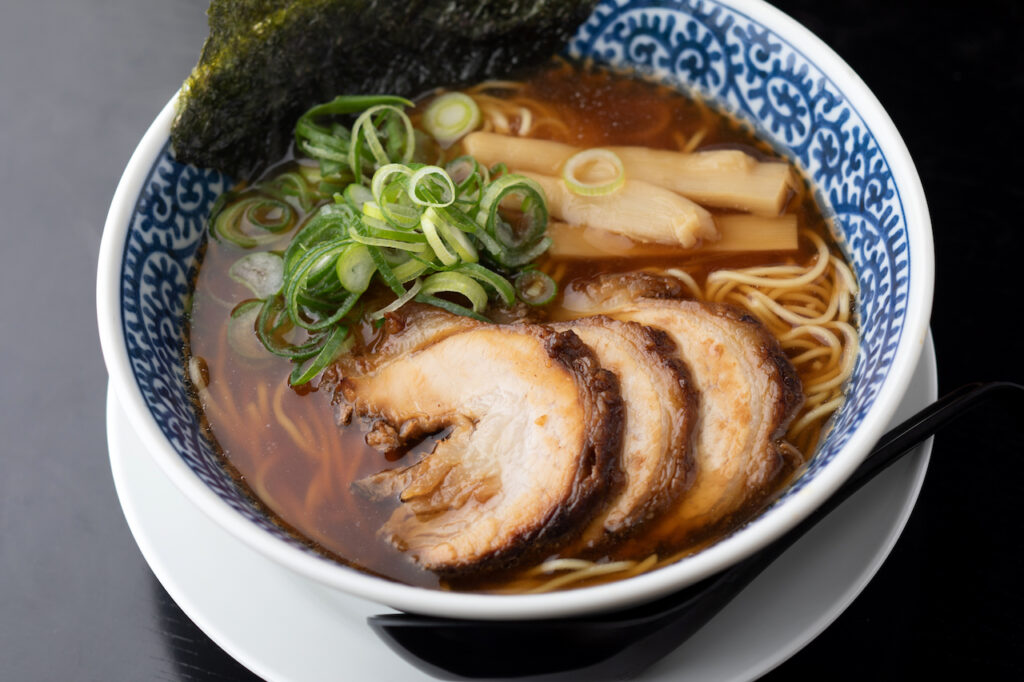
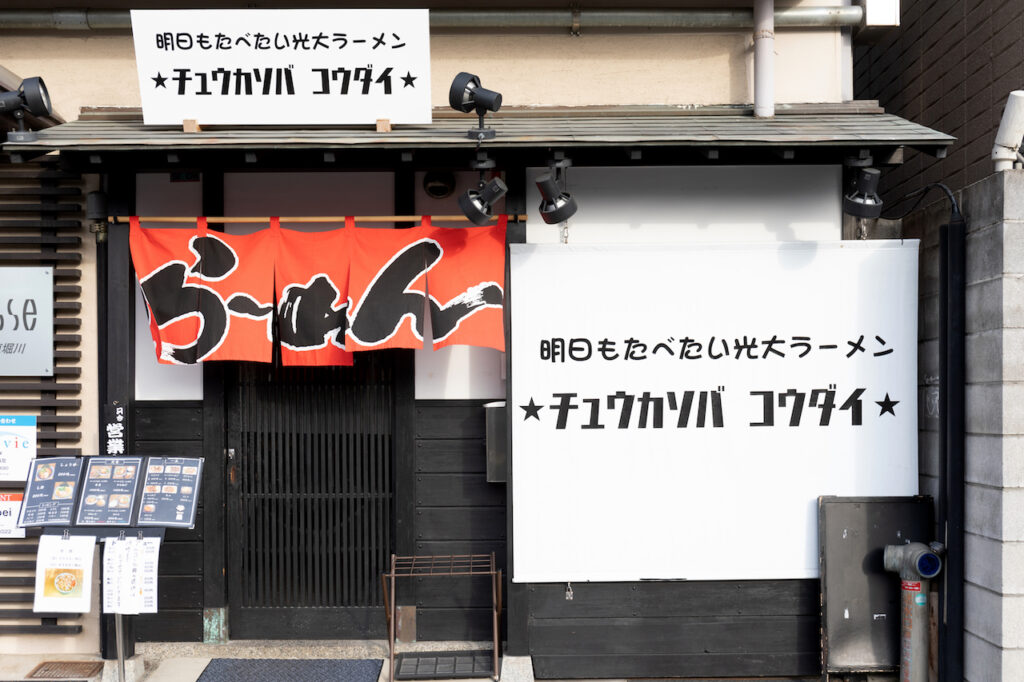
The owner trained for seventeen years at ramen shops in Kyoto, and what he makes is chuka soba in the plainest sense.
Animal ingredients are kept to a minimum, and the broth is built on dashi from vegetables and kombu.
As the sign outside says, it is food you want again tomorrow: not so strong that it tires you, which also makes it easy to order for children.
The gyudon on the side is unusual for a ramen shop and comes in a decent size, which helps if you want rice as well.
| Chuka Soba Kodai Address: 65-1 Higashihashizume-cho, Kamigyo-ku, Kyoto (by the Horikawa Nakadachiuri intersection) Hours: 11:30–14:00 and 17:30–21:30 Closed: Thursdays Payment: Cash Website: https://tabelog.com/kyoto/A2601/A260202/26034800/ |
Four Newer Shops Working with Lighter Broths
Kyoto ramen leans toward heavy soy sauce and rich broths, but shops working with chicken paitan and lighter seafood dashi have been opening.
Here are four of the newer shops.
Menjo Muraji Yanaginobanba Rokkaku: Chicken Paitan in a Machiya
Menjo Muraji opened in Gion in 2015 and has since moved to a machiya in Yanaginobanba Rokkaku.
The machiya, a hundred years old and renovated, does not read as a ramen shop at first glance.
The chicken paitan broth uses Kyo-aka jidori, a lean chicken with deep flavor, simmered with vegetables.
The lemon ramen sets the chicken paitan against fresh lemon, with smooth, chewy noodles.
The fried rice, mixed on an iron plate, is worth adding.
| Menjo Muraji Yanaginobanba Rokkaku Address: 404 Izutsuya-cho, Yanaginobanba Rokkaku-sagaru, Nakagyo-ku, Kyoto Tel: 075-744-1144 Hours: 11:30–22:00 (last orders 21:30) Closed: Irregular Payment: credit card, e-money, QR code, cash Instagram: https://www.instagram.com/ramen_muraji |
Ramen Yucho: Ginger Soy Sauce and Seafood Dashi, with Kyoto Craft Beer
Ramen Yucho opened in the middle of the city at Shijo-Kawaramachi in 2025 and drew a following quickly.
The reason is a broth built on ginger soy sauce tare, with original noodles from Menya Teigaku, the noodle maker behind much of Kyoto ramen.
The broth uses muroaji-bushi for a clean sweetness and the flavor of the fish, soda-bushi for depth and saba-bushi for richness, with the shop’s own ginger soy sauce.
There are rice bowls topped with roast beef or chashu, along with Kyoto craft beer, which sets it apart from most ramen shops.
The tatami tables and the tenugui art of a maiko give it a sense of Kyoto, and the staff are trained to serve in English, so it suits visitors from abroad as well.
| Ramen Yucho Address: 609 Teianmaenocho, Shimogyo-ku, Kyoto (2F) Tel: 075-257-2828 Hours: 11:00–21:30 Closed: None Payment: credit card, QR code, cash Instagram: https://www.instagram.com/ramen_yucho/ |
Menya Inoichi: Seafood Dashi at the Heart of Japanese Cooking
Menya Inoichi builds its dashi entirely from fish: several grades of top-quality dried fish blended and drawn slowly, for a bowl that is 100 percent seafood dashi.
It concentrates the depth of honkarebushi, the finest dried bonito, and has been listed in the Michelin Guide Bib Gourmand for nine years running.
The dishes to order are the dashi soba with its own white soy sauce, and the raw egg over rice with paper-thin shavings and an award-winning egg.
It gets busy, so the shop hands out numbered tickets, 100 each for lunch and dinner. Go early.
| Menya Inoichi Address: 542 Ebisunocho, Teramachi-dori Bukkoji-sagaru, Shimogyo-ku, Kyoto Tel: 075-746-3949 Hours: 11:00–14:30 / 17:30–21:00 Numbered tickets are handed out from 10:30 for lunch and 16:30 for dinner Closed: None Payment: Credit card, e-money, QR code Website: https://menyainoichi.net/ Instagram: https://instagram.com/inoichi_kyoto/ |
Kombu to Men Kiichi: Kombu Ramen from a Long-Standing Kombu Shop
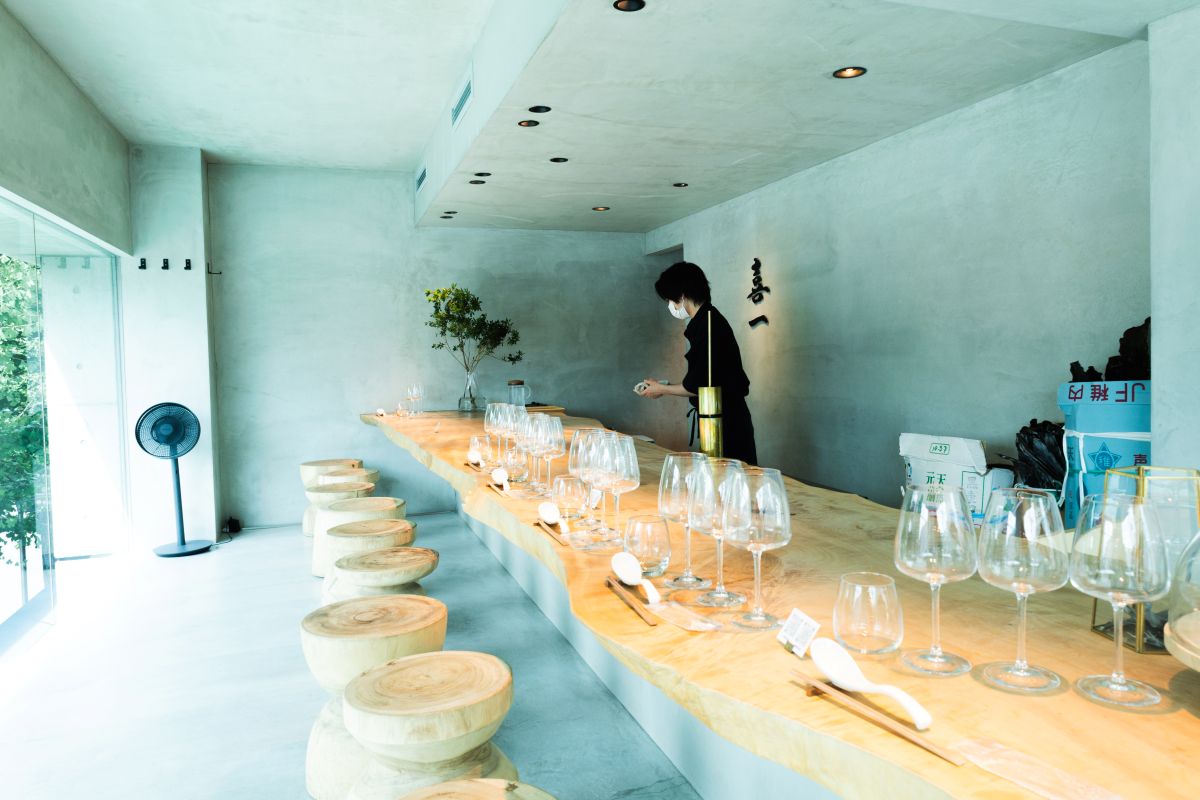
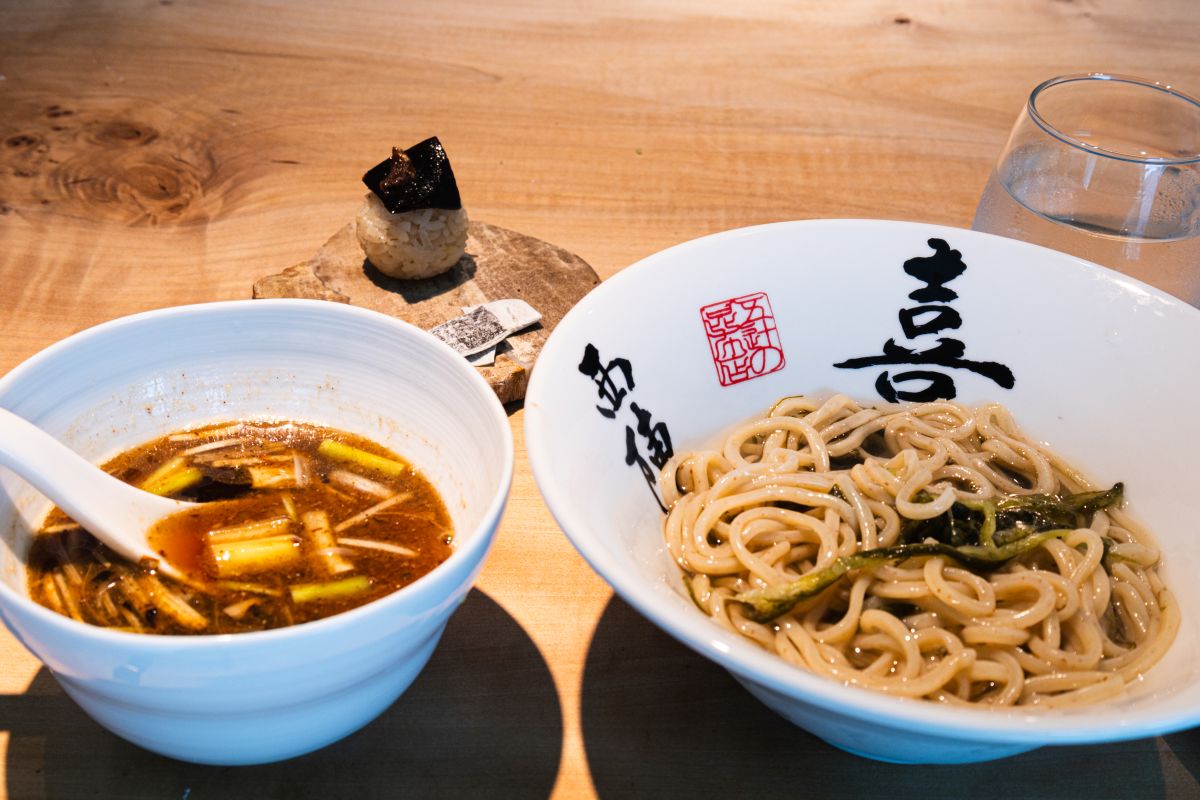
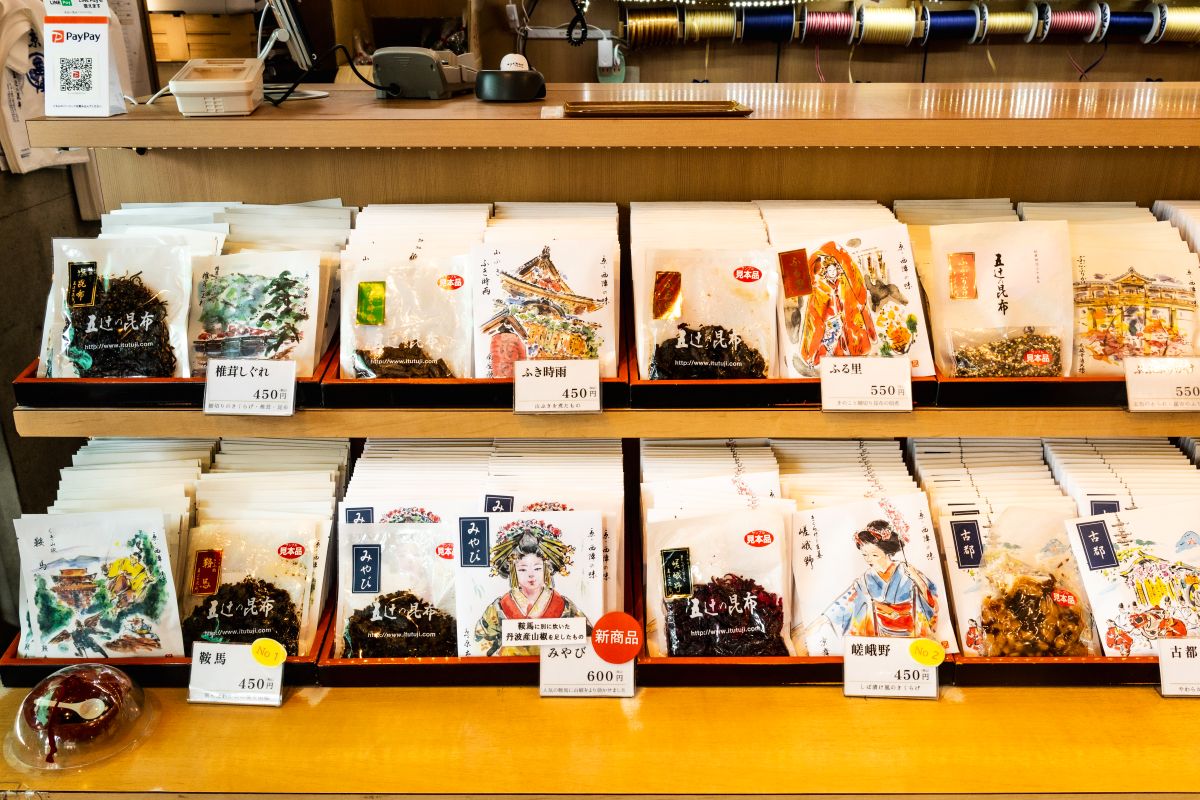
Itsutsuji no Kombu has been known in Kyoto as the kombu shop at Itsutsuji since the Meiji era, selling kombu for dashi along with shio-kombu and tsukudani.
Kombu to Men Kiichi is the ramen shop that kombu specialist runs.
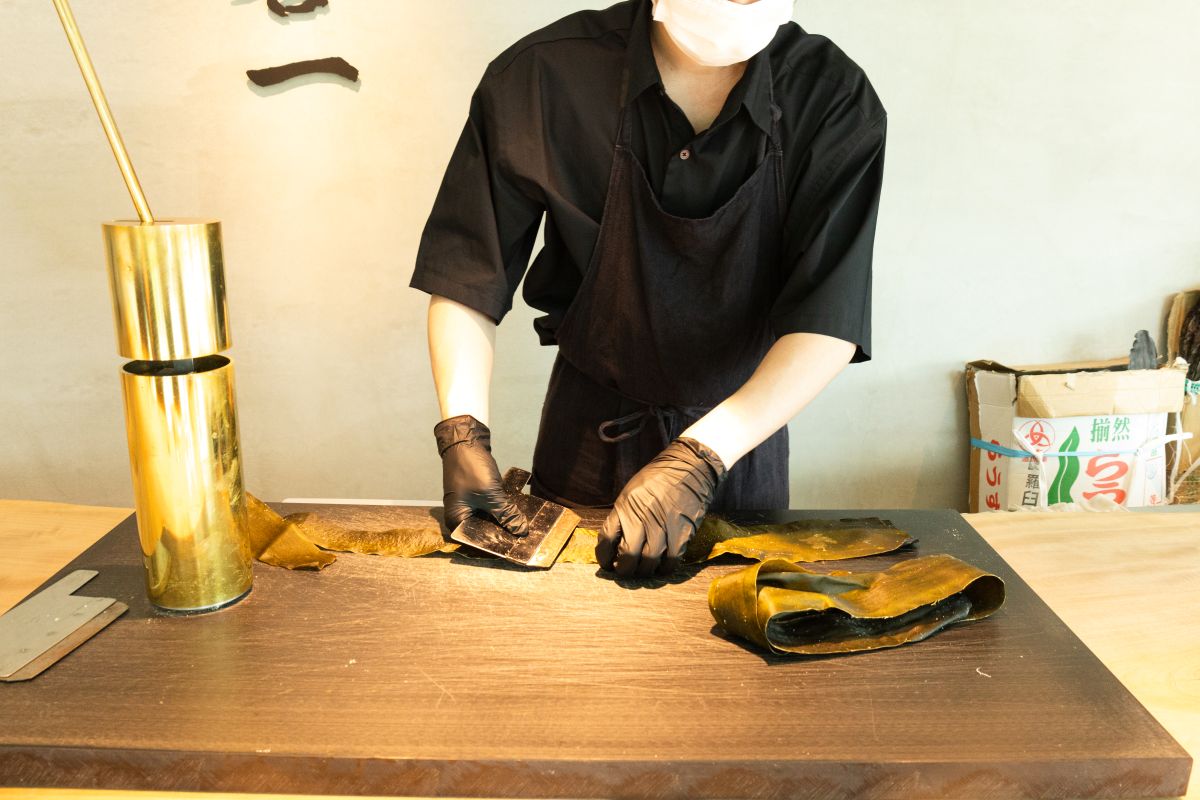
The broth blends ma-kombu, rausu kombu and rishiri kombu with katsuobushi and shellfish; the oboro kombu is shaved by hand from ma-kombu; and the chicken chashu is steeped in dashi and salt and cooked slowly at low temperature.
You start by tasting the cold-brewed water of each of the three kombu to compare them, then taste kombu shaved in front of you, before the kombu ramen itself.
It is reservation only at 11:00, 12:00 and 13:00, and the rule is one kombu: each guest buys one product from Itsutsuji no Kombu along with the meal.
There is enough worth taking home that one may not be enough.
| Kombu to Men Kiichi Address: 74-2 Nishiitsutsuji Higashi-machi, Kamigyo-ku, Kyoto Tel: 080-7227-7500 Hours: seatings at 11:00, 12:00 and 13:00 Three seatings a day, 10 seats each, by reservation; about 45 minutes per seating Closed: Irregular Payment: Cash, credit card, e-money, QR code Website: https://itutuji.com/kiichi/ RESERVATION Instagram: https://www.instagram.com/kiichi5224/ |
Tips for Eating Ramen in Kyoto
To close, here is what makes eating ramen in Kyoto easier.
The Kyoto Ichijoji Ramen Ticket, with the Eizan Railway
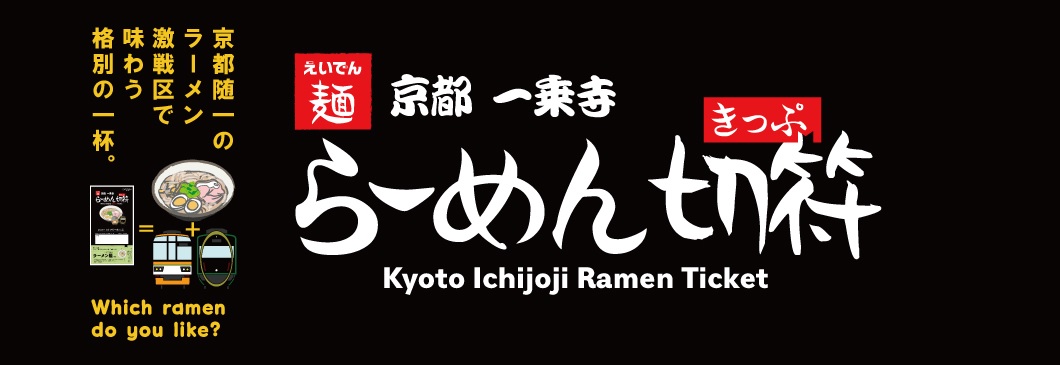
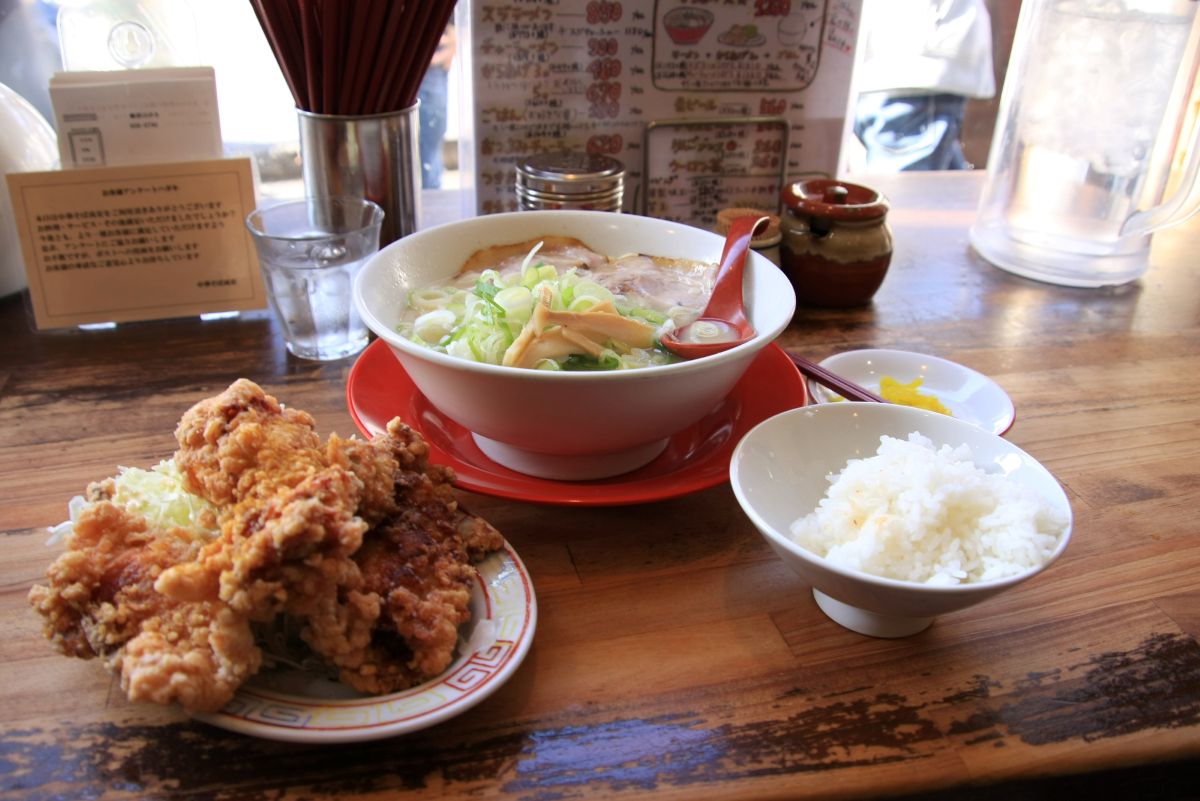
In Ichijoji, where the shops compete, there is the Kyoto Ichijoji Ramen Ticket: a day of unlimited travel on the Eizan Railway together with a noodle voucher for the ramen shops around Ichijoji.
The Eizan Railway runs from Ichijoji to Yase-Hieizanguchi and on to Kibune and Kurama in the north of Kyoto, which suits anyone who also wants the scenery and the shrines up there.
In Ichijoji: Chuka Soba Takayasu for pork bone broth, Ramen Tentenyu or Chinyu for chicken paitan, and Ramen Touhichi for soy sauce.
| The Kyoto Ichijoji Ramen Ticket Includes: a day of unlimited travel on the Eizan Railway and one bowl of ramen at a participating shop Price: 2,000 yen (adults only) Sold at: Demachiyanagi Station and the my route mobile app Sold: each fiscal year Details: https://eizandensha.co.jp/good-value/ramen/ |
Ramen at the Hotel: Kyoto Pleasant Hotel
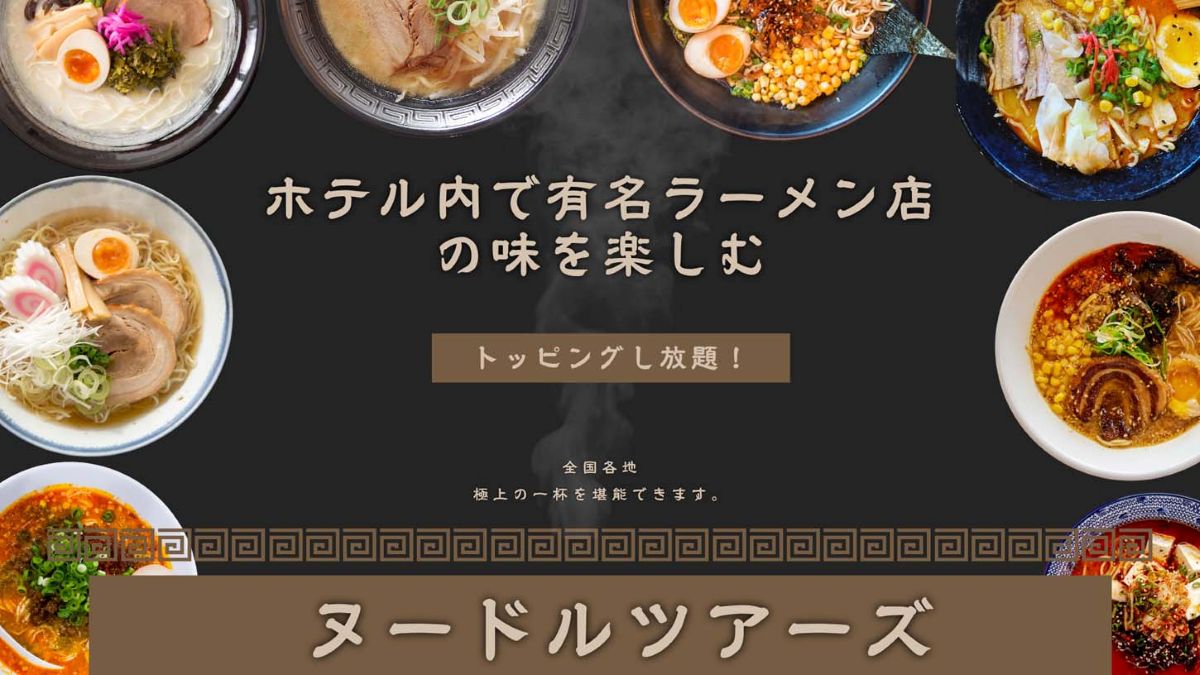
If you want ramen whenever it occurs to you, there is a hotel where you can eat it around the clock.
Kyoto Pleasant Hotel has Noodle Tours, a frozen ramen vending machine, so bowls from well-known shops around the country can be had without speaking to anyone.
The ramen is heated in hot water, so the noodles are freshly boiled and you add as much spring onion and menma as you like. Buy chashu or a seasoned egg at a nearby supermarket and it comes close to the real thing.
| Kyoto Pleasant Hotel Address: 857 Kitafunabashi-cho, Horikawa-dori Imadegawa-agaru, Kamigyo-ku, Kyoto Tel: 075-366-6711 Mail: info@kyoto-pleasanthotel.com Website: https://kyoto-pleasanthotel.com/ |
Short on Time? Kyoto Ramen Koji
If you want ramen quickly, between shopping or before a train, head to Kyoto Ramen Koji on the tenth floor of Kyoto Station.
Well-known shops from Kyoto and from around Japan, including Hokkaido, Yamagata, Toyama, Osaka and Fukuoka, are gathered on one floor, which makes comparing them easy.
From Kyoto there is Ra-men Miyako, built on a Gion paitan broth that concentrates chicken and the sweetness of vegetables, and a shop whose tsukemen pairs wholemeal noodles with a chicken and seafood broth.
Both work the fine dashi and careful seasoning that Kyoto is known for.
| Kyoto Ramen Koji Location: 10F of the Kyoto Station Building (south of the department store and the grand staircase) Hours: 11:00–22:00 (last orders 21:30) Closed: Irregular Payment: Cash, credit card, e-money, QR code Website: https://www.kyoto-station-building.co.jp/ramen_koji/ Instagram: https://www.instagram.com/kyotoramenkoji/ |
Summary
This article has covered what Kyoto ramen is and where to eat it.
Along with the rich, heavy, back-fat bowls, there are lighter ones built on the ingredients themselves and on seafood dashi.
Gyoza no Ohsho, the chain, also started in Kyoto. The Shijo-Omiya shop is where it began, and people travel to see it, which makes it easy to fit into a day out.
Plan a trip around eating your way through them, or compare the long-standing shops against the newer ones and argue about which you prefer.
The articles below cover kaiseki restaurants, cafes, coffee shops and bakeries in Kyoto.
We hope you eat well here.
More on eating in Kyoto
-

Twelve Bakeries to Try in Kyoto, a City That Eats Bread
-
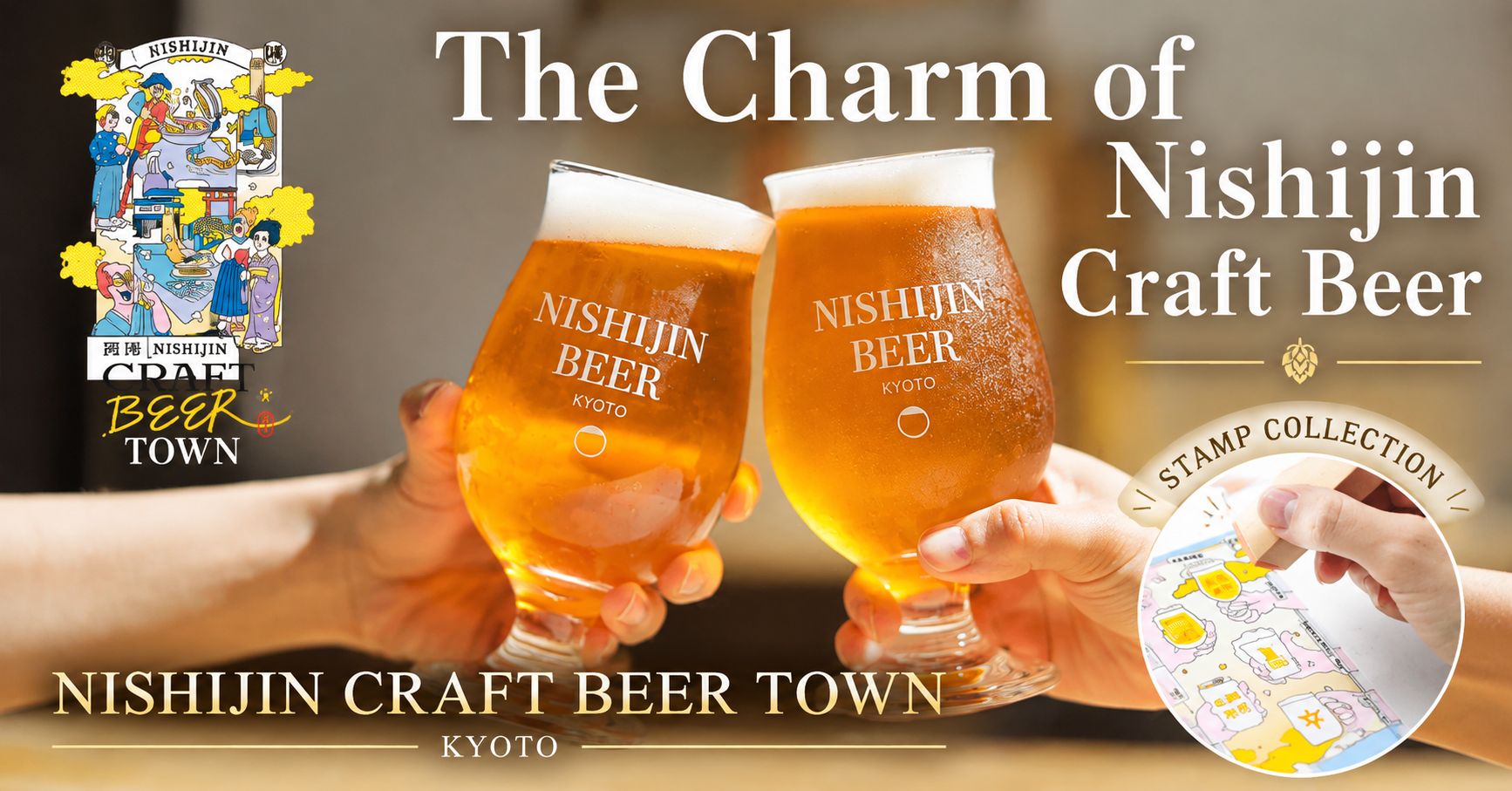
Nishijin CRAFT BEER TOWN: Three Breweries and a Long-Established Liquor Store in Kyoto
-
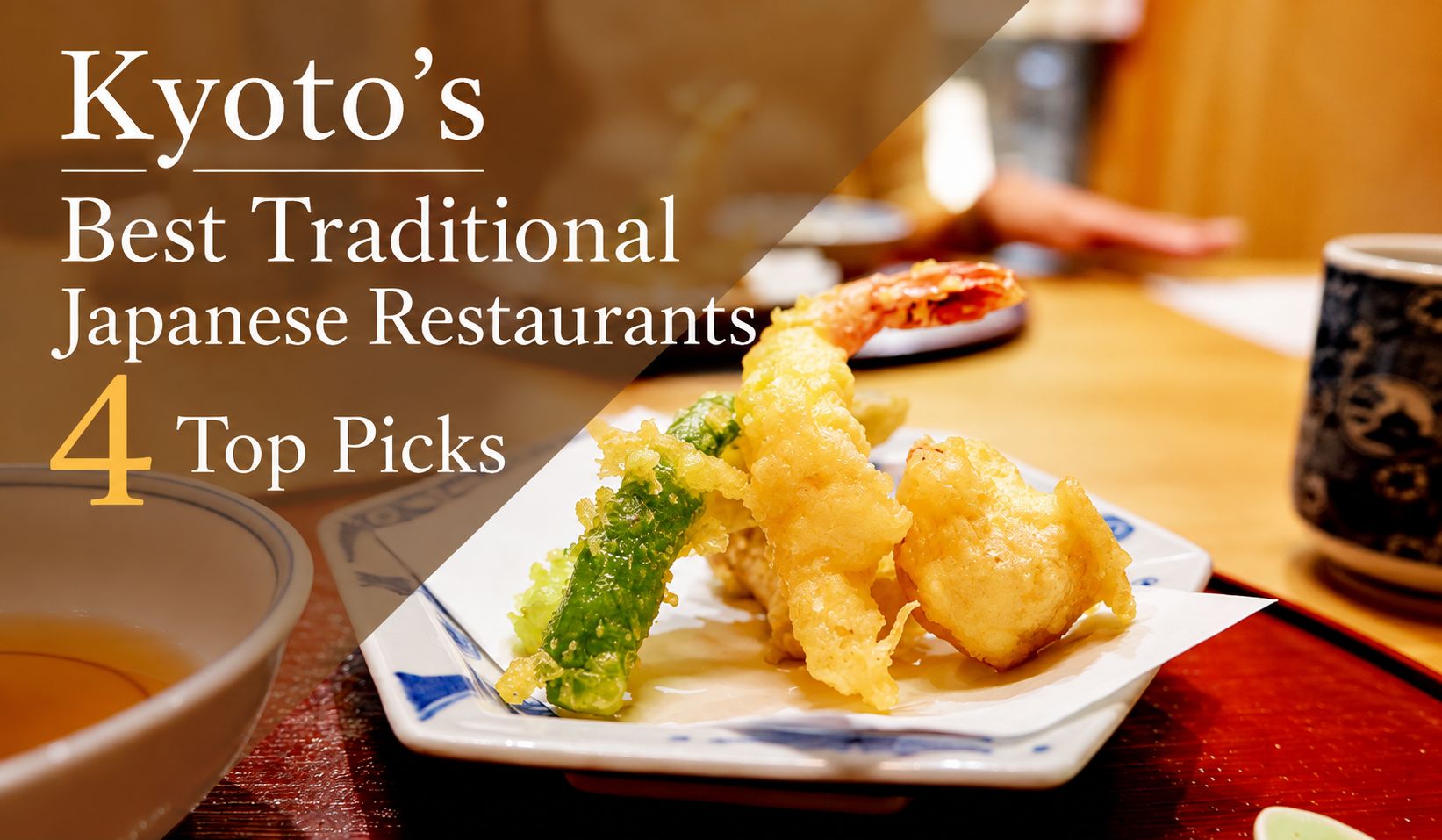
Four Kaiseki Restaurants to Try in Kyoto, with the Basics and the Manners
-
Nine Coffee Shops in Kyoto: Long-Standing Kissaten, Quiet Finds and % ARABICA
-
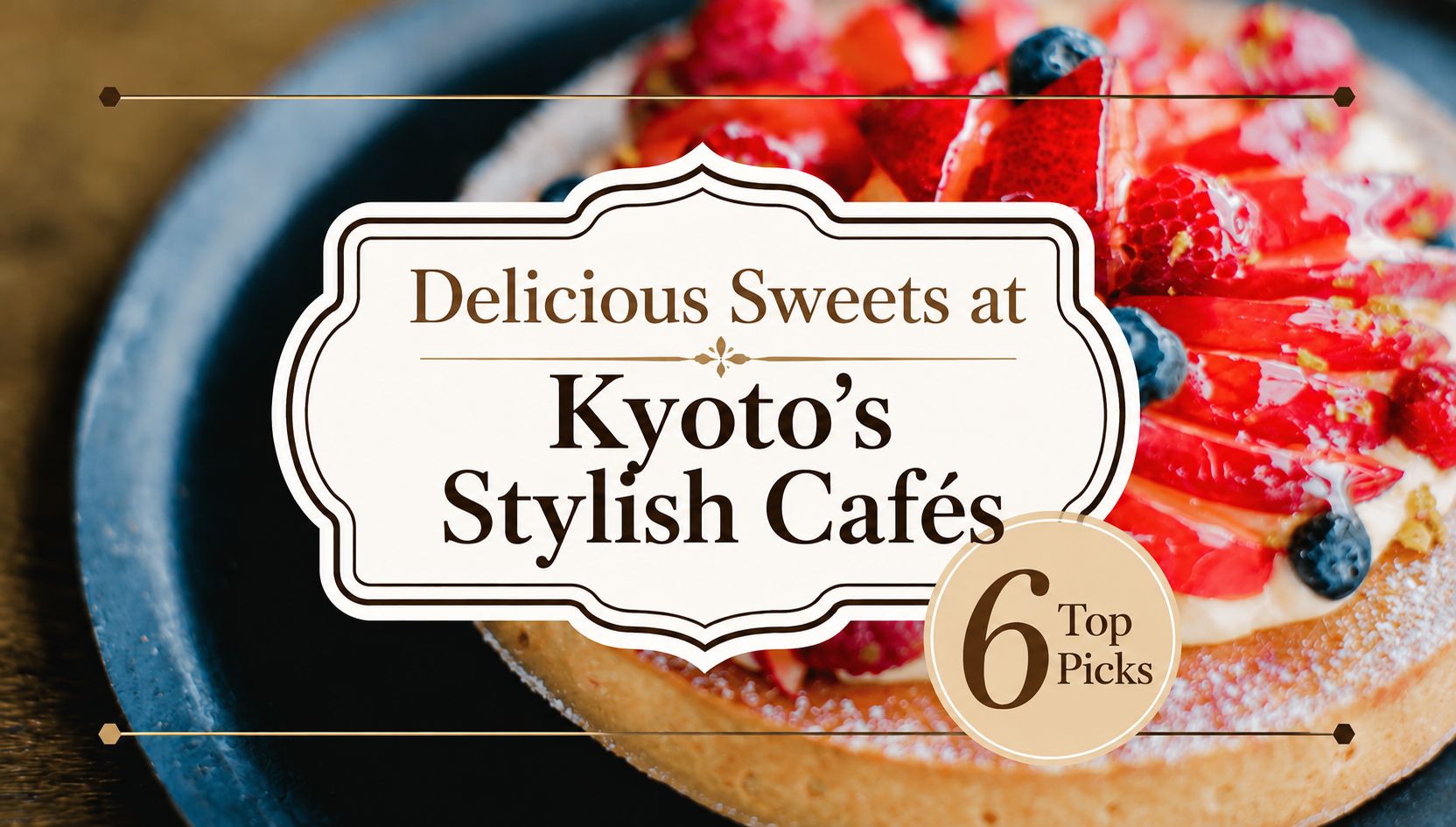
Six Stylish Cafes in Kyoto for Breakfast and Dessert